Table of Contents
ToggleHanging Glaciers in Himalayas
Rising temperatures and changing precipitation patterns are destabilising Himalayan glaciers, increasing the risk of glacier collapse, ice avalanches and downstream disasters. A 2026 study identified 219 hanging glaciers in the Alaknanda Basin of Uttarakhand’s Garhwal Himalayas, highlighting the growing threat to settlements, infrastructure and river systems.
What are Hanging Glaciers?
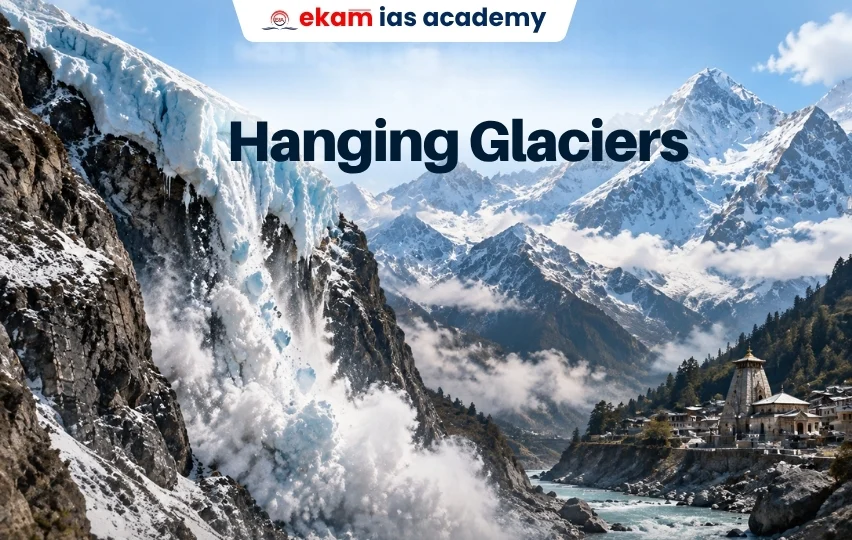
Hanging glaciers are masses of ice situated on steep mountain slopes or cliffs, often separated from the main glacier. Because they rest on unstable terrain, they are highly susceptible to sudden collapse.
Climate change, glacier retreat and changing snowfall patterns weaken their structural stability, causing ice redistribution and the formation of unstable hanging sections. Unlike valley glaciers, hanging glaciers can break away without warning, triggering large ice and rock avalanches.
Although such glaciers have been extensively studied in the European Alps, comprehensive monitoring across the Himalayas remains limited due to difficult terrain and inadequate observation infrastructure.
Risks Associated with Hanging Glacier Collapse
Ice Avalanches
The collapse of hanging glaciers can generate high-speed ice avalanches capable of travelling long distances. Simulations indicate that avalanche flows in the Badrinath–Mana region of Uttarakhand may exceed 50 metres in height, threatening nearby settlements and transport infrastructure.
Glacial Lake Outburst Floods (GLOFs)
A collapsing glacier can trigger Glacial Lake Outburst Floods (GLOFs) by displacing water from nearby glacial lakes. These sudden floods can devastate downstream villages, agricultural land, bridges and hydropower projects.
Cascading Disasters
Glacier failures often transport snow, rocks and sediments downhill, creating compound hazards such as debris flows, blocked rivers, flash floods and landslides.
Infrastructure Vulnerability
Roads, pilgrimage routes, hydropower projects, bridges and mountain settlements located along Himalayan valleys remain highly vulnerable to glacier-related disasters, especially as development expands into fragile regions.
Key Findings of the Alaknanda Basin Study
A study published in Nature (April 2026) mapped 219 hanging glaciers across the Alaknanda Basin.
Researchers found that nearly one-third of the unstable ice mass is concentrated in the Upper Alaknanda Basin, significantly increasing risks for downstream communities.
The study projects that by 2030, exposure of buildings and infrastructure to avalanche hazards could rise by nearly 120% compared to 2000.
It also estimates that the population living within these high-risk zones may increase by approximately 17%, making disaster management even more challenging.
Way Forward
Experts recommend strengthening glacier monitoring through satellite imagery, drones and early warning systems. Regular hazard mapping, climate-resilient infrastructure, scientific land-use planning and community-based disaster preparedness are essential to reduce risks in the Himalayan region. Greater investment in glacier research and continuous monitoring will also improve forecasting and emergency response.
Conclusion
The discovery of hundreds of unstable hanging glaciers in the Alaknanda Basin highlights the growing impact of climate change on Himalayan ecosystems. As glacier instability increases, the risks of avalanches, GLOFs and cascading disasters are expected to rise. Strengthening scientific monitoring, disaster preparedness and climate-resilient infrastructure will be crucial for safeguarding lives, ecosystems and development in the Himalayan region.


FAQs: Hanging Glaciers
What are hanging glaciers?
Hanging glaciers are masses of ice located on steep mountain slopes or cliffs, often separated from the main glacier. Due to unstable terrain, they are highly vulnerable to sudden collapse.
Why are hanging glaciers becoming a concern in the Himalayas?
Rising temperatures, glacier retreat and changing snowfall patterns are weakening glacier stability, increasing the risk of ice avalanches, GLOFs and downstream disasters.
What were the key findings of the Alaknanda Basin study?
A 2026 study identified 219 hanging glaciers in Uttarakhand’s Alaknanda Basin. Nearly one-third of unstable ice mass was found concentrated in the Upper Alaknanda Basin.
What are the major risks associated with hanging glacier collapse?
Collapse can trigger ice avalanches, glacial lake outburst floods (GLOFs), debris flows, flash floods and landslides, threatening settlements, infrastructure and river systems.
How can risks from hanging glaciers be reduced?
Risk reduction requires satellite monitoring, drone-based surveys, early warning systems, hazard mapping, climate-resilient infrastructure and community-based disaster preparedness.