
Table of Contents
TogglePradhan Mantri Bhartiya Janaushadhi Pariyojana
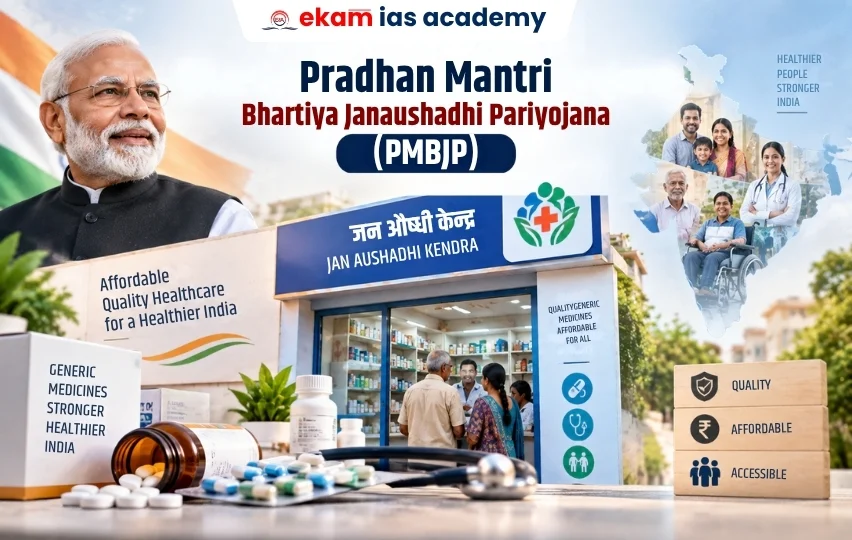
The Pradhan Mantri Bhartiya Janaushadhi Pariyojana (PMBJP) is expanding beyond affordable generic medicines to include surgical products, medical consumables, healthcare devices and supportive-care products. With a growing network of Jan Aushadhi Kendras (JAKs), the initiative aims to make essential healthcare products more accessible and affordable across different stages of life.
What is PMBJP?
The PMBJP is a government initiative that provides quality-assured generic medicines at substantially lower prices through Jan Aushadhi Kendras across India. Its broader objective is to improve access to essential medicines while reducing the financial burden of healthcare on households.
The programme has expanded its product basket to cover medicines and various healthcare-related products across major therapeutic categories.
Key Features of PMBJP
Affordable Generic Medicines
PMBJP medicines are generally available at 50–80% lower prices than comparable branded medicines. This can help reduce out-of-pocket expenditure, particularly for patients requiring long-term treatment.
The network currently offers around 2,110 medicines and 315 surgical items, medical consumables and devices.
Quality Assurance
Quality remains an important component of the programme. Medicines are procured from manufacturers complying with WHO-GMP standards and are tested through laboratories accredited by the National Accreditation Board for Testing and Calibration Laboratories (NABL).
Thus, the scheme combines affordability with quality assurance.
Expanding Jan Aushadhi Network
More than 18,000 Jan Aushadhi Kendras are operational across the country. The Government has set a target of establishing 25,000 Kendras by March 2027, including in rural and remote regions.
The expansion is intended to improve the geographical accessibility of essential healthcare products.
Financial and Social Impact
Between 2021–22 and 2025–26, PMBJP recorded sales of approximately ₹7,873.85 crore through Jan Aushadhi Kendras. The initiative is estimated to have generated around ₹37,200 crore in savings for citizens.
The scheme therefore has significance not only for healthcare access but also for household financial security.
Citizen-Centric and Inclusive Initiatives
PMBJP has introduced products such as Janaushadhi Suvidha oxo-biodegradable sanitary napkins at ₹1 per pad, supporting affordable menstrual hygiene.
The Jan Aushadhi Sugam app helps citizens locate nearby Kendras, check product availability and compare prices.
The scheme also provides incentives to women, persons with disabilities, SCs and STs, as well as entrepreneurs establishing Kendras in specified disadvantaged regions.
Significance
The expansion of PMBJP reflects a shift from focusing solely on medicines towards a broader affordable healthcare basket. By improving access to medicines, medical consumables and healthcare devices, the initiative can contribute to health equity, lower out-of-pocket expenditure and universal health coverage.
Conclusion
PMBJP represents an important component of India’s efforts towards affordable and accessible healthcare. Its expanding network, wider product basket and quality-assurance mechanisms can strengthen last-mile healthcare delivery while reducing the financial burden on citizens.
Take the article one step further
- Add a UPSC-focused analysis section
- Create a sharper SEO title and introduction


FAQs: Pradhan Mantri Bhartiya Janaushadhi Pariyojana (PMBJP)
What is the Pradhan Mantri Bhartiya Janaushadhi Pariyojana (PMBJP)?
PMBJP is a government initiative that provides quality-assured generic medicines at substantially lower prices through Jan Aushadhi Kendras across India.
How much cheaper are medicines available under PMBJP?
PMBJP medicines are generally available at around 50–80% lower prices than comparable branded medicines, helping reduce citizens’ out-of-pocket healthcare expenditure.
What are Jan Aushadhi Kendras?
Jan Aushadhi Kendras (JAKs) are retail outlets that provide affordable generic medicines and an expanding range of surgical products, medical consumables and healthcare devices.
How does PMBJP ensure the quality of medicines?
Medicines are procured from manufacturers complying with WHO-GMP standards and undergo testing through laboratories accredited by the National Accreditation Board for Testing and Calibration Laboratories (NABL).
What is the target for expanding Jan Aushadhi Kendras?
More than 18,000 Jan Aushadhi Kendras are currently operational, with the government targeting 25,000 Kendras by March 2027, including in rural and remote areas.