Daily Current Affairs 07th and 8th-November-2025

Share this Post

SURROGACY FOR A SECOND CHILD

TOPIC: (GS2) POLITY: THE HINDU

A new petition before the Supreme Court questions whether denying surrogacy to couples seeking a second child violates reproductive autonomy under Article 21.

Purpose and Logic Behind the Act

  • The Surrogacy (Regulation) Act, 2021 permits only altruistic surrogacy and allows it only for couples with no surviving child, except in cases of serious disability.
  • To prohibit commercial surrogacy and ensure ethical, non-exploitative reproductive practices.
  • Rationale: Restricting eligibility helps prevent commodification of women’s bodies and surrogate exploitation, common before the law came into force.
  • Regulatory Concern: Surrogacy involves another woman’s physical and emotional labour; hence, the State claims a legitimate interest in restricting misuse.
  • Judicial View (Interim): The Supreme Court has noted the terms appear reasonable, but it is also examining whether the provision unnecessarily limits reproductive choice.

Issue of Secondary Infertility

  • Meaning: Inability to conceive or carry a pregnancy after having one biological child.
  • Statutory Ambiguity: The Act uses the term “infertility” generally, without distinguishing between primary and secondary infertility.
  • Resulting Hardship: Couples medically unable to have a second child are barred, while there is no restriction on having multiple children naturally.
  • Grounds of Challenge: Petitioners argue the law creates unreasonable discrimination and interferes with family planning decisions.

Why the Issue Matters Today

  • Reproductive Autonomy: Deciding whether, when, and how many children to have is part of the right to privacy and dignity.
  • Growing Cases: Secondary infertility is medically documented and affects many couples.
  • Judicial Sensitivity: The Court recently allowed age relaxation for couples with pre-existing frozen embryos, showing readiness to interpret the law flexibly.
  • Policy Inconsistency: India does not legally restrict number of children, but surrogacy rules effectively impose such a limit.

Arguments Supporting Broader Access

  • Protects Personal and Family Rights: Every person has the freedom to decide whether to have children and how many to have. Allowing surrogacy for a second child supports this constitutional right to reproductive choice under Article 21.
  • Fair to Couples Facing Medical Infertility: Some couples are medically unable to have another child even though they already have one. Denying surrogacy to them feels unfair, because they are not choosing this situation—it is a genuine medical condition.
  • Regulation Can Still Be Strong: Allowing access does not mean removing safeguards. The government can keep strict rules to prevent exploitation, while still letting deserving couples use surrogacy.
  • Removes Unreasonable Limitations: There is no law in India that limits how many children a couple may have naturally, so restricting surrogacy only for the second child appears inconsistent and not based on strong logic.

Challenges:

  • Risk of Commercial Surrogacy: If eligibility is expanded, there is a worry that surrogacy might again be treated as a business, where women—especially poor women—may be pressured to rent their wombs for money.
  • More Burden on Regulation: Allowing more couples to apply means the government must monitor more cases. This could strain surrogacy boards and fertility clinics, making it harder to ensure rules are followed.
  • Protecting Women from Exploitation: The State has a duty to protect women, especially those who might be vulnerable. Strict rules may be seen as a necessary step to protect surrogate mothers’ dignity.
  • May Lead to Demands from Other Groups: If rules are relaxed for couples with one child, other groups such as single people, LGBTQ+ couples, and live-in partners may also demand legal access to surrogacy.

Conclusion

The debate reflects a balance between personal autonomy and State responsibility to prevent exploitation. A rights-based interpretation, acknowledging secondary infertility, can ensure dignity, equality, and reproductive freedom, while maintaining strict ethical safeguards.

WHY THE NOMINATION PROCESS NEEDS REFORM

TOPIC: (GS2) POLITY: INDIAN EXPRESS

The Representation of the People Act (RPA), 1951 facilitates candidates file nominations to contest elections has become overly technical, allowing rejection of candidates for minor procedural mistakes, which weakens electoral participation and voter choice.

Why the Issue Has Gained Importance

  • A recent case in Dadra and Nagar Haveli where a woman’s nomination was rejected without proper hearing highlighted how scrutiny can be used as a gatekeeping mechanism.
  • The issue raises concerns about the fairness of elections and the right of citizens to contest and be represented.

How the Nomination System Works

  • Governed under Sections 33–36 of the RPA, 1951.
  • Returning Officers (ROs) have the authority to accept or reject nominations.
  • Nominations may be rejected for incomplete or inconsistent information, even if errors are minor.
  • Although the Supreme Court in Resurgence India (2014) differentiated incomplete declarations from false ones, this distinction is often ignored in practice.

Problems in the Current System

  • Excessive Focus on Procedure: The process emphasizes perfect paperwork rather than genuine qualification. Errors like delayed affidavits, missing details, or treasury payment issues can lead to rejection, even when not intentional.
  • Wide Discretion to Returning Officers: ROs can make decisions without any immediate appeal mechanism. This raises concerns of bias, pressure, or political interference. It indirectly restricts the voter’s right to select among multiple candidates, linked to Article 326.
  • No Opportunity for Correction: Once submitted, forms cannot be corrected even for small mistakes. Other democracies provide candidates time to fix errors, reducing unfair disqualifications.
  • Exclusion Rather Than Participation: The process works like a filtering mechanism, removing candidates on technicalities rather than assessing their eligibility or integrity.

Lessons from Other Countries

  • UK: Allows correction of forms before final approval.
  • Canada: Permits post-scrutiny rectification.
  • United States: Courts handle disputes quickly to avoid wrongful exclusion.

Suggested Reforms

  • Create a time-bound appeal process for rejected nominations (e.g., within 24 hours).
  • Introduce digital filing and verification to minimize clerical errors.
  • Provide a 48-hour correction window for non-serious errors.
  • Mandate written, reasoned orders for every rejection and upload them online for transparency.
  • Issue uniform guidelines for scrutiny to reduce variation and discretion.

Representation of the People Act, 1951

  • Sets rules for how elections are conducted in India.
  • Defines who can contest elections to Lok Sabha and State Assemblies.
  • Lists reasons for disqualification (e.g., criminal conviction, corrupt practices).
  • Explains the process of filing nominations, scrutiny, and withdrawal.
  • Limits how much a candidate can spend during elections.
  • Requires candidates to submit details of their campaign spending to the Election Commission.
  • Defines corrupt practices, like bribing voters or spreading false information.
  • Describes offenses such as booth capturing, impersonation, and intimidation.

Conclusion

Reforming the nomination process is essential to protect democratic participation. The system must focus on fair access, not technical elimination, ensuring the voter’s right to genuine choice is upheld.

RIGHT TO VOTE VS FREEDOM OF VOTING

TOPIC: (GS2) POLITY: THE HINDU

The debate over whether the Right to Vote is a fundamental right has resurfaced in light of the Union Government’s recent submission in the Supreme Court. The case questions whether citizens are denied their freedom of electoral expression when elections are won uncontested.

Context of the Case

  • A petition by ADR and Vidhi Centre for Legal Policy challenges Section 53(2) of the Representation of the People Act (RPA), 1951).
  • This section allows uncontested candidates to be declared elected without polling.
  • Petitioners argue that such situations prevent citizens from expressing dissent through NOTA, linking the issue to Article 19(1)(a).

Government’s Key Argument

  • The government differentiates between:
    • Right to Vote → a statutory right provided under laws like RPA, 1951.
    • Freedom of Voting → recognised as a form of expression under Article 19(1)(a).
  • The freedom to express choice only arises when a poll actually takes place.
  • Therefore, in uncontested elections, where no ballot is conducted, no expressive right is engaged.

Rationale Behind the Government’s Stand

  • Section 53(1) → Polling is held when there are more candidates than available seats.
  • Section 53(2)-(3) → If candidates’ equal seats, polling is unnecessary.
  • NOTA is not a candidate, so requiring polls only to allow NOTA would serve no electoral purpose and may waste administrative resources.
  • The Election Commission supports this view and notes that treating NOTA as a candidate would require legal amendment.

Judicial Position on the Right to Vote

  • Statutory Right Affirmed: N.P. Ponnuswami (1952) and Kuldip Nayar (2006) held that voting is a right created by law, not constitutional by default.
  • Link to Expression Recognised: PUCL (2003) stated that the act of choosing, including choosing NOTA, is a form of free expression.

Why the Debate Matters

  • The case highlights the tension between electoral efficiency and voter autonomy.
  • It raises whether democratic legitimacy requires every election to involve voter choice, even when uncontested.
  • The question touches on citizen participation, electoral transparency, and the nature of representative democracy.

Conclusion

The issue reflects an ongoing balance between administrative practicality and the citizen’s right to meaningful political expression. The Court’s interpretation may shape the future scope of electoral rights in India’s democracy.

STATE OF FOOD AND AGRICULTURE REPORT, 2025

TOPIC: (GS3) ECONOMY: THE HINDU

The State of Food and Agriculture (SOFA) Report 2025, released by the Food and Agriculture Organization (FAO), highlights how human-induced land degradation is weakening global food security, reducing crop productivity, and worsening rural poverty.

About the SOFA Report

  • Published every year by the FAO, it is considered a flagship analytical report influencing global agricultural strategy.
  • It helps governments and international institutions design sustainable food system interventions.

Themes of the 2025 Report

  • Focuses on the impact of land degradation on agriculture, environment, and rural livelihoods.
  • Combines soil health data, land use patterns, crop performance trends, and socioeconomic indicators.
  • Identifies global hotspots most vulnerable to productivity decline and hunger.

Major Global Findings

  • 1.7 billion people live in areas where land degradation has led to declining crop output and livelihood risk.
  • Nearly 90% of global deforestation is linked to agriculture, particularly food and fodder expansion.
  • Between 2001 and 2023: Total agricultural land declined by 2% But Cropland increased, while pastureland drastically reduced, indicating shifting production pressures.
  • Each year, around 3.6 million hectares of farmland are abandoned due to soil damage and erosion.
  • Restoring just 10% of degraded cropland could feed over 150 million people annually.
  • Sub-Saharan Africa and South Asia show the highest overlap of land degradation, poverty, and child undernutrition.
  • Farm size inequality is severe:
    • Small farms (<2 ha) = 85% of farming households but own only 9% of total farmland.
    • Large farms (>1,000 ha) control nearly half of the farmland.
  • Large farms often maintain yield using high inputs, masking soil decline, while small farmers bear the brunt of productivity loss.

India-Specific Observations

  • India is among countries facing notable yield reduction due to land degradation.
  • Eastern and Southern India are most impacted due to high cropping intensity and population pressure.
  • Key causes include:
    • Soil erosion
    • Declining organic matter
    • Overuse of groundwater
    • Loss of tree cover and monocropping

Recommendations from FAO

  • Promote soil conservation, watershed management, and agroforestry.
  • Expand precision agriculture, micro-irrigation, and organic soil inputs.
  • Strengthen credit access, extension services, and MSP linkages for small farmers.
  • Align restoration plans with schemes like PM-KUSUM, PMKSY, and the National Mission for Sustainable Agriculture.

Conclusion

The report underscores that healthy land is the foundation of food security. Strengthening soil resilience and farmer capacity is essential to sustain productivity while protecting ecological balance.

CAG’S MOVE TO CREATE TWO NEW AUDIT CADRES

TOPIC: (GS2) GOVERNANCE: THE HINDU

The Comptroller and Auditor General (CAG) of India, has approved the formation of two new cadres within the Indian Audit and Accounts Department (IA&AD): Central Revenue Audit (CRA) and Central Expenditure Audit (CEA).

Why This Reform Has Been Introduced

  • This step marks a shift toward greater centralisation and domain-based audit specialization, beginning January 1, 2026.
  • Increasing complexity of tax structures, public expenditure, and digital finance demands specialised auditing skills.
  • Aim to improve consistency and expertise in auditing Union Government finances.
  • Reduce dependency on state-level or regional units for central audits.

Features of the New Cadres

Central Revenue Audit (CRA)

  • Will focus on auditing Central Government revenue sources.
  • Covers: Direct taxes (e.g., income tax), Indirect taxes (GST, customs, excise), Non-tax receipts
  • Ensures accuracy, compliance, and transparency in the revenue system.

Central Expenditure Audit (CEA)

  • Will audit Union Government expenditure across ministries and departments.
  • Evaluates: Legality of spending, Efficiency and value for money, Fiscal prudence in schemes and projects

Intended Outcomes

  • Strengthen domain expertise among around 4,000 specialized audit personnel.
  • Improve manpower flexibility, reducing delays and dependence on local posting cycles.
  • Enhance data-driven and digital auditing, aligning with e-governance reforms.
  • Promote uniform auditing standards at the national level.

Significance of the Reform

  • Reinforces the CAG’s role as the guardian of public finance.
  • Supports transparency and accountability in government financial operations.
  • Comes at a time when public spending on welfare, infrastructure, and digital services is significantly rising.
  • Relevant to debates on fiscal discipline and corruption prevention.

DE-DOLLARISATION?

  • De-dollarisation means reducing dependence on the US dollar for international trade, reserves, and financial transactions.
  • Countries switch to local currencies, gold, or currency baskets instead of the dollar.
  • Aim: Reduce US influence, avoid risks from U.S. sanctions and dollar fluctuations.
  • Seen in initiatives by BRICS, ASEAN, Russia-China trade, India’s UPI global push.
  • Example: India buying Russian oil in Rupees/Roubles.

Conclusion

The creation of CRA and CEA reflects a modernization of India’s public audit system. By combining centralisation with professional specialization, the reform aims to strengthen financial oversight, enhance public trust, and improve the efficiency of governance.

WATANDARI SYSTEM OF LAND REVENUE

TOPIC: (GS2) GOVERNANCE: THE HINDU

The Watandari system was a hereditary land and service-based administrative arrangement widely practiced in Maharashtra and the Deccan. Its remnants continue to affect land records, ownership disputes, and local power dynamics.

Origin and Development

  • The system gradually evolved under several regional powers such as Rashtrakutas, Bahmani and Deccan Sultanates, Mughal administration
  • It later continued under the Marathas, who expanded its reach to integrate local elites into state administration.

Features of the Watandari System

  • Hereditary Land Rights: Specific families or lineages received land (Watan) that passed down generations. Rights could not normally be sold or transferred.
  • Service-Based Tenure: Land was granted in return for duties, not ownership. These duties included:
      • Village administration (e.g., Patils / village headmen)
      • Record-keeping (e.g., Kulkarnis)
      • Revenue collection (e.g., Deshmukhs and Deshpandes)
      • Religious and ceremonial roles (e.g., priests or Josis)
  • Watandars (Right Holders): Holders derived social prestige from their role. Their authority often reinforced local caste hierarchies.
  • Revenue Privileges: Instead of salaries, Watandars collected a share of village produce or revenue. This created a semi-feudal agrarian order.
  • Built-in Local Autonomy: Because Watan lands were service-linked, the state relied on local elites for administrative continuity. However, this also led to reduced accountability over time.

Decline and Abolition

  • By the 19th–20th century, hereditary claims began causing administrative inefficiency, misuse of authority, and conflicts.
  • The British partially regulated the system, but did not fully dismantle it.
  • After independence, the Bombay Watans (Abolition) Acts (1950s–60s) formally ended the system and transferred lands to government or cultivating tenants.

Conclusion

The Watandari system played a major role in shaping local power structures and rural administration. While abolished, its historical imprint continues to affect land rights and social relations in parts of Maharashtra today.

CIVIL WAR IN SUDAN

TOPIC: (GS2) INTERNATIONAL RELATIONS: THE HINDU

Sudan is facing one of the world’s worst ongoing humanitarian crises due to a violent power struggle between its two main military factions. The conflict has shattered the country’s fragile political transition and threatens to destabilize the Horn of Africa region.
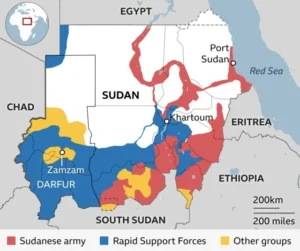
CIVIL WAR IN SUDAN

Background of the Conflict

  • The civil war started in April 2023 between:
    • Sudanese Armed Forces (SAF), led by Gen. Abdel Fattah al-Burhan, and
    • Rapid Support Forces (RSF), led by Gen. Mohamed Hamdan Dagalo (Hemedti).
  • Sudan was undergoing a political transition after the 2019 removal of Omar al-Bashir.
  • The situation worsened after the October 2021 military coup, which derailed plans for civilian rule.

Immediate Trigger

  • The conflict escalated due to disagreement over merging the RSF into the national army.
  • Both sides sought to control key military and economic assets, leading to open conflict.

Impact and Humanitarian Crisis

  • Fighting has spread across Khartoum, Omdurman, and Darfur.
  • Over 8.5 million people have been displaced internally and across borders.
  • Famine risk is increasing due to crop failure, destroyed markets, and blocked aid.
  • Health systems have collapsed, leading to rising deaths from disease and malnutrition.
  • Allegations of ethnic killings, mass sexual violence, and lootings are widespread, especially in Darfur.

Recent Developments (2025)

  • The RSF captured El-Fasher, the last major holdout of western Darfur.
  • This shift strengthens RSF control over western Sudan, raising concerns of territorial fragmentation.

Foreign Involvement

  • Egypt is believed to support the SAF.
  • UAE and Russia’s Wagner Group reportedly assist the RSF.
  • The situation resembles a proxy conflict, worsening its intensity.

Possible Future Outcomes

  • Sudan risks de-facto partition, with rival zones controlled by opposing forces.
  • Prolonged conflict may destabilize Chad, Ethiopia, South Sudan, and the Red Sea corridor.
  • Economic collapse is deepening, with inflation over 250% and agricultural output shrinking.
  • Return to civilian rule appears unlikely in the near term.

Conclusion

The Sudan conflict reflects a failed transition to democracy, compounded by external interference and military rivalry. Without coordinated international mediation and humanitarian support, the crisis may evolve into a regional security emergency.

INDIA AI: GOVERNANCE GUIDELINES

TOPIC: (GS3) SCIENCE AND TECHNOLOGY: THE HINDU

India has issued its first unified framework on AI oversight, focusing on ethical design, safe deployment, and transparent use. The approach emphasizes to balance economic growth and public trust.

India’s AI Governance Framework

  • Rising Influence of AI: Artificial Intelligence is now playing a major role in shaping government policies, business strategies, public communication, and national security mechanisms.
  • Need for Ethical Alignment: To ensure that AI development does not undermine constitutional values, transparency, or public trust, the Government has introduced a structured governance approach.
  • Launch of India AI Governance Guidelines (2025): The new framework promotes responsible and inclusive AI innovation, based on the vision of “AI for All”, balancing technological progress with accountability and safety.

Core Principles of India’s AI Governance

The framework is anchored on seven guiding principles:

  • Trust: AI systems must be reliable, explainable, and secure.
  • Human-Centric Approach: Decisions involving people should retain human oversight.
  • Innovation with Flexibility: Regulations should encourage research, not suppress experimentation.
  • Fairness & Inclusion: AI should avoid bias, discrimination, and digital inequality.
  • Accountability: Developers and deployers must take responsibility for outcomes.
  • Explainability: AI should be understandable, allowing users to know how conclusions are reached.
  • Safety & Resilience: AI systems must withstand misuse, attacks, and failures.

Promoting AI Development and Digital Ecosystem

  • Compute Infrastructure: Over 38,000 GPUs offered at concessional rates to startups and research institutes.
  • AIKosh Data Platform: Provides access to sector-wise datasets and trained models with privacy safeguards.
  • Digital Public Infrastructure: Platforms like Aadhaar, UPI, and Bhashini support scalable AI solutions.
  • MSME Support: Initiatives include credit incentives, tax benefits, and targeted AI toolkits for small enterprises.

Risk Management and Responsible Use

  • No standalone AI Act yet; existing laws like the IT Act, DPDP Act, and Copyright Act apply.
  • Key threats identified include deepfakes, misinformation, biased algorithms, data manipulation, and national security risks.
  • Encourages watermarking and content verification to counter disinformation, in line with global C2PA standards.

Institutional Mechanisms for Oversight

  • AI Governance Group (AIGG): Coordinates policy across ministries.
  • Technology & Policy Expert Committee: Provides advice on legal and technical aspects.
  • AI Safety Institute (AISI): Conducts risk evaluations and international cooperation.
  • Accountability Tools: Graded responsibility, transparency reports, grievance channels, and self-audit certifications.

India’s Global Positioning

  • India seeks to represent the Global South in AI diplomacy at platforms like UN, G20, and OECD.
  • Plans a national AI Incident Registry for monitoring and early warning.
  • Long-term goal: Build adaptive legal frameworks as AI technologies evolve.

Conclusion

The India AI Governance Guidelines aim to create an ethical, innovative, and secure AI ecosystem, ensuring that technological progress strengthens public trust and inclusive development. By combining institutional capacity, digital infrastructure, and human-centric values, India positions itself as a responsible global leader in AI governance.

BALIYATRA FESTIVAL

TOPIC: (GS1) ART AND CULTURE: THE HINDU

The President of India recently conveyed greetings on the occasion of the Baliyatra festival and Boita Bandana, drawing national attention to Odisha’s maritime heritage.

The Baliyatra is a major cultural festival in Cuttack, Odisha, celebrating the historic maritime legacy of ancient Kalinga traders who sailed to Southeast Asia. The event reflects India’s long-standing coastal trade and cultural exchange traditions.
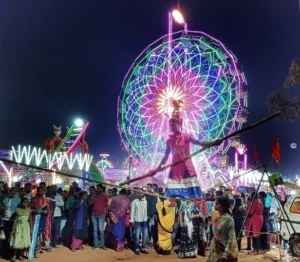
Baliyatra festival

Historical Significance

  • The term Bali Jatra means “Voyage to Bali”, representing ancient trade expeditions.
  • Commemorates maritime links of Kalinga with regions such as Bali, Java, Sumatra, Borneo, Sri Lanka, and Myanmar over 2,000 years ago.
  • It highlights the naval skills and oceanic knowledge of Kalinga sailors.

Cultural Practices

  • Observed during Kartika Purnima, symbolising auspicious beginning of sea voyages.
  • Women perform Boita Bandana, where miniature boats made of banana stem, paper, or sholapith are floated in rivers to pay tribute to sailors.
  • The festival includes:
    • Large fairs
    • Traditional dance and music
    • Craft and food stalls
    • Folk rituals celebrating seafaring heritage

Contemporary Relevance

  • Promotes local artisanship, tourism, and preservation of maritime culture.
  • Strengthens awareness about India’s early role in international trade networks.

BLACK-HEADED IBIS

TOPIC: (GS3) ENVIRONMENT: DOWN TO EARTH

A group of Black-headed Ibises was recently observed in the salt pans of Thoothukudi, Tamil Nadu, marking an important biodiversity sighting.

The Black-headed Ibis (scientific name: Threskiornis melanocephalus) is a wader bird known for its presence across wetlands in South and Southeast Asia. It plays a key ecological role in wetland food chains.
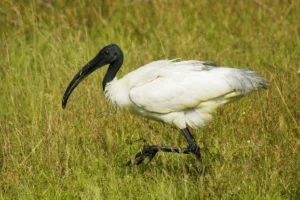
Black-headed Ibises

Identification Features

  • Medium to large bird, measuring 65–76 cm in length.
  • Distinctive white plumage with black head and neck.
  • Both sexes look similar.
  • Tail feathers turn black during breeding season.

Habitat and Distribution

  • Found in India, Nepal, Sri Lanka, Myanmar, Thailand, and occasionally Japan.
  • Prefers wetlands, marshes, rice fields, and urban ponds.
  • Adaptable to human-modified landscapes, including sewage ponds and salt pans.

Ecological Importance

  • Acts as an indicator species for wetland health.
  • Controls insect, crustacean, and small fish populations.

Conservation Status

  • Listed as Least Concern (LC) on the IUCN Red List.
  • Threatened by wetland degradation, pollution, and urban expansion.
  • Conservation needs include wetland restoration and protected migratory routes.

NATIONAL TECHNICAL TEXTILES MISSION (NTTM)

TOPIC: (GS2) POLITY: THE HINDU

The Mission recently supported the creation of Indigenous Thermal Testing Instruments for protective textiles, in collaboration with NITRA.

The National Technical Textiles Mission (2020-2026) is an initiative of the Ministry of Textiles to boost India’s production, innovation, and export of technical textiles, supported by a budget of ₹1,480 crore.

National Technical Textiles Mission (2020-2026)

Objectives

  • Strengthen research and development in high-performance textiles.
  • Promote industry adoption of technical textiles.
  • Enhance export competitiveness globally.

Major Components

  1. R&D and Innovation: Support for development of new fibres, smart textiles, and protective gear.
  2. Market Expansion: Increasing use of technical textiles in healthcare, agriculture, construction, and defense.
  3. Export Promotion: Creation of a dedicated export promotion council.
  4. Skill Development: Training programs and specialized courses in textile institutes.

What are Technical Textiles?

  • Textiles designed for function and performance, not decoration.
  • Applications include medical implants, geotextiles for roads, airbags, PPE suits, filtration fabrics.
  • Categorized into 12 sectors like Meditech, Geotech, Protech, Agrotech, etc.

Current Importance

  • Essential for defense, space, healthcare, and disaster management.
  • Helps reduce import dependency and promotes Make in India.

Write a Review

Your email address will not be published. Required fields are marked *