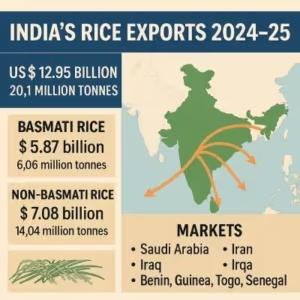
In 2025, India’s rice exports rose sharply after the government lifted restrictions imposed during 2022–23. This surge has reshaped global rice prices, food security debates, and India’s trade diplomacy.
About Export Performance
- Record Exports (2025): India exported 55 million tonnes of rice, marking a 19.4% increase and becoming the second-highest export volume ever.
- Year-wise Comparison: This figure is close to the 2022 peak of 22.3 MT, while exports in 2024 stood at 18.05 MT.
- Global Price Impact: Increased Indian supply pushed Asian rice prices to their lowest level in the last decade.
- Effect on Competitors: Countries like Thailand and Vietnam lost market share due to India’s more affordable rice exports.
Composition of Exports
- Non-Basmati Rice: 15.15 MT (↑25%). Destinations: Bangladesh, Benin, Cameroon, Ivory Coast, Djibouti. Role: Ensures food security in Africa and South Asia.
- Basmati Rice: 6.4 MT (↑8%, record high). Destinations: Iran, UAE, UK. Premium export strengthening India’s agri-brand globally.
India’s Position in Global Rice Trade
- India exports more rice than Thailand, Vietnam, and Pakistan combined.
- Reinforces India’s image as a food security provider for the Global South.
Drivers of Export Surge
- Policy Relaxation: Removal of bans and minimum export price in March 2025.
- Record Production: 137.8 MT in 2023–24; higher forecast for 2025–26.
- Price Competitiveness: Indian rice cheaper than rivals, boosting demand.
Production Overview
- Largest Producer: India accounts for ~40% of global rice supply.
- Major States: Uttar Pradesh, Telangana, West Bengal, Punjab, Chhattisgarh.
- Success Factors: Good monsoons, expanded cultivation, high-yielding dwarf varieties (IR-8, Jaya), policy support.
- Concerns: Water-intensive farming practices raise sustainability issues.
Challenges Ahead
- Domestic Food Security: Need buffer stock management to avoid sudden bans.
- Price Volatility: Risk during weak monsoon years.
- Crop Diversification: Overdependence on rice may hinder diversification.
- Climate Risks: Promote climate-resilient and water-efficient varieties.
- Policy Predictability: Transparent export rules to build farmer confidence.
Conclusion
India’s rice export surge highlights its dominant role in global food supply chains. While competitive pricing and policy reforms strengthen India’s leadership, a balanced approach is essential — safeguarding domestic food security, supporting farmers, and using rice exports as a tool of food diplomacy with Africa and South Asia.
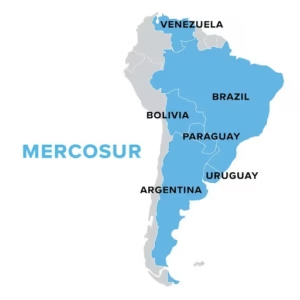
The European Union (EU) and Mercosur are set to sign a historic free trade agreement in Paraguay on January 17, 2026, after negotiations spanning over two decades.
About Mercosur:
- 1991 (Treaty of Asunción).
- Members: Argentina, Brazil, Paraguay, Uruguay; Bolivia joined later; Venezuela suspended.
- Associate Members: Several South American nations.
- Objectives:
- Create a common market.
- Remove internal trade barriers.
- Harmonise economic policies.
- Enable free movement of goods, services, capital, and people.
Features of the EU–Mercosur Deal
- Scale: Largest EU trade pact, cutting tariffs worth €4 billion.
- Current Trade: €111 billion annually. EU exports: machinery, chemicals, transport equipment. EU imports: farm products, minerals, paper.
- Market Access: Mercosur to remove duties on 91% of EU exports in 15 years. EU to remove duties on 92% of Mercosur exports in 10 years.
- Sensitive Products: EU quotas on poultry, pork, sugar, ethanol, rice, maize, honey. Mercosur quotas on milk powders and infant formula.
- Expanded Quotas: EU beef imports up to 99,000 tonnes. Duty-free 30,000 tonnes of EU cheese exports.
- Geographical Indications (GIs): 350 EU food and drink products protected.
- Safeguards: EU can suspend farm imports if rules are violated; stricter pesticide checks.
Opposition within EU
- Countries Opposing: France, Poland, Austria, Hungary, Ireland; Belgium abstained.
- Concerns:
- Cheaper farm imports may undercut EU farmers.
- Fear of 99,000 tonnes of beef entering EU markets.
- Imports may not meet EU’s strict environmental and animal welfare standards.
- Risk of deforestation in Amazon due to increased agricultural activity.
- Farmers demand equal standards to ensure fair competition.
Why the Deal Matters
- Strategic Diversification: Reduces EU’s reliance on traditional partners amid global protectionism.
- Countering China: Strengthens EU’s presence in Latin America, balancing China’s growing influence.
- Boost for Mercosur: Enhances credibility as a global trading bloc.
- Economic Gains: Mercosur GDP may rise by 0.7%, EU’s by 0.1%.
- Shield Against US Tariffs: Helps EU offset trade shocks from US protectionist policies.
- Critical Minerals: Diversifies supply chains away from China; Brazil and Argentina key suppliers of lithium, nickel, rare earths.
Conclusion
The EU–Mercosur trade pact is a landmark in global trade diplomacy, promising economic gains and strategic diversification. However, agricultural competition, environmental safeguards, and sustainability concerns remain major hurdles. For both blocs, balancing economic benefits with ecological responsibility will determine the long-term success of this agreement.
The Union government has released the draft Pesticides Management Bill, 2025 which seeks to replace the outdated Insecticides Act, 1968 and modernise India’s pesticide regulation system.
Reasons India Needs a New Pesticides Bill
- Outdated Law: Current regulation is under the Insecticides Act, 1968, made over 50 years ago. It does not reflect modern concerns about health, environment, and farmer safety.
- Health Risks: Farmers often face poisoning and exposure due to unsafe handling. Lack of strong liability provisions leaves victims without proper compensation.
- Environmental Damage: Chemical residues contaminate soil, water, and biodiversity. Old rules do not adequately address sustainability or eco-friendly alternatives.
- Spurious and Substandard Pesticides: Fake and poor-quality pesticides are widely sold in rural markets. Weak enforcement under the old law fails to control this menace.
Productivity and Agriculture Context
- Agricultural Dependence: India is the second-largest agricultural producer globally, with rice, wheat, cotton, and pulses heavily reliant on pesticide use.
- Yield Support: Pesticides help prevent 20–30% crop losses annually from pests, weeds, and diseases.
- Regional Use: States like Punjab, Haryana, Maharashtra, and Andhra Pradesh are among the highest consumers due to intensive farming.
- Biopesticides: Usage of biopesticides is growing but still accounts for less than 10% of total pesticide consumption.
- Farmer Exposure: Reports show thousands of poisoning cases annually, highlighting risks of improper handling and weak regulation.
Objectives of the Bill
- Ensure safe and effective use of pesticides.
- Reduce risks to humans, animals, and environment.
- Promote transparency, accountability, and traceability.
- Improve service delivery and ease of living for farmers.
- Repeal the Insecticides Act and consolidate regulation under one modern law.
Institutional Framework
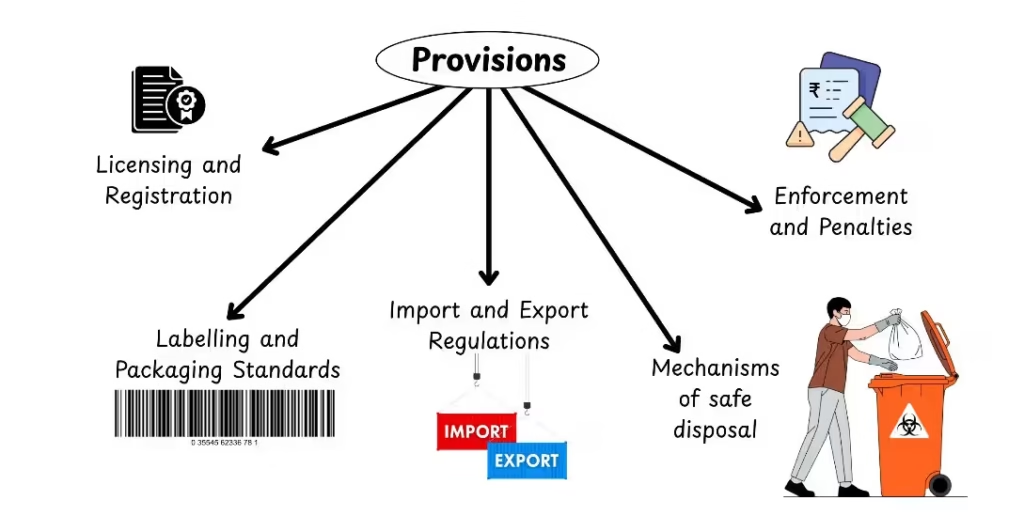
- Registration Committee: Includes ICAR, Drugs Controller, Environment Ministry, Chemicals Department, and toxicology experts.
- Central Pesticides Board: Recommends pesticides for inclusion. Prescribes good manufacturing practices.
- Frames recall protocols and poisoning case procedures. Issues guidelines for safe disposal of pesticides and packaging.
Role of States
- States can temporarily ban a pesticide or batch for up to one year.
- Such bans must be reviewed by the Registration Committee.
- States lack permanent prohibition or punitive powers, raising criticism.
Concerns in Draft 2025
- Language weakened: Bill says “strive to minimise risk” instead of committing to minimise risk.
- No criminal liability for manufacturers/distributors in cases of poisoning or misuse.
- States’ enforcement powers remain limited.
- No mechanism for price regulation or farmer affordability.
- Weak grievance redressal and compensation framework for affected farmers.
Way Forward
- Public consultation is crucial to address farmer, health, and environmental concerns.
- Need stronger enforcement, liability provisions, and farmer protection.
- Promote biological and traditional pest control methods.
- Encourage climate-friendly and less hazardous alternatives to chemical pesticides.
Conclusion
The Pesticides Management Bill, 2025 is a long-awaited reform to modernise pesticide governance. While it aims at safety and transparency, gaps in enforcement, accountability, and farmer protection must be addressed to ensure effective regulation and sustainable agriculture.
In 2025, fast-track special courts recorded a 109% disposal rate in child sexual offence cases under the POCSO Act, clearing more cases than registered.
About POCSO Act
- Enacted in 2012 to address crimes against children separately from general IPC provisions.
- Promised child-friendly procedures, time-bound trials, and special safeguards for survivors.
- Fast-track special courts were set up in 2019 with funding from the Nirbhaya Fund.
Current Situation
- 773 fast-track courts, 400 dedicated to POCSO cases.
- By September 2025, cleared 3.5 lakh cases.
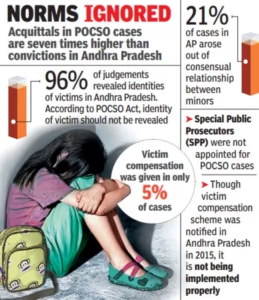
- Disposal rate high, but conviction rate dropped from 35% (2019) to 29% (2023).
- Fast-track courts average just 19% conviction, weaker than regular courts.
Key Concerns
- Speed vs Justice: Faster trials often mean hurried investigations, incomplete charge sheets, and delayed forensic reports.
- Support Systems Missing:
- Section 39 mandates support persons, but many states have not empanelled them.
- Children lack trained guidance during trials.
- PLVs Absent: Supreme Court (Dec 2025) directed para-legal volunteers at police stations, but implementation is poor (e.g., Tamil Nadu has none).
- Compensation Delays: Interim relief often comes years later, losing its purpose.
- Problematic Judgments: Some courts acquit accused if they offer marriage to survivors, undermining child rights.
Impact on Survivors
- Children face long trials without adequate support, leaving them traumatised.
- Families suffer financial strain due to repeated hearings and legal costs.
- Marginalised households often spend more on survival than what state relief provides.
Way Forward
- Strengthen forensic timelines and ensure complete charge sheets.
- Empanel support persons and PLVs across all states.
- Conduct quarterly conviction audits to identify weak states.
- Ensure timely compensation and child welfare support during trials.
- Focus on quality of justice, not just speed of disposal.
Conclusion
High disposal rates under POCSO courts show efficiency but not fairness. Without stronger investigations, support systems, and accountability, faster trials risk leaving children more harmed than protected. Justice must be both swift and substantive to truly safeguard child rights.
A recent study highlighted that water vapor warms the atmosphere far more than aerosols, renewing debate on their role in climate change.
What are Aerosols?
- Tiny solid or liquid particles suspended in the air.
- Stay in the atmosphere for days to weeks before settling or being washed out by rain/snow.
- Sources:
- Natural: desert dust, sea spray, volcanic eruptions.
- Human-made: burning of fossil fuels and biofuels.
- Visible forms: smoke, smog, haze, dust plumes.
Impact on Climate
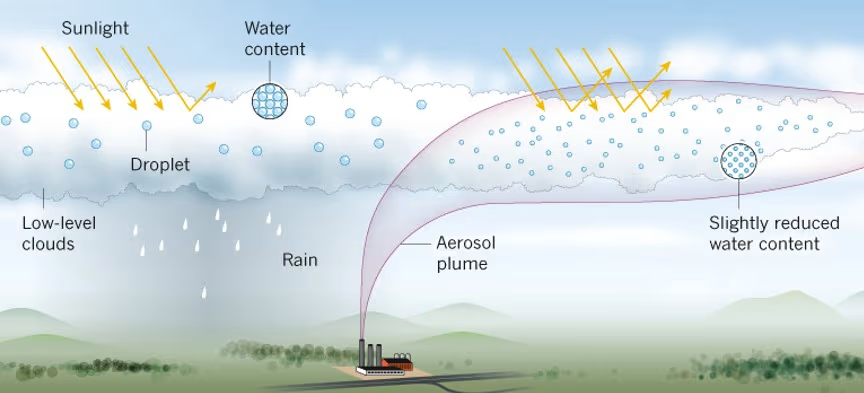
- Cooling Effect: Some aerosols reflect sunlight back into space, lowering atmospheric temperature.
- Warming Effect: Others, especially black carbon, absorb sunlight and heat the atmosphere.
- Cloud Formation: Act as cloud condensation nuclei, altering cloud properties and radiation balance.
- Solar Energy Impact: Reduce solar radiation reaching the ground, affecting solar power generation.
Impact on Human Health
- Cause poor air quality and respiratory problems.
- Fine particles (<2.5 µm) penetrate deep into lungs, leading to diseases like asthma, bronchitis, and cardiovascular issues.
- Linked to transport disruptions (dust storms, volcanic ash).
Conclusion
Aerosols play a dual role in climate—cooling and warming—while posing serious health hazards. Understanding their dynamics is vital for climate policy, clean energy planning, and public health management.