Table of Contents
ToggleThe Strings of Tradition: A Comprehensive Encyclopedia of Indian Puppetry
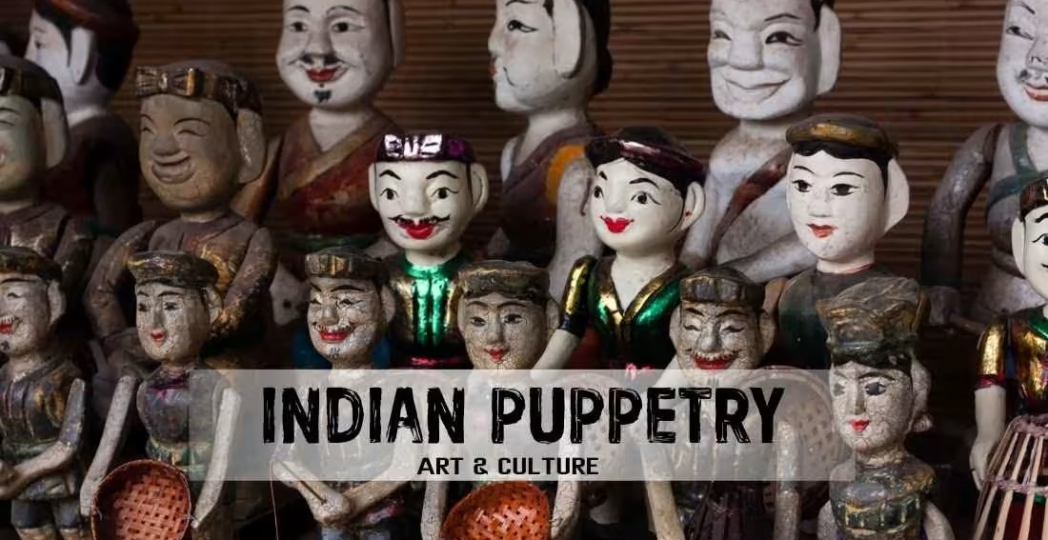
Puppetry has always been a powerful medium of communication in India, blending elements of painting, sculpture, music, dance, and drama. Historically used for both entertainment and moral education, it is one of the oldest forms of performance art in the subcontinent.
1. Historical and Philosophical Foundations
The roots of puppetry in India are ancient, with evidence dating back to the Indus Valley Civilization, where terracotta dolls with movable limbs were discovered.
- Literary References: The earliest textual mention is found in the Tamil classic Silappadikaram (2nd century BCE). The Srimad Bhagavata also uses the puppet metaphor to describe the relationship between God (the puppeteer) and the universe.
- The Sutradhara: In Sanskrit drama, the director is called the Sutradhara (holder of strings), a term directly borrowed from the world of puppetry, suggesting that puppetry preceded formal theatre.
- Purpose: Traditionally, puppetry was used to narrate episodes from the Ramayana, Mahabharata, and local folklore to instill ethical values in the masses.
2. Classification of Indian Puppetry
Indian puppetry is scientifically classified into four major categories based on the mechanism of manipulation.
A. String Puppets (Sutrakuli)
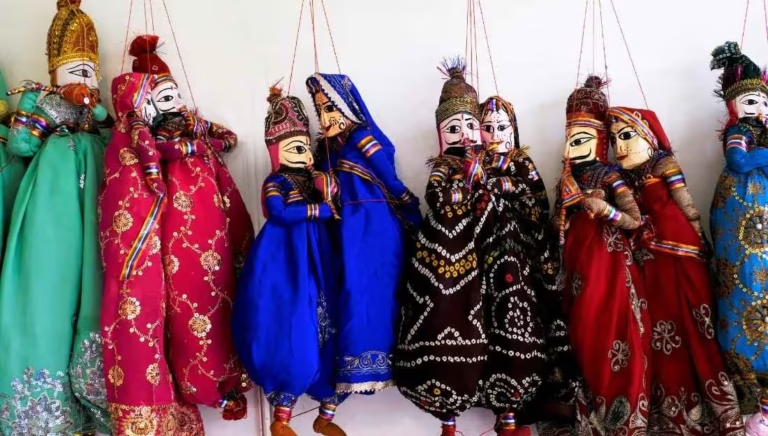
String puppets, or marionettes, are manipulated by strings attached to a control bar held by the puppeteer. They usually have jointed limbs and are made of wood or cloth.
- Kathputli (Rajasthan): The most famous form. Carved from a single piece of wood, these puppets have no legs but wear long, trailing skirts. The performance is accompanied by the Dholak and a characteristic whistling sound.
- Kundhei (Odisha): Made of light wood, these puppets have more joints and are manipulated with a triangular wooden control. They are dressed in the style of Jatra theatre.
- Gombeyatta (Karnataka): These are highly stylized puppets designed like characters from Yakshagana. They are unique for their heavy costumes and elaborate headgear.
- Bommalattam (Tamil Nadu): This form combines features of both string and rod puppets. The strings are attached to a cloth ring worn by the puppeteer on their head, leaving their hands free to manipulate rods attached to the puppet’s hands.
B. Shadow Puppets (Chhaya Kuli)
Shadow puppets are flat figures cut out of leather, rendered translucent, and pressed against a screen with a light source behind them.
- Togalu Gombeyatta (Karnataka): Known for the varying sizes of puppets—larger puppets represent kings and gods, while smaller ones represent commoners.
- Tholu Bommalata (Andhra Pradesh): These are the largest shadow puppets in India. They are intricately perforated and painted with vegetable dyes, creating a stained-glass effect on the screen.
- Ravana Chhaya (Odisha): These are the most primitive shadow puppets. They are made of deerskin, have no joints, and create opaque shadows on the screen.
- Tholpavakoothu (Kerala): Traditionally performed in temples (Koothambalams) during the festival of Goddess Bhadrakali.
[Image showing the stained-glass effect of Tholu Bommalata shadow puppets]
C. Rod Puppets (Putul)
Rod puppets are an extension of glove puppets but are much larger and supported by rods from below.
- Putul Nach (West Bengal): Performed in the Nadia district. The puppets are 3-4 feet high and dressed like characters from local Jatra plays. The puppeteers dance behind a head-high curtain, holding the rods.
- Yampuri (Bihar): A rare form made of wood. Unlike other rod puppets, these are not jointed. The performance traditionally depicts the court of Yama (the god of death) and the punishments for sins.
D. Glove Puppets (Bhuja Kuli)
Glove puppets, also known as sleeve or hand puppets, are worn like a glove. The index finger acts as the head, while the thumb and middle finger act as the hands.
- Pavakoothu (Kerala): Heavily influenced by Kathakali. The puppets feature the same elaborate facial paint, headgear, and costumes as Kathakali dancers. It originated in the 18th century.
3. Technical Elements: Music and Stagecraft
- The Screen and Light: In shadow puppetry, the screen is made of white cloth, and the traditional light source was an oil lamp (now replaced by electric bulbs).
- Music: Every region uses local folk instruments. For example, the Ektara in Bengal, Cymbals in Odisha, and Mridangam in the South.
- Voices: Puppeteers often use a “swazzle” or a bamboo whistle to produce high-pitched, squeaky voices for the puppets, which are then “interpreted” by a narrator.
4. Regional Diversity Table for UPSC
Puppet Form | Region | Type | Key Feature |
Kathputli | Rajasthan | String | No legs, long skirts, wooden heads |
Tholu Bommalata | Andhra Pradesh | Shadow | Large leather puppets, colored dyes |
Putul Nach | West Bengal | Rod | Large size, Jatra theatre influence |
Pavakoothu | Kerala | Glove | Kathakali-style costumes and makeup |
Kundhei | Odisha | String | Triangular control, Jatra style |
Yampuri | Bihar | Rod | Depicts Hell and Yama’s court |
5. Decline and Modern Conservation
Puppetry faced a decline during the colonial era and later due to the rise of cinema and television.
- Modern Revival: Organizations like the Sangeet Natak Akademi and the CCR T (Centre for Cultural Resources and Training) are working to provide patronage to traditional families.
- Modern Puppetry: Contemporary artists like Dadi Pudumjee have modernized the art, moving away from mythology to address social issues like HIV/AIDS awareness and environmental conservation.
UPSC Prelims: PYQs & Practice Questions
Previous Year Questions (PYQs)
Question 1 (2020)
Q: With reference to the cultural history of India, consider the following statements:
1. 'Putul Nach' is a traditional rod-puppet theatre of West Bengal.
2. 'Pavakoothu' is a traditional glove-puppet theatre of Kerala.
Which of the statements given above is/are correct?
Options:
(a) 1 only | (b) 2 only | (c) Both 1 and 2 | (d) Neither 1 nor 2
Answer: (c)
Explanation: Both statements are correct. Putul Nach (meaning “Doll Dance”) uses large rod puppets in West Bengal. Pavakoothu is a glove-puppet tradition of Kerala and is influenced by Kathakali’s costume, music, and storytelling style.
Question 2 (Generic/NCERT based)
Q: Which among the following is the characteristic feature of 'Kathputli' puppetry of Rajasthan?
Options:
(a) Use of leather for translucency
(b) Lack of legs and use of long trailing skirts
(c) Manipulation from below using rods
(d) Use of complex shadow effects
Answer: (b)
Explanation: Kathputli puppets are typically carved from a single piece of wood, usually have no legs, and are distinguished by long, colourful trailing skirts. They are generally manipulated using strings from above.
Prelims Practice Questions
Question 1
Q: Match the following Puppet forms with their respective mechanism:
List:
A. Tholu Bommalata
B. Gombeyatta
C. Yampuri
D. Pavakoothu
Mechanism:
1. String Puppet
2. Shadow Puppet
3. Glove Puppet
4. Rod Puppet
Options:
(a) A-1, B-2, C-4, D-3
(b) A-2, B-1, C-4, D-3
(c) A-2, B-1, C-3, D-4
(d) A-4, B-1, C-2, D-3
Answer: (b)
Explanation: Tholu Bommalata (Andhra Pradesh) is a Shadow Puppet; Gombeyatta (Karnataka) is a String Puppet; Yampuri (Bihar) is a Rod Puppet; and Pavakoothu (Kerala) is a Glove Puppet.
Question 2
Q: Consider the following statements regarding 'Ravana Chhaya' of Odisha:
Statements:
1. It is a form of shadow puppetry made of deerskin.
2. The puppets are jointed and produce colorful shadows.
3. It traditionally depicts the stories of the Ramayana.
Which of the statements given above is/are correct?
Options:
(a) 1 and 2 only
(b) 1 and 3 only
(c) 2 and 3 only
(d) 1, 2 and 3
Answer: (b)
Explanation: Statements 1 and 3 are correct. Statement 2 is incorrect because Ravana Chhaya puppets are typically non-jointed and create opaque (black) shadows, unlike the coloured shadow puppets seen in some other traditions.
UPSC Mains: Previous Year Questions (PYQs) – Indian Puppetry & Performing Traditions
Puppetry: Social Communication & Moral Education
Question: "Puppetry in India is not merely an art of entertainment but a powerful tool for social communication and moral education." Elucidate. (Generic/Frequent Theme)
Shadow Puppetry: Regional Variations & Religious Links
Question: Discuss the regional variations of Shadow Puppetry in India and their link to local religious traditions. (Generic Theme)
Modern Mass Media: Impact & Preservation
Question: Analyze the impact of modern mass media on traditional performing arts like puppetry. Suggest measures for their preservation. (Generic Theme)
Sutradhara & Puppetry: Antiquity of the Art
Question: "The 'Sutradhara' of Sanskrit theatre finds its origins in the traditions of Indian puppetry." Comment on the antiquity of this art form. (Generic Theme)
Sangeet Natak Akademi: Revival of Near-Extinct Forms
Question: Evaluate the role of the Sangeet Natak Akademi in the revival of near-extinct puppet forms like Yampuri and Ravana Chhaya. (Generic Theme)
Mains Practice Questions
Puppetry as “Total Theatre”
Question: "Indian puppetry is a 'total theatre' that integrates the disciplines of painting, sculpture, and music." Discuss with reference to Bommalattam and Pavakoothu. (250 Words)
String vs Rod Puppetry
Question: Explain the technical differences between String and Rod puppetry. How does the manipulation mechanism affect the storytelling style? (150 Words)
Globalization & Intangible Heritage
Question: "Traditional puppetry acts as a repository of local folklore and dialects." Discuss how globalization poses a threat to this intangible heritage. (250 Words)
Frequently Asked Questions (FAQs)
What is the 'Sutradhara' in the context of puppetry?
- Literally meaning “the holder of strings,” the Sutradhara is the puppeteer or narrator who directs the performance. This term was later adopted by classical Sanskrit theatre to denote the director of a play.
Which form of puppetry is most influenced by Kathakali?
- Pavakoothu from Kerala. The puppets wear the same elaborate headgear, facial makeup, and costumes as Kathakali dancers.
What makes 'Tholu Bommalata' of Andhra Pradesh unique?
They are the largest shadow puppets in India. They are rendered translucent and painted with vibrant vegetable dyes, creating a “stained-glass” effect when projected onto a screen with light.
Is there any form of puppetry that depicts 'Hell'?
- Yes, Yampuri from Bihar. It is a rod puppet tradition that traditionally depicts the court of Yama (the God of Death) and the punishments meted out to people for their sins.
Why do some puppets have no legs?
- In forms like Kathputli (Rajasthan), the lack of legs allows the puppeteer to manipulate the puppet’s torso and hands with greater flexibility, while the long, trailing skirts create a sense of movement and grace during dance sequences.