
GREAT NICOBAR AND THE ISSUE OF NATURE’S LEGAL RIGHTS
TOPIC: (GS3) ENVIRONMENT: THE HINDU
The Government of India’s massive development plan for Great Nicobar Island, including a port, airport, and power plant, has reignited concerns over forest diversion, tribal rights, and the broader debate on granting legal rights to nature.
Ecological Significance
- The Andaman and Nicobar Islands are among the world’s richest biodiversity hotspots, functioning as vital carbon sinks and climate regulators.
- Despite their ecological sensitivity, mainland-driven development projects often overlook the unique island ecosystem and the tribal communities dependent on it.
- The proposed mega infrastructure project in Great Nicobar threatens over 13,000 hectares of pristine forest, raising major environmental and ethical concerns.
The Niyamgiri Hills Case (2013)
- In Orissa Mining Corporation Ltd. vs Ministry of Environment & Forests, the Supreme Court upheld the rights of the Dongria Kondh tribe against bauxite mining in Niyamgiri Hills.
- The Court empowered Gram Sabhas to decide on forest land diversion, recognizing their authority under the Forest Rights Act (2006).
- It set a strong precedent that local tribal bodies must be consulted before diverting forest land for projects.
- In the Nicobar case, the Tribal Council has alleged that its rights were not duly recognized or settled, violating this legal principle.
Concept of ‘Rights of Nature’
- The traditional legal system protects nature only in relation to human interests.
- The idea of ‘Earth Jurisprudence’ or ‘Rights of Nature’ shifts this view — treating rivers, forests, and ecosystems as legal persons with independent rights.
- This idea originated from Christopher Stone’s 1972 essay “Should Trees Have Standing?”, which argued that nature itself should have legal standing and a guardian to represent it in court.
- Countries like Ecuador, Bolivia, New Zealand, and Colombia have implemented this approach by legally recognizing natural entities.
Indian Context
- In 2017, the Uttarakhand High Court declared the Ganga and Yamuna rivers as legal persons, granting them rights and duties through appointed guardians.
- Although the Supreme Court stayed the order, it highlighted a new legal direction — assigning guardianship for environmental protection.
Colombia’s Atrato River Case (2016)
- Colombia recognized the Atrato River as a legal entity and acknowledged bio-cultural rights of local communities.
- A joint guardianship body was created, including indigenous representatives, to protect the river and its ecosystem.
- This model could guide India in balancing tribal autonomy with environmental preservation.
Conclusion
The Great Nicobar project revives a vital debate — how far India should go in giving legal recognition to nature. Ensuring tribal consent, ecological balance, and legal safeguards can make development both sustainable and just.
GREENHOUSE GAS EMISSION INTENSITY (GEI) TARGET RULES, 2025
TOPIC: (GS3) ENVIRONMENT: THE HINDU
The Central Government has issued India’s first legally binding Greenhouse Gas Emission Intensity (GEI) Target Rules, 2025 for four major polluting sectors.
About the GEI Target Rules, 2025
- The GEI Rules set sector-specific emission intensity reduction goals — i.e., the amount of greenhouse gases emitted per unit of product.
- They apply to 282 industries across the four targeted sectors.
- These targets will be monitored for 2025–26 and 2026–27, linking emission reduction performance with carbon credit generation.
Objectives
- To align with India’s Paris Agreement pledge to cut the emission intensity of its GDP by 45% by 2030 from 2005 levels.
- To create a market-based system encouraging industries to invest in cleaner and more efficient technologies.
- To make Indian industries more climate-competitive and globally aligned with sustainable trade norms.
Key Features
- Emission Targets: Specific limits on greenhouse gas (GHG) emissions per production unit.
- Carbon Credits: Companies achieving or surpassing targets will earn tradable carbon credits within the domestic market.
- Penalties: Non-compliance will attract environmental compensation imposed by the Central Pollution Control Board (CPCB).
- Integration: Part of the Carbon Credit Trading Scheme (CCTS), 2023, which enables trading of verified emission reduction credits.
Benefits for India
- Encourages energy efficiency and industrial decarbonisation.
- Promotes innovation and technology adoption in low-carbon sectors.
- Generates economic value through carbon trading and green investments.
- Strengthens environmental governance through a transparent, rules-based system.
- Contributes to achieving India’s net-zero emissions target by 2070.
Challenges
- Need for reliable Measurement, Reporting, and Verification (MRV) systems to ensure credibility.
- Price instability in carbon markets may affect trading efficiency.
- Small industries may face financial and technological constraints during the transition.
- Requires strong institutional capacity and stakeholder awareness to ensure compliance.
Global Comparison
Aspect | India (GEI Rules & CCTS) | EU ETS | China’s ETS |
Launch | 2025 | 2005 | 2021 |
Sectors | 4 Industrial Sectors | Power, Industry, Aviation | Power (expanding) |
Approach | Emission Intensity Targets | Cap-and-Trade | Cap-and-Trade |
Regulator | BEE, CPCB | EU Commission | Ministry of Ecology & Environment |
Market | Domestic | Global Integration | Domestic (developing) |
Way Forward
- Expand gradually to include more sectors like steel, power, and transport.
- Enhance MRV systems using digital tracking, IoT sensors, and blockchain for transparency.
- Support industries through financial incentives, capacity building, and technology access.
- Promote awareness among industries about carbon markets and sustainable operations.
GREENHOUSE GASES (GHGS)
Greenhouse gases are gases in the Earth’s atmosphere that trap heat, preventing it from escaping into space, and thereby warming the planet. This natural process is called the greenhouse effect and is essential for maintaining life-supporting temperatures.
Common Greenhouse Gases
- Carbon dioxide (CO₂): Released from burning fossil fuels, deforestation, and industrial processes.
- Methane (CH₄): Emitted from agriculture (livestock), landfills, and natural gas production.
- Nitrous oxide (N₂O): From fertilizers, industrial activities, and burning biomass.
- Fluorinated gases (CFCs, HFCs, PFCs, SF₆): Synthetic gases used in refrigeration, air-conditioning, and industry.
Conclusion:
The GEI Target Rules, 2025 represent a crucial step in India’s climate action roadmap. By combining legally binding targets with a domestic carbon market, they transform emission reduction from a regulatory burden into an economic opportunity.
DO CASH TRANSFERS BUILD WOMEN’S AGENCY?
TOPIC: (GS3) ECONOMY: THE HINDU
The Bihar government launched the Mukhyamantri Mahila Rojgar Yojana, offering ₹10,000 to 75 lakh women as seed money for self-employment. This has revived the debate on whether cash transfers can genuinely empower women or merely serve as short-term welfare.
Gendered Welfare and Cash Transfers
- In recent years, welfare policy in India has become increasingly women-oriented.
- Several States have introduced cash transfer schemes for women, including:
- Karnataka: Gruha Lakshmi
- West Bengal: Lakshmir Bhandar
- Madhya Pradesh: Ladli Behna
- Telangana: Mahalakshmi Yojana
- These initiatives rely on India’s Direct Benefit Transfer (DBT) framework, supported by the JAM trinity — Jan Dhan, Aadhaar, and Mobile phones, enabling targeted and transparent transfers.
Progress in Women’s Financial Inclusion
- As of August 2025, 56 crore Jan Dhan accounts have been opened; 55.7% belong to women.
- 89% of Indian women now own a bank account — a level comparable with developed countries.
- According to the World Bank Global Findex (2025), over half of Indian women opened their first account to receive government benefits or wages, marking an important step toward financial identity and inclusion.
Can Cash Transfers Build Women’s Agency?
- Studies suggest that income in a woman’s name enhances her decision-making role within families and leads to better outcomes for children and elders.
- Cash transfers can therefore provide initial recognition of women as economic agents, but true empowerment needs more than account ownership.
- Around 20% of women’s accounts remain inactive due to low balances, limited financial knowledge, or difficulty accessing banks.
Barriers to Financial Empowerment
- Low Usage of Accounts: Most women use accounts only for withdrawals, not for savings or credit.
- Digital Divide: Women are 19% less likely to own mobile phones, limiting access to digital banking.
- Patriarchal Norms: Many still depend on male relatives for transactions.
- Limited Digital Literacy: Fear of fraud, shared devices, and lack of privacy reduce participation in digital payments.
- Underrepresentation: Only 10% of banking correspondents are women, limiting outreach in rural areas.
Way Forward:
- Secure Property Rights: Promote joint land titles and ownership of assets to strengthen women’s control over resources.
- Digital Access: Provide subsidized smartphones and low-cost data to increase digital independence.
- Tailored Financial Products: Design credit and saving options suitable for women’s informal or seasonal incomes.
- Community Support Networks: Expand initiatives like Digital Banking Sakhis and safe UPI/WhatsApp groups for peer learning.
- Capacity Building: Focus on financial and digital literacy to boost confidence and autonomy.
Conclusion
Cash transfer schemes can initiate empowerment, but real change requires ensuring women not only receive money but also control, invest, and grow it. Combining financial access with asset ownership, digital inclusion, and community support can help transform welfare into sustainable economic agency for women.
NATIONAL RED LIST ROADMAP AND VISION 2025–2030
TOPIC: (GS3) ENVIRONMENT: THE HINDU
India launched the National Red List Roadmap and Vision 2025–2030 during the IUCN World Conservation Congress 2025, marking a significant step toward creating its first comprehensive national database of threatened plant and animal species.
About the National Red List Roadmap
- The National Red List Roadmap is a long-term plan to assess the conservation status of India’s flora and fauna following IUCN Red List standards.
- It envisions publishing India’s National Red Data Books for both plants and animals by 2030.
- The project is jointly implemented by the Zoological Survey of India (ZSI), Botanical Survey of India (BSI), IUCN India, and the Centre for Species Survival.
Key Features
- Comprehensive Assessment: Nearly 11,000 species of plants and animals, including marine and terrestrial biodiversity, will be evaluated.
- Digital Integration: A centralized online platform will track data, monitor species status, and make information publicly accessible.
- Scientific Approach: The roadmap aligns with IUCN protocols and supports India’s commitments under the Convention on Biological Diversity and the Kunming-Montreal Global Biodiversity Framework (GBF).
- Policy Support: The findings will guide national conservation strategies, habitat protection plans, and resource prioritization.
Significance for India
- India is one of 17 megadiverse nations, housing 8% of global plant and 7.5% of global animal species despite occupying only 2.4% of global land area.
- It includes four biodiversity hotspots — the Himalayas, Western Ghats, Indo-Burma, and Sundaland.
- Around 28% of India’s plants and 30% of its animal species are endemic (found only in India).
- The roadmap will help fill gaps in data on species distribution, threats, and conservation status — vital for policy-making, research, and sustainable development planning.
Challenges
- Data Deficiency: Many species, particularly in remote ecosystems, remain undocumented or insufficiently studied.
- Coordination Issues: Successful implementation requires cooperation among central and state agencies, researchers, and local communities.
- Financial and Technical Constraints: Regular fieldwork, training, and maintaining digital systems need sustained funding.
- Development Pressure: Expanding infrastructure and mining activities often overlap with ecologically fragile regions.
Suggestions and Way Forward
- Strengthen institutional capacity of ZSI and BSI for scientific documentation.
- Involve local communities and citizen scientists in biodiversity monitoring.
- Integrate Red List data into national environmental policies and land-use planning.
- Ensure international collaboration with IUCN and global conservation organizations for expertise and data sharing.
Conclusion:
The National Red List Roadmap and Vision 2025–2030 is a landmark initiative that will provide India with its first detailed, science-based record of threatened species. By linking research, technology, and policy, it lays the foundation for safeguarding India’s unique biodiversity and ensuring ecological sustainability.
MICROFINANCE LOAN DEFAULTS SURGE IN 2024–25
TOPIC: (GS3) ECONOMY: THE HINDU
According to the Bharat Microfinance Report 2025 released by Sa-Dhan, India has witnessed a sharp rise in microfinance loan defaults during FY 2024–25. The findings highlight growing repayment challenges, especially among rural and low-income borrowers, posing a concern for financial inclusion and credit stability.
About the Report
- Sa-Dhan, the apex self-regulatory organization for microfinance institutions (MFIs), publishes an annual report assessing credit performance and financial inclusion trends in India.
- The 2025 report reveals mounting stress in the microfinance sector, with increased delinquencies and non-performing loans, especially among women borrowers and rural households.
Key Findings
- Loan Delinquencies Rising:
- Microfinance loans overdue by more than 30 days (PAR 30+) rose sharply to 6.2% in FY25, from 2.1% in FY24.
- Loans overdue by over 90 days (NPAs) increased to 4.8%, compared to 1.6% the previous year.
- Regional Patterns:
- Bihar had the largest portfolio of outstanding microfinance loans at ₹57,712 crore, with 7.2% delayed beyond 30 days and 4.6% beyond 90 days.
- States like Uttar Pradesh, West Bengal, and Assam also showed rising repayment stress.
- Rural Vulnerability:
- Of the ₹2.3 lakh crore loaned to rural borrowers, 6.4% were overdue beyond 30 days — higher than urban (6%) and semi-urban (6.1%) borrowers.
- The trend reflects deepening rural financial distress, possibly due to stagnant incomes, inflation, and climate-related shocks.
Relevance and Implications
- Inclusive Growth: Reflects vulnerabilities in India’s financial inclusion model where low-income borrowers face repayment challenges.
- Women Empowerment: Over 85% of MFI borrowers are women, making rising defaults a setback for self-help groups (SHGs) and rural entrepreneurship.
- Credit Risk Management: Underscores weak monitoring and risk assessment mechanisms within MFIs.
- Policy Concern: Raises questions about the effectiveness of schemes like MUDRA and National Rural Livelihood Mission (NRLM) in promoting sustainable credit access.
Way Forward
- Strengthen credit screening and borrower monitoring systems in MFIs.
- Introduce loan restructuring and flexible repayment for distressed borrowers.
- Enhance financial literacy and awareness on responsible borrowing.
- Develop digital credit tracking systems to prevent multiple borrowings.
Microfinance
Microfinance refers to the provision of small financial services, such as loans, savings, insurance, and remittance facilities, to low-income individuals or groups who lack access to traditional banking systems.
It aims to empower poor and marginalized communities, especially women and small entrepreneurs, by helping them start or expand small businesses, improve livelihoods, and achieve financial independence.
In simple terms: Microfinance means “small loans for small people” , giving financial help to the poor so they can build income and escape poverty.
Conclusion:
The surge in microfinance defaults during FY 2024–25 signals stress among India’s poorest borrowers. Addressing structural gaps through better regulation, financial education, and borrower protection is essential to sustain the progress of financial inclusion.
PRADHAN MANTRI DHAN-DHAANYA KRISHI YOJANA (PMDDKY)
TOPIC: (GS3) AGRICULTURE: THE HINDU
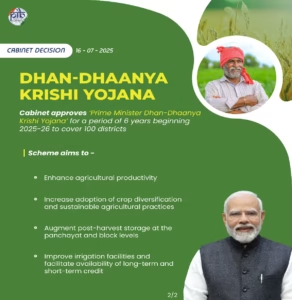
The Prime Minister of India has launched the Pradhan Mantri Dhan-Dhaanya Krishi Yojana (PMDDKY) — a new national-level mission to boost agricultural productivity, improve rural incomes, and modernize farming practices across 100 underperforming districts.
About the Scheme
- Launched by: Ministry of Agriculture and Farmers’ Welfare
- Nature of Scheme: A comprehensive agricultural transformation mission focused on technology, irrigation, and market reforms.
- Main Goal: To make Indian farming more productive, profitable, and climate-resilient while ensuring inclusive growth for small and marginal farmers.
Objectives
- Raise crop productivity by 20–30% and reduce post-harvest losses below 5%.
- Double farmers’ income by 2030 through better market access and diversification.
- Promote sustainable and climate-smart agriculture using modern technology.
- Empower women, youth, and Farmer Producer Organizations (FPOs) in rural areas.
Key Features
- Budget: ₹1.44 lakh crore over six years (2025–31).
- District Focus: Targets 100 low-performing districts identified by NITI Aayog.
- Integrated Approach: Merges 36 agriculture-related schemes under one digital platform for seamless coordination.
- Technology Use:
- Smart farming with IoT, drones, and AI tools for crop monitoring.
- Digital dashboard tracking 117 indicators like irrigation, yield, and storage.
- Infrastructure Support: New irrigation systems, cold chains, warehouses, and processing units.
- Women Empowerment: Formation of 10,000 Women Producer Groups, benefiting around 5 lakh women farmers.
- Training and Exposure: Farmers to receive training through Krishi Vigyan Kendras (KVKs) and global exposure visits to Israel, Japan, and the Netherlands.
Expected Benefits
- 20–30% increase in productivity through modern inputs and irrigation.
- 20–40% rise in farmer incomes via better market access and value addition.
- 10–15 rural jobs per village through allied sectors like dairy, poultry, and fisheries.
- Easier credit access with Kisan Credit Cards and NABARD loans from ₹50,000 to ₹10 lakh.
Conclusion:
The PMDDKY marks a major step toward making Indian agriculture smart, inclusive, and sustainable, combining technology with traditional farming to uplift rural livelihoods and ensure long-term food security.
NOBEL PEACE PRIZE 2025
TOPIC: (GS2) INTERNATIONAL RELATIONS: THE HINDU
The Prime Minister of India has launched the Pradhan Mantri Dhan-Dhaanya Krishi Yojana (PMDDKY) — a new national-level mission to boost agricultural productivity, improve rural incomes, and modernize farming practices across 100 underperforming districts.

About the Scheme
- Launched by: Ministry of Agriculture and Farmers’ Welfare
- Nature of Scheme: A comprehensive agricultural transformation mission focused on technology, irrigation, and market reforms.
- Main Goal: To make Indian farming more productive, profitable, and climate-resilient while ensuring inclusive growth for small and marginal farmers.
Objectives
- Raise crop productivity by 20–30% and reduce post-harvest losses below 5%.
- Double farmers’ income by 2030 through better market access and diversification.
- Promote sustainable and climate-smart agriculture using modern technology.
- Empower women, youth, and Farmer Producer Organizations (FPOs) in rural areas.
Key Features
- Budget: ₹1.44 lakh crore over six years (2025–31).
- District Focus: Targets 100 low-performing districts identified by NITI Aayog.
- Integrated Approach: Merges 36 agriculture-related schemes under one digital platform for seamless coordination.
- Technology Use:
- Smart farming with IoT, drones, and AI tools for crop monitoring.
- Digital dashboard tracking 117 indicators like irrigation, yield, and storage.
- Infrastructure Support: New irrigation systems, cold chains, warehouses, and processing units.
- Women Empowerment: Formation of 10,000 Women Producer Groups, benefiting around 5 lakh women farmers.
- Training and Exposure: Farmers to receive training through Krishi Vigyan Kendras (KVKs) and global exposure visits to Israel, Japan, and the Netherlands.
Expected Benefits
- 20–30% increase in productivity through modern inputs and irrigation.
- 20–40% rise in farmer incomes via better market access and value addition.
- 10–15 rural jobs per village through allied sectors like dairy, poultry, and fisheries.
- Easier credit access with Kisan Credit Cards and NABARD loans from ₹50,000 to ₹10 lakh.
Conclusion:
The PMDDKY marks a major step toward making Indian agriculture smart, inclusive, and sustainable, combining technology with traditional farming to uplift rural livelihoods and ensure long-term food security.
INDIA RECOGNISES THREE KEY PORTS AS GREEN HYDROGEN HUBS
TOPIC: (GS3) ENVIRONMENT: THE HINDU
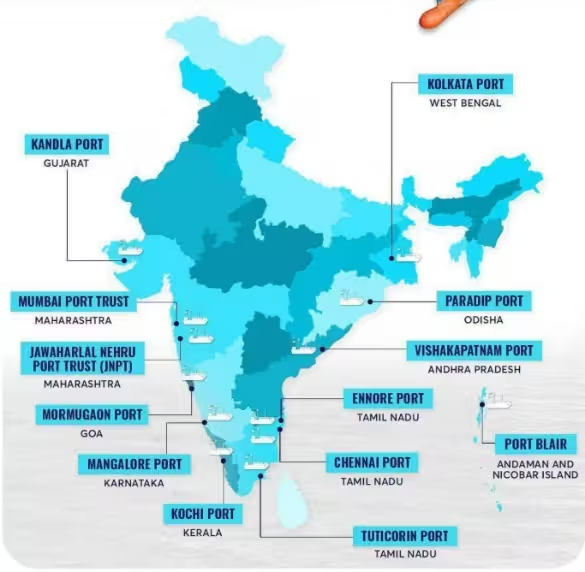
The Ministry of New and Renewable Energy (MNRE) has designated Deendayal, V.O. Chidambaranar, and Paradip ports as Green Hydrogen Hubs under the National Green Hydrogen Mission (NGHM).
About Green Hydrogen Hubs
- Definition: Integrated clusters combining production, storage, transport, and utilisation of green hydrogen and its derivatives like green ammonia and methanol.
- Objective:
- Build self-sustaining regional hydrogen ecosystems.
- Decarbonise hard-to-abate sectors such as steel, cement, and shipping.
- Position India as a global leader in green hydrogen production and exports.
- Under: Part of National Green Hydrogen Mission (NGHM).
Key Features
- Cluster-Based Model: Region-specific hydrogen valleys integrating renewable energy, industries, and logistics for efficiency.
- Infrastructure Integration: Connects production units, storage facilities, and transport networks (including pipelines and ports).
- Innovation & R&D: Encourages pilot projects, technological development, and public–private partnerships.
- Export Focus: Coastal hubs serve as gateways for green hydrogen and ammonia exports.
- Policy & Financial Support: Supported by Hydrogen Valley Innovation Clusters (HVIC) scheme with fiscal incentives, grants, and R&D funding.
Ports Recognised as Green Hydrogen Hubs
- Deendayal Port (Gujarat): Western hub focused on export-linked hydrogen value chain.
- V.O. Chidambaranar Port (Tamil Nadu): Southern hub integrating renewable energy and industrial clusters.
- Paradip Port (Odisha): Eastern hub supporting industrial hydrogen use and decarbonising coastal shipping.
Conclusion:
The designation of these ports as Green Hydrogen Hubs marks a significant step in India’s energy transition, promoting sustainable industrial growth, clean exports, and technological leadership in the green hydrogen sector.