Daily Current Affairs 29-October-2025

Share this Post

DELHI’S CLOUD-SEEDING TRIALS

TOPIC: (GS3) ENVIRONMENT: THE HINDU

Delhi, facing severe air pollution, carried out cloud-seeding experiments in partnership with IIT-Kanpur to create artificial rain. However, the trials resulted in only trace rainfall — 0.1 mm in Noida and 0.2 mm in Greater Noida — due to low humidity and weak cloud conditions.

What is Cloud Seeding?

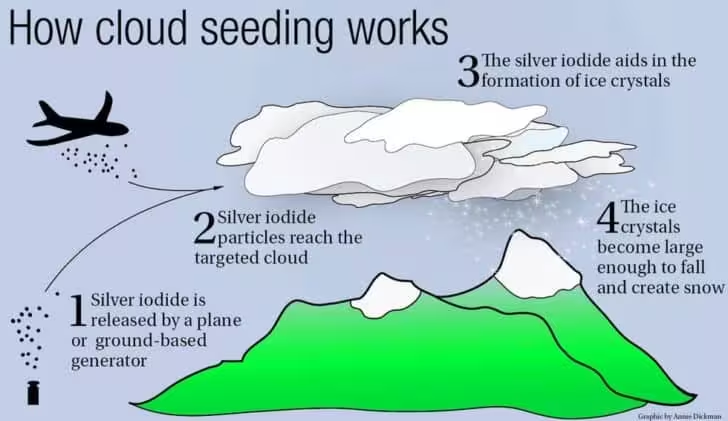
  • Cloud seeding is a weather modification technique used to increase rainfall by spreading tiny particles into suitable clouds.
  • These particles act as condensation or ice nuclei, helping water droplets combine and fall as rain.
  • The method was first developed in the 1940s and is now used in over 50 countries, including the U.S., China, and the UAE.
DELHI’S CLOUD-SEEDING TRIALS

How the Process Works

  • Substances like silver iodide, potassium iodide, or sodium chloride are released into clouds.
  • These are dispersed using aircraft, rockets, drones, or ground generators.
  • The process only works when clouds already contain enough moisture and depth for condensation.
  • Ideal conditions include over 50% humidity, cool temperatures, and existing cloud formation.

Why Delhi’s Trials Produced Limited Rain

  • The India Meteorological Department (IMD) reported that moisture levels were only 10–15%, too low for effective seeding.
  • Though clouds were present, they lacked sufficient liquid water content.
  • Cloud bases were around 10,000 feet, whereas effective seeding usually needs clouds below 5,000 feet.
  • The trials, however, provided valuable technical experience for future attempts.

Environmental and Technical Concerns

  • Silver iodide, used as a seeding agent, is slightly toxic in large amounts and can affect aquatic life.
  • There is also uncertainty about how much rainfall is actually caused by seeding versus natural weather changes.
  • The World Meteorological Organization (WMO) warns that measuring seeding’s effectiveness remains a scientific challenge.

Impact on Air Pollution

  • Despite weak rainfall, air quality improved slightly after the experiment.
  • PM2.5 levels dropped from around 230 to 205, and PM10 levels from 210 to 170 in several Delhi areas.
  • This shows that even light precipitation can settle airborne particles and temporarily reduce smog.

Way Forward

  • Cloud seeding can be a supportive measure, not a long-term solution.
  • Experts stress the need for regional cooperation and emission control across states to address the root causes of pollution.
  • Sustainable improvement requires curbing emissions from transport, construction, and power plants through an airshed-based strategy.

Conclusion:
Delhi’s cloud-seeding trials offered scientific insights but minimal rain. Artificial rain may provide short-term relief from pollution, yet lasting air quality improvement depends on systemic emission reduction and coordinated policy action.

This article has been updated and published in detail on our new platform. Please visit the link below for the latest version:

👉 Read the full article on ekamiasacademy.in

INDIA’S DIASPORA DIPLOMACY

TOPIC: (GS2) INTERNATIONAL RELATIONS: THE HINDU

In recent weeks, several incidents involving the Indian diaspora — like Ganapati idol immersion in public areas and Deepavali fireworks in residential zones of Western countries — have sparked debate.

India’s Global Diaspora and Its Role

  • India’s diaspora of nearly 35 million people is spread across more than 200 countries.
  • It includes Non-Resident Indians (NRIs) and Overseas Citizens of India (OCIs) who contribute through remittances worth over USD 100 billion annually.
  • The community supports India’s global influence through technology, entrepreneurship, and cultural diplomacy.
  • Indian-origin professionals and entrepreneurs have become symbols of India’s “soft power”, improving the country’s image abroad.

Evolution of Diaspora Policy

  • In the early years after Independence, India followed Jawaharlal Nehru’s approach, keeping a strict boundary between domestic and diaspora politics.
  • Nehru encouraged people of Indian origin to be loyal to their adopted countries and avoid involvement in Indian political matters.
  • This reflected India’s focus on territorial nationalism — prioritising citizenship and sovereignty over ethnic or cultural identity.

Shift Toward Cultural Nationalism

  • Since the 1990s, with globalization and increased migration, Indian identity abroad has become more assertive.
  • After 2014, large-scale diaspora events featuring Indian leaders abroad boosted national pride but also created greater visibility and scrutiny.
  • A new sense of cultural nationalism is visible through festivals, rallies, and symbolic expressions like fireworks or traditional rituals in public spaces.

Western Sensitivity to Foreign Influence

  • Western countries — especially the U.S., Canada, and Australia — have grown cautious about foreign political influence, particularly after Chinese and Russian interference cases.
  • India’s active engagement with its diaspora has been noticed but not yet seen as hostile.
  • However, analysts warn that state-linked mobilisation of diaspora groups could lead to diplomatic discomfort or stricter regulations.

India’s Citizenship and Diaspora Link

  • India does not allow dual citizenship, but offers OCI status (since 2003) for lifetime visa access, education, and business rights.
  • In 2015, PIO and OCI cards were merged, simplifying overseas identity management — “dual in spirit, not in law.”

Balancing Cultural Pride and Local Laws

  • Diaspora members represent India abroad and must balance cultural pride with civic responsibility.
  • In increasingly nationalistic societies, loyalty to host nations is crucial to maintain credibility.
  • Experts suggest India should promote a measured diaspora diplomacy — projecting culture positively without overstepping local norms.

Conclusion

India’s diaspora is a pillar of its global image and economic strength. Yet, as cultural nationalism grows, restraint and respect for host-country laws are essential to sustain goodwill. Effective diaspora diplomacy means combining pride with prudence — strengthening India’s soft power while avoiding political or cultural friction abroad.

This article has been updated and published in detail on our new platform. Please visit the link below for the latest version:

👉 Read the full article on ekamiasacademy.in

CYCLONE MONTHA AND INDIA’S COASTAL DISASTER PREPAREDNESS

TOPIC: (GS3) DISASTER MANAGEMENT: THE HINDU

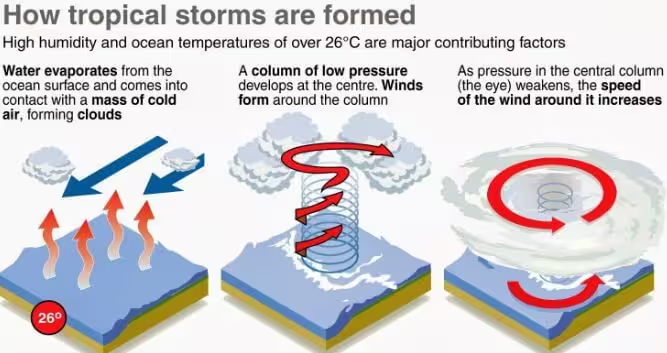
Cyclone Montha, which made landfall near Kakinada, Andhra Pradesh, once again highlighted the vulnerability of India’s eastern coastline to tropical storms.
Cyclone Montha

Historical Context of Cyclones on India’s East Coast

  • The Bay of Bengal is known for generating severe cyclones, especially during October and November.
  • Between the 18th and 20th centuries, 12 major cyclones struck India, nine of which occurred during these two months.
  • Notable examples include:
    • 1977 Nizampatnam Cyclone (Andhra Pradesh) – caused nearly 10,000 deaths.
    • 1999 Odisha Super Cyclone – another 10,000 fatalities with massive devastation in Paradip and nearby districts.
  • The recurrence of such storms, including Cyclone Montha (2025), revives memories of these past disasters.

Impact of Cyclone Montha

  • Rainfall and Evacuation:
    • Districts such as Visakhapatnam, Srikakulam, and Anakapalli in Andhra Pradesh and Ganjam and Gajapati in Odisha witnessed heavy rainfall.
    • Over 10,000 people were relocated from vulnerable coastal areas.
    • NDRF and SDRF teams were deployed for rescue and relief operations.
  • Loss and Damage:
    • Extensive harm to public infrastructure, crops, and livestock was reported.
    • Power lines, poultry farms, and cattle shelters suffered severe destruction, disrupting livelihoods of rural communities.

Improvement in Preparedness

  • Over the last two decades, better forecasting and evacuation systems have significantly reduced loss of life during cyclones.
  • However, economic losses and damage to livelihoods remain substantial, demanding sustained focus on rehabilitation and compensation.

Indian Initiatives for Disaster Management and Cyclone Preparedness

  • National Disaster Management Authority (NDMA) – coordinates policy and planning for disaster risk reduction.
  • India Meteorological Department (IMD) – issues early warnings and cyclone forecasts using advanced satellite data.
  • National Disaster Response Force (NDRF) – specialized rescue and relief teams deployed for cyclones, floods, and other calamities.
  • National Cyclone Risk Mitigation Project (NCRMP) – strengthens coastal infrastructure such as embankments, shelters, and communication systems.
  • Integrated Coastal Zone Management (ICZM) – promotes sustainable coastal development while enhancing disaster resilience.
  • Coastal Community Training Programs – conducted to enhance local awareness and evacuation readiness.

Way Forward

  • Strengthen post-cyclone rehabilitation to restore livelihoods of small farmers, fishermen, and rural families.
  • Develop resilient infrastructure to minimize losses to power, transport, and agriculture sectors.
  • Ensure political neutrality and efficiency in relief distribution to maintain public trust.
  • Incorporate climate adaptation strategies to handle the growing intensity of tropical storms.

WHY INDIA’S EAST COAST FACES MORE CYCLONES THAN THE WEST COAST

  • Warmer Bay of Bengal: The Bay of Bengal has higher sea surface temperatures than the Arabian Sea — ideal for cyclone formation.
  • More Freshwater Inflow: Rivers like the Ganga and Brahmaputra add fresh water, making the surface layer lighter and warmer — helping cyclone development.
  • Weather Disturbances from Pacific: Many cyclonic systems from the South China Sea and Pacific Ocean move westward into the Bay of Bengal.
  • Geographical Shape: The funnel-like shape of the Bay of Bengal helps in concentrating winds and moisture, increasing cyclone intensity near India’s east coast.

Conclusion

While India’s preparedness and response mechanisms have evolved remarkably, Cyclone Montha serves as a reminder that sustained vigilance, rapid rehabilitation, and inclusive disaster management remain crucial for safeguarding lives and livelihoods along India’s cyclone-prone eastern coast.

This article has been updated and published in detail on our new platform. Please visit the link below for the latest version:

👉 Read the full article on ekamiasacademy.in

INDIA’S EXPANDING METRO NETWORK

TOPIC: (GS3) ECONOMY: THE HINDU

India’s metro network and ridership have quadrupled in the last decade, making it the third-largest metro system in the world after China and the U.S., according to the Press Information Bureau (PIB).

Overview of India’s Metro Expansion

  • In 2014, India had 248 km of operational metro lines in 5 cities.
  • By 2025, this has expanded to over 1,000 km across 23 cities.
  • The rapid growth highlights India’s focus on urban mobility, sustainability, and decongestion.

Contributions of Metro Systems

  • Reduced Traffic Congestion: Major relief to urban road networks.
  • Eco-friendly Transport: Cuts carbon emissions and promotes green commuting.
  • Economic Boost: Enhances productivity and urban real estate value.
  • Improved Urban Mobility: Connects suburban and business hubs efficiently.
  • Job Creation: Generates employment in construction, operations, and maintenance sectors.

Challenges in Metro Development

  • High Construction Costs: Average cost ₹250–300 crore per km in major cities.
  • Land Acquisition Issues: Urban land scarcity delays projects.
  • Operational Losses: Some metros struggle to maintain financial sustainability.
  • Integration Gaps: Lack of seamless last-mile connectivity.
  • Ridership Variability: Smaller metros face low daily commuter numbers.

Way Forward

  • Promote Multi-Modal Integration: Link metros with buses, e-rickshaws, and suburban trains.
  • Adopt Smart Fare Systems: Unified mobility cards for all cities.
  • Enhance Financial Models: Use PPP (Public-Private Partnership) for cost efficiency.
  • Focus on Sustainability: Encourage solar-powered stations and energy-efficient rolling stock.
  • Expand to Tier-2 Cities: To improve accessibility and balanced regional growth.

Major Metro Networks (as of 2025)

  • Delhi Metro – 394 km (largest network; carries ~65 lakh passengers daily).
  • Bengaluru Metro – 96 km; ~10 lakh passengers daily.
  • Mumbai Metro – 80.2 km; ~8.5 lakh passengers daily.
  • Kolkata Metro – 74 km; over 6 lakh passengers daily; launched India’s first underwater metro tunnel in 2024.
  • Other Growing Networks – Chennai, Hyderabad, Pune, Lucknow, Nagpur, Jaipur, and Ahmedabad showing steady expansion.

Conclusion

India’s metro revolution marks a major leap in sustainable urban transport. With improved planning, integration, and innovation, metros can continue to drive inclusive and eco-friendly urban mobility across the country.

This article has been updated and published in detail on our new platform. Please visit the link below for the latest version:

👉 Read the full article on ekamiasacademy.in

8TH CENTRAL PAY COMMISSION

TOPIC: (GS2) INDIAN POLITY: THE HINDU

What is a Pay Commission?

  • A Pay Commission is a government-appointed body that reviews and recommends changes in the salary structure, allowances, and retirement benefits of Central government employees.
  • It ensures fair compensation based on economic conditions, inflation, and fiscal capacity.
  • Recommendations are usually implemented every 10 years.

About the 8th CPC

  • Announced: January 2025
  • Approved: October 2025 (Terms of Reference cleared by Union Cabinet)
  • Chairperson: Justice Ranjana Prakash Desai (Retd.)
  • Members:
    • Prof. Pulak Ghosh (IIM Bangalore) – Part-time Member
    • Pankaj Jain (Petroleum Secretary) – Member-Secretary
  • Timeline: Report to be submitted within 18 months of constitution

Coverage & Scope

  • Will impact ~50 lakh Central government employees and ~69 lakh pensioners
  • Includes personnel from Defence, Railways, Home Ministry, and other departments
  • Consultations held with State governments and Central PSUs

Key Considerations

  • Economic conditions and fiscal discipline
  • Resources for welfare and development
  • Cost of non-contributory pension schemes
  • Impact on State finances
  • Comparison with private sector and PSU pay structures

Significance

  • Aims to ensure equity, efficiency, and motivation in public service
  • Plays a crucial role in social security, employee morale, and governance quality

Conclusion:

The 8th CPC marks a major step in updating India’s public sector compensation framework, balancing employee welfare with fiscal responsibility.

This article has been updated and published in detail on our new platform. Please visit the link below for the latest version:

👉 Read the full article on ekamiasacademy.in

LOKTAK LAKE

TOPIC: (GS3) ENVIRONMENT: THE HINDU

A recent Nagaland University study has raised alarms over the declining ecological health of Manipur’s Loktak Lake, citing pollution, land-use changes, and human interference as major causes of concern.
LOKTAK LAKE

About Loktak Lake

  • Location: Situated in Manipur, Loktak is the largest freshwater lake in Northeast India.
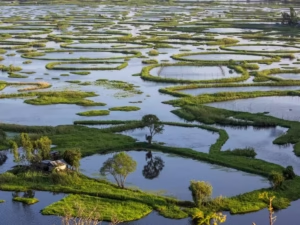
  • Unique Feature: Known for its phumdis — floating masses of vegetation, soil, and organic matter.
  • Ecological Importance:
    • The Keibul Lamjao National Park, the world’s only floating national park, lies within the lake.
    • It is the last natural refuge of the endangered Sangai deer (brow-antlered deer).
  • Inflowing Rivers: Fed by Khuga, Nambul, Imphal, Kongba, Iril, Thoubal, Heirok, and Sekmai rivers.
  • Ramsar Status: Declared a Ramsar site (Wetland of International Importance) in 1990.
  • Montreux Record: Added in 1993 due to concerns over its ecological degradation.

Biodiversity and Livelihood Importance

  • Hosts 132 plant species and 428 animal species, sustaining diverse flora and fauna.
  • Supports fishing, irrigation, hydropower generation, transport, and tourism — making it central to local livelihoods.

Major Environmental Concerns (as per study)

  • Land-use changes: Expansion of agriculture and human settlements around the lake.
  • Shifting cultivation: Leading to soil erosion and sediment deposition in feeder rivers.
  • Water pollution: Agricultural runoff and waste disposal degrading water quality.
  • Biodiversity loss: Threatening aquatic life and the survival of the Sangai deer.
  • Livelihood impacts: Decline in fish productivity and tourism affecting local income sources.

This article has been updated and published in detail on our new platform. Please visit the link below for the latest version:

👉 Read the full article on ekamiasacademy.in

DILMUN CIVILIZATION

TOPIC: (GS1) ART AND CULTURE: THE HINDU

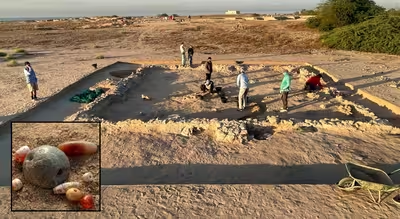
A joint Kuwaiti–Danish archaeological team has discovered a 4,000-year-old temple of the Dilmun civilization on Failaka Island, Kuwait, confirming its role as a major religious and trade hub in the Bronze Age.
Dilmun Civilization

Location & Spread

  • Dilmun was an ancient civilization in the eastern Arabian Peninsula.
  • Core regions included Bahrain and Failaka Island (Kuwait).
  • Extended influence over parts of Saudi Arabia, Qatar, Oman, and the Iranian Gulf coast.

Historical Timeline & Growth

  • Emerged around 3200 BCE as a small trading post.
  • By 3000 BCE, it became a key regional power.
  • Served as a trade link between Mesopotamia and the Indus Valley Civilization.
  • Traded goods like copper, pearls, dates, and pottery.

Economic Importance

  • Known as the “Land of Copper”, vital for Bronze Age tools and weapons.
  • Supplied copper to Mesopotamian cities, boosting its strategic value.

Recent Discovery

  • A 4,000-year-old temple was unearthed on Failaka Island in 2025.
  • It is the second temple found at the same site, indicating layered religious structures.
  • Artifacts like seals, pottery, and beads reveal Dilmun’s cultural and commercial depth.

Decline & Legacy

  • After 1600 BCE, Dilmun’s influence waned.
  • Eventually absorbed into Mesopotamian and Persian empires.
  • Archaeological remains include burial mounds, settlements, and stamp seals.

Conclusion:

The Dilmun temple find enriches our understanding of ancient Gulf civilizations and their role in early global trade networks.

This article has been updated and published in detail on our new platform. Please visit the link below for the latest version:

👉 Read the full article on ekamiasacademy.in

INDIAN COFFEE GLOBAL RECOGNITION

TOPIC: (GS3) ECONOMY: THE HINDU

The Prime Minister of India recently highlighted that Indian coffee is gaining increasing global recognition for its quality and unique flavour, boosting export potential and farmers’ income.

About Coffee

  • Coffee is a tropical plantation crop usually grown under the shade of tall trees.
  • It is valued worldwide for its aroma and flavour, making India one of the key producers in Asia.
  • There are two main varieties cultivated in India:
    • Arabica – smoother, less caffeinated, and aromatic.
    • Robusta – stronger flavour, higher caffeine, and disease-resistant.

Major Coffee-Growing States

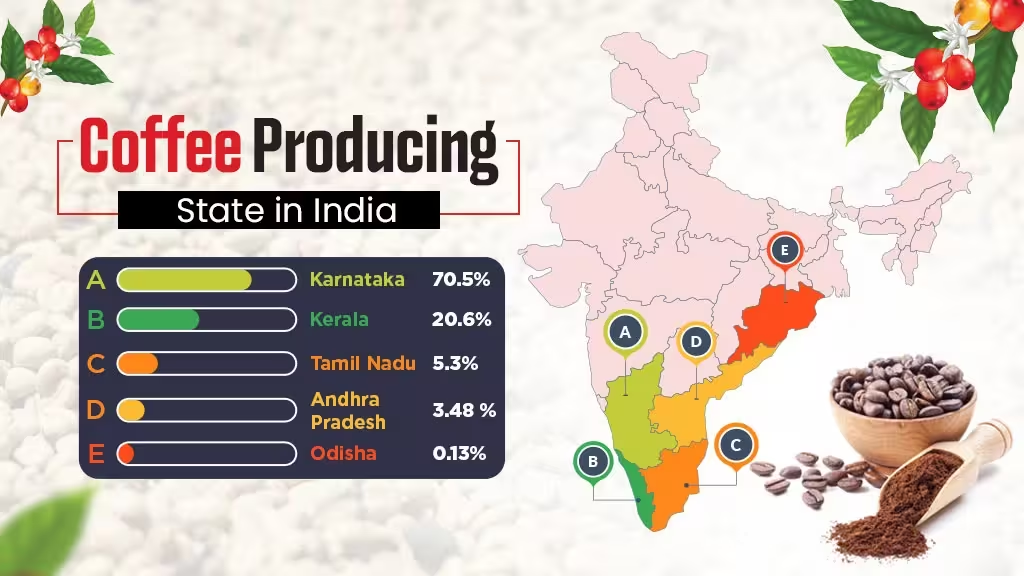
  • India’s coffee cultivation is mainly concentrated in the Southern states:
    • Karnataka – produces over 70% of India’s total coffee.
    • Kerala and Tamil Nadu – important secondary producers.
    • Andhra Pradesh and Odisha – emerging cultivation areas.
INDIAN COFFEE GLOBAL RECOGNITION

Climatic and Soil Requirements

  • Altitude: 600–1,600 metres above sea level (hill slopes).
  • Temperature: Between 15°C and 28°C.
  • Rainfall: Requires 150–250 cm annually.
  • Soil: Well-drained loamy soil rich in humus, iron, and calcium.
  • Dry weather is essential during the ripening of coffee berries.

Export and Global Market

  • Europe is the largest importer of Indian coffee.
  • Key importing countries: Italy, Germany, Belgium, Japan, South Korea, and Middle Eastern nations.
  • Indian coffee, known for its shade-grown and eco-friendly cultivation, is gaining global demand for its distinct taste and sustainable farming practices.

Conclusion

Indian coffee’s growing global reputation presents an opportunity to boost exports, farmer income, and rural employment, while reinforcing India’s image as a producer of high-quality, sustainable coffee.


This article has been updated and published in detail on our new platform. Please visit the link below for the latest version:

👉 Read the full article on ekamiasacademy.in

Write a Review

Your email address will not be published. Required fields are marked *