
Daily Current Affairs 28-October-2025

Share this Post

INDIA–EU CARBON MARKET LINKAGE

TOPIC: (GS3) ENVIRONMENT: THE HINDU

India and the European Union (EU) recently announced in their New Strategic EU–India Agenda (September 2025) that the Indian Carbon Market (ICM) will be linked with the EU’s Carbon Border Adjustment Mechanism (CBAM).

Background

  • The EU–India partnership focuses on five key pillars, including prosperity, sustainability, and clean transition.
  • The proposed linkage means that carbon costs already paid in India could be deducted from CBAM levies at EU borders.
  • This linkage, if implemented effectively, can make Indian exports more competitive while supporting low-carbon industrial growth.

India’s Carbon Market:

  • India’s Carbon Credit Trading Scheme (CCTS), or Indian Carbon Market (ICM), is in an early stage.
  • Unlike the EU Emissions Trading System (ETS), India’s market does not yet have:
    • A fixed cap on emissions.
    • Strong enforcement mechanisms for non-compliance.
    • Independent regulatory institutions to ensure transparency.
  • Current Indian carbon credits are project-based and focus on efficiency improvements, not absolute emission reductions.
  • For CBAM linkage, the EU demands tonne-by-tonne verification of embedded carbon — something India must still develop.

Challenges in Linking with CBAM

  • Price Gap: The EU’s carbon price averages €60–€80/tonne, while India’s is around €5–€10/tonne. Without comparable pricing, EU regulators will not allow meaningful deductions, leaving Indian exporters at a disadvantage.
  • Double Burden Risk: Indian industries may face both domestic carbon costs and EU border taxes. This could trigger political pushback and pressure to weaken India’s carbon market compliance rules.
  • Institutional Weakness: India lacks independent verification systems and emission registries similar to the EU’s, undermining credibility.
  • Political and Trade Tensions: Developing countries, including India, have opposed CBAM at WTO forums as protectionist.

Way Forward:

  • Strengthening the ICM: India must adopt binding emission caps, transparent registries, and credible verification standards.
  • EU’s Role: The EU should provide technical assistance and policy guidance to align both systems.
  • Negotiating a Fair Price Framework: Both sides could work on a sector-specific or floor carbon price to reduce the cost gap.
  • Ensuring Policy Stability: India must maintain consistent domestic rules to avoid disruption in trade and investor confidence.

CARBON BORDER ADJUSTMENT MECHANISM (CBAM)

  • CBAM is a carbon tax imposed by the European Union (EU) on imports from countries with weaker climate policies.
  • It aims to prevent “carbon leakage” — when companies move production to countries with lax emission rules — and promote cleaner manufacturing globally.
  • It affects Indian exports like steel, cement, and aluminium, making them costlier in EU markets unless they meet strict carbon standards.

Conclusion

The proposed India–EU carbon market linkage represents a landmark step toward equitable global climate cooperation. If executed well, it can protect Indian exporters, accelerate decarbonisation, and set a model for North–South collaboration in carbon trading.

This article has been updated and published in detail on our new platform. Please visit the link below for the latest version:

👉 Read the full article on ekamiasacademy.in

BIG TECH AND INDIA’S PUBLIC HEALTH

TOPIC: (GS2) GOVERNANCE: THE HINDU

Major global tech companies are violating India’s Drugs and Magic Remedies (Objectionable Advertisements) Act (DMRA), 1954, by promoting misleading advertisements for health and medicinal products.

Background

  • India has long struggled with false medical claims and unverified drug advertisements.
  • The DMRA Act, 1954 bans advertisements of drugs or remedies claiming to treat certain listed diseases, including diabetes and cancer.
  • With the rise of internet advertising, Big Tech platforms have become dominant players in the promotion of health products often without adhering to Indian laws.

Violation by Big Tech Platforms

  • Popular search engines, social media platforms, and e-commerce sites frequently display paid ads for ayurvedic, homeopathic, and herbal medicines claiming to cure serious diseases.
  • These ads clearly violate the DMRA Act, yet continue unchecked.
  • Ironically, these same platforms follow strict ad-screening rules in the United States, where misleading medical claims can lead to swift legal action.
  • Example: Ads promoting “cow urine products for cancer cure” and “herbal tablets for diabetes” have been openly displayed on Indian sites.

Reasons for Disregard of Indian Law

Corporate Negligence and Bias:

    • U.S.-based corporations often show lesser regard for compliance in developing countries.
    • Historical examples (like the Union Carbide case) highlight a pattern of undervaluing Indian lives.

Weak Enforcement:

    • Past violations, such as under the Pre-Natal Diagnostic Techniques (PNDT) Act, 1994, faced little punishment.
    • Courts and regulators have been slow to prosecute Big Tech for repeated offences.

Legal Loopholes and Jurisdictional Gaps:

    • Big Tech often hides behind the “intermediary” label, claiming it is not directly responsible for ad content.
    • However, these companies actively negotiate ad contracts and collect payments — making them publishers, not mere intermediaries.

Need for Stronger Regulation

  • India must hold Big Tech accountable through criminal prosecution of responsible management personnel.
  • Reforms should ensure that key managerial staff in India are Indian citizens accountable to Indian courts.
  • India could emulate the U.S. approach to TikTok regulation, enforcing local accountability and data sovereignty.
  • If non-compliance continues, intermediary immunity should be revoked for Big Tech firms in India.

Conclusion

Unchecked digital advertising by Big Tech platforms undermines India’s public health safeguards. Strengthening legal enforcement, ensuring local accountability, and imposing real penalties are vital steps to make Big Tech respect Indian laws and protect citizens from misleading medical claims.

This article has been updated and published in detail on our new platform. Please visit the link below for the latest version:

👉 Read the full article on ekamiasacademy.in

POLL-BOUND BIHAR RANKS LOWEST ON SOCIAL AND ECONOMIC INDICATORS

TOPIC: (GS1) SOCIAL ISSUES: THE HINDU

Ahead of the upcoming Bihar Assembly elections (November 2025), recent data highlights that Bihar continues to perform poorly across most social and economic parameters, ranking last among major Indian States in (HDI), health and education indicators.

Background

  • Bihar is preparing for Assembly elections scheduled for November 6 and 11, with results on November 14.
  • An analysis of national datasets (NFHS, HDI, and economic surveys) shows that Bihar’s progress in health, education, and income remains far behind the national average.
  • Despite some improvements in infrastructure and welfare coverage, the State’s social outcomes continue to lag.

Education and Gender Indicators

  • Only 61% of women in Bihar had ever attended school (2019–21), one of the lowest in India.
  • About 41% of women aged 20–24 were married before 18 years — the second highest rate in India.
  • Bihar ranked 28th in higher secondary enrolment (35.9%) and second last in college enrolment (17.1%).
  • The State also recorded one of the highest dropout rates among secondary school students.

Health and Nutrition Status

  • Bihar’s infant mortality rate (IMR) was 46.8 per 1,000 live births, higher than the national average of 35.2.
  • It had the lowest access to improved sanitation and the highest share of underweight children.
  • The share of wasted children (underweight for height) worsened from 20th position (2015–16) to 27th (2019–21).
  • The State failed to rank among the top 15 in any health or women empowerment parameter since 2005.

Economic and Employment Indicators

  • Bihar’s HDI score (0.609) is the lowest among 27 States (India’s average: 0.644).
  • Per capita Net State Domestic Product (NSDP) for 2023–24 was the lowest in India, showing limited economic growth.
  • Employment in manufacturing (6%) and services (25%) sectors is minimal, indicating a dominance of low-income agricultural jobs.

Environmental Performance

  • Despite poor human development outcomes, Bihar performed better in environmental parameters:
    • Generated only 0.61 tonnes of plastic waste per 1,000 people (ranked 6th).
    • Recorded the lowest per capita fossil fuel consumption, partly due to limited industrial activity.

Conclusion

Bihar’s persistent underperformance across social, health, and economic sectors underscores the urgent need for targeted investments in human capital, industrial growth, and education reform. As the State heads into elections, development indicators may become a key issue shaping the political discourse.

This article has been updated and published in detail on our new platform. Please visit the link below for the latest version:

👉 Read the full article on ekamiasacademy.in

DECLINE OF THE DOGRI LANGUAGE IN THE JAMMU REGION

TOPIC: (GS2) INDIAN POLITY: THE HINDU

Recent surveys have highlighted a sharp decline in the use of Dogri, a regional language of the Jammu region, despite its recognition as an official language of Jammu & Kashmir in 2020. Experts attribute this fall to weak policy support, generational shifts, and growing urban neglect.

Background

  • India is home to one of the world’s richest linguistic heritages but also faces rapid language loss.
  • According to UNESCO, India has already lost over 220 languages in the past 50 years, with many more endangered.
  • In this context, the Dogri language, spoken mainly in the Jammu region, is experiencing a steady decline in daily use and literacy levels.

Current Status of Dogri

  • Dogri received constitutional recognition in 2003 and became one of J&K’s five official languages under the Jammu and Kashmir Official Languages Act, 2020.
  • However, its official status has not translated into widespread practical use in schools, administration, or employment.
  • Globalisation and migration have led speakers, especially the youth, to prioritise Hindi and English for better job opportunities and social mobility.

Reasons for Decline

Lack of Governmental and Institutional Support

  • Nearly 48% of surveyed respondents felt that the government has not taken adequate steps to promote or preserve Dogri.
  • Delayed recognition has weakened its institutional base — unlike Urdu or Hindi, Dogri lacks presence in school curricula and public offices.

Generational Divide

  • Older generations (60+) retain strong speaking and reading skills in Dogri.
  • Middle-aged groups (41–60 years) show declining writing proficiency (around 0.25%).
  • Younger people (below 20 years) show no reading or writing proficiency, revealing a severe transmission gap.

Rural–Urban Disparity

  • Around 56% of rural residents actively speak Dogri; 15% can write it.
  • In urban areas, only 45% speak the language and a mere 4% can write it.
  • Urban migration and English-medium education have accelerated language shift in towns and cities.

Broader Linguistic Context

  • The Dogri case mirrors India’s broader trend of linguistic erosion, where smaller languages lose space to dominant ones.
  • English and Hindi are often viewed as languages of progress, causing regional languages to fade from education and homes.

The Way Forward

  • Update data: With the 2021 Census pending, updated information on endangered languages is crucial for policy design.
  • Revive education: Introduce Dogri in school curricula and local media.
  • Change mindset: Promote linguistic pride by recognising regional languages as carriers of culture, not barriers to progress.
  • Community participation: Encourage local initiatives to document, teach, and celebrate Dogri through literature and digital platforms.

OFFICIAL LANGUAGES OF INDIA

Constitutional Basis

  • Articles 343 to 351 of the Indian Constitution deal with the official language provisions.
  • These articles are part of Part XVII of the Constitution (Official Language).

Official Languages

  • Hindi (in Devanagari script) is the official language of the Union.
  • English is used as an associate official language for official purposes (along with Hindi).
  • The use of English was to continue initially for 15 years after 1950 but has been extended indefinitely by the Official Languages Act, 1963.

Regional Languages

  • States can choose their own official languages for state-level administration.
  • Many states use their regional languages (like Tamil, Telugu, Bengali, Marathi, etc.) as official languages.

Schedule of Languages

  • The Eighth Schedule of the Constitution lists 22 languages recognized by the Government of India.
    These include:
    Assamese, Bengali, Bodo, Dogri, Gujarati, Hindi, Kannada, Kashmiri, Konkani, Maithili, Malayalam, Manipuri, Marathi, Nepali, Odia, Punjabi, Sanskrit, Santali, Sindhi, Tamil, Telugu, Urdu.

Key Provisions

  • Article 343: Hindi in Devanagari script is the official language of the Union.
  • Article 344: Formation of a commission and committee to promote the spread of Hindi.
  • Article 345: States may adopt any language used in the state or Hindi as their official language.
  • Article 346–347: Deals with communication between states and with the Union in official languages.
  • Article 350: Provides for language used in representations for redress of grievances.
  • Article 351: Directs the Union to promote the spread of Hindi and enrich it by assimilating forms and expressions from other Indian languages.

Conclusion

Dogri’s decline is not just a linguistic concern but a cultural warning. Unless the government, educators, and communities act collectively to preserve it, another piece of India’s linguistic diversity may soon be lost to history.

This article has been updated and published in detail on our new platform. Please visit the link below for the latest version:

👉 Read the full article on ekamiasacademy.in

RASHTRIYA VIGYAN PURASKAR (RVP)

TOPIC: (GS3) SCIENCE AND TECHNOLOGY: THE HINDU

The Government of India has announced the Rastriya Vigyan Puraskar (RVP) — a new set of national awards that honour excellence in science, technology, and innovation, designed in the style of the Padma Awards

Background

  • The 2025 list includes top scientists such as Jayant Vishnu Narlikar (posthumously) and the CSIR Aroma Mission team.
  • Introduced in January 2024, the RVP aims to become India’s highest civilian recognition in the field of science and technology.
  • It replaces older honours such as the Shanti Swarup Bhatnagar Prize to create a more transparent, inclusive, and wide-ranging recognition system for Indian and overseas scientists of Indian origin.

Purpose and Objectives

  • To celebrate outstanding scientific achievements and innovations that contribute to national progress.
  • To inspire young researchers and strengthen India’s global leadership in emerging technologies.
  • To ensure a unified national recognition framework for science and innovation, similar to how Padma Awards celebrate other fields.
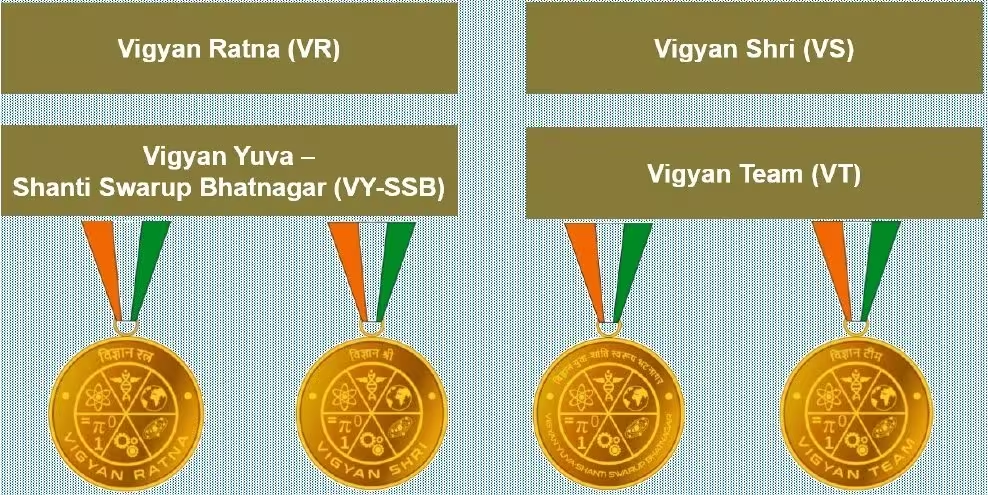
Rastriya Vigyan Puraskar (RVP)

Award Structure

  • Vigyan Ratna (VR): Highest category; honours lifetime achievements in science. Up to 3 awards annually.
  • Vigyan Shri (VS): For exceptional scientific contributions and leadership. Up to 25 awards.
  • Vigyan Yuva – Shanti Swarup Bhatnagar (VY-SSB): For young scientists below 45 years. Up to 25 awards annually.
  • Vigyan Team (VT): For collaborative or institutional scientific breakthroughs (minimum three members). Up to 3 awards per year.

Key Highlights of 2025 Awards

  • Vigyan Ratna: Jayant Vishnu Narlikar (Astrophysics, posthumous).
  • Vigyan Shri: Eight prominent scientists including G.P. Singh, K. Thangaraj, Venkata Mohan, and Mahan Mj.
  • Vigyan Yuva: Fourteen emerging scientists across diverse fields.
  • Vigyan Team: CSIR Aroma Mission – for advancing India’s flavour and fragrance industry and improving rural livelihoods.

Administration and Governance

  • Managed by the Rashtriya Vigyan Puraskar Committee (RVPC) chaired by the Principal Scientific Adviser to the Government of India.
  • Includes 17 members from key ministries, scientific departments, and research councils.

Award Schedule and Recognition

  • Announcement: Every May 11 on National Technology Day.
  • Presentation Ceremony: Every August 23 on National Space Day at Rashtrapati Bhavan.
  • Award Components: A citation signed by the President of India, a medallion, and an official certificate.

Significance

  • Marks a major reform in India’s science award ecosystem, aligning recognition with national goals of innovation and self-reliance.
  • Encourages institutional collaboration, young talent, and global Indian participation in research.
  • Strengthens India’s soft power in global science diplomacy.

Conclusion:

The Rashtriya Vigyan Puraskar marks a new era in recognising India’s scientific excellence by integrating transparency and inclusivity. It is a major step toward inspiring innovation and positioning India as a global leader in science and technology.

This article has been updated and published in detail on our new platform. Please visit the link below for the latest version:

👉 Read the full article on ekamiasacademy.in

ASIA-PACIFIC ECONOMIC COOPERATION (APEC)

TOPIC: (GS3) ECONOMY: THE HINDU

The upcoming APEC Summit in South Korea is expected to host a meeting between U.S. President Donald Trump and Chinese President Xi Jinping, drawing global attention to trade and strategic relations in the Asia-Pacific region.

About APEC

  • Established: 1989
  • Nature: APEC is a regional economic cooperation forum formed to strengthen trade, investment, and economic ties among economies in the Asia-Pacific region.
  • Purpose: To promote inclusive, balanced, sustainable, and innovation-driven growth and accelerate regional economic integration.
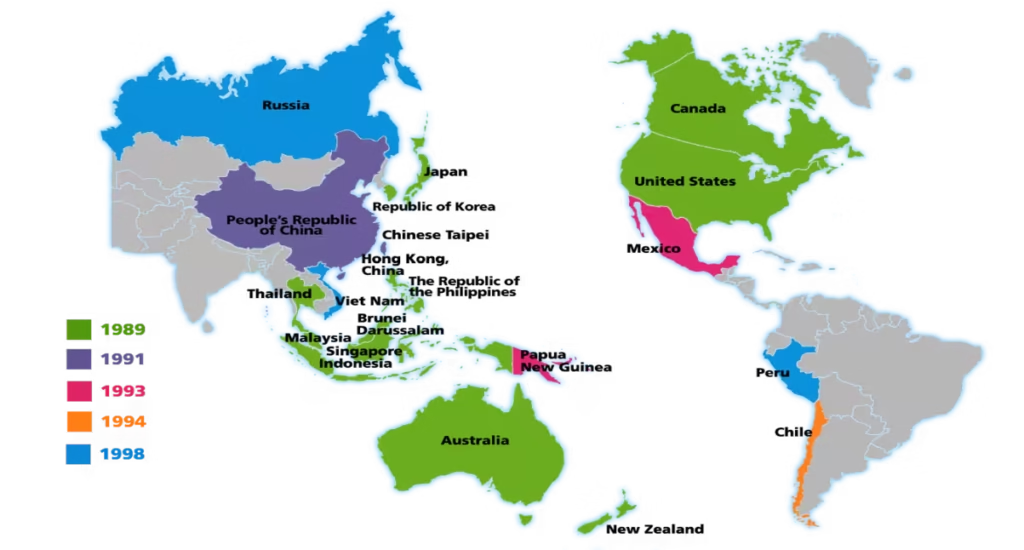
APEC Summit in South Korea

Key Features

  • Voluntary and Non-binding Mechanism: APEC functions without any formal treaty or legal obligations. Members make voluntary commitments and reach decisions through consensus.
  • Terminology: Since some members (like Hong Kong and Taiwan) are not sovereign states, APEC uses the term “member economies” instead of countries.
  • Focus Areas: Promoting free and open trade across the Asia-Pacific. Enhancing supply chain connectivity and digital trade. Supporting inclusive policies for small and medium enterprises (SMEs).
  • Secretariat: The APEC Secretariat is located in Singapore. It coordinates meetings, research, and policy support for member economies.

Member Economies (21)

  • Developed Members: USA, Japan, Canada, Australia, New Zealand, South Korea.
  • Emerging Members: China, Indonesia, Malaysia, Thailand, Vietnam, the Philippines, Mexico, Peru, Chile, Russia, Singapore, Brunei, Papua New Guinea, Hong Kong, and Taiwan.
  • Together, these economies represent: Over 2.9 billion people, and More than 60% of global GDP.

India’s Position

  • India is not a member of APEC, though it has expressed interest in joining.
  • Some members, however, have concerns about the impact of India’s inclusion on decision-making due to its size and trade policies.

Significance of APEC

  • Acts as a key platform for regional trade dialogue.
  • Helps coordinate economic policy among diverse economies.
  • Promotes economic resilience, especially after global disruptions like pandemics and trade wars.
  • Encourages cooperation in digital economy, clean energy, and sustainable infrastructure.

Conclusion

APEC remains a vital driver of economic growth and cooperation in the Asia-Pacific. The 2025 summit could shape future trade and strategic alignments between major powers like the U.S. and China, influencing global economic trends.

This article has been updated and published in detail on our new platform. Please visit the link below for the latest version:

👉 Read the full article on ekamiasacademy.in

OLLO TRIBE

TOPIC: (GS1) INDIAN ART AND CULTURE: THE HINDU

The Khonsa Battalion of the Assam Rifles has started a skill development and empowerment programme for women of the Ollo Tribe in Arunachal Pradesh under Operation Sadbhavana, aiming to boost self-reliance and inclusive growth.
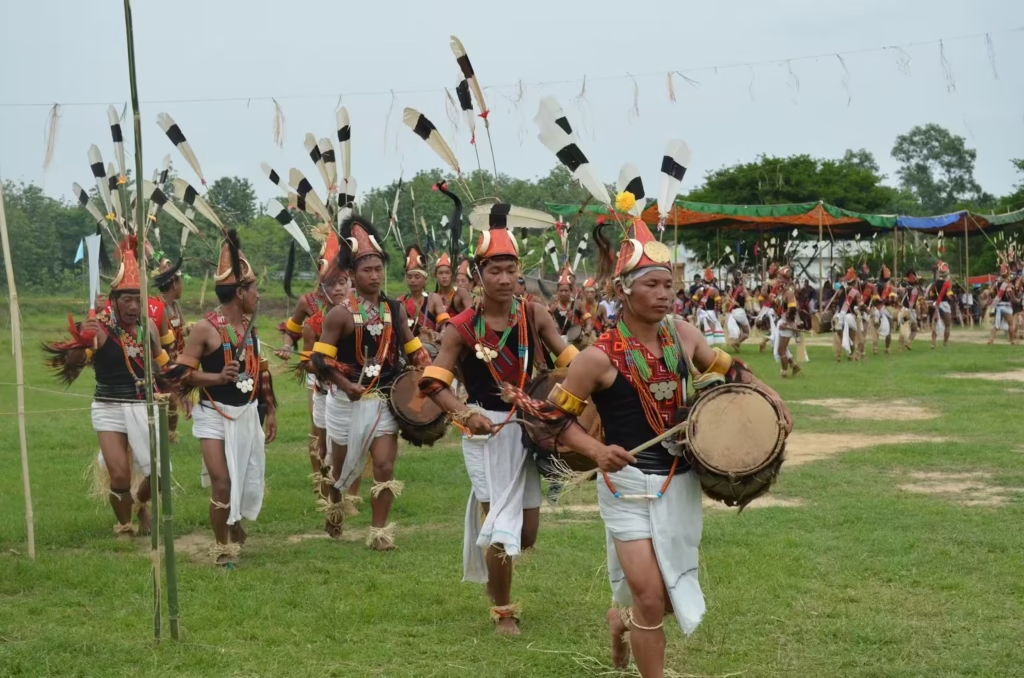
Ollo Tribe

Ollo Tribe

  • The Ollo Tribe, also known as Oloh or Lazu Naga, is an indigenous Naga community primarily found in the Laju Circle of Tirap district, Arunachal Pradesh, and across the border in Myanmar.
  • Despite living in two countries, they maintain close cultural and familial ties.

Geographical Distribution

  • Location: Predominantly in the Tirap district of Arunachal Pradesh.
  • Cross-border Presence: Many Ollo families live across the India-Myanmar border, preserving strong kinship and cultural bonds.

Cultural Characteristics

  • Language and Customs: The Ollo people speak a common dialect and share similar customs and religious practices on both sides of the border. Their traditions emphasize community life, respect for elders, and clan unity.
  • Social Structure: The community follows a clan-based social system with hereditary chieftainship. Ollo society is patriarchal, with leadership and property inheritance typically passing through the male line.
  • Cultural Heritage: Traditionally, they were known for distinctive facial tattoos and a head-hunting culture—a practice now long discontinued.

Housing and Lifestyle

  • Ollo homes are usually built on stilts, reflecting adaptation to hilly terrain.
  • The chief’s residence is larger and sturdier, often built with carved wooden pillars and decorative motifs symbolising power and prestige.

Population

  • According to the 2011 Census, the Ollo Tribe population in India stands at around 1,500 individuals, making it one of the smallest tribal groups in the country.

Development and Challenges

  • Despite limited numbers, the tribe is increasingly participating in education, entrepreneurship, and skill training initiatives.
  • The Assam Rifles’ project under Operation Sadbhavana focuses on women’s skill development, promoting self-employment and financial independence.
  • However, challenges such as limited infrastructure, poor connectivity, and border-related isolation continue to affect development.

Significance

  • The Ollo tribe represents India’s rich ethnic and cultural diversity.
  • Their inclusion in skill and livelihood programs strengthens the vision of inclusive growth and helps preserve traditional identity alongside modernization.

Conclusion

The Ollo Tribe stands as a symbol of cultural continuity amidst modern change. Ongoing welfare and empowerment programs are helping this small community bridge the gap between tradition and progress.

This article has been updated and published in detail on our new platform. Please visit the link below for the latest version:

👉 Read the full article on ekamiasacademy.in

CMS-03 SATELLITE (GSAT-7R)

TOPIC: (GS3) SCIENCE AND TECHNOLOGY: THE HINDU

The Indian Space Research Organisation (ISRO) is set to launch the CMS-03 communication satellite, also known as GSAT-7R, from the Satish Dhawan Space Centre, Sriharikota.

About CMS-03 Satellite

  • The CMS-03 (Communication Satellite-03), or GSAT-7R, is an advanced military communication satellite developed by ISRO.
  • It is designed to replace and upgrade earlier GSAT-series satellites used for secure communications by India’s armed forces.
  • The satellite will be launched using Launch Vehicle Mark-3 (LVM3) — India’s most powerful operational rocket.
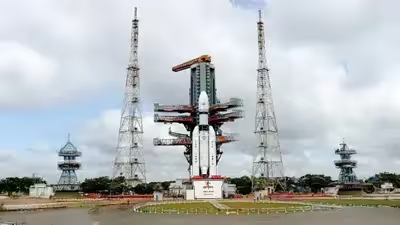
CMS-03 Satellite GSAT-7R

Key Features

  • Type: Multi-band communication satellite.
  • Weight: Approximately 4,400 kilograms, making it one of ISRO’s heaviest communication satellites.
  • Coverage Area: Provides services over a wide oceanic region, including the entire Indian subcontinent and adjoining maritime zones.
  • Orbit: To be placed in a Geosynchronous Transfer Orbit (GTO), from where it will move to a geostationary position.
  • Purpose: Designed to provide secure, high-bandwidth communication links for civilian, defence, and maritime sectors.
  • Enhanced Capabilities:
    • Improves bandwidth efficiency and signal clarity.
    • Offers real-time data transfer and high-speed connectivity for ships, submarines, and aircraft.
    • Strengthens strategic communication among the Indian Navy, Air Force, and Army.

Importance and Objectives

  • Strategic Significance:
    • Strengthens India’s maritime domain awareness and defence communication infrastructure.
    • Supports secure communication links in areas beyond terrestrial network reach.
  • Technological Advancement:
    • Demonstrates ISRO’s progress in heavy satellite technology and advanced transponder systems.
    • Enhances India’s ability to operate independently in communication and surveillance.

What is a Geosynchronous Orbit?

  • A geosynchronous orbit (GSO) is a high Earth orbit where a satellite revolves around Earth once every 24 hours — matching Earth’s rotation period.
  • It allows the satellite to stay fixed over a specific longitude, ensuring continuous coverage over the same region.
  • This orbit type is also called the Clarke Orbit, named after Arthur C. Clarke, who first proposed its use for communications satellites.

Significance for India

  • Boosts defence preparedness and strategic communication independence.
  • Improves maritime connectivity vital for India’s blue economy and naval operations.
  • Reinforces ISRO’s role in national security and space-based infrastructure development.

Conclusion:

The CMS-03 marks a major step in India’s pursuit of self-reliant defence communication systems. It enhances connectivity, security, and strategic reach, especially across the Indian Ocean region.


This article has been updated and published in detail on our new platform. Please visit the link below for the latest version:

👉 Read the full article on ekamiasacademy.in

Write a Review

Your email address will not be published. Required fields are marked *