

Table of Contents
ToggleDEFEAT OF THE CONSTITUTION (131ST AMENDMENT) BILL
TOPIC: (GS2) POLITY: THE HINDU
The Constitution (131st Amendment) Bill, 2026 aimed at linking women’s reservation in Parliament with delimitation based on the 2011 Census was defeated in Lok Sabha after failing to secure the required twothirds majority.
Background
- The Bill sought to redistribute Lok Sabha seats using the 2011 Census.
- Objective: ensure timebound implementation of women’s reservation for the 2029 general election.
- Required twothirds majority (352 votes) but received only 298 in favour, 230 against.
Developments Around the 131st Amendment Bill
Government’s Legislative Package
- The Centre introduced a set of three interconnected legislations:
- The Constitution (131st Amendment) Bill.
- The Union Territories Laws (Amendment) Bill.
- The Delimitation Bill.
- These were designed to work together, linking women’s reservation in Parliament with seat redistribution based on the 2011 Census.
Withdrawal After Defeat
- The Constitution Amendment Bill failed to secure the required twothirds majority in Lok Sabha.
- Following this defeat, the government withdrew the allied Bills, halting the entire reform package.
Extension of Budget Session
- To allow further deliberation on these contentious legislations, the government extended the Budget Session of Parliament.
- This move reflected the seriousness of the proposals and the need for wider political discussion.
Issues Highlighted
- Population disparity: Freeze since 1971 Census has created unequal constituency sizes.
- Regional concerns: Southern States fear reduced representation.
- Reservation link: Debate over whether SC/ST seat increase should be tied to delimitation.
- Caste count: Allegations that government is sidestepping ongoing caste census.
Significance
- Marks the fifth time women’s reservation legislation has been stalled.
- Highlights tension between political consensus and structural reforms in electoral representation.
- Raises debate on balancing demographic realities with federal equity.
Majorities in indian parliament
Simple Majority
- Means more than 50% of members present and voting.
- Used for passing ordinary bills, motions, and confidence votes.
- Example: Passing a Money Bill in Lok Sabha.
Absolute Majority
- Refers to more than 50% of the total membership of the House, regardless of how many are present.
- Rarely used in practice but important in theory.
- Example: Needed for forming a government (majority of total Lok Sabha seats).
Effective Majority
- Means more than 50% of the effective strength of the House (total membership minus vacancies).
- Example: Required for removing the VicePresident under Article 67(b).
Special Majority (Article 368)
- Required for Constitutional Amendments.
- Different forms exist:
- Special Majority of 2/3rd present and voting + majority of total membership (used for most constitutional amendments).
- Special Majority with ratification by half of the States (used for amendments affecting federal provisions like representation of states in Parliament).
Conclusion
The rejection of the Bill shows the difficulty of building consensus on linking women’s reservation with delimitation. It reflects the larger challenge of balancing gender justice, demographic realities, and federal equity in India’s electoral reforms.
INDIA’S FIRST SEMICONDUCTOR FABRICATION PLANT AT DHOLERA, GUJARAT
TOPIC: (GS3) ECONOMY: THE HINDU
India has officially announced the establishment of its first semiconductor fabrication plant (fab) in a Special Economic Zone (SEZ) at Dholera, Gujarat, marking a milestone in the country’s electronics and IT manufacturing ecosystem.
About Semiconductor Fab
- A semiconductor fabrication plant (fab) is a highly advanced facility where microchips are produced on ultrapure silicon wafers.
- Processes like photolithography, doping, and metallization create billions of transistors that power devices from smartphones to AI systems.
- The Dholera SEZ is dedicated to Electronic Hardware, Software, IT/ITES, and is expected to generate 21,000 jobs.
Policy Reforms Enabling the Fab
- In June 2025, SEZ Rules (2006) were amended to attract capitalintensive investments:
- Minimum land requirement reduced from 50 hectares to 10 hectares.
- Flexibility introduced in encumbrance norms.
- Freeofcost supplies allowed in Net Foreign Exchange (NFE) calculations.
- Domestic sales permitted in the Domestic Tariff Area (DTA) with applicable duties.
Strategic Significance
- Part of India Semiconductor Mission 2.0, which aims to build a complete domestic ecosystem from chemicals and gases to chipmaking machinery.
- Reduces dependence on imports and strengthens supply chain resilience.
- Positions India as a globally competitive hub for semiconductor and electronics production.
- Expected to catalyze domestic value chains and generate highskilled employment.
Challenges
- High Capital and Technology Requirements: Semiconductor fabs demand multibilliondollar investments, advanced machinery, and skilled manpower, which India is still developing.
- Supply Chain Dependence: Critical inputs like ultrapure chemicals, gases, and lithography equipment are largely imported, making India vulnerable to global disruptions.
- Global Competition and Geopolitics: Countries like Taiwan, South Korea, and the US dominate chip manufacturing, and India must compete while navigating geopolitical tensions in supply chains.
Way Forward
- Strengthen Domestic Ecosystem: Build the entire value chain — from raw materials to advanced machinery — under the India Semiconductor Mission 2.0.
- Skill Development and R&D: Invest in training engineers, technicians, and researchers, while promoting innovation through partnerships with global leaders and academia.
- Policy Support and Incentives: Ensure longterm financial incentives, infrastructure support, and ease of doing business to attract global chipmakers and sustain domestic fabs.
Conclusion
By building a domestic chipmaking ecosystem, India is moving closer to selfreliance in critical technologies, reducing import dependence, and strengthening its role in the global electronics supply chain.
IT RULES AMENDMENT AND CONCERNS OF PRECENSORSHIP IN INDIA
TOPIC: (GS2) POLITY: THE HINDU
The Government has proposed amendments to the IT Rules regulation over digital news and usergenerated content.
Background
- The amendments aim to regulate digital news content, including usergenerated posts, satire, commentary, and factchecking.
- Independent creators and influencers may be treated like formal publishers, increasing compliance burdens.
- Concerns arise about freedom of speech and the vibrancy of India’s digital ecosystem.
Existing Legal Powers
- Section 69A of IT Act: Allows government to block online content.
- Section 79(3)(b): Permits authorities to direct platforms to remove content.
- These provisions are already widely used, including against satirical posts, showing that censorship tools exist even without new rules.
Key Concerns
- Expansion of Regulatory Scope: Rules extend beyond professional publishers to ordinary users posting newsrelated content. Could blur the line between casual users and formal media houses.
- SelfCensorship Risk: Fear of penalties or scrutiny may discourage individuals from expressing opinions freely. Creates a psychological tendency to avoid sensitive topics.
- Impact on Creator Economy: Brands may hesitate to collaborate with independent voices due to regulatory uncertainty. Could reduce visibility of diverse content and weaken India’s “orange economy.”
- Oversight Mechanism: Proposed InterDepartmental Committee under the Ministry of Information and Broadcasting (MIB) to review flagged content. Powers to recommend apology, modification, or takedown add a new layer of direct intervention.
Parallels with Withdrawn Broadcasting Bill
- The Broadcasting Services Regulation Bill, 2024 had similar provisions:
- Expanded MIB jurisdiction to social media users.
- Mandatory registration for digital news broadcasters.
- Content evaluation standards.
- Though withdrawn, the IT Rules amendments are seen as a continuation of that regulatory intent.
Way Forward
- Ensure Proportional Regulation: Limit oversight to harmful content such as deepfakes, misinformation, and hate speech, while avoiding blanket regulation of ordinary usergenerated posts.
- Safeguard Freedom of Expression: Establish transparent review mechanisms with judicial or independent oversight to prevent misuse of censorship powers and protect democratic values.
- Support Digital Ecosystem Growth: Provide clarity and ease of compliance for independent creators and small platforms, ensuring that regulation does not stifle India’s vibrant creator economy and innovation.
Conclusion
Balancing the fight against misinformation with protection of democratic values will be crucial for the credibility of these reforms.
CORPORATE AVERAGE FUEL EFFICIENCY (CAFE3)
TOPIC: (GS3) ENVIRONMENT: THE HINDU
The Government of India has released the draft Corporate Average Fuel Efficiency (CAFE3) norms, scheduled for implementation from April 2027.
CAFE Norms
- Corporate Average Fuel Efficiency (CAFE) norms are regulatory standards that require automobile manufacturers to maintain a prescribed average fuel efficiency and CO₂ emission level across their entire fleet.
- First introduced in 2017 (CAFE1), tightened under CAFE2 (2022 onwards), and now moving towards CAFE3 (20272032).
- Purpose: To reduce vehicular fuel consumption, cut greenhouse gas emissions, and promote cleaner mobility technologies.
- Global Context: Similar fleetwide efficiency standards exist in the US, EU, and Japan, forming part of international climate action strategies.
Objectives of CAFE Norms
- Reduce fuel consumption by improving vehicle efficiency.
- Lower greenhouse gas emissions, especially CO₂, from the transport sector.
- Decrease dependence on crude oil imports, enhancing energy security.
- Promote innovation in cleaner technologies such as EVs, hybrids, and flexfuel vehicles.
- Support India’s climate commitments, including the netzero target by 2070.
Features of Draft CAFE3 Norms
- Flexible Compliance: Shift from a penaltydriven approach to an incentivebased model. Automakers given flexibility in meeting targets, reducing compliance burden.
- Carbon Credit Trading: Companies exceeding emission targets can generate surplus credits. These credits can be sold to manufacturers falling short of targets.
- Offset Mechanism via BEE: Deficits can be offset by purchasing credits from the Bureau of Energy Efficiency (BEE). Ensures lagging manufacturers can still comply.
- Promotion of Clean Technologies: Higher weightage for electric vehicles, hybrids, and flexfuel vehicles.
- Support for Alternative Fuels: Push for biofuels and ethanol blending. Flexfuel vehicles promoted to reduce fossil fuel reliance.
Implementation Timeline
- Applicable from FY 202728 to FY 203132.
- Provides industry a fiveyear transition window to adapt to new standards.
Significance of Draft CAFE3 Norms
- Encourages innovation in clean mobility technologies.
- Supports India’s netzero pathway (2070).
- Reduces compliance burden through flexibility and trading mechanisms.
- Promotes marketbased environmental regulation instead of rigid penalties.
- Aligns industrial growth with sustainability goals, balancing environment and economy.
Conclusion
The draft CAFE3 norms combine flexible compliance and carbon trading with progressive emission targets, ensuring that the automobile industry can grow while moving towards cleaner mobility and netzero goals by 2070.
INDIA’S RESPONSE TO US SECTION 301 ON TRADE AND FORCED LABOUR
TOPIC: (GS2) INTERNATIONAL RELATIONS: THE HINDU
The United States has launched two Section 301 investigations against India on issues of “structural excess capacity” and “forced labour.”
About Section 301
- Section 301 of the US Trade Act, 1974 empowers the US Trade Representative (USTR) to investigate foreign trade practices considered unreasonable, unjustifiable, or discriminatory.
- It allows the US to impose retaliatory tariffs or restrictions without multilateral approval.
- Historically used to pressure trading partners on intellectual property, market access, labour standards, and industrial policies.
- In March 2026, USTR initiated probes against India and other nations focusing on:
- Structural excess capacity in manufacturing.
- Alleged forced labour in supply chains.
🇮🇳 India’s Response on Excess Capacity
- Trade Surplus Argument: India argued that a bilateral surplus is not proof of unfair trade. Surpluses/deficits are natural outcomes of global trade and comparative advantage.
- Reserve Currency Factor: Highlighted the role of the US Dollar as the world’s reserve currency (56% of global forex reserves).
- Dollar dominance allows the US to sustain deficits; hence trade imbalances are structural, not policydriven. US consumers import more because of easy borrowing and high spending.
- Export Profile: India’s merchandise exports = ~12% of GDP, showing domestic demand orientation. India’s share in US imports = only 3.1%, too small to significantly impact US deficits.
- NonMarket Economies Factor: India suggested that countries with statedriven production (implicitly China) are more responsible for global excess capacity.
India’s Response on Forced Labour
- India emphasized compliance with International Labour Organisation (ILO) conventions: Forced Labour Convention, 1930. Abolition of Forced Labour Convention, 1957.
- India’s legal framework prohibits forced labour in all forms.
- Hence, the US probe lacks credible legal basis.
Broader Context
- Trade Policy Angle:
- Section 301 is a unilateral tool often used by large economies to exert pressure.
- Challenges the principle of comparative advantage, central to free trade theory.
- IndiaUS Relations:
- Reflects dual nature: strategic partners but frequent trade frictions.
- Illustrates tension between cooperation in geopolitics and disputes in economics.
- Macroeconomic Insight:
- India’s arguments highlight how reserve currency dynamics drive US deficits.
- Trade imbalances are systemic, not simply due to policies of surplus countries.
Significance
- Demonstrates India’s ability to defend its trade practices using economic reasoning and international law.
- Highlights growing use of protectionist instruments by major economies.
- Important for UPSC as it links international trade law, macroeconomics, and IndiaUS relations.
Conclusion
India’s response to the Section 301 probes underscores that trade imbalances are shaped by structural global factors like reserve currency status and consumption patterns, rather than unfair practices by surplus countries.
HOKERSAR LAKE
TOPIC: (GS3) ENVIRONMENT: THE HINDU
The Comptroller and Auditor General (CAG) recently flagged serious ecological damage to Hokersar Lake in Jammu & Kashmir, noting that over 2,500 kanals of land have been encroached, threatening its biodiversity and wetland functions.
About Hokersar Lake
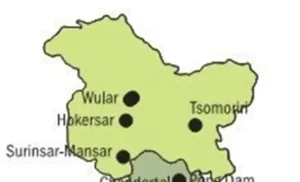
- Also called Hokera, it is a large natural wetland located near Srinagar, Jammu & Kashmir.
- Area: 13.75 sq. km., situated at 1,585 meters above sea level.
- Lies in the Jhelum River basin, fed mainly by the Doodhganga River.
- Part of the Northwest Himalayan biogeographic province, behind the Pir Panchal range.
- Declared a Ramsar site, recognized for its international ecological importance.
Ecological Importance
- Largest bird sanctuary in Kashmir Valley.
- Serves as a critical stopover for migratory waterbirds from Siberia, Central Asia, and Northern Europe.
- Hosts around 68 waterfowl species, including endangered birds.
- Rich in aquatic vegetation like reedbeds and water chestnuts, supporting fish and bird populations.
- Functions as a natural flood absorption basin, protecting Srinagar from floods.
- Supports local livelihoods through fishing, fodder, and plant resources.
Threats and Concerns
- Encroachment: Over 2,500 kanals of wetland area converted to agriculture or settlements.
- Pollution: Discharge of untreated waste and agricultural runoff.
- Shrinking Size: Human activities have reduced its area over time.
- Loss of Habitat: Decline in migratory bird populations due to habitat degradation.
Significance
- Hokersar is vital for biodiversity conservation, climate regulation, and community livelihoods.
- Its degradation undermines India’s commitments under the Ramsar Convention and broader environmental goals.
- Protecting Hokersar is crucial for maintaining wetland ecosystems in the fragile Himalayan region.
Conclusion
The CAG’s warning highlights the urgent need for restoration measures, strict enforcement against illegal land use, and communitybased conservation.
STATE OF INDIA’S BATS REPORT (2024–25)
TOPIC: (GS3) ENVIRONMENT: THE HINDU
India released its first national assessment on bats, highlighting ecological threats, data gaps, and the urgent need for conservation research.
Key Findings
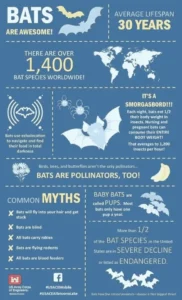
- India hosts 135 bat species, including 16 endemic species.
- 7 species are listed as threatened by IUCN; 35 species remain unassessed or data deficient.
- Species like the Khasian Leafnosed bat face risks from hunting and mining but lack proper conservation status.
Habitat and Roosting
- Bats roost in caves, trees, and manmade structures such as monuments.
- Caves provide stable microclimates and predator protection.
- Example: Robber’s Cave (Mahabaleshwar) hosts one of the largest roosts of Phillip’s longfingered bat.
Ecological Role
- Provide vital ecosystem services:
- Pollination and seed dispersal.
- Pest control in agriculture.
- Soil nutrient enrichment.
- Indispensable for ecosystem stability and farm productivity.
Issues Highlighted
- Data Gaps: Bureaucratic hurdles in research permissions limit scientific studies.
- Negative Perceptions: PostCOVID stigma wrongly portrays bats mainly as disease carriers.
- Habitat Loss: Urbanisation, deforestation, and landuse change threaten bat populations.
Conclusion
The report shows that bats are critical for biodiversity and agriculture, yet remain neglected in conservation policy. Addressing research gaps, correcting public misconceptions, and protecting habitats are essential for safeguarding these species and ensuring ecological balance.

CART CELL THERAPY
TOPIC: (GS3) SCIENCE AND TECHNOLOGY: THE HINDU
For the first time, scientists have successfully used CART cell therapy to treat a patient suffering from three severe autoimmune diseases, highlighting its potential beyond cancer treatment.
About CART Cell Therapy
- CART (Chimeric Antigen Receptor Tcell) therapy is an advanced immunotherapy.
- Patient’s own T cells (a type of white blood cell) are collected and genetically modified in the lab.
- Modified cells (CART cells) are reinfused into the patient’s bloodstream.
- These engineered cells recognize and attack cancer cells by binding to specific antigens.
- CART cells can multiply inside the body, providing longterm anticancer effects.
How It Works
- Collection: T cells are extracted from patient’s blood.
- Modification: Lab engineers add synthetic receptors (CARs) to T cells.
- Multiplication: Modified cells are grown in large numbers.
- Infusion: CART cells are infused back into the patient.
- Action: CART cells target antigens on cancer cells, killing them and triggering broader immune responses.
Applications
- Primarily used for blood cancers, including:
- Bcell acute lymphoblastic leukemia (ALL).
- Diffuse large Bcell lymphoma.
- Follicular lymphoma.
- Mantle cell lymphoma.
- Multiple myeloma.
- Primary mediastinal large Bcell lymphoma.
Side Effects
- Cytokine Release Syndrome (CRS): Severe immune overreaction causing hyperinflammation and organ damage (seen in ~12%).
- Anemia: Low red blood cell count (61%), leading to fatigue.
- Thrombocytopenia: Low platelet count (65%), increasing bleeding risk.
- Neutropenia: Low neutrophil count (96%), raising infection risk.
Conclusion
CART cell therapy represents a revolutionary step in personalized medicine, offering hope for patients with resistant cancers and now autoimmune diseases. While side effects remain a challenge, its ability to harness the body’s own immune system makes it a gamechanging innovation in modern healthcare.