
Table of Contents
ToggleMARINE SPATIAL PLANNING (MSP) IN ODISHA
TOPIC: (GS3) DISASTER MANAGEMENT: THE HINDU
Odisha has become the first Indian state to implement Marine Spatial Planning (MSP) in partnership with the National Centre for Coastal Research (NCCR), marking a major step in integrated coastal and marine management.
Background
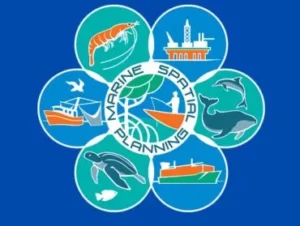
- Marine Spatial Planning (MSP): A scientific framework to manage ocean resources sustainably.
- Global Context: India began MSP in 2019 under the IndoNorway Ocean Initiative, starting with Puducherry and Lakshadweep.
- Odisha’s Role: In the second phase, Odisha is leading as the first state to adopt MSP.
National Centre for Coastal Research (NCCR)
- Established in 1998 in Chennai under the Ministry of Earth Sciences.
- Formerly known as ICMAMPD.
- Functions:
- Shoreline management using satellite and field data.
- Monitoring pollution and water quality (microplastics, heavy metals).
- Hazard mitigation tools (flood warnings, storm surge models).
- Ecosystem research on coastal habitats.
- Capacity building through training and awareness programs.
Marine Spatial Planning
- Objective: Balance ecological protection with economic growth.
- Activities Covered: Fisheries and aquaculture, Ports and shipping, Renewable energy, Tourism, Conservation zones
- Method: Mapping marine areas to allocate specific zones for different uses.
- Benefits: Promotes blue economy, enhances climate resilience, and ensures sustainable livelihoods.
Odisha’s Context
- Coastline: Over 550 km, rich in lagoons, mangroves, and estuaries.
- Supports biodiversity and livelihoods for millions.
- Scientific Mapping under MSP:
- Study of water parameters (salinity, temperature).
- Benthic mapping (underwater vegetation).
- Identification of zones for tourism, fisheries, aquaculture, seagrass, and seaweed cultivation.
- Outcome: Evidencebased policies for coastal management.
Significance for Odisha
- Boosts fisheries, ports, tourism, and marine industries.
- Protects fragile ecosystems while meeting developmental needs.
- Strengthens livelihoods of coastal communities.
- Ensures longterm environmental sustainability.
Supporting Initiative – OMBRIC
- In August 2025, Odisha launched the Odisha Marine Biotechnology Research and Innovation Corridor (OMBRIC).
- Focus: Marine biotechnology research, startups, ecological protection, and scientific tourism.
- Complements MSP by integrating innovation with conservation.
Conclusion
By combining scientific mapping, biotechnology innovation, and community participation, MSP ensures a balanced approach to economic growth and ecological sustainability along India’s coasts.
INDIA MUST DRAW A RED LINE ON U.S. UNILATERAL SANCTIONS
TOPIC: (GS2) INTERNATIONAL RELATIONS: THE HINDU
India’s economy is facing rising energy costs, inflation, and supply chain disruptions due to the U.S.–Israel war against Iran and Washington’s unilateral sanctions. Analysts argue India must assert its strategic autonomy and resist compliance with such sanctions.
Background
- U.S. sanctions have repeatedly targeted India’s energy imports from Iran, Venezuela, and Russia.
- Temporary waivers have allowed limited purchases, but uncertainty persists.
- India’s compliance has weakened its diversification efforts in energy and connectivity projects.
Impact of U.S. Sanctions on India
- Energy Security: Imports of Iranian and Venezuelan oil halted since 2019. Russian oil imports reduced under pressure in 2025.
- Economic Costs: Rising fuel bills, shipping and insurance costs. Exports fell by 7% in March; rupee depreciation pushed India down in IMF’s global rankings.
- Connectivity Losses: Chabahar port project stalled due to sanctions. International NorthSouth Transport Corridor (INSTC) plans curtailed.
India’s Past Responses
- Compliance: Reduced Iranian oil imports during 2012–14 and again after 2019.
- Resistance: Ignored CAATSA sanctions in 2018 to purchase Russian S400 systems, facing no penalties.
- Opportunity Costs: Billions lost by not buying discounted crude; missed chance to build strategic reserves like China.
Global Context
- U.S. is the largest sanctioning power, with 365 sanctions this century.
- EU has imposed ~133; China, Russia, and Iran together only 12 countersanctions.
- UN Security Council maintains ~15 sanction regimes, far fewer than Washington.
Lessons from History
- In 1966, U.S. President Lyndon Johnson restricted wheat shipments under PL480, leaving India in a “shiptomouth” situation.
- Prime Minister Indira Gandhi responded by vowing selfreliance, leading to the Green Revolution.
- Today, similar resolve is needed for energy independence.
Way Forward
- India must declare a red line against unilateral sanctions.
- Options include:
- Rupeerial trade with Iran.
- IntraBRICS payment systems.
- Airgapped financial institutions insulated from Western pressure.
- Expanding renewable and alternative energy sources.
- Such measures would strengthen India’s strategic autonomy and inspire other Global South nations.
Conclusion
Drawing a firm red line would safeguard national interests, promote energy security, and reaffirm India’s commitment to strategic autonomy in global affairs.
PRIME MINISTER’S SPEECH AND MODEL CODE OF CONDUCT (MCC)
TOPIC: (GS2) POLITY: THE HINDU
On April 18, Prime Minister Narendra Modi delivered a speech that was broadcast on Doordarshan and Sansad TV, where he accused Opposition parties of obstructing the passage of the women’s reservation and delimitation Bills. Critics argue that this address amounted to a violation of the Model Code of Conduct (MCC) during the election period.
About MCC
- Definition: A set of guidelines issued by the Election Commission of India to regulate political parties and candidates during elections.
- Purpose: Ensure free, fair, and transparent elections by preventing misuse of power and maintaining a level playing field.
- Applicability: Comes into force from the date of announcement of elections until results are declared.
Key Provisions
- General Conduct: Parties must avoid activities that aggravate communal tensions or create hatred.
- Campaigning Rules: No use of official machinery for campaigning. No criticism of opponents based on caste, religion, or personal life.
- Meetings & Processions: Prior permission required from local authorities.
- Polling Day Guidelines: No canvassing near polling stations; orderly conduct ensured.
- Party in Power Restrictions: No announcement of new schemes or projects. No use of government transport, staff, or premises for electioneering.
- Election Manifestos: Must not contain promises that vitiate fairness or violate constitutional principles.
Concerns about ECI’s Role
- Delayed Response: Slow action in sensitive cases creates doubts about the Commission’s neutrality.
- Scope for Loopholes: Treating major announcements as “official” allows them to influence voters while avoiding accountability.
- Pattern of Decisions: In past instances, notices were directed to party officials rather than the Prime Minister himself, raising questions about consistency.
- Credibility at Risk: Perceived inaction weakens public confidence in the fairness of elections and the impartiality of the institution.
Implications
- Democratic Fairness: Unequal treatment of ruling party vs Opposition weakens electoral integrity.
- Institutional Credibility: ECI’s reluctance damages its image as a neutral constitutional body.
- Electoral Impact: Such speeches can sway voters, especially when broadcast on state media.
Way Forward
- ECI must:
- Clarify whether prior approval was given.
- Investigate the speech’s content.
- Remove it from official platforms if found violative.
- Sanction the Prime Minister to uphold MCC.
- Ensuring equal accountability for all leaders is essential to protect democratic institutions.
Conclusion
The controversy highlights the fragility of electoral fairness when constitutional bodies hesitate to act against powerful leaders. the ECI must enforce the MCC uniformly, regardless of political stature.
INDIA–SOUTH KOREA RELATIONS
TOPIC: (GS2) INTERNATIONAL RELATIONS: THE HINDU
South Korean President Lee Jae Myung’s visit to India has elevated the bilateral relationship, with both nations signing agreements and reaffirming their Special Strategic Partnership.
Background of Relations
- Diplomatic ties established in 1973.
- Upgraded to a Special Strategic Partnership in 2015.
- Driven by:
- Expanding trade and investment (Samsung, Hyundai).
- Defense collaboration (K9 VajraT gun system).
- Technological convergence in AI, IT, and shipbuilding.
- Cultural bonds (Queen Suriratna memorial in Ayodhya).
- Strategic alignment: India’s Act East Policy and Korea’s New Southern Policy.
Key Outcomes of the Recent Meeting
Trade and Economy
- Target: Scale bilateral trade from $27 billion to $50 billion by 2030.
- Restart CEPA upgrade talks (in force since 2010, trade up nearly 90%).
- India runs a trade deficit (imports ~$21B vs exports ~$5.8B).
- Launch of India–Korea Financial Forum and Industrial Cooperation Committee.
- Economic Security Dialogue initiated for critical technologies and supply chains.
Digital and Industrial Partnership
- Launch of India–Korea Digital Bridge for AI, semiconductors, and IT.
- Agreements to support SMEs and digital innovation.
- Plan for a Korean Industrial Township in India to ease market entry.
Maritime and Shipbuilding
- Signed a Comprehensive Framework for Shipbuilding and Maritime Logistics.
- Korea brings advanced technology; India offers policy support and demand base.
- Dialogue launched on climate change, Arctic, and maritime cooperation.
Multilateral and Geopolitical Cooperation
- Korea joined International Solar Alliance (ISA) and IndoPacific Oceans Initiative (IPOI).
- Both nations called for global institutional reforms.
- Shared views on conflicts in West Asia and Europe, stressing peace for stability.
Cultural Diplomacy
- Growing popularity of Kpop and Kdramas in India; Bollywood gaining traction in Korea.
- Launch of Mumbai Korea Centre as a permanent Kpop hub.
- Plan for India–Korea Friendship Festival in 2028.
Challenges
- Persistent trade imbalance despite CEPA.
- Building India’s shipbuilding capacity requires infrastructure and skilled labour.
- Geopolitical risks may disrupt energy and supply chains.
- Implementation hurdles for MoUs, especially in SME and tech transfer.
Way Forward
- Fasttrack CEPA renegotiation to reduce India’s trade deficit. Codevelop semiconductor supply chains.
- Attract Korean FDI into India’s industrial corridors. Build resilient supply chains for critical minerals and emerging technologies.
- Align shipbuilding cooperation with Sagarmala Project and Maritime India Vision 2030. Position IndoPacific as a zone of cooperative prosperity.
Conclusion
The visit signals a shift towards a technologydriven, futureoriented partnership. From “chips to ships” and “talent to technology,” India and South Korea are forging a relationship that blends economic resilience, strategic depth, and cultural vibrancy — vital for navigating a multipolar world.
PREMATURE RELEASE AND THE DELHI HC’S SCRUTINY IN THE MATTOO CASE
TOPIC: (GS2) POLITY: THE HINDU
The Delhi High Court questioned the denial of premature release to Santosh Kumar Singh in the 1996 Priyadarshini Mattoo case.
Background of the Case
- Victim: Priyadarshini Mattoo, a Delhi University law student, was raped and murdered in 1996. Accused Santosh Kumar Singh, son of a senior police officer.
Judicial Timeline
- 1999 (Trial Court): Singh was acquitted, citing lack of evidence.
- 2006 (Delhi High Court): Conviction overturned; he was sentenced to death.
- 2010 (Supreme Court): Death penalty commuted to life imprisonment, noting mitigating circumstances.
- Custody Period: Singh has now spent nearly 30 years in prison.
Premature Release Plea
- Singh applied for premature release (early release before completing full sentence). His plea was rejected twice by the Sentencing Review Board (SRB).
- The Delhi High Court earlier set aside the first rejection (July 2025) and directed reconsideration.
- The second rejection is now under judicial review, raising questions about whether SRB decisions are guided by legal principles or public sentiment.
Premature Release
- Meaning: Early release of life convicts before completing full sentence, based on reform and rehabilitation.
- Constitutional Powers: Article 72 – President’s power of pardon/remission. Article 161 – Governor’s similar powers.
- Statutory Provisions (BNSS): Sections 473–474: State governments can grant remission. Section 475: Minimum 14 years actual imprisonment before eligibility.
- Role of SRB: Senior officials assess conduct, rehabilitation prospects, and recommend release.
Criteria for Premature Release
- Good behaviour in prison.
- Compliance with parole/bail conditions.
- No further criminal activity.
- Psychological assessment and rehabilitation prospects.
- Nature of crime considered, but not the sole factor.
Judicial Guidelines and Precedents
- Union of India v. V. Sriharan: Remission is not absolute; must be reasoned and consultative.
- Manu Sharma (Jessica Lall case): Released in 2020 after SRB recommended based on good conduct.
- Sushil Sharma (Tandoor case): Released after 23 years; HC intervened, SC upheld release in 2023.
- Fixed-term sentences: SC clarified that once a judicially fixed sentence ends, SRB approval is not needed.
Issues Highlighted by HC
- SRB decisions often cautious in high-profile cases, influenced by public sentiment.
- Leads to repeated litigation cycles: SRB rejection → writ petition → judicial reconsideration.
- Raises concerns of executive overreach and undermines principles of reformative justice.
Conclusion
Premature release must balance justice, rehabilitation, and rule of law, reinforcing faith in India’s criminal justice system.
VISHWA SUTRA INITIATIVE
TOPIC: (GS1) INDIAN ART AND CULTURE: THE HINDU
The Ministry of Textiles has launched the ‘Vishwa Sutra – Weaves of India for the World’ initiative to showcase Indian handlooms in a modern global design framework.
About the Initiative
- Launched by: Office of the Development Commissioner (Handlooms) in collaboration with National Institute of Fashion Technology (NIFT).
- Aim: Present Indian handlooms in a contemporary global design context.
- Scope:
- 30 distinct handloom weaves from across India, each linked to a different state.
- Reinterpreted with design inspirations from 30 countries, blending Indian traditions with global fashion sensibilities.
Examples:
- Odisha Ikat with Greek motifs.
- Kanchipuram silk with Norwegian design lines.
- Muga silk with Egyptian elements.
- Patola with Spanish influences.
- Banarasi with UAEinspired ensembles.
Significance
- Local to Global: Strengthens India’s handloom sector by positioning it in international markets.
- Cultural Continuity: Highlights centuriesold weaving traditions preserved across generations.
- Innovation: Combines heritage with modern fashion trends, making handlooms more appealing globally.
- Economic Impact: Supports artisans and promotes exports, aligning with the government’s “Vocal for Local to Global” vision.
- 5F Framework: Integrates the chain from Farm → Fibre → Factory → Fashion → Foreign, ensuring holistic growth of the textile sector.
Conclusion
By blending traditional weaves with global design inspirations, it seeks to make India’s textile heritage both economically competitive and culturally vibrant in the global fashion industry.
SMILE SCHEME
TOPIC: (GS1) SOCIAL ISSUES: THE HINDU
Recent reports show that the government allocated ₹390 crore (2021–2026) for the SMILE scheme, aimed at supporting transgender persons and individuals engaged in begging.
About the Scheme
- Full Form: Support for Marginalized Individuals for Livelihood and Enterprise.
- Launch: 12 February 2022.
- Type: Central Sector Scheme.
- SubSchemes:
- Comprehensive Rehabilitation for Welfare of Transgender Persons.
- Comprehensive Rehabilitation of Persons Engaged in Begging.
- Objective: Provide welfare, rehabilitation, and livelihood opportunities to marginalized groups, ensuring dignity and social inclusion.
Key Features
- Scholarships: For transgender students from Class IX to postgraduation.
- Skill Development: Training and livelihood support under PMDAKSH.
- Medical Support: Composite health package under PMJAY, including genderaffirmation surgeries.
- Garima Greh: Shelter homes offering safe accommodation for transgender persons facing family rejection or homelessness.
- Protection Cells: Statelevel units to monitor offences against transgender persons and ensure timely investigation.
- National Portal & Helpline: Information and grievance redressal for transgender persons and those engaged in begging.
Significance
- Promotes social justice and inclusion.
- Strengthens education, health, and livelihood opportunities for marginalized groups.
- Aligns with the government’s vision of empowerment and dignity for all citizens.
Conclusion
By addressing education, health, shelter, and livelihood needs, it seeks to transform the lives of transgender persons and individuals engaged in begging, ensuring they are integrated into mainstream society with dignity.
MARKET INTERVENTION SCHEME (MIS)
TOPIC: (GS3) ECONOMY: THE HINDU
The Union Agriculture Ministry recently announced the procurement of 20 lakh metric tonnes of potatoes under the Market Intervention Scheme (MIS) to protect farmers from distress sales.
About the Scheme
- Part of: Pradhan Mantri Annadata Aay Sanrakshan Abhiyan (PMAASHA).
- Nature: A price support mechanism for perishable crops (like tomato, onion, potato) that do not have a fixed Minimum Support Price (MSP).
- Implemented by: Department of Agriculture and Farmers Welfare.
- Trigger: Activated when market prices fall sharply due to bumper harvests.
Objectives
- Prevent distress sales by farmers during peak arrival seasons.
- Ensure prices do not fall below economic levels or cost of production.
- Provide a safety net for growers of perishable commodities.
Pattern of Assistance
- Losses shared between Centre and States:
- 50:50 basis for general states.
- 75:25 basis for NorthEastern states.
Conditions for Implementation
- Market price must fall by at least 10% compared to the previous normal year.
- Procurement/coverage limited to 25% of total production of the crop.
Significance
- Supports farmers in times of price crashes.
- Strengthens food security and rural incomes.
- Complements MSP by covering crops outside its ambit.
Conclusion
The Market Intervention Scheme is a crucial policy tool to stabilize farm incomes in case of bumper harvests of perishable crops. By sharing costs between Centre and States, it ensures both economic protection for farmers and market stability.