

Table of Contents
ToggleARTICLE 142 AND COMPLETE JUSTICE
TOPIC: (GS2) POLITY: THE HINDU
The Supreme Court in In Re: Phalodi Accident vs. NHAI (2025) took suo motu cognisance of two highway accidents that killed 34 people, declaring the Right to Safe Travel on National Highways a fundamental right under Article 21.
Supreme Court’s Power of Complete Justice
- Extraordinary Constitutional Power: Article 142 authorizes the Supreme Court to issue any decree or order required to ensure “complete justice” in cases before it.
- Safety Valve of the Constitution: It functions as a constitutional safeguard, bridging gaps where ordinary laws or procedures are silent, inadequate, or incapable of providing relief.
- Beyond Procedural Rigidity: Unlike statutory remedies bound by technicalities, Article 142 ensures that substantive justice prevails over procedural hurdles.
- Residuary Nature: This power is inherent to the Supreme Court’s role as the guardian of the Constitution, not conferred by legislation.
- Conditions for Invocation: It is exercised in cases of manifest error or where nonexercise would result in a travesty of justice.
Road Safety Crisis
- National Highways: Only 2% of India’s roads, yet account for 30% of fatalities.
- 2025 Data: ~26,770 deaths in six months, despite an 11% decline from 2024.
- Government Target: Reduce accidents by 50% by 2030 through the 4Es – Education, Engineering, Enforcement, Emergency Medical Services.
Nature of Article 142 Power
- Residuary in nature: Exists where ordinary law is silent or inadequate.
- Conditions: Invoked when manifest error exists or nonexercise would cause injustice.
- Beyond procedure: Ensures justice even if statutes lack remedies.
Judicial Interpretations
- Delhi Judicial Service Assn. vs. State of Gujarat (1991): Article 142 power is of a “different quality” beyond statutory limits.
- Canara Bank vs. Debasis Das (2003): Substantive justice must prevail; natural justice fills gaps.
- Hitesh Bhatnagar vs. Deepa Bhatnagar (2011): Extraordinary care required while exercising this jurisdiction.
Necessity vs. Overreach
- Criticism: Judicial overreach, bypassing laws, encroaching on executive/legislative domain.
- CounterArgument: Judicial activism ensures justice in evolving contexts (e.g., livein relationships, LGBTQ+ rights, environmental crises, digital privacy).
- High Courts: Under Article 226, can deliver justice but not at par with Supreme Court’s plenary powers.
Challenges
- Separation of Powers: Risk of judiciary stepping into policymaking.
- Predictability: Frequent use may create uncertainty in governance.
- Balance: Need to avoid undermining legislative intent while ensuring justice.
Way Forward
- Codify Guidelines: Clear parameters for invoking Article 142 to prevent arbitrariness.
- Strengthen Institutions: Ensure executive and legislature act proactively, reducing reliance on judicial intervention.
- Public Awareness: Promote road safety and accountability alongside judicial directives.
- Judicial Restraint: Exercise Article 142 sparingly, only in cases of manifest injustice.
Conclusion
Article 142 remains the Supreme Court’s extraordinary weapon to deliver complete justice, bridging the gap between law and evolving social realities. While concerns of judicial overreach persist, its judicious use ensures that justice is not denied due to procedural rigidity.
KERALA’S AGEING POPULATION CRISIS
TOPIC: (GS2) POLITY: THE HINDU
Kerala has announced the creation of a dedicated Department for the Elderly (2026) — the first such initiative in India to address rapidly ageing demographic profile
Kerala’s Ageing Population Crisis
- Kerala has emerged as India’s fastest ageing state, with demographic trends resembling those of East Asia and Europe more than the rest of the country.
- The Old Age Dependency Ratio has risen from 19.6% in 2011 to 26.1% in 2021, and is projected to reach 34.3% by 2031, meaning one in three working-age individuals will support an elderly dependent.
- This demographic transition poses serious social, economic, and healthcare challenges, requiring urgent policy interventions to safeguard livelihoods, welfare, and dignity of the elderly.
Why Kerala is Ageing Rapidly
- Falling Fertility Rate: Kerala’s TFR is 1.35, far below the national average of 1.9, reducing youth inflow.
- Rising Life Expectancy: Women: 78.4 years, Men: 71.9 years, leading to swelling elderly numbers.
- OutMigration: Large working-age migration abroad leaves behind elderly parents; return migrants add to ageing burden.
Geographic and Gender Dimensions
- Rural Burden: 17.5% of rural population aged 60+, compared to 15.4% in urban areas, due to youth migration.
- Feminisation of Ageing: Sex ratio among 80+ years is 1,651 women per 1,000 men, creating a large population of widows living alone.
Existing Initiatives in Kerala
- State Elderly Commission (2025): Quasijudicial forum for senior citizens’ rights.
- Vayomithram: Mobile medical care at the doorstep.
- Samayaprabha: Daycare centres for elderly.
- Kerala Care Palliative Grid: Network of 1,387 govt institutions + 1,227 NGOs, serving 1.5 lakh bedridden and 4 lakh ailing individuals.
- Welfare Pension: ~75% of aged population covered under pension schemes.
India’s Demographic Transition
- National TFR: Dropped to 1.9 (SRS 2024), below replacement level (2.1).
- Demographic Dividend: Median age 29.2 years, with 370–380 million youth (15–29 years), ~27% of population.
- Challenge: Dividend window closing in 2–3 decades; India must skill and employ youth before ageing sets in.
Way Forward
- Dedicated Elderly Policy: Expand Kerala’s model nationally with geriatric governance departments.
- Healthcare Strengthening: Build geriatric wards, palliative care, and telemedicine for elderly.
- Social Security Expansion: Universalise pension and insurance portability.
- Skill Development: Train caregivers and paramedical staff in geriatrics and foreign languages.
- Community Support: Promote daycare centres, selfhelp groups, and rural elderly cooperatives.
Demographic Dividend
It refers to the economic growth potential that arises when a country’s workingage population (15–64 years) is larger than the dependent population (children and elderly).
- India’s Context:
- Median age: 29.2 years (2025), compared to 40.2 in China and much higher in Europe.
- Youth population: 370–380 million aged 15–29, ~27% of total population.
- Over 65% of Indians are below 35 years, making India one of the youngest nations globally.
- Significance:
- Provides a window of opportunity for accelerated growth if youth are skilled, educated, and employed.
- Countries like South Korea and China leveraged their demographic dividend to achieve rapid industrialization.
- Challenge: This window will close in 2–3 decades as fertility declines and ageing rises.
Population Replacement Ratio (Replacement Level Fertility)
- It is the Total Fertility Rate (TFR) at which a population exactly replaces itself from one generation to the next, without migration.
- Global Standard: Replacement level is 2.1 children per woman.
- The extra 0.1 accounts for child mortality and gender imbalance.
- India’s Context:
- National TFR: 1.9 (SRS 2024), below replacement level.
- Kerala’s TFR: 1.35, among the lowest in India, accelerating ageing.
Conclusion
Kerala’s ageing crisis is a preview of India’s future demographic challenge. Proactive measures in healthcare, pensions, and social support are vital to manage this transition.
VEMBANAD LAKE
TOPIC: (GS1) GEOGRAPHY: THE HINDU
Recently in news as the Kerala High Court directed action against houseboat pollution, prompting the state government to regulate activities on Vembanad Lake.
Vembanad Lake
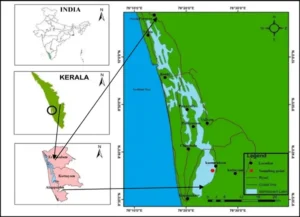
- Largest Lake in Kerala and longest in India, covering 2,033 sq. km.
- Known locally as Vembanad Kayal, Vembanad Kol, Punnamada Lake, and Kochi Lake.
- Fed by Meenachil, Achankovil, Pampa, and Manimala rivers.
- Separated from the Arabian Sea by a narrow barrier island; freshwater dominates most parts, saline water near the sea.
- Ramsar Site (2002): Recognized under the National Wetlands Conservation Programme.
- Kumarakom Bird Sanctuary lies on its eastern bank, hosting migratory birds from Siberia and the Himalayas.
Ecological Importance
- Supports diverse avifauna: Little Cormorant, Indian Darter, White Ibis, Kingfishers, Waterfowl, Siberian Cranes, Teal, Flycatchers.
- Extensive paddy fields below sea level and coconut groves form part of Kerala’s backwater ecosystem.
- Annual Nehru Trophy Snake Boat Race (Vallam Kali) held in August, showcasing cultural heritage.
Challenges
- Pollution Load: Houseboats, untreated sewage, and industrial effluents degrade water quality.
- Ecosystem Stress: Overfishing, sand mining, and reclamation threaten biodiversity.
- Tourism Pressure: Unregulated tourism impacts fragile wetland ecology.
Way Forward
- Strict enforcement of pollution control norms for houseboats and industries.
- Strengthen communitybased conservation through local participation.
- Promote ecotourism models integrating livelihood with sustainability.
- Enhance wetland monitoring under Ramsar and national programmes.
Conclusion
Vembanad Lake is both an ecological treasure and cultural icon of Kerala. Protecting it from pollution and overuse is vital for sustaining biodiversity, tourism, and livelihoods.
FERROCENE
TOPIC: (GS3) SCIENCE AND TECHNOLOGY: THE HINDU
Recently in news as researchers synthesized a new carbonfree molecule mimicking the unique ‘sandwich’ structure of ferrocene, marking a breakthrough in organometallic chemistry.
Ferrocene
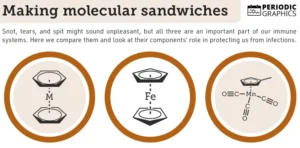
- Ferrocene is an orange crystalline organometallic compound with formula Fe(C₅H₅)₂.
- First prepared in 1951 by reacting sodium cyclopentadienide with iron(II) chloride, its discovery launched the field of organometallic chemistry.
Properties
- Appears as stable orange crystals with a melting point of 174°C (345°F).
- Chemically behaves like benzene, undergoing substitution reactions due to aromatic stability.
- Solubility: Dissolves in organic solvents but insoluble in water.
- Unique Structure: Iron atom sandwiched between two cyclopentadienyl rings, giving rise to the term “sandwich compound.”
Applications
- Medicines: Used in drug design for anticancer and antimicrobial agents.
- Batteries: Incorporated in redox systems for energy storage.
- Advanced Materials: Applied in polymers and nanomaterials for enhanced stability.
- Electronics: Utilized in semiconductors and sensors due to its stable redox properties.
Conclusion
Ferrocene remains a landmark compound in organometallic chemistry, combining stability, versatility, and unique structure. Its applications across medicine, materials, and energy systems underline its enduring scientific importance.
INFORMATION AGENTS
TOPIC: (GS2) POLITY: THE HINDU
Recently in news as Google unveiled “information agents” at its annual developer conference, integrating them into Search to monitor the web proactively on behalf of users.
Who are Information Agents
- Information Agents are intelligent computational entities designed to access diverse and distributed information sources.
- They proactively acquire, filter, and mediate data, ensuring users receive relevant insights without manual search overload.
- By acting as semantic brokers, they bridge the gap between information providers and consumers, offering valueadded services and contextual knowledge.
Core Functions
- Proactive Resource Discovery: Automatically identify and collect relevant data across diverse sources.
- Semantic Brokering: Bridge gaps between information providers and consumers by interpreting context.
- ValueAdded Services: Provide enriched information products, summaries, or alerts.
- Integration of Sources: Can access databases, websites, and even other agents.
Example Use Case
- A user asks the agent to investigate agentoriented programming.
- The agent searches across FTP sites, retrieves a technical report, and provides the researcher’s contact details — saving time and effort.
Significance
- Helps users cope with information overload in the digital age.
- Enhances decisionmaking by providing curated, contextaware insights.
- Forms the backbone of nextgeneration search engines and AI assistants.
Conclusion
Information agents represent a paradigm shift in information management, moving from passive search to active, intelligent monitoring. Their ability to deliver complete, contextual insights makes them vital in the era of big data and AI.
PM-AJAY SCHEME
TOPIC: (GS2) POLITY: THE HINDU
Recently in news as the Ministry of Social Justice & Empowerment launched the PM-AJAY portal and AJAY mobile app to digitise the implementation of the scheme.
PM-AJAY Scheme
- PM-AJAY (Pradhan Mantri Anusuchit Jaati Abhyuday Yojana) was launched in FY 202122 as a comprehensive programme for the socio-economic upliftment of Scheduled Castes (SCs).
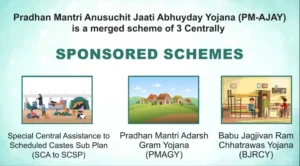
- It merged three earlier schemes: PM Adarsh Gram Yojana (PMAGY), Special Central Assistance to SCSP, and Babu Jagjivan Ram Chhatrawas Yojana (BJRCY).
- Nodal Ministry: Ministry of Social Justice & Empowerment (MoSJE).
Eligibility
- SC persons below poverty line eligible for income generation and skill programmes.
- Villages with ≥50% SC population eligible for infrastructure grants.
Key Components
- Adarsh Gram Development: Transform SC-majority villages into model villages with better infrastructure.
- Socio-Economic Projects: Grants for livelihood projects, skill centres, and financial aid for loans.
- Hostel Construction: Build hostels in higher education institutions ranked under NIRF and government-funded schools.
- Infrastructure Creation: Roads, schools, health centres in SC-dominated villages.
Significance
- Addresses poverty reduction, education access, and social inclusion.
- Promotes skill development and livelihood generation for SC youth.
- Strengthens infrastructure in marginalized areas, bridging rural-urban gaps.
- Enhances digital governance through portal and mobile app for transparency.
Conclusion
PM-AJAY is a holistic scheme for Scheduled Castes, combining infrastructure, education, and livelihood support. Its digitisation ensures efficient delivery and empowerment of marginalized communities.
KORAGA TRIBE
TOPIC: (GS2) POLITY: THE HINDU
Recently in news as the UNHabitat World Cities Report 2026 highlighted the plight of the Koraga tribe, noting entrenched caste barriers and policy gaps that continue to deny them secure housing and social equality.
Koraga tribe
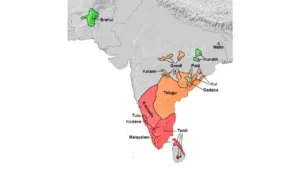
- The Koraga tribe is an indigenous community mainly found in Dakshina Kannada and Udupi districts of Karnataka and Kasaragod district of Kerala.
- Classified as a Particularly Vulnerable Tribal Group (PVTG), they face socioeconomic exclusion and cultural marginalization.
- They communicate in Koraga Bhasha and Tulu, reflecting their distinct linguistic heritage.
Culture and Social Organization
- Livelihoods: Depend on agriculture, forest produce, and basketmaking crafts.
- Clan System: Follow a matrilineal family structure with unique clans called “bali”.
- Leadership: Villages are led by a senior elder known as Mooppan, responsible for community welfare.
- Music & Rituals: Drumming and flute (Dholu & Voote) central to ceremonies; folk dances and spirit worship (Bhutas) form part of their cultural identity.
- Religion: Follow Hinduism but retain distinct tribal beliefs, including rituals to ward off evil.
Challenges
- Housing Inequality: Lack of secure housing despite welfare schemes.
- Social Discrimination: Entrenched caste barriers continue to marginalize them.
- Economic Vulnerability: Dependence on lowincome traditional crafts and agriculture.
- Gender Dimension: Matrilineal system often leaves women vulnerable when resources are scarce.
Way Forward
- Strengthen housing and livelihood schemes targeted at PVTGs.
- Promote Koraga crafts and cultural heritage through market linkages.
- Ensure inclusive education and healthcare access.
- Empower community leadership and integrate Koraga voices in local governance.
Conclusion
The Koraga tribe represents both the rich cultural diversity and deep social challenges of India’s tribal landscape. Addressing their housing, livelihood, and social rights is essential for inclusive development and dignity.

INDIAN CYBERCRIME COORDINATION CENTRE (I4C)
TOPIC: (GS2) POLITY: THE HINDU
Recently in news as the Indian Cybercrime Coordination Centre (I4C) issued an advisory after detecting a sophisticated phishing campaign targeting Apple iPhone users whose devices were lost or stolen.
Indian Cybercrime Coordination Centre (I4C)
- The Indian Cybercrime Coordination Centre (I4C) was set up under the Ministry of Home Affairs (MHA) as the national nodal agency to combat cybercrime.
- It provides a coordinated framework for law enforcement agencies (LEAs), academia, industry, and citizens to collectively address cyber threats.
- Headquarters: Located in New Delhi, it acts as the central hub for cybercrime prevention, detection, investigation, and prosecution.
Objectives of I4C
- Act as a nodal point to curb cybercrime.
- Strengthen fight against cyber offences targeting women and children.
- Facilitate easy filing of complaints via the National Cybercrime Reporting Portal.
- Serve as an early warning system for proactive prevention.
- Build capacity of police, prosecutors, and judiciary in cyber forensics and investigation.
- Promote R&D in cyber tools with academia and industry.
- Suggest legal amendments to keep pace with evolving technologies.
- Coordinate international cooperation through MLATs.
Components of I4C
- Threat Analytics Unit
- National Cybercrime Reporting Portal
- Training Centre
- Research & Innovation Centre
- Joint Cyber Crime Coordination Team
- Forensic Laboratory Ecosystem
Key Initiatives
- Citizen Financial Cyber Fraud Reporting System – near realtime fraud reporting.
- National Helpline 1930 – assistance for online complaints.
- CyberDost – social media handle for safety tips.
- Cyber Crime Volunteers Programme – citizen participation in cyber safety.
- Pratibimb Geospatial Crime Mapping – mapping crime infrastructure for jurisdictional visibility.
Phishing – Current Threat
- Phishing is a cyberattack using deceptive messages to steal sensitive data.
- Methods include domain spoofing, fake websites, and AIgenerated content.
- Commonly supports account takeovers, ransomware, and business email compromise.
Conclusion
I4C has emerged as India’s central pillar in cybercrime prevention and response, combining technology, law enforcement, and citizen awareness. Its initiatives are crucial to protect against evolving digital threats.