...
Daily Current affairs 23 May 2026

Daily Current Affairs 23-May-2026

Share this Post

UPPER GANGA NODAM CONSENSUS

TOPIC: (GS1) GEOGRAPHY: THE HINDU

The Union Government informed the Supreme Court (Jan 2026) that it will not support new hydropower projects on the Alaknanda and Bhagirathi rivers, marking a decisive move towards ecological protection in the fragile Himalayan region.

Upper Ganga Hydropower Policy

  • 2013 Kedarnath Disaster: The devastating floods led the Supreme Court to halt new environmental and forest clearances for hydropower projects in Uttarakhand, citing ecological fragility.
  • Ravi Chopra Committee (2014): This expert panel concluded that 23 out of 24 proposed projects would severely damage biodiversity, strengthening the case against largescale dam construction.
  • EBII Committee (2015): Tasked with assessing cumulative impacts, seismic risks, glacial movements, and socioeconomic factors, it provided a broader framework for evaluating hydropower feasibility.
  • Policy Deadlock (2015–2021): Ministries disagreed on the way forward; eventually, in 2021, the Centre supported only seven projects that were either near completion or had major financial commitments.
  • Fresh Review (2024): Under Cabinet Secretary T.V. Somanathan, a new panel recommended five projects (Bowala Nandprayag, Devsari, Bhyundar Ganga, Jhalakoti, UrgamII), reflecting a cautious approach to development in the fragile Himalayan ecosystem.

Key Concerns

  • Disaster Vulnerability: Risks from glacial lake outburst floods (GLOFs), highlighted by the 2023 Sikkim flood.
  • Fragile Ecosystem: Frequent disasters — 2021 Rishi Ganga floods, Joshimath subsidence — show extreme vulnerability.
  • Ecological Sensitivity: Region includes Nanda Devi National Park, Valley of Flowers, Gangotri National Park, and the Bhagirathi EcoSensitive Zone.
  • Cultural Significance: The Ganga headstreams are considered sacred, adding a socioreligious dimension to conservation.

Centre’s Position (2026)

  • Declared the Alaknanda and Bhagirathi basins as “sui generis” — unique in ecological, geological, and cultural terms.
  • Opposed new hydropower projects, prioritising environmental sustainability over economic gains.
  • Stressed the need for renewable alternatives like solar and wind energy in Uttarakhand.

Hydropower Projects – Large vs Small

  • Large Hydropower Projects
    • Capacity: More than 25 MW.
    • Features: Big reservoirs, major electricity supply, but high ecological and social impact. Examples: Tehri Dam, Bhakra Nangal, Sardar Sarovar.
  • Small Hydropower Projects (SHPs)
    • Capacity: Up to 25 MW (Micro ≤100 kW, Mini 101 kW–2 MW, Small 2–25 MW).
    • Features: Runofriver type, minimal storage, lower impact, ideal for rural electrification. Examples: Darjeeling SHP, Chitral SHP.
    • Total Hydropower Capacity (2025): ~46 GW. Large Hydro (>25 MW): ~40 GW. Small Hydro (<25 MW): ~6 GW.
    • Balance needed: Large hydro for bulk power, small hydro for sustainable local energy.

GANGA RIVER

Ganga River

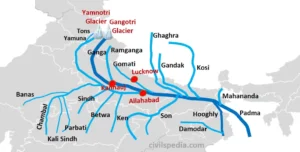
  • Origin: Begins at Devprayag, Uttarakhand, where the Alaknanda and Bhagirathi rivers meet.
  • Length: Approximately 2,525 km (1,569 miles).
  • Countries: Flows through India and Bangladesh (called Padma in Bangladesh).
  • Mouth: Empties into the Bay of Bengal, forming the world’s largest delta (Sundarbans).
  • Basin Size: Covers nearly 1 million sq. km, supporting ~40% of India’s population.
  • Tributaries: Major ones include Yamuna, Ghaghara, Gandak, Kosi, Gomti, Son, Damodar, and Mahananda.

Cities Along Ganga: Haridwar, Rishikesh, Kanpur, Prayagraj, Varanasi, Patna, Kolkata, Dhaka.

Conclusion

The Upper Ganga NoDam Consensus reflects India’s shift from developmentfirst to ecologyfirst planning in the Himalayas. It sets a precedent for climateresilient infrastructure policy, balancing energy needs with environmental and cultural preservation.

UAPA BAIL CURBS AND SUPREME COURT

TOPIC: (GS2) POLITY: THE HINDU

The Supreme Court recently granted six months of interim bail to two accused in the 2020 Delhi riots case and referred issue of bail restrictions under the Unlawful Activities (Prevention) Act, 1967 (UAPA) to a larger Bench.

UAPA Bail Concerns

  • Primary AntiTerror Law: The Unlawful Activities (Prevention) Act (UAPA), 1967 is India’s main legislation to combat terrorism and safeguard national security. It empowers the state to designate individuals and groups as terrorists and restricts bail provisions under Section 43D(5).
  • Stringent Bail Provisions: Bail can be denied if accusations appear prima facie true, making UAPA one of the toughest laws in India. As of 2024 NCRB data, over 5,000 cases were registered under UAPA, but conviction rates remain low (~29%), raising concerns about prolonged incarceration.
  • Impact on Liberty: Critics argue that restrictive bail provisions often conflict with Article 21 (Right to Life and Liberty), leading to extended pretrial detention and human rights concerns.
  • Judicial Interventions: The Supreme Court in Union of India v. K.A. Najeeb (2021) allowed bail despite UAPA restrictions, stressing that long incarceration without trial violates fundamental rights. Recent cases (2026) have again highlighted the need for judicial consistency.

Features of UAPA Bail Provisions

  • Section 43D(5): Bail can be denied if the court believes the accusations are prima facie true.
  • This makes bail under UAPA far more restrictive compared to ordinary criminal law.
  • Courts often face difficulty in balancing national security concerns with fundamental rights under Article 21 (Right to Life and Liberty).

Judicial Developments

  • Union of India v. K.A. Najeeb (2021): Supreme Court held that prolonged incarceration without trial violates Article 21, allowing bail despite UAPA restrictions.
  • Delhi Riots Case (2020): Multiple accused challenged long detentions; interim bail was granted in 2026, but the broader issue was referred to a larger Bench.
  • Judicial Concern: Courts stress the need for institutional fidelity and consistent application of precedents to avoid arbitrary outcomes.

Issues with Current Framework

  • Prolonged Trials: UAPA cases often take years, leading to extended pretrial detention.
  • Human Rights Concerns: Critics argue bail restrictions undermine due process and liberty.
  • State vs Individual: Balancing societal security with individual rights remains a persistent challenge.
  • Judicial Backlog: Heavy caseloads delay trials, intensifying the problem of long incarceration.

Way Forward on UAPA Bail Concerns

  • Judicial Clarity: A larger Bench of the Supreme Court should lay down uniform bail guidelines under UAPA to avoid inconsistent rulings. This will ensure institutional fidelity and protect Article 21 rights.
  • TimeBound Trials: As per NCRB 2024 data, conviction rate under UAPA is only ~29%, with many accused spending years in pretrial detention.
  • Periodic Bail Review: Courts should conduct regular reviews (every 6–12 months) of detention under UAPA. If trials are delayed beyond a reasonable period, bail should be considered to uphold human rights standards.
  • Strengthening Investigation: Enhancing forensic capacity, digital surveillance, and training of investigators will improve conviction rates and reduce misuse.

Conclusion

The Supreme Court’s referral of UAPA bail curbs to a larger Bench reflects the urgent need for judicial clarity and balance. Ensuring national security while protecting constitutional liberties will be crucial for India’s democratic credibility.

DECLINING BIRTH RATE AND INFANT MORTALITY IN INDIA

TOPIC: (GS2) POLITY: THE HINDU

The Sample Registration Survey (SRS) 2024 reported a decline in India’s birth rate, death rate, and infant mortality rate (IMR), reflecting demographic transition and improvements in public health outcomes.

Birth Rate & Infant Mortality Rate (IMR)

  • Birth Rate: It refers to the number of live births per 1,000 people in a population per year.
    •  
  • Significance: Indicates population growth trends, fertility levels, and helps in planning healthcare and education policies.
  • Infant Mortality Rate (IMR): It measures the number of deaths of infants under one year of age per 1,000 live births in a given year.
    •  
  • Significance: Considered a key indicator of public health, reflecting maternal care, healthcare access, nutrition, and socioeconomic conditions.


Key Findings of SRS 2024

  • Birth Rate: Declined from 22.7 (2014) to 20.0 (2024) per 1,000 population.
  • Death Rate: Reduced slightly from 6.7 (2014) to 6.4 (2024).
  • Infant Mortality Rate (IMR): Dropped from 39 (2014) to 24 (2024) per 1,000 live births — a fall of 15 points.
  • Rural vs Urban:
    • Rural IMR: 43 → 27
    • Urban IMR: 26 → 17
  • State Achievement: Kerala achieved singledigit IMR (8), the lowest in India.

Reasons for Improvement

  • Healthcare Expansion: Better maternal and child health services under NHM and Ayushman Bharat.
  • Immunisation: Intensified vaccination drives like Mission Indradhanush.
  • Nutrition Schemes: Programs such as POSHAN Abhiyaan improved child nutrition.
  • Awareness & Education: Rising female literacy and institutional deliveries contributed to lower IMR.
  • Technology Use: Telemedicine and digital health monitoring enhanced rural healthcare access.

Govt targets:

  • National Health Policy 2017: Targets IMR reduction to below 20 by 2025.
  • SDG Goal 3.2: End preventable deaths of newborns and children under 5 by 2030.
  • India’s Demographic Transition: Moving towards replacementlevel fertility, signalling stabilisation of population growth.

MATERNAL MORTALITY RATE (MMR)

Maternal Mortality Rate (MMR) refers to the number of maternal deaths per 100,000 live births in a given year.

A maternal death is defined as the death of a woman during pregnancy, childbirth, or within 42 days of termination of pregnancy, due to causes related to pregnancy or its management (excluding accidental or incidental causes).

  • Formula


India’s Status

    • As per Sample Registration System (SRS) 2022, India’s MMR is 97 per 100,000 live births, showing a steady decline from 130 in 2014–16.
    • States like Kerala (19) and Maharashtra (33) have achieved very low MMR, while Assam (195) and UP (167) remain high.

Conclusion

India’s falling birth and infant mortality rates highlight progress in healthcare and social development. Sustaining these gains while addressing regional disparities will be crucial for achieving equitable demographic transition.

SUPREME COURT REVIEW OF NCERT CARTOONS

TOPIC: (GS2) POLITY: THE HINDU

The Supreme Court has directed a panel to review cartoons in NCERT textbooks after concerns that they may negatively influence young students.

Cartoons in NCERT Textbooks

  • Judicial Concern: Some cartoons were seen as lampooning institutions, including the judiciary.
  • Committee Formation: A panel led by Justice Indu Malhotra was tasked with reviewing content.
  • Objective: Ensure textbooks remain educational tools, not platforms for satire.
  • Pedagogical Debate: While cartoons can aid learning, critics argue they must be ageappropriate and respectful of institutions.

Why Supreme Court Directed Review of NCERT Cartoons

  • Age Appropriateness: Concern that cartoons in textbooks may negatively influence children of impressionable age, leading to misinterpretation rather than learning support.
  • Respect for Institutions: Some cartoons were seen as mocking or maligning institutions like the judiciary, which could undermine respect for constitutional bodies.
  • Educational Purpose: Textbooks are meant to be learning tools, not platforms for satire or lampooning. The directive ensures content remains pedagogically sound.
  • Judicial Consistency: The Court emphasized the need for uniform standards in educational material, aligning with constitutional values and promoting balanced curriculum design.

Benefits of Visual Representation

  • Simplifies Complex Ideas: Converts difficult theories into easytounderstand visuals.
    • Example: A cartoon showing three arms of government (Legislature, Executive, Judiciary) as three people balancing on a seesaw helps students grasp the idea of separation of powers quickly.
  • Engages Attention: Cartoons are fun and relatable, making students more attentive.
    • Example: A cartoon of a judge holding a balance scale while a politician tries to tilt it, illustrates the concept of judicial independence.
  • Improves Retention: Students remember images longer than text.
    • Example: A cartoon in Economy showing a farmer, an industrialist, and a banker exchanging goods and money — explains the circular flow of income better than plain text.

CBSE ThreeLanguage Rule

  • Policy Basis: Rooted in National Education Policy 2020 and NCFSE 2023.
  • Requirement: Class 9 students must study three languages, with at least two being Indian languages.
  • Assessment: The third language (R3) is schoolbased evaluation only.
  • Challenges Raised:
    • Extra academic burden on students.
    • Concerns about regional imbalance and fairness.
    • Parents argue it may limit flexibility in choosing foreign languages.

Conclusion

The Supreme Court’s intervention reflects the delicate balance between educational innovation and student welfare. Both issues highlight the need for inclusive, respectful, and flexible curriculum design in India’s evolving education system.

RUSSIA CHINA PROXIMITY AND INDIA’S SECURITY CHALLENGE

TOPIC: (GS3) SECURITY: THE HINDU

Russian President Vladimir Putin’s recent visit to Beijing underscored the deepening Russia–China partnership, raising strategic concerns for India amid shifting global power equations.

Russia–China Relations

  • Historical Background: Relations have passed through imperial, Soviet, and postSoviet phases.
  • Early Cooperation: The 1950 Treaty of Friendship marked strong ties after China’s Communist revolution.
  • SinoSoviet Split: Ideological rifts led to border clashes in 1969, paving the way for US–China rapprochement.
  • PostSoviet Revival: After 1991, both nations rebuilt ties through the 1992 Strategic Partnership Treaty.
  • NoLimits Partnership: In 2022, Putin and Xi Jinping declared a “nolimits” partnership, signalling unprecedented strategic closeness.

Deepening Strategic Partnership

  • Economic Interdependence: China now accounts for ≈ 32 % of Russia’s trade (≈ $228 billion of $700 billion in 2025).
  • Energy Cooperation: Expansion of the Power of Siberia gas pipelines strengthens longterm energy ties.
  • Technology & Industry: Chinese firms replaced Western companies in automobiles, telecom, and semiconductors.
  • Currency Dedollarisation: Bilateral trade increasingly uses yuan and ruble, reducing dependence on the US dollar.
  • Political Coordination: Frequent summits and over 40 agreements in 2025 highlight shared opposition to Western dominance and support for a multipolar world order.

Are They Moving Toward a Military Alliance?

  • Strategic Alignment: Both view the US as a structural rival, but remain cautious about formal defence commitments.
  • Mutual Constraints: China avoids entanglement in Russia’s Ukraine conflict. Russia steers clear of China’s Taiwan tensions.
  • Flexible Cooperation: Joint military drills and technology exchanges continue, yet no formal alliance is expected soon.
  • US–China Engagement: Renewed US–China diplomacy further reduces the likelihood of a binding pact.

Implications for India’s Security

  • Strategic Dilemma: Russia’s growing dependence on China narrows India’s strategic balancing space between Moscow and Washington.
  • Defence Cooperation Risks: India’s reliance on Russian defence supplies (≈ 60 % of inventory) could face constraints if Moscow prioritises Beijing.
  • Regional Power Shift: A stronger Russia–China axis may reshape Eurasian geopolitics, affecting India’s interests in Central Asia and the IndoPacific.
  • Policy Recalibration: India must diversify defence partnerships, strengthen Quad cooperation, and enhance selfreliance in technology and energy.

Conclusion

The Russia China proximity marks a major geopolitical realignment, challenging India’s traditional strategic equilibrium. India must pursue multivector diplomacy and defence autonomy to safeguard its interests in an increasingly multipolar world.

SEED BALL DRIVE IN ANDHRA PRADESH

TOPIC: (GS2) ENVIRONMENT: THE HINDU

The Andhra Pradesh government has launched a massive seed ball campaign to distribute 2.5 crore seed balls across the state, aiming to boost green cover and strengthen biodiversity during the monsoon season.

Seed Balls

  • Seed Balls Origin: Popularised by Japanese agriculturist Masanobu Fukuoka as part of natural farming methods.
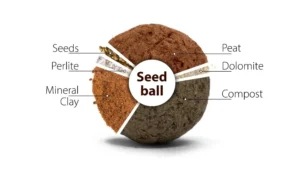
  • Seed balls are a lowcost, ecofriendly method of afforestation. They consist of seeds mixed with clay and organic manure, which protect the seeds until they germinate naturally in suitable conditions.
  • This technique is widely used in communitybased reforestation programs across the world.
Seed Ball Drive in Andhra Pradesh

Features of the Initiative

  • Scale of Campaign: Preparation of 2.5 crore seed balls involving public representatives, selfhelp groups, students, NGOs, and volunteers.
  • Timing: Seed balls will be dispersed during the monsoon season, ensuring higher germination rates.
  • Technology Use: Innovative methods like dronebased dispersal will be employed to cover inaccessible forest areas.
  • Community Participation: Encourages citizen involvement in environmental conservation, fostering a sense of responsibility.
  • Ecological Benefits: Helps restore degraded lands, improve soil fertility, and enhance climate resilience.

Advantages of Seed Balls

  • Low-Cost and Easy: Require minimal resources: clay, compost, and seeds. Can be made by students, communities, or NGOs, making them a cost-effective greening solution.
  • Protects Seeds Naturally: The clay covering shields seeds from birds, insects, and harsh weather. Ensures higher chances of germination during rains.
  • Promotes Native Biodiversity: Using indigenous seeds helps restore local ecosystems. Supports pollinators, wildlife, and soil health.
  • Community Engagement: Seed ball drives involve schools, NGOs, and citizens, spreading environmental awareness. Encourages participatory conservation and a sense of responsibility.

Wayforward

  • Select Native Seeds: Use indigenous and droughtresistant species suited to local climate and soil. Native plants ensure better germination and ecological balance.
  • Improve Composition: Mix clay, compost, and organic manure in the right ratio (2:1:1). Add biofertilizers or mycorrhizal fungi to enhance root growth and survival.
  • Community Participation: Involve schools, NGOs, and local communities in making and dispersing seed balls. Conduct “Seed Ball Drives” during monsoon for maximum germination.
  • Strategic Dispersal: Target degraded lands, barren hills, and roadside areas. Use drones or volunteers for largescale distribution.

Conclusion

The seed ball drive in Andhra Pradesh reflects a communitydriven approach to afforestation, combining tradition with technology. It is a step towards building a greener and climateresilient India.

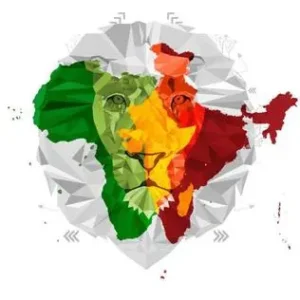
INDIA–AFRICA FORUM SUMMIT (IAFS)

TOPIC: (GS2) INTERNATIONAL RELATIONS: THE HINDU

The India–Africa Forum SummitIV has been postponed due to the Ebola outbreak, highlighting health security challenges in global diplomacy.

About the Summit

  • Establishment: Initiated in 2008 to strengthen India–Africa ties.
  • Nature: Apex platform for dialogue and cooperation.
  • Past Summits:
    • IAFSI (2008, New Delhi)
    • IAFSII (2011, Addis Ababa)
    • IAFSIII (2015, New Delhi)

India-Africa Forum Summit (IAFS)

Objectives

  • Diplomatic Relations: Strengthen political and strategic partnerships.
  • Economic Cooperation: Enhance trade, investment, and industrialisation.
  • Technology Transfer: Promote innovation and capacity building.
  • Sectoral Collaboration: Cooperation in health, agriculture, education, and infrastructure.
  • Youth Empowerment: Encourage entrepreneurship and skill development.
  • Peace & Security: Maritime cooperation and regional stability.
  • South–South Cooperation: Promote inclusive development and multilateralism.

Static Context

  • India–Africa Trade: Over $100 billion (2025), with India among Africa’s top trading partners.
  • Development Cooperation: India provides Lines of Credit, scholarships, and training programs.
  • Strategic Importance: Africa is vital for India’s energy security, maritime routes, and global South solidarity.

Conclusion

The India–Africa Forum Summit embodies India’s commitment to inclusive partnerships and South–South cooperation. Its postponement underscores the need to balance diplomatic engagement with global health security.

UMMID PROGRAMME

TOPIC: (GS2) POLITY: THE HINDU

The Union Minister for Science & Technology recently dedicated the UMMID Programme, India’s first national initiative to systematically address rare inherited genetic disorders.

Genetic Disorders in India

  • Though individually rare, genetic disorders collectively affect millions of families in India.
  • Common examples include Thalassemia, Sickle Cell Anemia, Hemophilia, Down Syndrome, and Duchenne Muscular Dystrophy.
  • Causes: Mutations in DNA, chromosomal abnormalities, or inherited defective genes.
Ummid Programme

UMMID Programme

  • Launch: Initiated by the Department of Biotechnology (DBT), Ministry of Science & Technology.
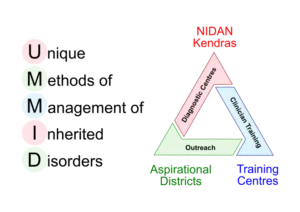
  • Objective: Early detection, prevention, and management of rare genetic diseases.
  • Integrated Approach: Combines diagnosis, counselling, training, and public awareness.
  • Support to NPRD 2021: Aligns with the National Policy for Rare Diseases, creating structured care pathways.

Key Pillars of the Programme

  • NIDAN Kendras: Centres for diagnostics and genetic counselling.
  • Outreach in Aspirational Districts: Extends services to underserved regions.
  • Specialised Training Centres: Builds capacity among healthcare professionals.

Static Context

  • Rare Diseases in India: Estimated 70 million people affected.
  • National Policy for Rare Diseases (2021): Focuses on early intervention, affordability, and research support.
  • Global Context: WHO stresses the importance of genomic medicine in public health.

CAUSES OF GENETIC DISORDERS

Genetic disorders are health conditions caused by abnormalities in an individual’s DNA. These abnormalities may involve a single gene, multiple genes, chromosomes, or mitochondrial DNA, and they can be inherited or occur due to new mutations.

  • SingleGene Mutations
    • These occur when a single gene is altered, leading to defective proteins.
    • Example: Sickle Cell Disease and Cystic Fibrosis result from mutations in one gene.
  • Chromosomal Abnormalities
    • Caused by changes in chromosome number or structure.
    • Example: Down Syndrome arises due to an extra copy of chromosome 21 (Trisomy 21).
  • Multifactorial Inheritance
    • Results from a combination of genetic predisposition and environmental factors.
    • Example: Diabetes and heart disease develop through gene–environment interaction.
  • Mitochondrial Inheritance
    • Inherited through mutations in maternal mitochondrial DNA.
    • Example: Disorders affecting muscle function and energy metabolism are linked to mitochondrial defects.

Conclusion

The UMMID Programme marks India’s first structured national response to rare genetic disorders. It strengthens healthcare delivery by combining diagnosis, prevention, and capacity building, ensuring a more inclusive and resilient health system.

Write a Review

Your email address will not be published. Required fields are marked *

Seraphinite AcceleratorOptimized by Seraphinite Accelerator
Turns on site high speed to be attractive for people and search engines.