
Table of Contents
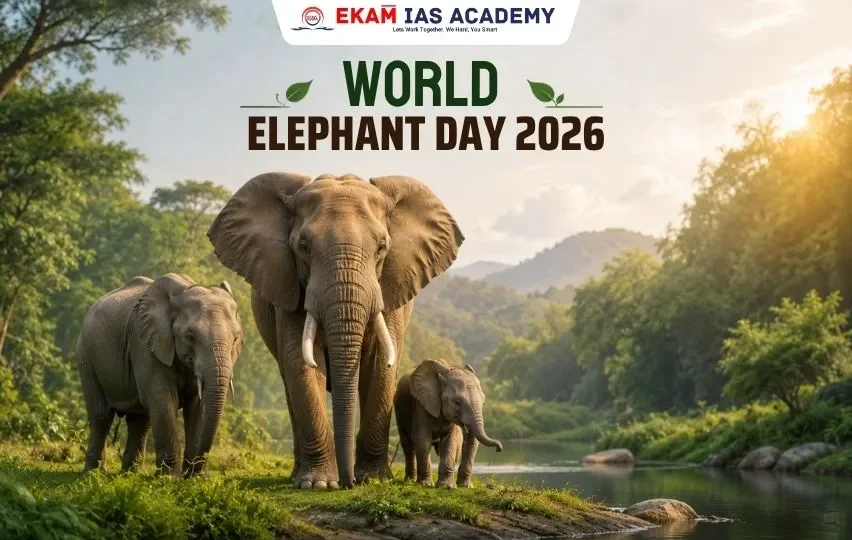
ToggleWorld Elephant Day 2026 will be observed on 12 August 2026 to spread awareness about elephant conservation, protection of habitats and the growing challenges faced by elephant populations worldwide.
The day highlights the ecological importance of elephants, while drawing attention to major threats such as habitat destruction, ivory poaching, climate change and human-elephant conflict.
It encourages governments, conservation organisations and local communities to work together for the protection of elephants and promote peaceful coexistence between humans and wildlife.
About World Elephant Day
World Elephant Day is a global awareness campaign observed every year on 12 August to support the conservation and welfare of elephants.
The initiative was launched in 2012 with the objective of:
- Creating awareness about the intelligence, emotional capacity and ecological importance of elephants.
- Highlighting threats affecting elephant survival.
- Encouraging global efforts for elephant protection.
Over the years, the campaign has reached millions of people through:
- Educational programmes.
- Awareness campaigns.
- Social media initiatives.
- Conservation activities.
The World Elephant Society supports the campaign by organising awareness programmes and promoting elephant conservation efforts.
World Elephant Day 2026 Theme
The theme of World Elephant Day 2026 is:
“Bringing the World Together to Help Elephants”
The theme emphasises the need for global cooperation and collective responsibility in protecting elephants.
It focuses on:
- Strengthening conservation partnerships.
- Combating illegal wildlife trade.
- Protecting elephant habitats.
- Promoting sustainable coexistence between humans and elephants.
Key Facts About Elephants
Species Diversity
There are three major species of elephants:
- African Savannah Elephant
- African Forest Elephant
- Asian Elephant
African elephants are generally larger and have bigger ears, while Asian elephants have smaller ears and distinct physical features.
Largest Land Mammal
- Elephants are the largest terrestrial animals on Earth.
- They play an important role in maintaining ecosystem balance by modifying landscapes and supporting biodiversity.
Lifespan and Reproduction
- Elephants can live for around 60–65 years.
- Female elephants have the longest gestation period among mammals, lasting about 22 months.
- Their slow reproductive rate makes population recovery difficult.
Social Behaviour and Intelligence
- Elephant groups are led by a matriarch, usually the oldest female.
- They have strong family bonds and communicate through:
- Sounds
- Touch
- Ground vibrations
Their advanced intelligence and emotional behaviour make them among the most socially complex animals.
Protection Status of Asian Elephants
Asian elephants receive protection under various national and international frameworks.
IUCN Red List
- Status: Endangered
Wildlife Protection Act, 1972
- Status: Endangered
CITES
- Listed under Appendix I, restricting international commercial trade.
Decline in Elephant Population
Elephant populations across the world have witnessed a significant decline due to multiple human-induced pressures.
Major concerns include:
- Rapid habitat loss.
- Illegal ivory trade.
- Human-wildlife conflict.
- Climate change impacts.
In Africa, illegal hunting continues to threaten elephant populations, with thousands of elephants being killed annually for ivory.
The declining population trend has made global conservation efforts essential for ensuring the survival of elephants.
Major Threats to Elephant Conservation
Poaching
Elephants are primarily targeted for their ivory tusks, which are illegally traded in international markets.
Other concerns include:
- Capture of elephants for tourism and entertainment.
- Separation of young elephants from natural herds.
- Poor treatment in captivity.
Habitat Loss
Expansion of:
- Agriculture
- Urban settlements
- Roads and railway infrastructure
has reduced elephant habitats and fragmented forests.
Loss of natural habitats restricts elephant movement and access to food and water resources.
Human-Elephant Conflict
Increasing overlap between human settlements and elephant habitats has intensified conflicts.
Consequences include:
- Crop damage.
- Property destruction.
- Injuries and deaths of humans and elephants.
Creating and protecting wildlife corridors is an important strategy to allow safe elephant movement and reduce conflicts.
Mistreatment in Captivity
Elephants used for tourism, rides and entertainment often face:
- Poor living conditions.
- Physical stress.
- Psychological problems.
Promoting ethical tourism practices can help reduce exploitation and improve animal welfare.
Elephant Conservation Efforts in India
India has adopted several programmes focusing on elephant protection, habitat conservation and conflict mitigation.
Project Elephant (1992)
Project Elephant is a Centrally Sponsored Scheme launched in 1992 for:
- Conservation of elephants and their habitats.
- Protection of elephant corridors.
- Supporting anti-poaching measures.
- Reducing human-elephant conflict.
The programme provides financial and technical assistance to elephant-bearing states.
Elephant Reserves in India
India has established 33 Elephant Reserves across 14 states to provide protected habitats for elephant populations.
These reserves help in:
- Maintaining ecological connectivity.
- Protecting migration routes.
- Conserving elephant habitats.
Elephant Corridors
Elephant corridors allow elephants to move safely between fragmented forest areas.
Around 150 elephant corridors have been identified for protection.
They help in:
- Reducing human-elephant conflicts.
- Maintaining genetic diversity.
- Ensuring long-term survival of elephant populations.
Project RE-HAB (Bee Fencing Initiative)
The Project RE-HAB initiative uses bee boxes along forest boundaries to reduce elephant intrusion into human settlements.
Key Features
- Uses natural methods instead of harmful barriers.
- Prevents crop damage.
- Promotes coexistence between humans and elephants.
The initiative is implemented by the Khadi and Village Industries Commission (KVIC).
Technology-Based Conservation Measures
Modern technology is increasingly used for elephant conservation.
Important tools include:
- Satellite monitoring.
- Land Use Land Cover (LULC) analysis.
- Habitat mapping.
- Tracking changes in elephant landscapes.
These technologies help identify threats and improve conservation planning.
MIKE Programme
The Monitoring of Illegal Killing of Elephants (MIKE) programme helps track elephant poaching trends.
It supports:
- Data collection on illegal killings.
- Identification of poaching hotspots.
- Development of effective conservation strategies.
Institutional Support for Elephant Conservation
The Wildlife Institute of India (WII) through its Elephant Cell provides:
- Scientific research.
- Technical guidance.
- Training support.
Conservation is also strengthened through:
- Tiger Reserves.
- Wildlife Sanctuaries.
- Reserved Forests.
Community Participation and Coexistence
Modern elephant conservation focuses on involving local communities.
Key approaches include:
- Awareness programmes.
- Community-based conflict management.
- Compensation mechanisms.
- Sustainable coexistence strategies.
Local participation is essential because many elephant habitats overlap with human settlements.
Conclusion
World Elephant Day highlights the urgent need to protect one of the planet’s most intelligent and ecologically important species.
For India, elephant conservation requires a balanced approach combining habitat protection, legal safeguards, technology, scientific management and community participation.
Ensuring the survival of elephants is not only about protecting a species but also about maintaining healthy ecosystems and promoting harmonious coexistence between humans and wildlife.



Frequently Asked Questions About World Elephant Day 2026
When is World Elephant Day observed?
World Elephant Day is observed every year on 12 August to raise awareness about elephant conservation and protection.
What is the theme of World Elephant Day 2026?
The theme of World Elephant Day 2026 is “Bringing the World Together to Help Elephants.”
What are the major threats to elephants?
Major threats include habitat loss, ivory poaching, human-elephant conflict, climate change and mistreatment in captivity.
What is Project Elephant?
Project Elephant is a Centrally Sponsored Scheme launched in 1992 to conserve elephants and their habitats, protect corridors and reduce human-elephant conflict.
How many Elephant Reserves are there in India?
India has 33 Elephant Reserves across 14 states, which help protect elephant habitats, migration routes and ecological connectivity.