
Table of Contents
TogglePuga Valley Geothermal Project
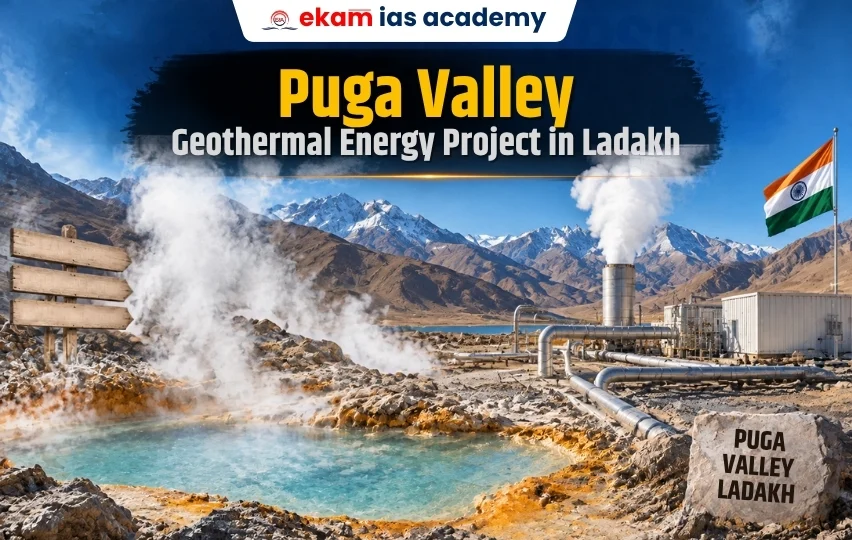
The Puga Valley Geothermal Energy Project in Ladakh represents an important initiative to explore India’s geothermal energy potential. Located at an altitude of over 14,000 feet, Puga Valley is one of India’s most promising geothermal sites due to its natural hot springs and significant underground heat activity.
The project is being developed by the ONGC Energy Centre to demonstrate electricity generation using geothermal resources and promote clean energy solutions in high-altitude regions.
What is Geothermal Energy?
Geothermal energy refers to the energy derived from the natural heat stored inside the Earth. This heat warms underground rocks and water, which can be extracted and used for electricity generation, heating applications and industrial purposes.
Unlike solar and wind energy, geothermal power can provide a continuous 24×7 energy supply as it does not depend on weather conditions.
Key Features of Geothermal Energy
- Natural heat source: It uses heat stored deep within the Earth’s crust.
- Renewable resource: Earth continuously produces internal heat, making geothermal energy a sustainable source.
- Electricity generation: Underground hot water and steam can be used to operate turbines and generate electricity.
- Direct applications: Geothermal heat can support space heating, greenhouse farming and industrial activities.
- Low carbon emissions: It produces significantly fewer greenhouse gas emissions compared to fossil fuel-based power generation.
- Geothermal hotspots: Regions with hot springs, geysers and volcanic activity generally have higher geothermal potential.
India has several geothermal regions, including Ladakh, Himachal Pradesh, Uttarakhand and Gujarat, where geothermal resources can be explored for clean energy generation.
How Will the Puga Valley Geothermal Project Generate Electricity?
The Puga Geothermal Project aims to use underground heat reservoirs to generate electricity through a pilot 1 MW geothermal power plant.
The process involves extracting naturally heated geothermal fluids from deep underground and converting their heat energy into electrical power.
Step-by-Step Process
Drilling Geothermal Wells:
Deep wells are drilled to access underground reservoirs containing heated water. At Puga Valley, two wells have been developed to a depth of around 1,000 metres.
Extraction of Hot Fluids:
Water present beneath the Earth’s surface absorbs heat from surrounding rocks and becomes highly heated. This geothermal fluid is brought to the surface through production wells.
Steam Generation:
The heat from geothermal fluids produces steam, which is used as an energy source for running turbines.
Electricity Generation:
The steam rotates a turbine connected to a generator. The mechanical energy of the turbine is converted into electrical energy.
Reinjection Process:
After extracting heat, the cooled geothermal fluid can be pumped back underground through injection wells. This helps maintain the geothermal reservoir and supports sustainable operation.
National Policy on Geothermal Energy
The National Policy on Geothermal Energy, notified by the Ministry of New and Renewable Energy (MNRE) in September 2025, provides a framework for promoting geothermal exploration and utilisation in India.
The policy aims to:
- Encourage geothermal power generation and direct heat applications.
- Identify and develop promising geothermal regions, including 42 geothermal manifestations.
- Promote research, innovation and technological advancement.
- Encourage international cooperation and technology transfer.
- Explore the conversion of abandoned oil and gas wells into geothermal energy sources.
- Support India’s clean energy transition and the goal of achieving Net Zero emissions by 2070.
Significance of the Puga Valley Project
The Puga geothermal project can diversify India’s renewable energy portfolio by adding a reliable source of clean power. It is particularly significant for remote and high-altitude regions like Ladakh, where conventional energy infrastructure faces geographical challenges.
By demonstrating geothermal electricity generation, the project can support future investments, strengthen energy security and contribute to India’s long-term climate goals.
Puga Valley geothermal project
- Compare geothermal with other renewables
- Explore India’s geothermal potential


FAQs: Puga Valley Geothermal Energy Project
What is the Puga Valley Geothermal Energy Project?
The Puga Valley Geothermal Energy Project is an initiative in Ladakh to explore geothermal energy potential and generate electricity using underground heat resources. It is being developed by the ONGC Energy Centre.
Where is Puga Valley located and why is it important for geothermal energy?
Puga Valley is located in Ladakh at an altitude of over 14,000 feet. It is considered one of India’s most promising geothermal sites due to its hot springs and significant underground heat activity.
How does geothermal energy generate electricity?
Geothermal power uses heat stored inside the Earth. Underground hot water and geothermal fluids are extracted through wells, converted into steam, and used to rotate turbines connected to generators for electricity production.
What is the capacity of the Puga Valley geothermal project?
The project aims to demonstrate electricity generation through a pilot 1 MW geothermal power plant using geothermal resources available in the Puga Valley region.
Why is geothermal energy important for India’s clean energy transition?
Geothermal energy provides a 24×7 renewable power source unlike solar and wind energy, which depend on weather conditions. It can strengthen energy security and support India’s Net Zero emissions target by 2070.