Table of Contents
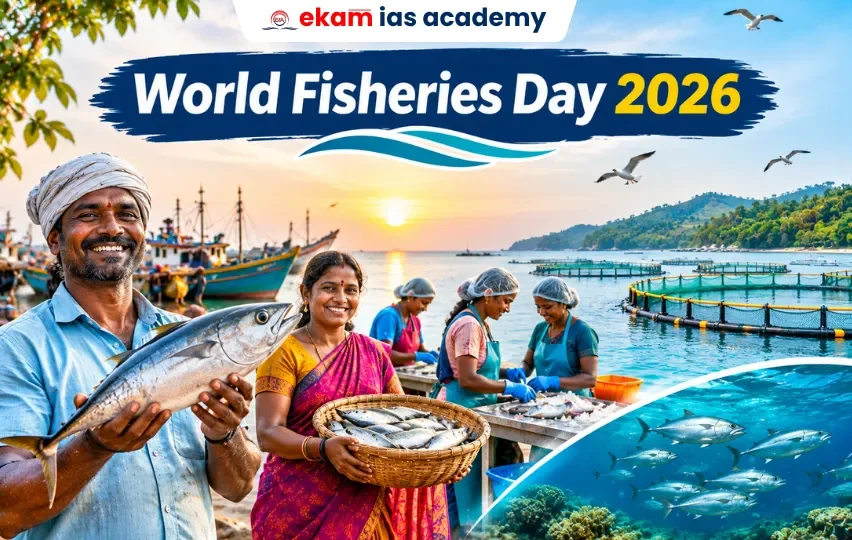
ToggleWorld Fisheries Day 2026 will be observed on November 21 to highlight the importance of sustainable fisheries, aquatic ecosystem conservation and the welfare of fishing communities. The observance recognises the contribution of fishers and fish workers to nutrition, employment, food security and economic development. This year, emphasis is placed on decent work, labour rights and greater opportunities for women and youth in fisheries and aquaculture.
About World Fisheries Day 2026
World Fisheries Day is observed annually on November 21 to promote responsible fishing and strengthen the livelihoods of communities dependent on aquatic resources.
The observance traces its origins to November 21, 1997, when representatives of fishing communities from 18 countries met in New Delhi. The meeting resulted in the formation of the World Forum of Fish Harvesters and Fish Workers and promoted international cooperation on sustainable fisheries, resource conservation and workers’ rights.
The day also draws attention to challenges such as overfishing, illegal fishing, marine pollution, unsafe working conditions and inadequate social protection.
World Fisheries Day 2026 Theme
The 2026 theme is “Empowering People for Change: Advancing Decent Work in Fisheries and Aquaculture, particularly for Youth and Women.”
It focuses on improving working conditions, labour rights and social protection while expanding opportunities for women and young people. The FAO and ILO are jointly organising a related event on November 20, 2026, in Rome and online.
Fisheries Sector in India
India is the world’s second-largest fish-producing country and contributes around 8% of global fish production. Fish production increased from 95.79 lakh tonnes in 2013-14 to 197.75 lakh tonnes in 2024-25.
The sector supports nearly 3 crore people and generated seafood exports worth about ₹62,408 crore in 2024-25. Inland fisheries and aquaculture have emerged as important drivers of this growth.
Government Initiatives for Fisheries Development in India
India has introduced several programmes to modernise the fisheries sector and improve fisher livelihoods. Key initiatives include:
- Pradhan Mantri Matsya Sampada Yojana (PMMSY) for sustainable production and infrastructure.
- FIDF for fisheries-related infrastructure.
- PM-MKSSY for financial inclusion, insurance and market access.
- Kisan Credit Card facilities for fishers and fish farmers.
- National Fisheries Digital Platform (NFDP) for digital access to government services.
- Marine Fisheries Census 2025 for improved data-based policy planning.
World Fisheries Day 2026 Significance
Fisheries contribute to food and nutritional security, employment, exports and the Blue Economy. The sector also supports women’s livelihoods in processing and marketing.
Sustainable fisheries management is essential to protect fish stocks, marine habitats, mangroves and aquatic biodiversity while ensuring that fishing communities receive fair incomes, safe working conditions and long-term livelihood opportunities.


FAQs - World Fisheries Day 2026
When is World Fisheries Day 2026 observed?
World Fisheries Day is observed on 21 November each year to promote sustainable fishing, aquatic conservation and the welfare of fishing communities.
What is the theme of World Fisheries Day 2026?
According to the article, the theme is “Empowering People for Change: Advancing Decent Work in Fisheries and Aquaculture, particularly for Youth and Women.”
How did World Fisheries Day originate?
Its origins trace to a gathering of fishing-community representatives from 18 countries in New Delhi on 21 November 1997, which established the World Forum of Fish Harvesters and Fish Workers.
Why is the fisheries sector important for India?
Fisheries support nutrition, employment, exports and India’s Blue Economy. The sector provides livelihoods for fishers, fish farmers and workers involved in processing and marketing.
Which government initiatives support fisheries development in India?
Major initiatives include PMMSY, FIDF, PM-MKSSY, Kisan Credit Card facilities and the National Fisheries Digital Platform, supporting infrastructure, credit, insurance and market access.