
Table of Contents
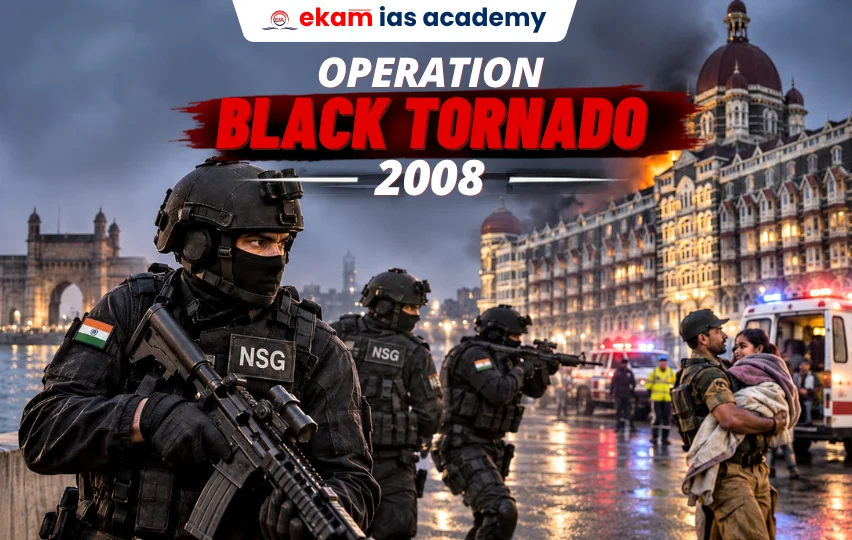
ToggleOperation Black Tornado was the National Security Guard (NSG) operation launched to neutralise terrorists during the 26/11 Mumbai attacks in November 2008. The nearly three-day counter-terror operation involved hostage rescue, building clearance and the neutralisation of attackers at multiple locations. It became a defining episode in India’s urban counter-terrorism response.
26/11 Terror Attack Anniversary 2026
On November 26, 2026, the NSG Mumbai is observing the anniversary of the attacks through a memorial and pledge programme at the Gateway of India under the #NEVEREVER theme. The event honours victims, survivors and security personnel through tributes, memorial displays and a Living Memorial, while students participate in pledges promoting peace and vigilance.
What is Operation Black Tornado 2008?
Operation Black Tornado was the codename for the NSG’s coordinated response to the Mumbai attacks. Its objectives included eliminating terrorists, rescuing hostages, protecting civilians and ensuring that targeted buildings were cleared of explosives. The operation concluded on November 29, 2008.
26/11 Mumbai Terror Attack
On November 26, 2008, ten Lashkar-e-Taiba terrorists launched coordinated attacks across Mumbai after arriving by sea. Major targets included the Taj Mahal Palace Hotel, Oberoi-Trident Hotel, Nariman House and Chhatrapati Shivaji Terminus. The attacks continued until November 29, killing around 175 people and injuring more than 300. Ajmal Kasab was the only attacker captured alive.
Operation Black Tornado Background
The scale and coordination of the assault created a complex hostage situation. Terrorists were heavily armed and had targeted several locations simultaneously, requiring specialised intervention by the NSG.
Operation Black Tornado Launch 2008
NSG teams conducted simultaneous operations at the Taj, Oberoi-Trident and Nariman House. The mission required close-quarter combat, hostage evacuation and systematic building searches. The attackers were gradually neutralised, with the final clearance completed on November 29.
Operation Black Tornado Outcomes and Aftermath
The attacks prompted major changes in India’s security architecture, including the creation of the National Investigation Agency (NIA), strengthening of coastal security and establishment of Maharashtra’s Force One. The incident also intensified international counter-terror cooperation and affected India-Pakistan relations.
Operation Black Tornado Leaders
Several personnel displayed exceptional courage during the crisis. Major Sandeep Unnikrishnan and Hawaldar Gajender Singh Bisht were among the NSG commandos who lost their lives. Mumbai Police officers Hemant Karkare, Ashok Kamte and Vijay Salaskar were also killed while responding to the attacks.
Tukaram Omble played a decisive role in capturing Ajmal Kasab despite sustaining fatal injuries. He was posthumously awarded the Ashoka Chakra.
Railway announcer Vishnu Dattaram Zende repeatedly warned passengers at CST, helping many people escape the attack.
Operation Black Tornado remains a powerful reminder of the courage of security personnel and civilians who confronted one of India’s most serious terrorist attacks.


FAQs - Operation Black Tornado 2008
What was Operation Black Tornado 2008?
Operation Black Tornado was the National Security Guard’s counter-terror operation during the 26/11 Mumbai attacks. It focused on neutralising terrorists, rescuing hostages and clearing targeted buildings.
Where was Operation Black Tornado conducted?
NSG commandos conducted operations at the Taj Mahal Palace Hotel, Oberoi-Trident Hotel and Nariman House in Mumbai.
When did Operation Black Tornado end?
The operation concluded on November 29, 2008, following intense combat, hostage evacuations and systematic searches of the affected buildings.
Who were the NSG personnel martyred during the operation?
Major Sandeep Unnikrishnan and Hawaldar Gajender Singh Bisht lost their lives during the operation while confronting terrorists and protecting civilians.
What security reforms followed the 26/11 Mumbai attacks?
Major reforms included establishing the National Investigation Agency, strengthening coastal security and creating Maharashtra’s specialised counter-terrorism force, Force One.