
Table of Contents
ToggleNationwide Ban on Paraquat Dichloride in India
Why in News?
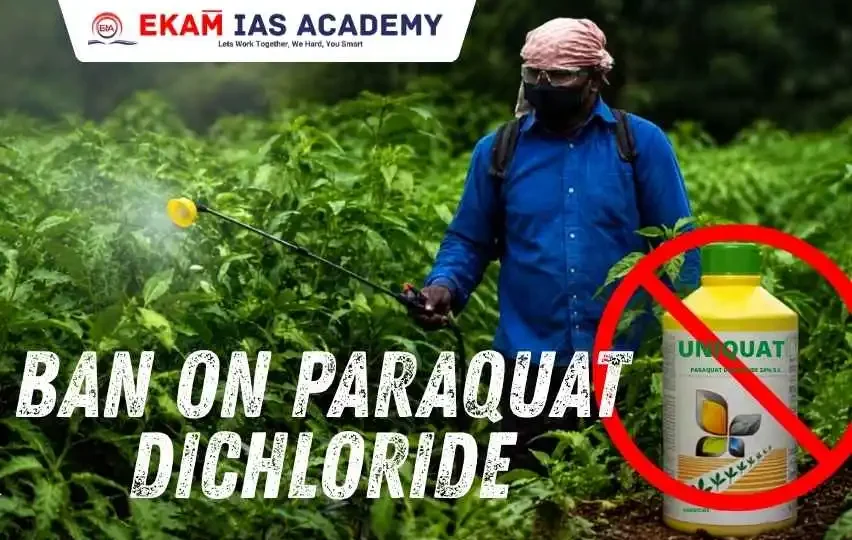
The Central Government has issued a draft notification proposing a nationwide ban on Paraquat Dichloride, a highly toxic herbicide. The proposed prohibition covers its import, manufacture, sale, transport, distribution and use in India. The move has been initiated under Section 27 of the Insecticides Act, 1968, citing serious risks to human and animal health.
What is Paraquat Dichloride?
Paraquat Dichloride is a fast-acting, non-selective herbicide, commonly known as a weedicide. It is used for weed control and crop desiccation before harvest.
It has been used in crops such as:
- Tea
- Cotton
- Coffee
- Rubber
- Paddy
- Wheat
- Maize
- Potato
- Grapes
- Apple
Why is Paraquat Considered Dangerous?
Paraquat is regarded as one of the most toxic herbicides. Poisoning may occur through ingestion, inhalation or skin contact. It can cause severe health complications such as lung damage, kidney failure, liver injury and even death. Studies and medical reports also associate paraquat poisoning with serious respiratory and multi-organ complications.
A major concern is that there is no specific antidote for paraquat poisoning. This makes exposure extremely dangerous, especially in rural areas where immediate specialised medical treatment may not be available.
Findings Behind the Proposed Ban
A government-appointed Expert Committee and the Registration Committee reportedly found:
- Established adverse health effects
- Frequent poisoning incidents
- High fatality rate
- Absence of a specific antidote
- Misuse beyond approved crops
- Occupational exposure risks
The chemical has already been banned or heavily restricted in more than 70 countries, reflecting global concern over its toxicity.
Need for the Ban
The proposed ban follows growing concerns over:
- Accidental poisoning
- Occupational exposure among farmers and farm workers
- Intentional self-harm cases
- Misuse beyond approved crops
- Toxic residues entering the food chain
- Demands from states such as Telangana, Andhra Pradesh, Odisha and Kerala
Some states had already pushed for stricter controls due to rising poisoning cases and public health concerns.
Implications for Agriculture
The ban is expected to reduce health risks and prevent harmful residues from entering the food system. However, farmers may face short-term challenges in weed management.
Possible implications include:
- Higher weed-control costs
- Need for safer herbicide alternatives
- Greater focus on integrated weed management
- Increased awareness on pesticide safety
- Shift towards sustainable and less toxic farming practices
Significance
The proposed ban marks an important step towards strengthening pesticide regulation in India. It also reflects a shift from chemical-intensive farming towards safer, health-conscious and sustainable agriculture.
This decision is significant for:
- Public health protection
- Farmer and farm-worker safety
- Food safety
- Environmental protection
- Sustainable agriculture
- Stronger pesticide governance
Conclusion
The proposed nationwide ban on Paraquat Dichloride is a major policy step to protect farmers, consumers and the environment from a highly toxic herbicide. While the transition may create short-term challenges for weed management, it can promote safer alternatives, stronger pesticide regulation and more sustainable agricultural practices in India.



Paraquat Dichloride-FAQs Answered
Why is Paraquat Dichloride in news?
Paraquat Dichloride is in news because the Central Government has issued a draft notification proposing a nationwide ban on its import, manufacture, sale, transport, distribution and use.
What is Paraquat Dichloride?
Paraquat Dichloride is a fast-acting, non-selective herbicide used for weed control and crop desiccation before harvest in crops like tea, cotton, paddy, wheat, maize, potatoes, grapes and apples.
Under which law has the proposed ban been initiated?
The proposed ban has been initiated under Section 27 of the Insecticides Act, 1968.
Why is Paraquat considered dangerous?
Paraquat is highly toxic and can cause poisoning through ingestion, inhalation or skin contact. It may lead to lung fibrosis, kidney and liver failure, heart damage, Parkinson’s disease and death, especially because there is no specific antidote.
What will be the impact of banning Paraquat Dichloride?
The ban may reduce health risks, prevent toxic residues in the food chain and promote safer farming practices, though farmers may initially face higher weed-management costs.