
Table of Contents
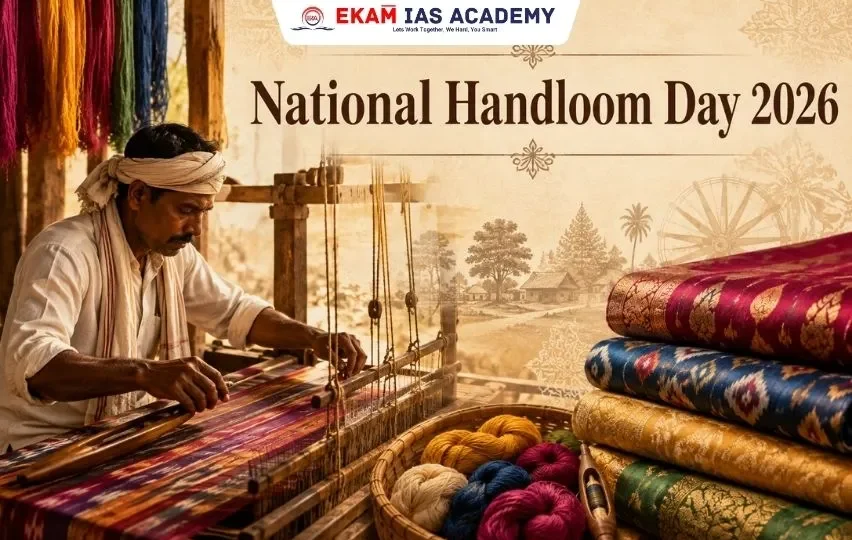
ToggleIndia observes National Handloom Day every year on 7 August to celebrate the country’s rich textile heritage and recognise the contribution of millions of handloom weavers and artisans.
The day commemorates the launch of the Swadeshi Movement on 7 August 1905, which encouraged Indians to promote indigenous products and reject foreign goods during the freedom struggle.
History of National Handloom Day
The Swadeshi Movement was officially launched at the Calcutta Town Hall on 7 August 1905 in response to the partition of Bengal by the British government.
Handloom weavers played a crucial role in the movement by promoting locally produced textiles and encouraging the use of Indian-made fabrics.
To honour this historic contribution and support the handloom sector, the Government of India declared 7 August as National Handloom Day in 2015.
The first National Handloom Day was celebrated in 2015, marking the beginning of an annual celebration of India’s traditional weaving communities.
Significance of National Handloom Day
The handloom sector represents India’s cultural identity and provides livelihood opportunities to millions of artisans.
The day aims to:
- Promote Indian handloom products and traditional weaving techniques.
- Support local artisans under the “Vocal for Local” initiative.
- Encourage consumers to choose authentic handmade textiles.
- Preserve traditional crafts and strengthen rural livelihoods.
The sector also plays an important role in women’s empowerment, as a significant proportion of handloom workers are women.
Small Cluster Development Programme (SCDP)
The Small Cluster Development Programme (SCDP) is an initiative aimed at improving productivity and infrastructure in small handloom clusters.
Under the programme:
- Financial assistance of up to ₹2 crore per cluster is provided.
- Support is extended for:
- Improved looms
- Better lighting facilities
- Worksheds
- Design development
- Product improvement
- Marketing support
From 2021–22 to 2026–27 (till June), around 357 handloom clusters have been sanctioned under the programme.
During 2025–26, approximately ₹94 crore was released for interventions such as worksheds, looms, accessories and electronic jacquards.
Impact of Small Cluster Development Programme
Improved Workshed Infrastructure
The programme provides financial support for constructing better working spaces for weavers.
Key outcomes include:
- Average daily production increased by 53%.
- Working hours improved by 60%.
- Monthly working days increased by 28%.
- Average daily earnings increased by 42%, rising from ₹328 to ₹465.
Introduction of Electronic Jacquards
Electronic jacquards use digital technology to control warp threads, enabling faster production and intricate designs.
The technology has improved efficiency and income levels of handloom workers.
Key outcomes:
- Average daily production increased by 55%.
- Around 96% beneficiaries reported productivity improvement.
- Average daily wages increased by 56%, from ₹360 to ₹560.
- Average monthly income increased from ₹9,600 to ₹15,000.
Welfare Schemes for Handloom Workers
The government has introduced various social security initiatives to support handloom weavers and their families.
Pradhan Mantri Jeevan Jyoti Bima Yojana (PMJJBY)
- Provides renewable life insurance coverage for handloom workers aged 18–50 years.
- Offers a benefit of ₹2 lakh in case of death due to any cause.
Pradhan Mantri Suraksha Bima Yojana (PMSBY)
- Provides accident insurance coverage for workers aged 18–70 years.
- Provides:
- ₹2 lakh for accidental death or permanent total disability.
- ₹1 lakh for permanent partial disability.
These schemes enhance social security and financial protection for artisan communities.
Geographical Indication (GI) Tags: Protecting Traditional Weaves
GI tags help protect the unique identity and authenticity of regional handloom products.
Under the:
Geographical Indications of Goods (Registration and Protection) Act, 1999
Registered geographical indications receive legal protection against unauthorised use.
Key provisions:
- Registered users can approach legal authorities against illegal manufacturing or marketing.
- State Handloom and Textile Departments are encouraged to strengthen protection mechanisms.
As of August 2026:
- 106 handloom products
- 6 product logos
- 227 handicraft products
have received GI registration.
Importance of GI Tags for Handloom Sector
GI recognition helps:
- Preserve traditional weaving practices.
- Provide better market identity to regional crafts.
- Prevent imitation and misuse of traditional designs.
- Increase income opportunities for artisans.
Examples of famous Indian handloom products with GI recognition include:
- Banarasi Silk
- Kanchipuram Silk
- Pochampally Ikat
- Chanderi Fabric
- Muga Silk
Conclusion
National Handloom Day represents India’s commitment towards preserving its traditional crafts while improving the economic and social conditions of artisans.
Through initiatives like the Small Cluster Development Programme, social security schemes and GI protection, the government aims to modernise the handloom sector without losing its cultural heritage.
Supporting handloom products not only strengthens rural livelihoods but also promotes India’s vision of Atmanirbhar Bharat and Vocal for Local.


Frequently Asked Questions (FAQs) on National Handloom Day 2026
Why is National Handloom Day celebrated on 7 August?
National Handloom Day is observed on 7 August to commemorate the launch of the Swadeshi Movement in 1905 and to honour India’s handloom weavers and artisans.
What is the Small Cluster Development Programme (SCDP)?
The SCDP supports small handloom clusters through better looms, worksheds, lighting, design development and marketing. Financial assistance of up to ₹2 crore per cluster is provided.
How has SCDP improved the livelihood of handloom weavers?
Improved worksheds increased average daily production by 53% and daily earnings from ₹328 to ₹465. Electronic jacquards also raised productivity and monthly income to around ₹15,000.
Which welfare schemes support handloom workers?
Handloom workers are supported through schemes such as PMJJBY for life insurance and PMSBY for accident insurance, providing financial protection to weavers and their families.
How do GI tags benefit the Indian handloom sector?
Geographical Indication (GI) tags protect traditional handloom products from imitation and unauthorised use. They improve market recognition, preserve regional weaving traditions and strengthen artisans’ income opportunities.