
Table of Contents
ToggleA new wild cat species has been formally identified in Bolivia’s Yungas cloud forests, marking the first discovery of a new living cat species in more than 100 years. The discovery highlights the importance of unexplored ecosystems and their role in conserving global biodiversity.
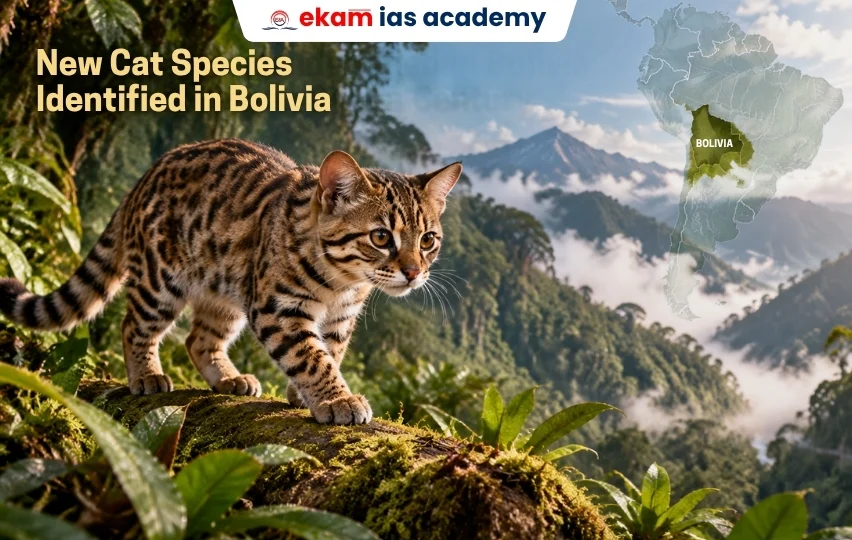
The newly identified species, locally known as “Tilcayo,” belongs to a group of small tiger cats found across South America. Researchers identified the species through a combination of genetic analysis, physical characteristics and field observations.
About the New Cat Species
The newly discovered Bolivian wild cat inhabits the Yungas forest, a mountainous cloud forest ecosystem known for its high humidity, dense vegetation and rich biodiversity.
The species is relatively small, measuring around 46 cm in length and weighing approximately 1.4 kg, making it smaller than an average domestic cat. Scientists believe that the species has unique physical and genetic characteristics that distinguish it from other closely related tiger cats.
Researchers studied various forms of evidence, including DNA analysis, field observations and scat examination, to confirm its identity. The analysis of scat samples revealed traces of small rodents, indicating that these animals may form an important part of its diet.
Ecological Importance of Yungas Cloud Forests
The discovery of Tilcayo highlights the ecological significance of cloud forests, which are among the most biologically diverse ecosystems on Earth.
Cloud forests provide habitat for many specialised species due to their unique combination of altitude, moisture and vegetation. However, these ecosystems face threats from:
- Deforestation
- Habitat fragmentation
- Climate change
- Human activities
Protecting such habitats is essential for conserving rare and endemic species.
Significance of the Discovery
The identification of a new cat species after more than a century is a major milestone in wildlife science and biodiversity research. It demonstrates that even well-studied animal groups can contain species that remain unknown due to limited exploration of remote ecosystems.
The discovery also reinforces the importance of:
- Biodiversity surveys
- Genetic research
- Wildlife monitoring
- Habitat conservation
Conservation Concerns
Although researchers have confirmed the existence of Tilcayo, limited information is currently available about its population size, breeding behaviour and ecological requirements.
Further studies are needed to understand its conservation status and identify threats affecting its survival. Protecting Bolivia’s Yungas forests will be crucial for ensuring the long-term survival of this newly recognised species.
Conclusion
The discovery of the new Bolivian wild cat species represents a significant achievement in biodiversity research. The identification of Tilcayo demonstrates the hidden ecological wealth of cloud forests and the need for continued exploration and conservation of fragile ecosystems.


FAQs: New Cat Species Identified in Bolivia
What is the newly identified cat species in Bolivia?
The newly identified wild cat species is locally known as “Tilcayo”. It was discovered in Bolivia’s Yungas cloud forests and belongs to the group of small tiger cats found in South America.
How was the new cat species identified?
Researchers confirmed Tilcayo through a combination of genetic analysis, physical characteristics, field observations and scat examination, which helped distinguish it from closely related tiger cat species.
Where is the Tilcayo wild cat found?
The species has been identified in the Yungas cloud forests of Bolivia, a mountainous ecosystem known for high humidity, dense vegetation and rich biodiversity.
Why is the discovery of Tilcayo significant?
The discovery marks the first identification of a new living cat species in more than 100 years and highlights the importance of unexplored ecosystems and biodiversity research.
What are the major threats to the new Bolivian wild cat species?
The species may face threats from deforestation, habitat fragmentation, climate change and human activities. Further research is needed to understand its population status and conservation requirements.