

Table of Contents
ToggleINFORMAL SECTOR IN INDIA AND URBAN WORKFORCE
TOPIC: (GS3) ECONOMY: THE HINDU
Recent worker protests in Noida have highlighted the growing vulnerabilities of India’s urban informal workforce, especially in terms of wages, housing, and social security.
Definition & Scope
- Informal Sector: Economic activities outside formal regulation.
- Includes selfemployed workers, daily wage earners, street vendors, and unregistered enterprises.
- Workers lack contracts, job security, and social protection, making them highly vulnerable.
Size & Economic Role
- Employs ~90% of India’s workforce.
- Even in cities, formal salaried jobs are limited; majority depend on informal work.
- Despite scale, sector remains underrecognised due to poor data coverage.
Key Challenges
- Unstable Employment: Low wages, no longterm security.
- No Social Security: Limited access to health insurance, pensions.
- Weak Bargaining Power: Especially in urban labour markets.
- Financial Exclusion: Reliance on informal credit → debt cycles.
- Housing Stress: ~40% urban poor live in slums; high rent burden (up to half of income).
- Hazard Exposure: Settlements often in unsafe areas.
Government Initiatives
- Code on Social Security, 2020: Extends benefits to unorganised workers.
- eShram Portal: National database for better targeting.
- PM SVANidhi Scheme: Credit support for street vendors.
- Limitations: Coverage gaps, weak implementation, low awareness.
Urban Structural Shifts
- Decline of formal industries (e.g., textile mills in Mumbai, Ahmedabad).
- Rise of survivaloriented urban economy (housing, food, services).
- Privatisation of essentials (water, electricity) → higher costs for workers.
- Urban policies promoting gentrification and eviction → reduced affordable housing.
Financial Vulnerability
- Lack of collateral → dependence on moneylenders.
- Chronic indebtedness → financial instability.
Conclusion
India’s urban informal sector is the backbone of employment, yet faces job insecurity, housing stress, and financial vulnerability. Recent protests underline the urgent need for inclusive urban governance, stronger social security, and policies that integrate informal workers into decisionmaking structures.
AAP MPS QUIT PARTY AND ANTIDEFECTION LAW
TOPIC: (GS2) POLITY: THE HINDU
Seven of AAP’s 10 Rajya Sabha MPs resigned and announced merger with the BJP, marking a major political shift in the Upper House.
Background of the Event
- MPs including Raghav Chadha, Sandeep Pathak, Ashok Mittal, Harbhajan Singh, Rajendra Gupta, Vikramjit Sahney, and Swati Maliwal signed merger documents.
AntiDefection Law (Tenth Schedule, 1985)
- Added by 52nd Constitutional Amendment Act, 1985.
- Objective: Prevent political defections and ensure stability.
- Grounds for disqualification:
- Voluntarily giving up membership of the party.
- Voting/abstaining against party whip without prior permission.
- Authority: Presiding officer (Speaker/Chairman) decides on disqualification.
Rules for Group Transfers
- Merger Provision: If twothirds of legislators/MPs of a party agree to merge with another party, it is treated as a valid merger.
- Such members are not disqualified under the AntiDefection Law.
- In this case: 7 out of 10 AAP MPs (more than twothirds) merger legally valid.
Implications
- Strengthens BJP’s numbers in Rajya Sabha (NDA tally ~141).
- Weakens AAP’s parliamentary presence and bargaining power.
- Raises debate on ethics vs legality of defections.
- Highlights continuing relevance of Tenth Schedule in Indian politics.
Conclusion
The resignation of seven AAP MPs and their merger with BJP is a constitutional merger under the AntiDefection Law, as it crosses the twothirds threshold. While legally valid, it raises questions about political morality, stability, and representation of voters’ mandate.
CRISIS OF URBAN ELECTORAL DISENFRANCHISEMENT
TOPIC: (GS2) POLITY: THE HINDU
The Special Intensive Revision (SIR) of electoral rolls (2025) has led to largescale deletions of urban voters, especially among the poor, migrants, and minorities.
Background
- Dr. B.R. Ambedkar envisioned “one person, one vote” as the foundation of democracy.
- In practice, urban populations face systematic disenfranchisement due to bureaucratic hurdles and rigid documentation.
- Former CEC T.N. Seshan had clarified that even pavement dwellers deserved voting rights, but current practices contradict this spirit.
Key Issues
LargeScale Deletions
- Patna: 16.5 lakh names removed.
- Ghaziabad: ~36.67% deletions.
- Lucknow: ~30.88% deletions.
- Purnia: 2.73 lakh deletions.
- Kanpur: ~25.62% deletions.
- Kolkata (Gulshan Colony): 90% voters missing.
- Mumbai: ~14 lakh deletions; nearly half of informal housing residents excluded.
Impact on Urban Poor
- Dalits, minorities, migrants, and unorganised workers most affected.
- Dual burden: difficulty in registering + high incidence of deletions.
- Slum dwellers (~40% of urban population) disproportionately excluded.
Documentation Barriers
- SIR demands proof of stable residence, often dating back to 2002/2005.
- Migrant workers and informal settlers struggle to provide such records.
Compromised Secrecy
- Boothwise vote disclosure in EVM system allows inference of community voting patterns.
- Threatens confidentiality of franchise, especially in small towns.
Structural Concerns
- SIR seen not just as an administrative exercise but as selective filtration of the electorate.
- Exclusionary processes weaken democratic participation in urban India.
- High mobility and informal housing make rigid voter verification unsuitable for cities.
Conclusion
The SIR process, instead of expanding outreach, has created barriers, leading to mass deletions and selective exclusion. Safeguarding the right to vote for all urban residents is essential to uphold India’s democratic foundation.
RBI HIGHLIGHTS MIXED ECONOMIC TRENDS
TOPIC: (GS3) ECONOMY: THE HINDU
The Reserve Bank of India (RBI) in its latest State of the Economy report noted mixed signals in India’s economy due to the West Asia crisis.
What is the State of the Economy Report?
- Published by the Reserve Bank of India (RBI).
- Provides a forwardlooking analysis of India’s growth, inflation, external sector, and financial stability.
- Uses highfrequency indicators (PMI, auto sales, eway bills, fuel consumption, core industries index).
- Helps policymakers and markets assess risks and resilience in the economy.
Key Findings
- Demand Side: Automobile sales and vehicle registrations remain strong. GST relief continues to support consumption.
Supply Indicators
- Manufacturing PMI: Declined to lowest in nearly 4 years; new orders and output weakest since mid2022.
- Core Industries Index: Fell to a 19month low, with declines in fertilisers, crude oil, coal, and electricity.
- Cost Pressures: Rising input costs impacting production.
Way Forward
- Strengthen Supply Chains & Core Industries: Invest in logistics, energy, and raw material sectors to reduce bottlenecks.
- Boost Domestic Demand & Confidence: Support consumption through targeted GST reliefs, rural demand programmes, and MSME credit.
- Accelerate Structural Reforms & Green Transition: Promote renewable energy and EV adoption to reduce import dependence and meet climate goals.
Major RBI Reports
- Financial Stability Report (FSR): Twice yearly; assesses risks to banking and financial system.
- Monetary Policy Report (MPR): Biannual; explains inflation trends and policy stance.
- Annual Report: Comprehensive review of RBI’s operations and economy.
- Handbook of Statistics on Indian Economy: Annual statistical compendium.
- Report on Currency and Finance (RCF): Thematic analysis on longterm issues.
- State of the Economy Report: Periodic; shortterm macroeconomic trends.
Conclusion
RBI cautions that persistent supply stress could evolve into a demand shock, requiring close monitoring and policy support.
INCREMENTAL CHANGE & FUEL EFFICIENCY
TOPIC: (GS3) ENVIRONMENT: THE HINDU
In April 2026, India’s automakers agreed to new fuel efficiency and emission reduction targets under CAFEIII norms (2027–2032) proposed by the Bureau of Energy Efficiency (BEE).
Background
- Transport sector = thirdlargest source of greenhouse gas emissions in India.
- Earlier controversy: Maruti Suzuki sought exemptions for small cars (14–15% of sales).
- New framework removes explicit carveout but introduces alternative compliance pathways.
Provisions of CAFEIII
- Target: Reduce average CO₂ emissions from 113 g/km (CAFEII) to 77 g/km by 203132.
- Cycle: April 2027 – March 2032.
- Compliance Pathways:
- Credits for ethanolcompatible vehicles (E20–E85).
- Credits for incremental technologies (startstop systems, regenerative braking, tyre pressure monitoring).
- SuperCredits: Battery electric vehicle counts as three vehicles.
- Credit Banking & Trading: Surplus credits can be sold to lagging manufacturers.
- Assessment: Over threeyear blocks, not annually.
Key Concerns
- Incremental focus: Emphasis on small efficiency gains (startstop, tyre pressure systems) rather than full electrification.
- Weak enforcement: Flexible compliance pathways dilute urgency.
- Paper compliance risk: Targets may be met through credits and trading rather than real emission cuts.
- Market imbalance: Larger carmakers face stricter norms, while smaller vehicles indirectly benefit.
Implications
- Slow EV transition: May delay India’s shift to electric mobility, crucial for climate goals.
- Energy security risk: Continued fossil fuel dependence undermines India’s energy diversification.
- Climate commitments: Weakens India’s pledge to cut emissions intensity by 45% by 2030 (Paris Agreement target).
- Policy signalling: Reflects cautious regulation prioritising industry comfort over aggressive decarbonisation.
Way Forward
- Sharper EV incentives: Expand FAMEII and state EV policies; India targets 30% EV penetration by 2030.
- Annual compliance checks: Replace 3year blocks with yearly monitoring to ensure accountability.
- Strengthen ethanol blending: Push towards E20 nationwide by 2025, but avoid using it as a substitute for electrification.
- Invest in charging infra: India currently has ~12,000 public charging stations (2025); needs rapid scaleup to meet demand.
Conclusion
The CAFEIII framework sets ambitious headline targets but relies on incremental improvements and flexible credits. Without sharper incentives for electrification, India risks managing emissions on paper rather than achieving real transformation in its transport sector.
SUSTAINABLE AVIATION FUEL (SAF)
TOPIC: (GS3) ENVIRONMENT: THE HINDU
The Government has amended the Aviation Turbine Fuel (ATF) Regulation of Marketing Order, 2001 to include ATF blended with Sustainable Aviation Fuel (SAF) under its ambit.
About SAF
- Definition: Specially processed aviationgrade hydrocarbons, chemically similar to ATF.
- Compatibility: Fully usable in existing aircraft engines without modifications.
- Nature: A biojet fuel made from renewable feedstocks.
- Performance: Matches conventional ATF in safety and efficiency.
Sources of SAF
- Biomass & Waste: Waste oils, fats, municipal waste, agricultural residues.
- Nonfood Crops: Renewable plants grown for energy purposes.
- Synthetic Production: Carbon capture from air combined with hydrogen to produce fuel.
Production Process
- SAF is refined to aviation standards ensuring same chemistry as petroleumbased jet fuel.
- Can be blended with ATF in varying proportions.
- Helps reduce lifecycle carbon emissions compared to fossilbased ATF.
Significance
- Aviation is a major contributor to greenhouse gas emissions.
- SAF offers a pathway to decarbonise aviation without changing aircraft technology.
- Supports India’s climate commitments and energy diversification.
- Encourages investment in biofuel and wastetoenergy technologies.
Conclusion
Sustainable Aviation Fuel represents a clean alternative to conventional jet fuel, compatible with current aviation systems. By bringing SAF blends under the ATF regulatory framework, India has taken a step towards greener aviation and climatefriendly transport policies.
SHEKHA JHEEL BIRD SANCTUARY
TOPIC: (GS3) ENVIRONMENT: THE HINDU
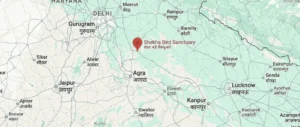
The Union Ministry of Environment, Forest and Climate Change has declared Shekha Jheel Bird Sanctuary (Aligarh, Uttar Pradesh) as a Ramsar Site (Wetland of International Importance).
Origin & Location
- Area: 25hectare freshwater perennial wetland.
- Formation: Came into existence in 1852 after construction of the Upper Ganga Canal, which divides the lake into two parts.
- With this, India now has 99 Ramsar sites, and Uttar Pradesh’s tally rises to 12.
Ecological Significance
- Acts as a wintering habitat for over 166 water bird species.
- Important species: Painted Stork, Barheaded Goose.
- Supports mammalian fauna: Blackbuck (Schedule I species) and Blue Bull (Nilgai).
Flora & Vegetation
- Dominant trees: Terminalia arjuna and Syzygium cumini.
- Threatened by invasive alien species: Lantana camara, Parthenium hysterophorus, Water Hyacinth.
Anthropogenic Threats
- Siltation: Result of unscientific mound construction (1991).
- Loss of forest cover: Due to land distribution schemes.
- Poaching risks: Increased by nearby road construction.
- Water chestnut farming: Reduces foraging area for migratory birds.
Eutrophication
- Excessive growth of water hyacinth severe eutrophication.
- Leads to deterioration of water quality and shrinking habitats for waterfowl.
Ramsar Sites
Wetlands designated as “Wetlands of International Importance” under the Ramsar Convention (1971) to Conserve wetlands, promote sustainable use, and protect biodiversity.
- Convention Origin: Signed at Ramsar, Iran in 1971 and came into force in 1975.
- Criteria: Sites are chosen based on ecological importance, rare species, migratory birds, or unique wetland ecosystems.
- Global Coverage: Over 2,400 Ramsar sites worldwide.
- India’s Status:
- India joined in 1982.
- As of April 2026, 99 Ramsar sites.
- Largest number in Tamil Nadu (16 sites), followed by Uttar Pradesh (12 sites).
- Examples in India:
- Chilika Lake (Odisha) – first Ramsar site in India.
- Keoladeo National Park (Rajasthan).
- Loktak Lake (Manipur).
- VembanadKol Wetland (Kerala).
Conclusion
Shekha Jheel’s designation as a Ramsar site is a step towards wetland conservation, but challenges like invasive species, siltation, and human pressures must be addressed to preserve its ecological value.
SEED SCHEME FOR DNT, NT & SNT COMMUNITIES
TOPIC: (GS2) POLITY: THE HINDU
The Development and Welfare Board for Denotified, Nomadic and SemiNomadic Communities (DWBDNC) reported strong progress under the SEED Scheme in FY 2025–26, showing improved outreach and impact.
SEED Scheme
- Launch: February 2022 by the Ministry of Social Justice & Empowerment.
- Type: Central Sector Scheme.
- Outlay: ₹200 crore over five years (2021–22 to 2025–26).
- Implementation: Managed by DWBDNC through an online portal for registration and monitoring.
Key Components
- Education: Free coaching for competitive exams and professional courses.
- Health: Insurance coverage via PMJAY.
- Livelihood: Support for income generation activities.
- Housing: Assistance through schemes like PMAY.
About DNT, NT & SNT Communities
- Denotified Tribes (DNTs): Once labelled as “criminal tribes” under the Criminal Tribes Act, 1871 by the British.
- Denotification: Act abolished in 1952; communities were freed from stigma.
- Nomadic & SemiNomadic Tribes: Move from place to place instead of permanent settlement.
- Distribution: ~150 DNTs and ~500 nomadic groups in India, together ~10% of population.
- Social Categories: Many fall under SC, ST, OBC; some remain outside these classifications.
Challenges
- Historical stigma and marginalisation.
- Poor access to education, health, housing, and livelihoods.
- High vulnerability due to mobility and lack of documentation.
- Committees like Kaka Kalelkar Commission, Mandal Commission, NCRWC highlighted need for targeted welfare.
Conclusion
By combining education, health, livelihood, and housing support, it addresses longstanding marginalisation, but effective implementation and awareness remain key to success.