
Daily Current affairs 26 October 2026

Daily Current Affairs 26 October 2026

Share this Post

NORTHEAST MONSOON AND DISASTER PREPAREDNESS IN SOUTHERN INDIA

TOPIC: (GS1) GEOGRAPHY: THE HINDU

The India Meteorological Department (IMD) has forecast normal northeast monsoon rainfall despite a deficient southwest monsoon influenced by El Niño.

What is the Northeast Monsoon?

  • Also called the retreating monsoon, it occurs mainly from October to December.
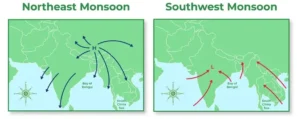
  • During this period, winds generally blow from the northeast towards the southwest.
  • These winds collect moisture over the Bay of Bengal and bring rainfall to southeastern India.
  • Major beneficiaries include Tamil Nadu, Puducherry, coastal Andhra Pradesh, Rayalaseema and parts of Karnataka and Kerala.
  • It contributes around 10–12% of India’s annual rainfall, but provides a major share of Tamil Nadu’s yearly rainfall.
Northeast Monsoon and Disaster Preparedness in Southern India

Major Concerns Highlighted

  • Southwest monsoon deficit: Rainfall was 759.4 mm against the normal 868.6 mm, representing a 12.6% shortfall.
  • Agricultural impact: Inadequate rainfall affects kharif crops, groundwater recharge and food prices.
  • Forecast uncertainty: IMD’s northeast monsoon forecast has a wider variation range of approximately ±12%, compared with ±5% for southwest monsoon forecasts.
  • Extreme rainfall: Even a season classified as normal can experience severe flooding during a few days.

Relationship Between El Niño and Monsoons

  • El Niño refers to unusual warming of surface waters in the central and eastern equatorial Pacific Ocean.
  • It generally weakens India’s southwest monsoon by influencing atmospheric circulation.
  • However, its relationship with the northeast monsoon is less consistent.
  • Examples: El Niño years such as 1997, 2009 and 2015 experienced above-normal northeast monsoon rainfall in Tamil Nadu.
  • In contrast, 1982 and 2002 witnessed weaker northeast monsoon conditions.

Why is the Northeast Monsoon Unpredictable?

  • Rainfall depends heavily on depressions, cyclones and other weather systems over the Bay of Bengal.
  • The movement and intensity of these systems can change rapidly.
  • Interactions among El Niño, the Indian Ocean Dipole and regional atmospheric conditions complicate forecasting.
  • Rapid urbanisation and loss of wetlands increase flood damage even without exceptionally high seasonal rainfall.

Implications for Southern India

  • Agriculture: Rainfall supports paddy cultivation and rabi-season water availability.
  • Water security: Reservoirs and groundwater depend on seasonal replenishment.
  • Urban flooding: Heavy rainfall can overwhelm drainage networks.
  • Example: The 2015 Chennai floods demonstrated the dangers of intense rainfall, inadequate drainage and development in flood-prone areas.

Way Forward

  • Early warning: Strengthen IMD’s district-level forecasts and impact-based alerts.
  • Infrastructure: Desilt stormwater drains and protect natural water channels.
  • Disaster management: Improve evacuation plans, shelters and emergency communication.
  • Urban planning: Restore wetlands, regulate construction in floodplains and promote sponge-city approaches.
  • Agriculture: Encourage climate-resilient crops, crop insurance and improved water storage.

Conclusion

Effective northeast monsoon management requires accurate forecasting, climate-resilient infrastructure and coordinated disaster preparedness to protect lives, livelihoods and water security.

RIGHT TO PEACEFUL ASSEMBLY IN INDIA AND PUBLIC ORDER

TOPIC: (GS2) POLITY: THE HINDU

Recent protests in Delhi over the Special Intensive Revision (SIR) of electoral rolls have raised concerns about restrictions on public demonstrations.

Constitutional Basis of the Right to Protest

  • Article 19(1)(a): Guarantees freedom of speech and expression, including peaceful political dissent.
  • Article 19(1)(b): Guarantees citizens the right to assemble peacefully without weapons.
  • Article 19(3): Permits reasonable restrictions on assembly in the interests of public order and India’s sovereignty and integrity.
  • Article 21: Protects life and personal liberty, including safeguards against arbitrary detention.
  • The Constitution protects peaceful protest, but not violence or unrestricted occupation of public spaces.

Importance of Peaceful Assembly

  • Democratic participation: Allows citizens to express concerns between elections.
  • Government accountability: Encourages public scrutiny of policies and decisions.
  • Protection of minorities: Gives marginalised communities opportunities to communicate grievances.
  • Historical importance: The freedom struggle, farmers’ movements and labour protests demonstrate the role of collective action.
  • Example: Peaceful demonstrations have contributed to public debate on environmental protection and land acquisition.

Legal Framework Governing Protests

  • Section 163, BNSS, 2023: Empowers Executive Magistrates to issue urgent preventive orders when immediate action is necessary to prevent danger or disturbances.
  • It broadly replaces Section 144 of the Criminal Procedure Code.
  • Restrictions must have a lawful basis, serve a legitimate purpose and remain proportionate.
  • Authorities may regulate protest timings, locations and routes to protect public safety.

Important Supreme Court Judgments

  • Himmat Lal K. Shah v. Commissioner of Police (1973): Public meetings may be regulated, but authorities cannot arbitrarily deny access to public streets.
  • Babulal Parate v. State of Maharashtra (1961): Upheld preventive powers while examining their use in urgent situations.
  • Ramlila Maidan Incident (2012): Emphasised protection of peaceful protesters against unjustified police action.
  • Mazdoor Kisan Shakti Sangathan v. Union of India (2018): Called for balancing protest rights with residents’ interests.
  • Amit Sahni v. Commissioner of Police (2020): Held that public roads cannot be occupied indefinitely for demonstrations.

Challenges

  • Excessive restrictions: Repeated preventive orders may discourage legitimate dissent.
  • Police accountability: Unnecessary force and prolonged detention raise civil-liberty concerns.
  • Restricted protest spaces: Remote locations may reduce the visibility of public grievances.
  • Competing rights: Demonstrations can affect traffic, businesses, emergency services and residents.

Way Forward

  • Designate accessible protest locations without imposing blanket prohibitions.
  • Apply the principles of necessity, proportionality and minimum force.
  • Ensure transparent permissions, legal assistance and independent review of restrictions.
  • Promote dialogue between authorities, organisers and affected communities.

Conclusion

A strong democracy must protect peaceful dissent while ensuring that restrictions on public assembly remain lawful, necessary and proportionate.

FREE BUS TRAVEL FOR WOMEN AND IMPACT ON MOBILITY

TOPIC: (GS2) POLITY: THE HINDU

An analysis of the National Statistics Office’s Time Use Surveys (2019 and 2024) shows increased women’s mobility in States offering free public bus travel.

Free Bus Travel Schemes

  • Four States introduced free travel for women in ordinary government buses between 2021 and 2024:
    • Tamil Nadu: Vidiyal Payanam Scheme (2021).
    • Punjab: Free Bus Travel Scheme (2021).
    • Karnataka: Shakti Scheme (2023).
    • Telangana: Mahalakshmi Scheme (2023).
  • Andhra Pradesh introduced the Stree Shakti Scheme in August 2025, after the 2024 survey.
  • These initiatives aim to reduce transport expenses and improve women’s access to opportunities.

Major Findings of the Time Use Survey

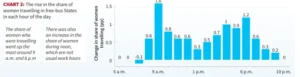
  • Increased mobility: Women’s travel participation rose from 38.7% in 2019 to 45.3% in 2024 across the four States.
  • Gender comparison: Women’s mobility increased by 6.6 percentage points, compared with 3.7 points for men.
  • Other States: Women’s mobility increased by only 4.4 points, against 7.6 points for men.
  • Telangana example: Women’s travel participation increased from 43.7% to 54.6%, while Andhra Pradesh recorded little change.
  • Travel purposes: Trips for caregiving, healthcare, education and social activities increased.
  • Employment: Women’s paid-work participation rose, but not faster than in States without free-bus schemes.

Significance for Women’s Empowerment

  • Economic independence: Reduced transport costs increase disposable income and access to markets.
  • Social inclusion: Women can participate more actively in community and public activities.
  • Healthcare access: Affordable transport supports hospital visits and maternal healthcare.
  • Education: Easier travel can improve access to colleges and skill-development centres.
  • Unpaid care work: Better mobility helps women fulfil household responsibilities with less financial burden.

Constitutional and Developmental Linkages

  • Article 14: Equality before the law.
  • Article 15(3): Permits special provisions for women and children.
  • Article 39(a): Promotes adequate livelihood opportunities for men and women.
  • SDG 5: Gender equality and women’s empowerment.
  • SDG 11.2: Safe, affordable and accessible transport systems.

Challenges

  • Employment barriers: Transport alone cannot overcome job shortages, unpaid care responsibilities or skill gaps.
  • Fiscal burden: States must ensure timely compensation to public transport corporations.
  • Service quality: Overcrowding, inadequate buses and poor connectivity may reduce benefits.
  • Safety: Harassment and unsafe last-mile travel can discourage women.
  • Evidence limitation: Survey comparisons show an association, not conclusive proof that free fares caused every increase.
Free Bus Travel For Women and Impact on Mobility

Way Forward

  • Increase bus frequency, rural connectivity and last-mile transport.
  • Improve lighting, complaint systems and passenger safety.
  • Combine free travel with childcare facilities, employment programmes and skill training.
  • Conduct independent evaluations using gender-disaggregated data.

Conclusion

Free public transport can strengthen women’s freedom and social participation, but lasting economic empowerment requires safe mobility, accessible jobs and supportive public services.


FUND FOR RESPONDING TO LOSS AND DAMAGE (FRLD)

TOPIC: (GS3) DISASTER MANAGEMENT: THE HINDU

The Fund for Responding to Loss and Damage (FRLD) has provisionally allocated $21.6 million for Nepal’s August 2026 floods.

What is the FRLD?

  • An international climate-finance mechanism supporting developing countries vulnerable to climate-related disasters.
  • Established at COP27 (2022), Egypt, and operationalised at COP28 (2023), Dubai.
  • Functions under the financial mechanism of the UNFCCC and Paris Agreement.
  • Covers both sudden disasters, such as floods, and slow-onset events, such as sea-level rise.

Institutional Structure

  • Governing Board: 26 members — 12 from developed and 14 from developing countries.
  • Board host country: Philippines.
  • World Bank: Serves as interim trustee and hosts the Secretariat under agreed arrangements.
  • Promotes country-led recovery based on local priorities.

Significance

  • Climate justice: Supports vulnerable nations that contributed relatively little to historical emissions.
  • Economic recovery: Helps rebuild damaged infrastructure and livelihoods.
  • Non-economic losses: Recognises harm to lives, cultural heritage and ecosystems.
  • Example: Flood-affected communities in Nepal may require housing reconstruction and livelihood restoration.

Challenges

  • Limited financial contributions may fall short of growing climate-related losses.
  • Complex procedures can delay assistance to vulnerable communities.
  • Predictable funding, simplified access and transparent allocation are essential.
  • India and other developing countries advocate stronger climate-finance commitments.

Conclusion

The FRLD can advance global climate justice by converting international responsibility into timely, accessible and effective support for vulnerable communities.

RBI'S NEW FOREX REPORTING RULES AND MSMES

TOPIC: (GS3) ECONOMY: THE HINDU

RBI’s foreign exchange reporting regulations, effective from October 1, 2026, have reportedly caused payment delays for freelancers and Micro, Small and Medium Enterprises (MSMEs).

What are Forex Reporting Rules?

  • Foreign exchange regulations govern payments received from abroad and money transferred overseas.
  • They operate under the Foreign Exchange Management Act (FEMA), 1999, administered by RBI.
  • Authorised Dealer (AD) banks handle foreign exchange transactions and ensure regulatory compliance.
  • The revised framework aims to simplify reporting for exports and imports of goods and services.

Major Provisions of the New Rules

  • Export Declaration Form (EDF): Service exporters covered by the requirement must declare the value of exported services.
  • Reporting deadline: Within 30 days after the end of the month in which the invoice is issued.
  • Individual exemption: According to RBI’s clarification described in the report, individuals are exempt from EDF filing regardless of transaction value.
  • Business compliance: Eligible business exporters must provide transaction details for monitoring and reconciliation.
  • Objective: Improve transparency, streamline documentation and facilitate legitimate foreign exchange transactions.

Challenges Faced by Freelancers and MSMEs

  • Implementation gap: Some banks reportedly demand EDF submissions even from exempt individuals.
  • Payment delays: Foreign earnings may remain uncredited while documentation is processed.
  • Complex procedures: Repeated reporting requires invoices, customer information, currency details and service classification.
  • Higher costs: Small businesses may need additional accounting or professional assistance.
  • Regulatory uncertainty: Different banking practices create confusion among exporters.

Economic Significance

  • Digital exports: Freelancers, software developers and online consultants contribute to India’s expanding services trade.
  • Employment: Delayed payments can affect self-employed workers and small enterprises.
  • Foreign exchange: Smooth export payments support foreign exchange earnings and external-sector stability.
  • Ease of doing business: Predictable regulations improve confidence among entrepreneurs and international clients.
  • Example: A graphic designer receiving monthly payments from an overseas client may face cash-flow difficulties if the bank unnecessarily delays credit.

Broader Governance Issues

  • Policy implementation: Regulatory reforms require consistent interpretation by banks.
  • Proportionality: Compliance requirements should reflect transaction size and risk.
  • Digital governance: Automated reporting can reduce paperwork and human errors.
  • Financial inclusion: Complex procedures may discourage small exporters from accessing global markets.

Way Forward

  • RBI should issue clear FAQs and standard operating procedures for banks.
  • Introduce a common digital reporting platform with pre-filled transaction details.
  • Consider simplified declarations and minimum-value exemptions for small businesses.
  • Establish fixed payment-processing timelines and accessible grievance mechanisms.
  • Train banking staff and monitor unnecessary compliance demands.

Conclusion

Effective forex regulation must balance financial transparency with simple, predictable procedures that protect small exporters and strengthen India’s digital economy.

LADAKH GOVERNANCE CRISIS AND DEMOCRATIC AUTONOMY

TOPIC: (GS2) GOVERNANCE: THE HINDU

Ladakh’s civil society groups have rejected the Centre’s proposed governance framework, arguing that it fails to provide meaningful legislative powers and constitutional safeguards.

Ladakh’s Political Status

  • Under the Jammu and Kashmir Reorganisation Act, 2019, Ladakh became a Union Territory without a legislature on October 31, 2019.
  • Previously, Ladakh was part of Jammu and Kashmir, which had an elected Legislative Assembly.
  • Its strategic location near China and Pakistan makes effective governance important for national security.
  • Ladakh’s fragile Himalayan environment and distinctive tribal cultures require special protection.

Major Demands of Ladakh

  • Statehood: Establish an elected government with greater decision-making powers.
  • Sixth Schedule: Protect tribal identity, traditional institutions, land and local resources.
  • Employment safeguards: Reserve suitable government employment opportunities for local residents.
  • Political representation: Strengthen democratic institutions and public participation.
  • The Leh Apex Body (LAB) and Kargil Democratic Alliance (KDA) are prominent organisations supporting these demands.

What is the Sixth Schedule?

  • Provided under Article 244(2) and Article 275(1) of the Constitution.
  • Currently applies to designated tribal areas in Assam, Meghalaya, Tripura and Mizoram.
  • Establishes Autonomous District Councils with powers over specified local matters.
  • Councils can regulate certain aspects of land, forests, customary practices and village administration.
  • Extending similar protections to Ladakh would require an appropriate constitutional framework.

Centre’s Governance Initiatives

  • High-Powered Committee (2023): Established by the Ministry of Home Affairs to examine cultural protection, employment, land rights and political empowerment.
  • May 2026 discussions: According to the report, talks explored a customised elected governance structure.
  • Article 371 proposal: A special constitutional arrangement was discussed as an alternative safeguard.
  • New districts: The administration has proposed expanding district-level institutions to improve service delivery across remote areas.

Why Was the Draft Rejected?

  • LAB and KDA argue that the proposal lacks an elected legislature with substantial powers.
  • They seek clearer authority over administration, finances and civil servants.
  • Some civil society organisations support the Centre’s approach, indicating differences within Ladakh.

Challenges

  • Democratic deficit: Limited elected representation can weaken public accountability.
  • Ecological concerns: Tourism, infrastructure and climate change threaten fragile mountain ecosystems.
  • Border security: Local participation must complement strategic national interests.
  • Way forward: Resume inclusive negotiations, strengthen hill councils and develop enforceable land, cultural and employment safeguards.
  • Any governance model should clearly divide powers between elected representatives and the Lieutenant Governor.

Conclusion

Lasting stability in Ladakh requires a constitutional framework that combines national security, environmental protection and genuine democratic self-governance.

Write a Review

Your email address will not be published. Required fields are marked *