
Table of Contents
ToggleOVERTREATMENT AND OVERMEDICATION IN INDIA
TOPIC: (GS2) SOCIAL JUSTICE AND HEALTH: THE HINDU
Growing concerns over unnecessary medical tests, excessive prescriptions and avoidable surgeries have highlighted the problem of overtreatment in India’s healthcare system.
What are Overtreatment and Overmedication?
- Overtreatment: Providing medical interventions whose expected benefits do not justify their risks or costs.
- Overmedication: Prescribing unnecessary medicines, excessive doses or treatments for longer than required.
- Overdiagnosis: Identifying abnormalities that would never cause symptoms or harm.
- Polypharmacy: Commonly defined as using five or more medicines simultaneously; particularly concerning among elderly patients.
Major Causes
- Excessive testing: Unnecessary health packages may produce false-positive results, triggering further investigations.
- Fragmented healthcare: Multiple specialists may prescribe medicines without reviewing existing treatments.
- Commercialisation: Fee-for-service payments can encourage more tests, procedures and prescriptions.
- Defensive medicine: Fear of legal action may lead doctors to recommend avoidable investigations.
- Patient expectations: Some patients associate better healthcare with more medicines and expensive tests.
- Insurance-related moral hazard: Third-party payments may encourage unnecessary procedures when oversight is weak.
Major Implications
- Health risks: Adverse drug reactions, medicine interactions and avoidable surgical complications.
- Economic burden: Increased out-of-pocket expenditure and financial pressure on households.
- Antimicrobial resistance: Unnecessary antibiotic use promotes drug-resistant infections.
- Healthcare inequality: Excessive treatment for some coexists with inadequate essential healthcare for others.
- Ethical concerns: Unnecessary interventions undermine informed consent and the principle of non-maleficence (do no harm).
- Example: Prescribing antibiotics for uncomplicated viral common colds provides no benefit and contributes to antimicrobial resistance.
Way Forward
- Strengthen primary care: Promote family physicians as the first point of contact and coordinators of specialist treatment.
- Regular prescription reviews: Check medicine necessity, duplication, interactions and treatment duration, particularly among elderly patients.
- Deprescribing: Safely reduce or discontinue unnecessary medicines under medical supervision.
- Evidence-based guidelines: ICMR and medical associations should identify low-value investigations and procedures.
- Payment reforms: Reward treatment outcomes and patient safety rather than the number of procedures performed.
GOVERNMENT INITIATIVES
- Ayushman Arogya Mandirs: Strengthen comprehensive primary healthcare and continuity of treatment.
- National Health Policy, 2017: Promotes affordable, accessible and quality healthcare.
- ICMR Standard Treatment Workflows: Encourage evidence-based diagnosis and rational treatment.
- National Action Plan on AMR: Supports responsible antimicrobial use.
- Choosing Wisely Campaign: International initiative encouraging doctors and patients to question low-value medical interventions.
Conclusion
India must shift from treatment-intensive healthcare to evidence-based, patient-centred care, where medical success is measured by better health outcomes rather than more interventions.
RISING FOOD INFLATION IN INDIA AND ECONOMIC STABILITY
TOPIC: (GS3) ECONOMY: THE HINDU
India’s retail inflation reached 5.54% in September, while rural inflation rose to 6.08%, mainly due to increasing food, fuel and transport costs.
Understanding Food Inflation
- Food inflation: A sustained increase in the prices of essential food items, reducing household purchasing power.
- Measurement: The National Statistics Office (NSO) measures retail inflation through the Consumer Price Index (CPI).
- RBI target: India follows a 4% inflation target, with a tolerance band of 2%–6%, under the flexible inflation-targeting framework.
Major Causes of Rising Inflation
- Supply disruptions: Irregular monsoons and extreme weather reduce agricultural production.
- Vegetable prices: Seasonal shortages and weak storage facilities cause sharp price fluctuations.
- Imported inflation: Higher international crude oil prices increase domestic production and transport costs.
- Rupee depreciation: A weaker currency makes imported fuel, fertilisers and machinery costlier.
- Geopolitical tensions: Conflicts in West Asia disrupt energy supplies and global trade.
- Capital outflows: Foreign portfolio investment withdrawals can increase pressure on the rupee.
Impact on the Indian Economy
- Rural distress: Food expenses consume a larger share of poorer households’ income.
- Reduced consumption: Higher essential expenditure limits spending on education, healthcare and other goods.
- Agricultural challenges: Rising fertiliser, irrigation and transport costs reduce farmers’ profit margins.
- Economic growth: Persistent inflation weakens demand and increases business uncertainty.
- Monetary policy: Higher interest rates may control demand but increase borrowing costs.
Government and RBI Measures
- Monetary policy: RBI adjusts the repo rate to manage inflation expectations.
- Price Stabilisation Fund: Supports market interventions to reduce excessive price fluctuations.
- Buffer stocks: FCI procurement and public distribution help maintain food availability.
- Operation Greens: Supports agricultural value chains and reduces post-harvest losses.
Way Forward
- Agricultural resilience: Promote climate-resistant crops and improved irrigation.
- Supply-chain reforms: Expand cold storage, warehouses and efficient transportation.
- Import diversification: Reduce dependence on vulnerable international energy supply routes.
- Targeted support: Strengthen food security measures for low-income households.
- Policy coordination: Combine RBI’s monetary measures with government action to improve supplies.
Conclusion
Controlling food inflation requires stable agricultural supplies, energy security and coordinated policies that protect vulnerable households without weakening economic growth.
INDIA–U.S. RELATIONS AND INDIA'S STRATEGIC AUTONOMY
TOPIC: (GS2) INTERNATIONAL RELATIONS: THE HINDU
The reported U.S. suspension of labour certification for major IT companies, including Indian firms, has raised concerns about India–U.S. relations.
Significance of India–U.S. Relations
- Strategic partnership: Cooperation strengthens Indo-Pacific security, maritime stability and a rules-based international order.
- Economic ties: The U.S. is a major market for Indian goods and IT services.
- Defence cooperation: Joint military exercises, intelligence sharing and defence purchases improve interoperability.
- Technology: Collaboration covers semiconductors, artificial intelligence, space and critical technologies.
- People-to-people ties: Indian professionals, students and the diaspora strengthen bilateral relations.
Challenges
- Immigration restrictions: H-1B visa uncertainties and reported PERM restrictions affect Indian professionals and IT companies.
- Trade disputes: Tariff disagreements and U.S. demands for greater access to Indian agriculture and dairy markets create friction.
- Energy security: India’s Russian oil purchases reflect its need for affordable energy despite Western pressure.
- Defence dependence: Delays in GE F404 engines for Tejas highlight vulnerabilities in foreign military supply chains.
- Technology transfer: Export restrictions and limited co-production constrain India’s defence-industrial development.
- Pakistan factor: Washington’s engagement with Pakistan and differences over regional security complicate mutual trust.
Important Bilateral Initiatives
- QUAD: Promotes maritime security and cooperation in the Indo-Pacific.
- COMPACT (2025): Framework for stronger military, commercial and technological cooperation.
- TRUST Initiative (2025): Expands collaboration in AI, semiconductors, critical minerals and advanced technologies.
- INDUS-X: Connects defence industries and start-ups to promote innovation.
- Mission 500: Sets a bilateral trade target of $500 billion by 2030.
Way Forward
- Strategic autonomy: Maintain independent foreign policy decisions.
- Balanced trade: Protect farmers’ interests while expanding market access.
- Defence self-reliance: Prioritise domestic manufacturing and genuine technology transfer.
- Diplomatic engagement: Resolve immigration and security disagreements through sustained dialogue.
- Diversified partnerships: Strengthen ties with Europe, Japan and other partners to reduce excessive dependence.
Conclusion
India–U.S. relations must evolve into a partnership of equals, built on mutual respect, strategic autonomy, reliable cooperation and shared interests.
FREE LEGAL AID FOR UNDERTRIAL PRISONERS AND TIMELY JUSTICE IN INDIA
TOPIC: (GS2) POLITY: THE HINDU
A study covering over 22,000 undertrial prisoners in Maharashtra found that free legal assistance significantly improved access to bail, but often reached prisoners after prolonged detention.
Who are undertrial Prisoners
- Undertrial prisoners: Individuals held in custody while their criminal cases are being investigated or tried, without a final conviction.
- National concern: According to Prison Statistics India 2022, over 75% of India’s prisoners were undertrials.
- Vulnerable groups: Poor households, migrant workers, women and socially marginalised communities face greater difficulties in obtaining legal representation.
- Presumption of innocence: An accused person must be treated as innocent until proven guilty.
Key Findings of the Maharashtra Study
- Study coverage: Over 22,000 undertrials assisted between 2018 and 2023 across eight prisons.
- Improved bail access: Around 84% of participants’ bail applications succeeded, compared with 26% of applications in the district court comparison data.
- Delayed assistance: Participants spent approximately 171 days in custody before entering the programme.
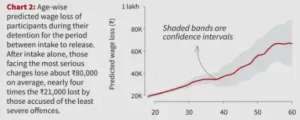
- Economic losses: Prolonged detention caused substantial wage losses, sometimes reaching approximately ₹2 lakh.
Constitutional and Legal Framework
- Article 21: Guarantees protection of life and personal liberty, including the right to a fair and speedy trial.
- Article 22(1): Protects the arrested person’s right to consult and be defended by a legal practitioner.
- Article 39A: Directs the State to ensure equal justice and free legal aid.
- Legal Services Authorities Act, 1987: Established the framework for NALSA and State and District Legal Services Authorities.
- BNSS, 2023: Section 479 provides safeguards against excessive detention of eligible undertrials, subject to statutory conditions.
- Judicial precedent: In Hussainara Khatoon v. State of Bihar, the Supreme Court recognised speedy trial as an essential part of Article 21.
What is Free Legal Aid?
- Free legal aid means providing legal advice, representation and assistance at State expense to people who cannot afford legal services or belong to legally eligible categories.
- Its objective is to ensure that justice is not denied because of poverty or social disadvantage.
Constitutional Provisions
- Article 14: Guarantees equality before the law and equal protection of laws.
- Article 21: Protects life and personal liberty, including the right to a fair and speedy trial.
- Article 22(1): Guarantees an arrested person the right to consult and be defended by a legal practitioner of choice, subject to constitutional exceptions.
- Article 39A: Directs the State to provide free legal aid and promote equal justice.
UPSC Fact: Article 39A was inserted by the 42nd Constitutional Amendment Act, 1976, and belongs to the Directive Principles of State Policy.
Who is Eligible for Free Legal Aid?
- Under Section 12 of the Legal Services Authorities Act, 1987, eligible categories include:
- Members of Scheduled Castes and Scheduled Tribes.
- Women and children.
- Persons with disabilities covered by the Act.
- Victims of trafficking or forced labour.
- Industrial workmen.
- Persons affected by disasters, ethnic violence or similar circumstances specified in the Act.
- Persons in custody, including undertrial prisoners.
- Individuals whose annual income falls below the applicable prescribed limit.
Challenges
- Delayed identification: Eligible prisoners may remain unaware of free legal assistance after arrest.
- Procedural barriers: Difficulties arranging sureties, documents and legal representation delay release.
- Institutional weaknesses: Shortage of trained lawyers, inadequate monitoring and inconsistent service quality affect outcomes.
- Social consequences: Detention can cause unemployment, family separation, stigma and interrupted education.
- Prison overcrowding: High undertrial populations place pressure on correctional facilities and public finances.
Government Initiatives
- NALSA: Provides legal awareness, representation and assistance to eligible persons.
- Legal Aid Defence Counsel System: Seeks to strengthen professional criminal defence services.
- e-Prisons and e-Courts: Support digital case information and coordination between courts and prisons.
- Undertrial Review Committees: Examine eligible cases for possible release and help prevent unnecessary detention.
Way Forward
- Early intervention: Provide legal aid immediately after arrest and during the first court appearance.
- Strengthen prison legal aid clinics: Ensure regular visits, trained lawyers and confidential consultations.
- Simplify bail procedures: Reduce avoidable documentation delays and improve support for indigent accused persons.
- Improve accountability: Monitor lawyer performance, detention duration and post-release outcomes.
- Evidence-based reforms: Collect better data on vulnerable groups and evaluate programme effectiveness.
RIGHTS AND RESTRICTIONS OF UNDERTRIAL PRISONERS IN INDIA
Rights Available to Undertrial Prisoners
Constitutional Rights
- Article 14 – Right to Equality: Equal protection of laws and protection against arbitrary treatment.
- Article 20(1) – Protection Against Retrospective Criminal Laws: No conviction under a law that did not criminalise the act when committed.
- Article 20(2) – Protection Against Double Jeopardy: No prosecution and punishment twice for the same offence.
- Article 20(3) – Right Against Self-Incrimination: Cannot be compelled to testify against oneself.
- Article 21 – Right to Life and Personal Liberty: Includes dignity, humane treatment, healthcare and speedy trial.
- Article 22(1) – Legal Representation: Right to consult and be defended by a lawyer of choice after arrest.
- Article 22(2) – Judicial Safeguard: An arrested person must ordinarily be produced before a magistrate within 24 hours, excluding necessary travel time.
- Article 32 and Article 226: Constitutional remedies through the Supreme Court and High Courts against unlawful detention.
Legal and Human Rights
- Free Legal Aid: Available to eligible prisoners under Article 39A and the Legal Services Authorities Act, 1987.
- Right to Bail: Eligible prisoners may seek bail; release depends on applicable legal conditions and judicial assessment.
- Protection Against Torture: Prisoners cannot be subjected to custodial violence, degrading treatment or unlawful punishment.
- Basic Facilities: Access to adequate food, sanitation, medical treatment and reasonable contact with family and lawyers.
- Right to Privacy: Retained subject to lawful and necessary prison restrictions.
- Protection Against Excessive Detention: Section 479 of BNSS, 2023, provides for release of eligible undertrials after specified periods of detention, subject to exceptions.
Conclusion
Timely legal aid is essential not merely for securing bail, but for protecting personal liberty, reducing poverty and ensuring that justice does not depend on an individual’s financial capacity.
PREVENTIVE DETENTION IN INDIA AND PERSONAL LIBERTY
TOPIC: (GS2) POLITY: THE HINDU
Recent controversies over police action against protesters in Delhi have renewed debate over preventive detention and restrictions on peaceful assembly.
What is Preventive Detention?
- Detention of a person without criminal conviction to prevent anticipated activities threatening public order or national security.
- Preventive versus punitive: Preventive detention aims to stop possible future harm, while punitive detention follows criminal proceedings for an alleged offence.
- Exceptional power: It restricts personal liberty and therefore requires strict legal safeguards.
Constitutional and Legal Framework
- Article 21: Protects life and personal liberty through procedures established by law.
- Article 22(3): Excludes preventive detainees from certain ordinary arrest safeguards under Article 22(1) and 22(2).
- Article 22(4): Generally requires Advisory Board scrutiny for detention beyond three months, subject to constitutional exceptions.
- Article 22(5): Requires communication of detention grounds and an opportunity to challenge the order.
- Article 22(6): Permits withholding facts considered against public interest.
- National Security Act, 1980: Authorises detention on specified grounds involving national security, public order and essential supplies.
- COFEPOSA, 1974: Provides preventive detention powers concerning smuggling and foreign-exchange-related activities.
Preventive Detention versus Prohibitory Orders
- Preventive detention: Restricts an individual’s liberty through custody under a specific detention law.
- Section 163, BNSS, 2023: Allows empowered Executive Magistrates to issue urgent orders preventing threats to public safety or tranquillity.
- Key difference: Prohibitory orders regulate specified activities or gatherings; they do not themselves authorise preventive detention.
- Example: Restricting an assembly in a sensitive area differs from detaining an individual under the NSA.
Historical Evolution
- Colonial period: The Rowlatt Act, 1919, enabled detention without ordinary trial safeguards.
- Post-Independence: The Preventive Detention Act, 1950, continued such powers.
- Emergency period: MISA, 1971, was extensively used against political opponents and repealed in 1978.
- Present framework: The NSA and specialised laws continue to permit detention under defined conditions.
Important Supreme Court Judgments
- Maneka Gandhi (1978): Procedures affecting personal liberty must be fair, just and reasonable.
- Khudiram Das (1975): Detention grounds must enable an effective representation against the order.
- Mazdoor Kisan Shakti Sangathan (2018): Peaceful protests should be regulated rather than completely prohibited.
- Shaik Nazneen (2022): Preventive detention is an exceptional measure, not a routine policing tool.
- Ameena Begum (2023): Emphasised constitutional protection through Articles 14, 19 and 21.
Way Forward
- Potential misuse: Vague allegations may enable detention of protesters or political opponents.
- Weak accountability: Limited awareness and delayed legal assistance can weaken effective challenges.
- Judicial scrutiny: Courts must examine legality, procedural compliance and relevant evidence.
- Proportionality: Authorities should prefer less restrictive measures when sufficient.
- Institutional reforms: Strengthen Advisory Boards, legal aid, transparent records and accountability for unlawful detention.
- Democratic balance: Protect peaceful dissent while addressing genuine security threats.
Conclusion
Preventive detention must remain a narrowly used constitutional exception, never a routine substitute for lawful policing, fair trials or democratic tolerance of dissent.
TRISHNA SATELLITE
TOPIC: (GS3) SCIENCE AND TECHNOLOGY: THE HINDU
The project head of the Indo-French TRISHNA satellite recently indicated that its launch is expected within the next 12–16 months.
About TRISHNA Satellite
- Full Form: Thermal Infra-Red Imaging Satellite for High-resolution Natural Resource Assessment.
- Joint Mission: Developed by the Indian Space Research Organisation (ISRO) and French Space Agency (CNES).
- Previous Collaboration: Follows the Megha-Tropiques and SARAL satellite missions.
- Main Purpose: To study Earth’s surface temperature, water availability and environmental conditions.
Major Objectives
- Water Security: Monitor soil moisture stress, agricultural water use and evapotranspiration.
- Agriculture: Identify crop water shortages and support efficient irrigation.
- Urban Planning: Detect urban heat islands and extreme surface temperatures.
- Water Quality: Observe changes in inland water bodies and coastal ecosystems.
- Cryosphere: Study glacier changes and snowmelt-related runoff.
- Disaster Monitoring: Detect thermal anomalies associated with volcanic and geothermal activity.

Important Payloads
- Thermal Infrared (TIR): Developed by CNES; measures surface temperature and thermal emissions using four infrared channels.
- VNIR-SWIR Sensor: Developed by ISRO; uses seven spectral bands to study vegetation, land surfaces and reflected solar radiation.
Significance for India
- Climate Action: Supports climate-change assessment and environmental monitoring.
- Agricultural Planning: Helps improve irrigation efficiency and drought preparedness.
- Disaster Management: Provides useful observations for heatwaves and environmental hazards.
- International Cooperation: Strengthens India–France collaboration in advanced space technology.
Conclusion
TRISHNA will strengthen climate-resilient development by converting satellite observations into practical solutions for water management, agriculture and environmental protection.