
Table of Contents
ToggleAmrit Bharat Station Scheme
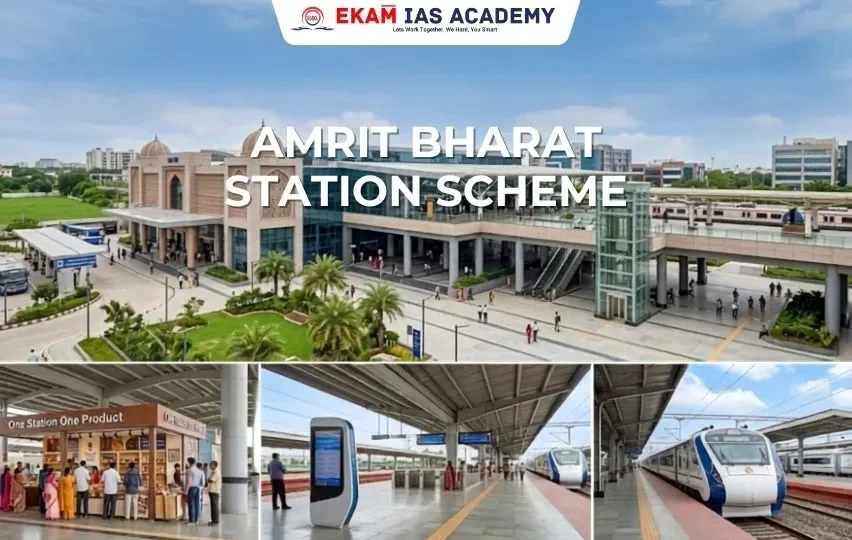
The Amrit Bharat Station Scheme (ABSS) is a major railway infrastructure development programme launched by the Ministry of Railways in December 2022. The scheme aims to modernise more than 1,300 railway stations across India by transforming them into passenger-friendly, sustainable, and well-integrated urban spaces.
Unlike conventional station renovation projects, ABSS follows a long-term, demand-based redevelopment approach, where each station is upgraded according to its passenger volume, geographical location, and future growth potential. The initiative seeks to make railway stations not just transit points but vibrant centres connecting mobility, commerce, and local culture.
Objectives of the Amrit Bharat Station Scheme
Long-Term and Need-Based Station Development
The scheme focuses on preparing comprehensive development plans for railway stations based on:
- Passenger footfall and future demand
- Availability of land and infrastructure requirements
- Local economic potential
- Operational feasibility
The redevelopment process is planned in phases to ensure efficient utilisation of resources and sustainable growth.
Integration with Urban Infrastructure
ABSS aims to transform railway stations into important urban mobility centres by improving connectivity with:
- Metro networks
- Bus transport systems
- Road infrastructure
- Pedestrian pathways
The objective is to create seamless movement for passengers while reducing congestion around railway premises.
Promotion of Local Heritage and Identity
A unique feature of the scheme is the emphasis on preserving regional identity. Station designs are encouraged to reflect:
- Local architecture
- Cultural traditions
- Historical significance of the region
The approach follows the vision of “Virasat Bhi, Vikas Bhi”, balancing heritage conservation with modern development.
Major Features and Facilities under ABSS
Enhanced Passenger Amenities
Redeveloped stations will provide improved facilities such as:
- Modern entry and exit areas
- Spacious waiting lounges
- Improved platform shelters
- Escalators and elevators
- Free Wi-Fi facilities
- Better passenger information systems
These upgrades aim to provide a comfortable and efficient travel experience.
Inclusive Infrastructure for Divyang Passengers
The scheme promotes universal accessibility by incorporating facilities including:
- Barrier-free movement pathways
- Accessible toilets
- Ramps and elevators
- Dedicated parking facilities
- Braille-enabled signs and tactile navigation systems
This ensures railway infrastructure becomes more inclusive for senior citizens and persons with disabilities.
Boosting Local Economy through One Station One Product
ABSS supports local businesses and artisans by integrating “One Station One Product (OSOP)” outlets at railway stations.
These kiosks provide a platform for:
- Local craftsmen
- Self-help groups
- Micro, Small and Medium Enterprises (MSMEs)
to showcase and sell regional products, thereby promoting local employment and entrepreneurship.
Focus on Sustainable Development
The redevelopment programme incorporates environmentally responsible practices such as:
- Energy-efficient lighting and systems
- Rainwater harvesting
- Improved waste management
- Green landscaping around station premises
These measures aim to reduce the environmental footprint of railway infrastructure.
Use of Modern Technology
Technology-driven solutions are being introduced to improve passenger safety and convenience through:
- AI-enabled surveillance systems
- Smart ticketing solutions
- Digital passenger information displays
- Advanced monitoring mechanisms
These initiatives support the creation of smarter and more efficient railway stations.
Significance of the Amrit Bharat Station Scheme
The ABSS represents a shift from traditional railway station upgrades towards a broader vision of integrated urban development. By combining modern infrastructure, sustainability, accessibility, and local cultural representation, the scheme aims to create railway stations that serve as gateways to cities and catalysts for economic growth.
Conclusion
The Amrit Bharat Station Scheme is an important step towards modernising India’s railway infrastructure. By focusing on passenger experience, technological advancement, environmental sustainability, and regional identity, the initiative seeks to transform railway stations into future-ready public spaces aligned with India’s growing mobility needs.



Frequently Asked Questions: Amrit Bharat Station Scheme
What is the Amrit Bharat Station Scheme (ABSS), and when was it launched?
The Amrit Bharat Station Scheme is a major railway infrastructure program launched by the Ministry of Railways in December 2022. It aims to redevelop and modernize over 1,300 railway stations across India, transforming them into passenger-friendly, sustainable, and well-integrated urban hubs.
How does ABSS differ from traditional station renovation projects?
Unlike conventional upgrades, ABSS follows a long-term, demand-based, and phased approach. Stations are upgraded based on their specific passenger footfall, geographical location, land availability, and future growth potential—making them vibrant centers for commerce, mobility, and local culture rather than simple transit points.
What accessibility features are included for Divyang (specially-abled) passengers?
To ensure universal accessibility and barrier-free movement, redeveloped stations feature:
- Ramps, elevators, and dedicated parking
- Accessible toilets
- Braille-enabled signage and tactile navigation pathways for visual impairment
How does the scheme support local economies and regional culture?
ABSS aligns with the vision of “Virasat Bhi, Vikas Bhi” by:
- Integrating station architecture with regional heritage and local traditions.
- Hosting “One Station One Product” (OSOP) kiosks, giving local artisans, self-help groups, and MSMEs a direct platform to sell regional handicrafts and products.
What green and sustainable practices are implemented under ABSS?
The scheme focuses on reducing the environmental footprint of railway stations by incorporating:
- Energy-efficient lighting and power systems
- Rainwater harvesting systems
- Improved waste management protocols
- Green landscaping around station premises