
Table of Contents
ToggleAshtalakshmi Rising
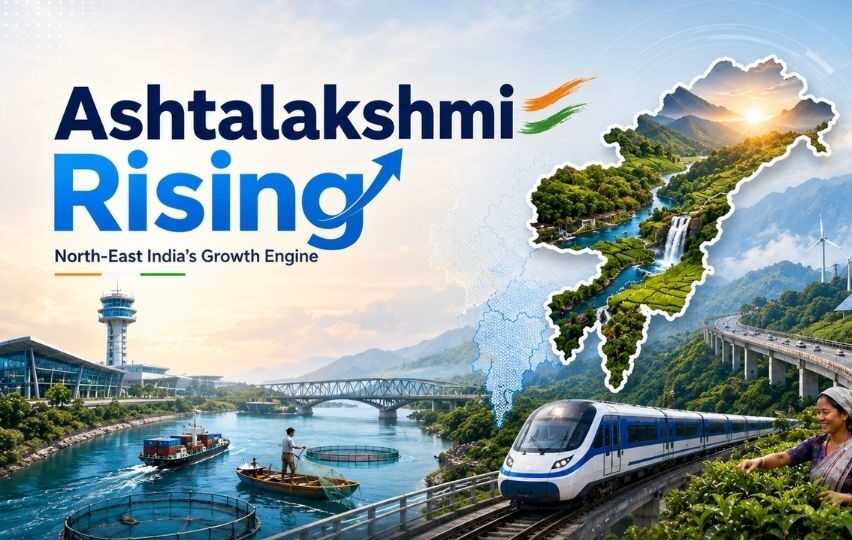
The North-Eastern Region of India, often described as Ashtalakshmi, is emerging as a major pillar of India’s development strategy. The term reflects the immense economic, cultural, ecological and strategic value of the eight North-Eastern states. Over the last decade, the region has witnessed major improvements in infrastructure, connectivity, clean energy, agriculture, fisheries, trade and socio-economic development.
The idea of Ashtalakshmi Rising highlights the transformation of the North-East from a geographically remote region into a connected and prosperous growth engine for India. This transformation is closely linked with India’s Act East Policy, the vision of Viksit Bharat, and the goal of inclusive national development.
Why is Ashtalakshmi Rising in News?
The developmental transformation of India’s North-Eastern Region between 2014 and 2026 has come into focus due to visible progress in connectivity, infrastructure and regional integration.
The North-East has historically faced challenges such as difficult terrain, limited connectivity, inadequate infrastructure, low industrialisation and market access constraints. However, sustained policy support, targeted central schemes and improved public investment have helped change the development trajectory of the region.
The region is now increasingly seen as India’s gateway to Southeast Asia and a critical bridge for trade, tourism, energy and strategic connectivity.
Development Snapshot of the North-East
The North-East has recorded notable gains across several sectors.
National Waterways
The number of national waterways in the North-East increased from 1 in 2014 to 20 in 2024. This reflects the growing importance of inland water transport for trade, logistics and regional connectivity.
Inland Fish Production
Inland fish production in the North-Eastern Region increased from 4.03 lakh tonnes in 2014–15 to 6.78 lakh tonnes in 2024–25, showing a rise of about 68.2%. This is significant for food security, livelihoods and rural income generation.
Egg Production
Egg production increased from 10,098 lakh in 2014–15 to 12,145 lakh in 2021, reflecting improvements in livestock-based rural livelihoods.
Milk Production
Milk production rose from 1,293.5 thousand tonnes in 2014–15 to 1,739.9 thousand tonnes in 2024–25, showing progress in dairy development and nutritional security.
National Highway Expansion
National highway length in the North-East expanded from 10,905 km in 2014 to 16,207 km by April 2025. Improved road connectivity is crucial for reducing isolation, improving market access and strengthening border infrastructure.
Railway Budget Allocation
The annual average budget allocation for railways in the North-East increased from ₹2,122 crore during 2009–14 to ₹11,486 crore in 2026–27. This reflects the government’s focus on railway connectivity and regional integration.
Airports
The number of airports in the North-East increased from 9 in 2014 to 17 in 2026, improving air connectivity, tourism potential and emergency access in remote areas.
Targeted Policy Support for North-East Development
Several government schemes and institutions have played a major role in supporting the North-East’s growth.
PM-DevINE
The Prime Minister’s Development Initiative for North East Region is a 100% centrally funded initiative designed to support high-impact infrastructure and social development projects. It aims to fill critical development gaps and accelerate economic growth in the region.
North Eastern Council
The North Eastern Council plays an important role in holistic and region-specific development. It supports sectors such as bamboo livelihoods, tourism, regional infrastructure and social development.
Special Development Packages
Special Development Packages have been used for states such as Assam and Tripura to support employment, skill development, inclusion and regional peace. These packages aim to address state-specific needs and strengthen local development outcomes.
NESIDS
The North East Special Infrastructure Development Scheme supports roads and other infrastructure projects. It helps improve connectivity and public service delivery in difficult terrain.
Brand North East: From Subsistence to High-Value Growth
The Ministry of Development of North Eastern Region’s Brand North East vision aims to transform the regional economy from subsistence-based production to a high-value, export-oriented growth hub.
The approach focuses on unlocking the state-specific unique selling propositions of each North-Eastern state. This includes promoting local strengths such as bamboo, organic agriculture, handlooms, tourism, horticulture, fisheries, tea, spices and clean energy.
Role of North-East in Act East Policy
The North-East is central to India’s Act East Policy because of its geographical proximity to Southeast Asia. Better roads, railways, air connectivity and waterways can help the region become a trade and connectivity bridge between India and ASEAN countries.
Improved connectivity through border infrastructure, inland waterways and multimodal transport can support trade, tourism and people-to-people linkages.
Clean Energy and Sustainable Development
The North-East has strong potential for clean energy due to its rivers, hydropower resources, forests, solar potential and biodiversity. Sustainable development in the region must balance infrastructure growth with ecological protection.
The region’s forests, rivers and biodiversity make it environmentally sensitive. Therefore, development must follow a balanced model that protects natural ecosystems while improving livelihoods.
Agriculture, Fisheries and Rural Prosperity
Agriculture and fisheries are key livelihood sectors in the North-East. Growth in inland fish production, dairy and livestock sectors shows the potential for rural income diversification.
The region can become a hub for organic farming, horticulture, bamboo-based industries, fisheries and eco-tourism. Strengthening value chains, storage, processing and market access will help increase farmer and fisher incomes.
Strategic Importance of North-East India
The North-East is not only economically important but also strategically significant. It shares international borders with countries such as China, Myanmar, Bangladesh, Bhutan and Nepal. Better infrastructure in the region strengthens India’s border management, internal security and regional diplomacy.
Connectivity projects in the North-East also support national integration and reduce the psychological distance between the region and the rest of India.
Challenges in North-East Development
Despite progress, several challenges remain. The region faces difficult terrain, landslide-prone areas, high infrastructure costs, ecological fragility and limited industrial base.
Market access is still a concern for many farmers, artisans and small entrepreneurs. Skill development, private investment, digital connectivity and logistics infrastructure need further strengthening.
Ethnic diversity, border concerns and climate vulnerability also require sensitive and inclusive governance.
Way Forward
The future development of the North-East must focus on sustainable connectivity, local entrepreneurship and ecological balance. Infrastructure projects should be designed with climate resilience and disaster safety in mind.
The government should promote state-specific industries, local value addition, agro-processing, tourism, clean energy and digital services. Better coordination between central ministries, state governments and local communities will be essential.
A people-centric development model can ensure that the North-East becomes not just a transit corridor, but a prosperous and inclusive growth region.
UPSC Relevance
Ashtalakshmi Rising is important for UPSC because it connects with regional development, Act East Policy, infrastructure, border management, inclusive growth, North-East development schemes, clean energy, fisheries, agriculture and Viksit Bharat.
This topic is relevant for GS Paper 2 under governance and regional development, GS Paper 3 under infrastructure, economy and internal security, and Essay paper under inclusive development and national integration.
Conclusion
The transformation of the North-East into India’s growth engine represents a major shift in India’s development vision. With better roads, railways, waterways, airports, clean energy, agriculture and fisheries, the region is moving toward greater prosperity and integration.
Ashtalakshmi is rising as a strategic, connected and prosperous growth hub for India. If development remains inclusive, sustainable and region-specific, the North-East can become a powerful driver of Viksit Bharat and India’s engagement with Southeast Asia.



Frequently Asked Questions on Ashtalakshmi Rising
What is Ashtalakshmi Rising?
Ashtalakshmi Rising refers to the development transformation of India’s North-Eastern Region into a major growth engine through better infrastructure, connectivity, clean energy, trade, agriculture and socio-economic progress.
Why is North-East India called Ashtalakshmi?
North-East India is called Ashtalakshmi because its eight states are seen as eight sources of prosperity, representing India’s economic, cultural, ecological and strategic strength.
Why is Ashtalakshmi Rising important for India?
Ashtalakshmi Rising is important because the North-East acts as India’s gateway to Southeast Asia, supports the Act East Policy, strengthens border infrastructure and promotes inclusive regional development.
Which schemes support North-East development?
Important schemes include PM-DevINE, North Eastern Council schemes, NESIDS, Special Development Packages and infrastructure projects related to roads, railways, airports and waterways.
Why is Ashtalakshmi Rising important for UPSC?
It is important for UPSC because it connects with North-East development, Act East Policy, Viksit Bharat, infrastructure, border management, inclusive growth, clean energy, agriculture and regional planning.