Table of Contents
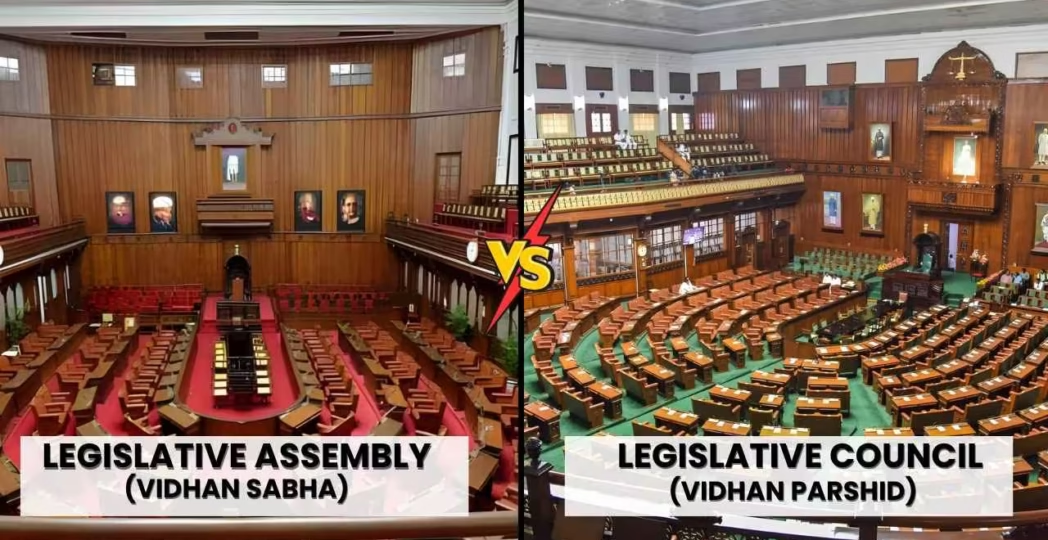
ToggleIndia’s State Legislature can be unicameral or bicameral depending on the state. It consists of:
- Legislative Assembly (Vidhan Sabha) – the Lower House
- Legislative Council (Vidhan Parishad) – the Upper House
While both Houses participate in law-making at the state level, they differ significantly in composition, powers, election process, and term of members.
Legislative Assembly (Vidhan Sabha)
The Legislative Assembly is the lower house of the State Legislature. It directly represents the people of the state and plays a pivotal role in making laws, controlling finances, and holding the state government accountable.
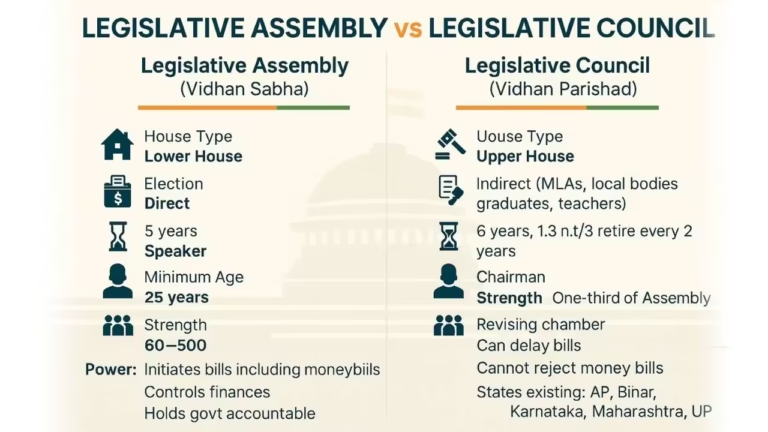
- Mode of Election: Members are directly elected by the people of the state through general elections based on universal adult franchise.
- Term: 5 years, unless dissolved earlier.
- Presiding Officer: Speaker
- Minimum Age of Membership: 25 years
- Existence: Every state in India has a Legislative Assembly.
- Strength: Maximum 500 members, minimum 60 members, depending on the state’s population.
Key Functions:
- Introduction and passage of state bills including money bills.
- Control over state finances by approving budgetary demands and grants.
- Supervision and accountability of the Council of Ministers.
- Represents the direct will of the people of the state.
Legislative Council (Vidhan Parishad)
The Legislative Council is the upper house of the State Legislature. It acts as a revising body for bills passed by the Legislative Assembly and ensures representation for specific groups like graduates, teachers, and local authorities.
- Mode of Election: Members are indirectly elected through a system involving:
- Members of the State Legislative Assembly.
- Local bodies like municipalities and panchayats.
- Graduates and teachers from the state.
- Term: 6 years, with one-third of members retiring every 2 years.
- Presiding Officer: Chairman
- Minimum Age of Membership: 30 years
- Existence: Only in 6 states: Andhra Pradesh, Bihar, Karnataka, Maharashtra, Telangana, and Uttar Pradesh.
- Strength: One-third of the total number of members of the Legislative Assembly of that state; minimum 40 members.
Key Functions:
- Revises, reviews, and debates state legislation passed by the Legislative Assembly.
- Can delay bills but cannot reject money bills.
- Provides representation to special interest groups (graduates, teachers, and local authorities).
Key Differences Between Legislative Assembly and Legislative Council
| Feature | Legislative Assembly (Vidhan Sabha) | Legislative Council (Vidhan Parishad) |
|---|---|---|
| House Type | Lower House of the State Legislature | Upper House of the State Legislature |
| Election Method | Directly elected by the people | Indirectly elected (MLAs, local bodies, graduates, teachers) |
| Term | 5 years | 6 years (1/3 retire every 2 years) |
| Presiding Officer | Speaker | Chairman |
| Minimum Age | 25 years | 30 years |
| Existence | Present in all states | Only in 6 states: Andhra Pradesh, Bihar, Karnataka, Maharashtra, Telangana, Uttar Pradesh |
| Strength | Max. 500, Min. 60 members | One-third of Legislative Assembly members; not less than 40 |
| Role in Legislation | Initiates bills and approves state budget | Reviews and revises bills; cannot reject Money Bills |
| Representation | Represents all citizens of the state directly | Represents special interest groups and acts as a revising chamber |
House Type
Election Method
Term
Presiding Officer
Minimum Age
Existence
Strength
Role in Legislation
Representation
The Legislative Assembly is the direct voice of the people at the state level, while the Legislative Council serves as a revising and advisory body, providing representation to special groups and ensuring deeper scrutiny of legislation. Together, they maintain the balance of democracy and governance at the state level.
What is the difference between Legislative Assembly and Legislative Council?
The Legislative Assembly (Vidhan Sabha) is the directly elected lower house representing the people, while the Legislative Council (Vidhan Parishad) is the indirectly elected upper house that acts as a revising chamber.
How are members of the Legislative Assembly elected?
Members of the Legislative Assembly (MLAs) are directly elected by the people of the state through general elections based on universal adult franchise.
Which Indian states have a Legislative Council?
Currently, only 6 states have a Legislative Council: Andhra Pradesh, Bihar, Karnataka, Maharashtra, Telangana, and Uttar Pradesh.
What are the powers of the Legislative Council compared to the Legislative Assembly?
The Legislative Assembly has greater powers, especially in financial matters and passing money bills. The Legislative Council can review and delay legislation but cannot reject money bills.
What is the term of members in Legislative Assembly and Legislative Council?
MLAs serve a 5-year term (unless dissolved earlier), while MLCs serve for 6 years, with one-third retiring every two years.