Table of Contents
ToggleUPSC History - Art and Culture - Architecture in Ancient history
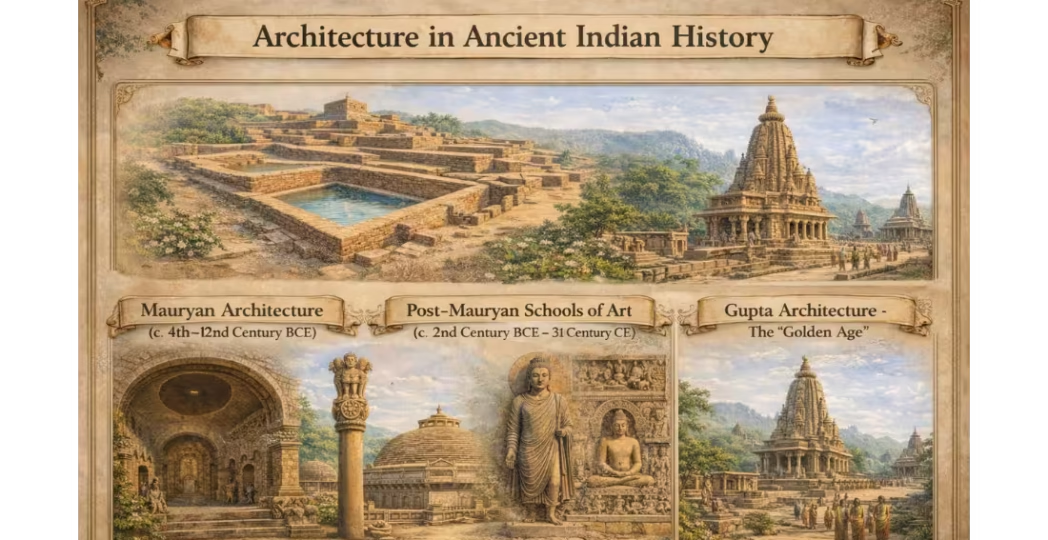
1. The Harappan Architecture (c. 2500–1700 BCE)
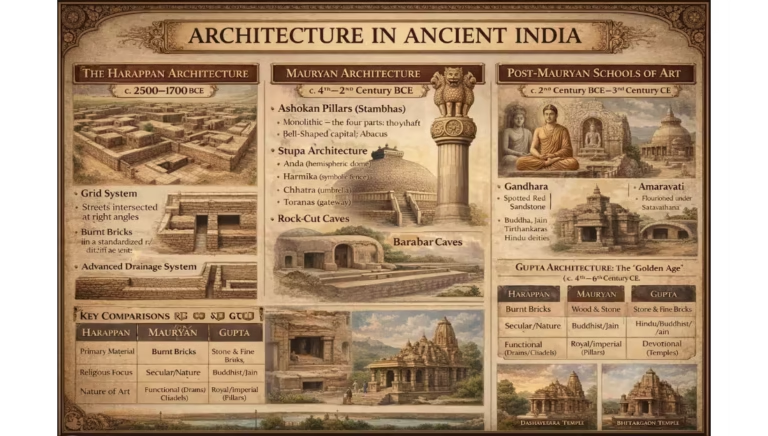
The Indus Valley Civilization (IVC) represents the pinnacle of Bronze Age urban planning. Unlike later periods that focused on temples, Harappan architecture was primarily utilitarian and secular.
- Grid System: Cities like Mohenjo-Daro and Harappa followed a “Gridiron” layout where streets intersected at right angles.
- Citadel & Lower Town: Cities were divided into a raised Citadel (for the elite and public buildings) and a Lower Town (for commoners).
- Material: The use of burnt bricks (in a standardized ratio of 4:2:1) was a unique feature, whereas contemporary civilizations like Mesopotamia used sun-dried bricks.
- Drainage System: Perhaps the most advanced feature was the covered drainage system connected to every house, reflecting a high sense of hygiene.
2. Mauryan Architecture (c. 4th–2nd Century BCE)
This period saw the transition from wood to stone, marking the beginning of monumental stone architecture in India.
- Pillars (Stambhas): Ashokan pillars were monolithic (carved from a single stone), usually Chunar sandstone. They featured four parts: the shaft, the bell-shaped capital, the abacus, and the crowning animal (e.g., the Sarnath Lion Capital).
- Stupa Architecture: Originally burial mounds, Stupas became Buddhist commemorative structures.
- Core Elements: The Anda (hemispheric dome), Harmika (square railing on top), Chhatra (umbrella), and Toranas (elaborate gateways added later by Shungas).
- Key Site: The Sanchi Stupa is the most iconic example.
- Rock-Cut Caves: The Barabar and Nagarjuni caves (Bihar) were the earliest examples, gifted by Ashoka and Dasharatha to the Ajivika sect.
3. Post-Mauryan Schools of Art (c. 2nd Century BCE – 3rd Century CE)
During this era, sculpture and architecture became more decorative, influenced by various schools of art.
- Gandhara School: Centered in modern-day Pakistan/Afghanistan, it showed heavy Hellenistic (Greek) influence. Buddha was depicted with wavy hair, muscular physique, and sandals.
- Mathura School: An indigenous school using spotted red sandstone. It produced images of Buddha, Jain Tirthankaras, and Hindu deities.
- Amaravati School: Flourished in the Krishna-Godavari delta under the Satavahanas. It focused on “Narrative Art” (stories from Jataka tales) and used white marble.
4. Gupta Architecture (The "Golden Age", c. 4th–6th Century CE)
The Gupta period is marked by the birth of the Hindu Temple.
- Cave Evolution:
- Ajanta Caves: 29 Buddhist caves (mostly Viharas and Chaityas) known for fresco paintings and the absence of blue color.
- Ellora Caves: 34 caves representing a confluence of Hinduism, Buddhism, and Jainism. It features the monolithic Kailash Temple (Cave 16), carved from top to bottom.
- Temple Architecture Evolution:
- Temples evolved from simple flat-roofed structures to those with a Shikhara (tower).
- Panchayatan Style: A main shrine surrounded by four smaller subsidiary shrines.
- Key Examples: Dashavatara Temple (Deogarh) and Bhitargaon Temple (one of the oldest brick temples).
5. Early Temple Architecture Styles
The foundations of the two major styles were laid in the ancient period:
- Nagara Style (North India): Characterized by a curvilinear Shikhara and a pillared hall called Mandapa.
- Dravida Style (South India): Characterized by a pyramid-like tower called Vimana, high boundary walls, and massive gateways called Gopurams.
Key Comparisons for Mains
Feature | Harappan | Mauryan | Gupta |
Primary Material | Burnt Bricks | Wood & Stone | Stone & Fine Bricks |
Religious Focus | Secular/Nature | Buddhist/Jain | Hindu/Buddhist/Jain |
Nature of Art | Functional (Drains/Citadels) | Royal/Imperial (Pillars) | Devotional (Temples) |
UPSC Prelims: Previous Year Questions (PYQs)
Previous Year Questions (PYQs) – Art, Architecture & IVC
PYQ 1 (2015)
Q: With reference to the art and archaeological history of India, which one among the following was made earliest?
Options:
(a) Lingaraja Temple at Bhubaneswar
(b) Rock-cut Elephant at Dhauli ✅
(c) Rock-cut Monuments at Mahabalipuram
(d) Varaha Image at Udayagiri
Answer: (b) Rock-cut Elephant at Dhauli
Explanation: The Rock-cut Elephant at Dhauli dates to the Mauryan period during Ashoka (3rd Century BCE), making it earlier than the Gupta, Pallava, and later medieval structures.
PYQ 2 (2013)
Q: Which of the following characterizes/characterize the people of Indus Valley Civilization?
Statements:
1. They possessed great palaces and temples.
2. They worshipped both male and female deities.
3. They employed horse-drawn chariots in warfare.
Options:
(a) 1 and 2 only
(b) 2 only ✅
(c) 1, 2 and 3
(d) None of the above
Answer: (b) 2 only
Explanation: No clear evidence of temples or palaces exists in IVC. Horse-drawn chariots are linked to later Vedic culture. Evidence suggests worship of Mother Goddess and Pashupati.
PYQ 3 (2013)
Q: With reference to the history of Indian rock-cut architecture, consider the following statements:
Statements:
1. The caves at Badami are the oldest surviving rock-cut caves in India.
2. The Barabar rock-cut caves were originally made for Ajivikas by Emperor Ashoka.
3. At Ellora, caves were made for different faiths.
Options:
(a) 1 only
(b) 2 and 3 only ✅
(c) 3 only
(d) 1, 2 and 3
Answer: (b) 2 and 3 only
Explanation: Barabar caves (3rd Century BCE) are the oldest rock-cut caves. Badami caves are later (6th Century CE). Ellora includes Buddhist, Hindu, and Jain caves.
II. Prelims Practice Questions
Question 1
Q: Consider the following statements regarding Stupa architecture:
Statements:
1. The 'Anda' represents the hemispherical dome symbolizing the mound of earth.
2. The 'Harmika' was a square railing atop the dome representing the abode of gods.
3. The 'Toranas' or gateways were always plain to maintain Buddhist simplicity.
Options:
(a) 1 and 2 only
(b) 2 and 3 only
(c) 1 and 3 only
(d) 1, 2 and 3
Answer: (a)
Explanation: Toranas were highly decorated with carvings of Jataka tales, as seen in Sanchi.
Question 2
Q: The 'Panchayatan' style of temple architecture, which emerged during the Gupta period, refers to:
Options:
(a) A temple with five different entry gates.
(b) A main shrine surrounded by four subsidiary shrines.
(c) A temple dedicated to five different deities in one sanctum.
(d) A temple built at the confluence of five rivers.
Answer: (b)
UPSC Mains: Previous Year Questions (PYQs)
Mains Practice Questions – Art, Architecture & IVC
Buddhist Stupa Art
Question: “Early Buddhist Stupa-art, while depicting folk motifs and narratives, successfully expounds Buddhist ideals.” Elucidate. (2016)
Gandhara Art
Question: The Gandhara art signals the coexistence of different cultural influences. Discuss with examples. (2023)
Indus Valley Civilization
Question: To what extent has the urban planning and culture of the Indus Valley Civilization provided inputs to present-day urbanization? (2014)
Temple Sculpture
Question: Discuss the Tandava dance as recorded in the early Indian inscriptions and sculptures. (2013)
Rock-cut Architecture
Question: Assess the significance of the Barabar Hill caves in the history of Indian rock-cut architecture.
Mains Practice Questions – Art & Architecture
Nagara and Dravida Styles
Question: Compare and contrast the Nagara and Dravida styles of temple architecture with special reference to their towers and gateways. (250 Words)
Gupta Architecture
Question: “The Gupta period represents the classical peak of Indian architecture.” Critically analyze this statement in the context of temple and cave evolution. (150 Words)
Ashokan Architecture
Question: Evaluate the role of Ashokan edicts and pillars as a medium of communication and their architectural uniqueness. (250 Words)
Architecture In Ancient History - FAQs
What is the main difference between a Chaitya and a Vihara?
A Chaitya is a Buddhist prayer hall or chapel, usually featuring a stupa at one end. A Vihara is a residential monastery or lodging for monks.
Why did Harappan architecture use burnt bricks while other contemporary civilizations used sun-dried bricks?
Burnt bricks were more durable and resistant to the frequent flooding of the Indus River. This reflects the advanced engineering and focus on long-term urban stability in IVC.
What are the three main schools of sculpture in ancient India?
- Gandhara School: Influenced by Greek/Roman styles (Hellenistic).
- Mathura School: Indigenous, used spotted red sandstone.
- Amaravati School: Focused on narrative art using white marble.
What is the 'Lost Wax Technique'?
Known as Cire-perdue, it is a method of metal casting where a wax model is replaced by molten metal. It was used to create the famous ‘Dancing Girl’ of Mohenjo-Daro.
What is the significance of the Shore Temple at Mahabalipuram?
Built by the Pallavas, it is one of the oldest structural (not rock-cut) stone temples in South India and marks the transition toward the fully developed Dravidian style.