Table of Contents
ToggleThe Living Stage: A Comprehensive Encyclopedia of Indian Theatre
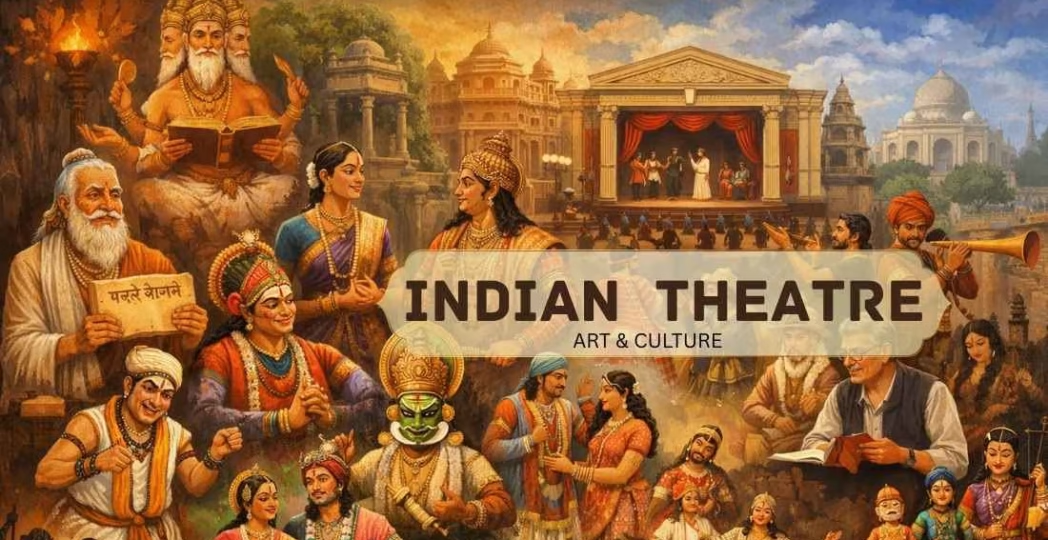
Indian Theatre is one of the oldest and most diverse theatrical traditions in the world. Unlike Western theatre, which often prioritizes the script, Indian theatre is a total art form—amalgamating music, dance, pantomime, and religion into a single performance.
1. The Classical Foundations: Natya Shastra
The bedrock of Indian performing arts is the Natya Shastra, attributed to Bharat Muni (c. 200 BCE – 200 CE).
A. Divine Origin
According to legend, Lord Brahma created the Natyaveda (the Fifth Veda) to provide a form of entertainment that was also morally and spiritually uplifting for all castes. He took:
- Pathya (Recitation) from the Rig Veda.
- Gita (Song) from the Sama Veda.
- Abhinaya (Acting/Gestures) from the Yajur Veda.
- Rasa (Emotions) from the Atharva Veda.
B. The Concept of Rasa and Bhava
The goal of Indian theatre is to evoke a Rasa (aesthetic flavor or sentiment) in the audience. There are eight original Rasas (later nine, including Shanta):
- Shringara (Love), Hasya (Humor), Karuna (Sorrow), Raudra (Anger), Veera (Heroism), Bhayanaka (Fear), Bibhatsa (Disgust), and Adbhuta (Wonder).
C. The Four Pillars of Abhinaya (Acting)
- Angika: Body movements and gestures.
- Vachika: Speech, song, and intonation.
- Aharya: Costumes, makeup, and props.
Sattvika: Pure mental state and involuntary emotional reactions (e.g., tears, trembling).
2. Classical Sanskrit Theatre (The Golden Age)
From the 2nd century BCE to the 10th century CE, Sanskrit drama flourished under royal patronage.
- Bhasa: The earliest known playwright. His famous works include Swapnavasavadatta.
- Kalidasa: The pinnacle of Sanskrit literature. His Abhijnanashakuntalam is considered a world masterpiece.
- Shudraka: Author of Mrichchhakatika (The Little Clay Cart), unique for its secular and realistic portrayal of a merchant and a courtesan.
- Visakhadatta: Wrote Mudrarakshasa, a rare political thriller about Chanakya and Chandragupta Maurya.
Technical Features
- The Vidushaka: A recurring character—the “jester” or “clown”—who provides comic relief and acts as a bridge between the hero and the audience.
- Language: High-status characters (Kings, Priests) spoke Sanskrit, while women and commoners spoke Prakrit, reflecting the social stratification of the time.
3. Traditional and Folk Theatre of India
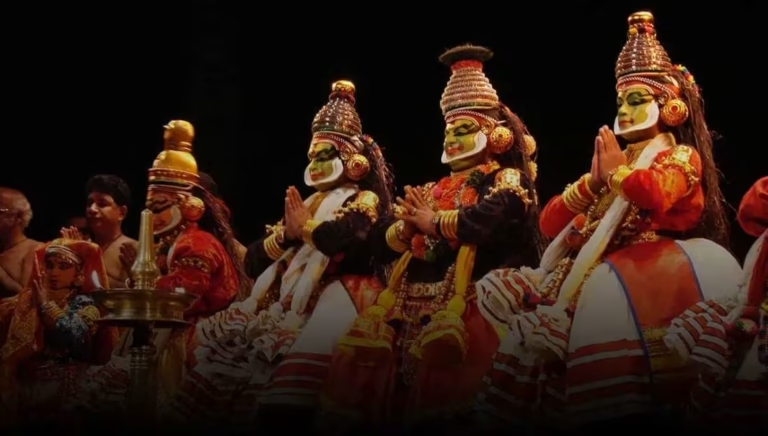
With the decline of Sanskrit theatre after the 10th century, theatre moved to the streets and rural shrines, evolving into diverse regional folk forms.
A. Ritual Theatre (Religious Roots)
- Kutiyattam (Kerala): The oldest living theatre tradition in India, recognized by UNESCO. It is performed in temples called Koothambalams.
- Ramlila (North India): A theatrical enactment of the Ramayana during Dussehra.
- Raslila (Braj region): Focused on the life of Krishna and Radha.
- Mudiyettu (Kerala): A ritualistic dance-drama depicting the battle between Goddess Kali and the demon Darika.
B. Secular/Social Folk Theatre
- Bhavai (Gujarat): Known for its speed and the use of the Bhungal (long pipe). It often satirizes social issues.
- Jatra (Bengal): Originated as a musical form during the Bhakti movement; it evolved into a popular secular drama performed in open-air arenas.
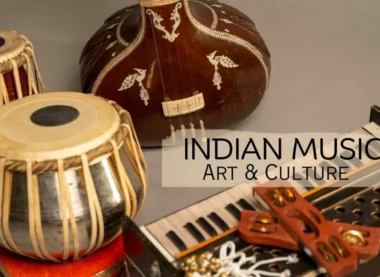
- Nautanki (Uttar Pradesh): Characterized by heavy percussion (Nagara) and high-pitched singing.
- Tamasha (Maharashtra): High-energy performance featuring the Lavani dance.
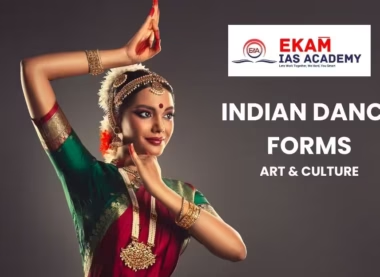
- Yakshagana (Karnataka): A grand performance combining dance, music, and heavy costumes, depicting stories from epics.
4. Modern Indian Theatre: The Colonial Encounter
The 19th century introduced Western-style proscenium stages (indoor, curtained stages) via the British.
- Parsi Theatre: A commercial hybrid that mixed Western stagecraft with Indian myths and music. It laid the foundation for the modern Bollywood film industry.
- IPTA (Indian People’s Theatre Association): Formed in the 1940s, it used theatre as a tool for political mobilization against British rule and social inequality. Bijon Bhattacharya’s Nabanna is a landmark play of this era.
5. Post-Independence Theatre: "Theatre of the Roots"
Modern directors sought to break away from Western realism and return to traditional Indian forms.
- Key Personalities:
- Ebrahim Alkazi: Transformed the National School of Drama (NSD).
- Habib Tanvir: Known for working with tribal folk artists of Chhattisgarh (Charandas Chor).
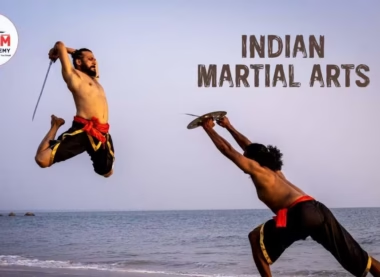
- Badal Sircar: Developed the “Third Theatre”—a street-based, minimalist theatre to engage directly with the masses.
- Girish Karnad: Used folklore and history to critique modern society (Hayavadana, Tughlaq).
UPSC Prelims: PYQs & Practice Questions
Previous Year Questions (PYQs)
Question 1 (2017)
Q: Consider the following pairs:
Tradition : State
Chapchar Kut festival : Mizoram
Khongjom Parba ballad : Manipur
Thang-Ta dance : Sikkim
Which of the pairs given above is/are correctly matched?
Options:
(a) 1 only | (b) 1 and 2 only | (c) 1, 2 and 3 | (d) 2 and 3 only
Answer: (b)
Explanation: Thang-Ta is a martial art/theatre form from Manipur, not Sikkim. Khongjom Parba is a musical narration of the Anglo-Manipur war, and Chapchar Kut is the most important festival of Mizoram.
Question 2 (Generic/NCERT based)
Q: Which one of the following is a transition from the 'monumentalism' of Sanskrit drama to the 'folk' theatre traditions of India?
Options:
(a) Mudiyettu
(b) Koodiyattam
(c) Yakshagana
(d) Bhavai
Answer: (b)
Explanation: Koodiyattam (Kerala) is recognized by UNESCO as the only surviving link to ancient Sanskrit theatre, preserving the classical acting techniques while transitioning into a ritualistic folk setting.
Question 3 (Generic)
Q: The puppet theatre tradition 'Putul Nach' belongs to which state?
Options:
(a) Odisha
(b) Karnataka
(c) West Bengal
(d) Rajasthan
Answer: (c)
Explanation: Putul Nach is the traditional rod-puppet theatre of West Bengal, often depicting stories from the Ramayana and social themes.
Prelims Practice Questions
Question 1
Q: Consider the following statements regarding the 'Vidushaka' in Sanskrit drama:
Statements:
1. He is a constant companion of the hero.
2. He is always a Brahmin by caste but speaks in Prakrit.
3. His role is to provide comic relief and criticize the king's actions subtly.
Which of the statements given above is/are correct?
Options:
(a) 1 and 2 only
(b) 2 and 3 only
(c) 1 and 3 only
(d) 1, 2 and 3
Answer: (d)
Explanation: The Vidushaka is a unique character who bridges the gap between the royal characters (Sanskrit speakers) and the audience, often using Prakrit for humorous and critical commentary.
Question 2
Q: Match the following Folk Theatre forms with their respective states:
List:
A. Jatra
B. Bhavai
C. Maach
D. Bhaona
States:
1. Gujarat
2. West Bengal
3. Madhya Pradesh
4. Assam
Options:
(a) A-1, B-2, C-3, D-4
(b) A-2, B-1, C-3, D-4
(c) A-2, B-1, C-4, D-3
(d) A-4, B-3, C-2, D-1
Answer: (b)
Explanation: Jatra is associated with West Bengal, Bhavai with Gujarat, Maach with Madhya Pradesh, and Bhaona with Assam.
UPSC Mains: Previous Year Questions (PYQs) – Indian Theatre, Drama & Performing Traditions
Classical Sanskrit Theatre: Moral & Social Order
Question: "The classical Sanskrit theatre was not just entertainment but a medium to uphold the social and moral order." Discuss with reference to the works of Bhasa and Kalidasa. (Generic recurring theme)
Traditional Folk Theatre: Mass Communication
Question: Examine the role of 'Traditional Folk Theatre' as a tool for social communication and mass education in medieval India. (Generic theme)
Colonial Influence: Proscenium Stage Impact
Question: Discuss the impact of the Western 'Proscenium' stage on the traditional open-air theatre forms of India during the colonial period. (Generic theme)
IPTA & Nationalist Movement
Question: "Indian People’s Theatre Association (IPTA) acted as a catalyst for the nationalist movement." Evaluate. (Generic/History theme)
Koodiyattam: UNESCO Intangible Cultural Heritage
Question: Analyze the significance of 'Koodiyattam' as a UNESCO Intangible Cultural Heritage. (Generic theme)
Mains Practice Questions
Folk Theatre: Ritual to Secular Traditions
Question: "From the ritualistic 'Mudiyettu' to the secular 'Bhavai', Indian folk theatre reflects the regional specificities of India’s cultural landscape." Elaborate. (250 Words)
Modern Playwrights & Folk Revival
Question: Evaluate the contribution of modern playwrights like Girish Karnad and Habib Tanvir in reviving traditional folk elements in contemporary Indian theatre. (150 Words)
Puppetry Traditions & Regional Spread
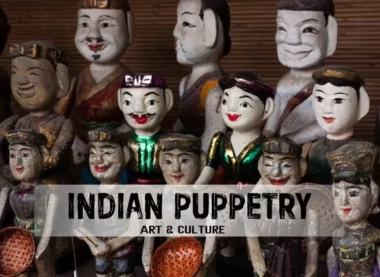
Question: "Puppetry is the most ancient form of theatre in India." Discuss the various types of puppetry (String, Shadow, Rod, Glove) and their regional distribution. (250 Words)
Frequently Asked Questions (FAQs)
What is the 'Natyashastra'?
- Authored by Bharat Muni (c. 200 BCE – 200 CE), it is the most detailed ancient treatise on the performing arts, covering acting, dance, music, stage design, and the theory of Rasa (emotions).
What are the 'Sutradhara' and 'Vidushaka'?
- The Sutradhara is the director/string-holder who introduces the play. The Vidushaka is the jester/clown who provides humor and social commentary.
Which theatre form is famous for its 'Bhungal' (long pipe) and speed?
- Bhavai from Gujarat. It is characterized by its high speed, energetic dancing, and the blowing of the Bhungal to signal transitions.
What is 'Therukoothu'?
- It is a popular folk theatre form of Tamil Nadu, literally meaning “Street Play.” It is usually performed at temple festivals and centers around stories from the Mahabharata.
How did the 'Parsi Theatre' influence modern Indian cinema?
- Parsi Theatre (19th century) introduced professional management, elaborate backdrops, and a mix of music, dance, and melodrama. This “masala” format directly laid the blueprint for the early Bollywood film industry.