

...
Daily Current affairs 15 June 2026

Daily Current Affairs 15-June-2026

Share this Post

ASSAM–NAGALAND OIL DEAL

TOPIC: (GS3) ECONOMY: THE HINDU

A tripartite MoU signed between the Union government, Assam, and Nagaland to restart oil & gas exploration after 30 years of suspension.

Birthplace of India’s Oil Industry

  • Assam is historically the cradle of India’s oil sector, with Digboi refinery (1901) being Asia’s first refinery.
  • Assam contributes 22% of India’s crude reserves and about 15% of natural gas reserves (Petroleum Planning & Analysis Cell, 2025).
  • The Northeast accounts for nearly 12% of India’s total crude output annually.

Disputed Area Belt (DAB)

  • The Assam–Nagaland border dispute spans 434 km, with the DAB covering 1,000+ sq km.
  • Exploration was halted since the mid-1990s due to jurisdictional disputes and recurring law-and-order challenges.
  • This belt is strategically located within the Assam-Arakan Basin, one of India’s richest hydrocarbon-bearing regions.

Untapped Hydrocarbon Potential

  • Nagaland’s Naga-Schuppen Belt is estimated to hold 555 million metric tonnes of oil equivalent (MMTOE).
  • Only 17.05 MMTOE is classified as established reserves — just 3% of Nagaland’s potential, compared to 65% in Assam.
  • One oilfield alone in the disputed belt is valued at over ₹15,000 crore in hydrocarbons (Geological Survey of India estimates).
  • India’s overall crude oil import dependence is 88%, making domestic exploration critical for energy security.

Features of the New MoU

  • Covers 1,000+ sq km of disputed border territory.
  • Establishes a coordinated framework for mineral oil operations ensuring safety, security, and smooth functioning.
  • Both states agreed to treat oil & gas as national wealth, separating disputes from resource development.
  • Nagaland permitted exploration across the entire state, beyond six identified fields.

Energy Security

  • India imports 88% of crude oil and nearly 50% of natural gas (Petroleum Planning & Analysis Cell, 2025).
  • Import dependence leads to:
    • Rising bills when global oil prices surge.
    • Pressure on forex reserves and rupee value.
    • Higher inflation due to fuel costs.
  • Current West Asia conflict disrupted the Strait of Hormuz, a chokepoint handling 20% of global crude trade (IEA data).
  • Boosting domestic production strengthens energy self-reliance (Atmanirbharta).

Potential Scale

  • Assam holds 22% of India’s crude reserves and 15% of natural gas reserves.
  • Nagaland’s Naga-Schuppen Belt (part of Assam-Arakan Basin) remains largely untapped.
  • Current Northeast production: 1,000–1,500 barrels/day.
  • MoU could raise output tenfold, marking Nagaland’s return to oil production after 31 years.

Beyond Oil

  • The MoU is seen as a development model for resolving disputes in the Northeast.
  • Could pave the way for similar mineral exploration agreements in other states.
  • Unlocks resources, attracts investment, and boosts regional economic growth.
  • Northeast India is estimated to hold over 3.7 billion tonnes of coal reserves and significant hydrocarbon deposits (Geological Survey of India).

Conclusion

This MoU demonstrates how cooperation over confrontation can unlock long-stalled hydrocarbon potential and sets a template for shared development across India’s Northeast.

SUPREME COURT’S LANDMARK AND RECOGNISING UNPAID DOMESTIC LABOUR

TOPIC: (GS2) POLITY: THE HINDU

In a groundbreaking judgment, the Supreme Court (SC) has ruled that unpaid domestic work carried out by homemakers holds independent economic worth.

Latest Development

  • The Supreme Court (SC) ruled that unpaid domestic work by homemakers has independent economic value.
  • Compensation in motor accident death cases must account for this contribution.
  • A new compensation head called “Loss of Domestic Care” was introduced.
  • Minimum notional income fixed at ₹30,000 per month, with a 10% upward revision every three years.

Case Background

  • Originated from a motor accident case in Punjab (2001) involving the death of homemaker Reshma.
  • MACT award (2003): ₹2.42 lakh.
  • Punjab & Haryana HC (2024): Enhanced to ₹8.43 lakh with interest.
  • Supreme Court (2026): Raised compensation to ₹62.78 lakh.
  • SC recognised not only household contributions but also loss of maternal care, companionship, and family support.

Directions of the SC

  • Creation of New Compensation Head
    • Introduced a distinct category called “Loss of Domestic Care.”
    • Assigned homemakers a minimum monthly income of ₹30,000.
    • Directed that this benchmark be revised upward by 10% every three years.
  • Provision for Working Homemakers
    • If a homemaker is also engaged in paid employment, compensation under Loss of Domestic Care will be granted in addition to her proven income.
    • Ensures recognition of both unpaid care work and paid professional work as separate contributions.

Recognition of Homemakers as Economic Contributors

  • Domestic labour sustains the paid workforce and boosts overall productivity.
  • Activities like cooking, cleaning, childcare, elder care, and household management have been excluded from GDP calculations despite their value.
  • SC described homemakers as “Nation Builders” — nurturing future citizens and contributing to social development.
  • Invisible household labour underpins visible economic achievements.

Data Insight:

  • Globally, unpaid care work contributes 9–11% of GDP equivalent (ILO estimates).
  • In India, women spend 299 minutes/day on unpaid care work vs 97 minutes/day by men (NSSO Time Use Survey, 2019).

Directions to Expedite Motor Accident Compensation Cases

  • Judicial delays:  Average pendency is 6 years before MACTs, 8 years before High Courts.
  • SC directives: Appeals should not remain pending in HCs beyond 4 years. Adjournments only for genuine reasons.
  • Chief Justices to prioritise older cases and consider additional benches for faster disposal.

Significance of the Judgment

  • Concrete Benchmark for Valuation: Sets a minimum notional income of ₹30,000/month for homemakers, revised every 3 years as compensation for unpaid domestic labour.
  • Gender Justice: Acknowledges unpaid household work as an economic contribution. Globally, 82% of unpaid care workers are women (UN Women, 2020).
  • National Economic Impact: Strengthens legal recognition of homemakers and enhances compensation for families. In India, unpaid domestic labour by women is valued at ₹19 lakh crore annually, nearly 7% of GDP (Oxfam India, 2020).
  • Future Challenges & Debate: Benchmark lacks empirical basis; questions remain on regional variations, inflation adjustments, and standardisation.

Conclusion

This ruling is a historic step towards gender justice and inclusive economic valuation, giving visibility to the invisible labour that sustains society.

DRAFT BROADCASTING RULES 2026

TOPIC: (GS3) ECONOMY: THE HINDU

The Ministry of Information and Broadcasting (MIB) has released the Draft Telecommunications (Television, Radio and Associated Services) Rules, 2026 for consultation, aiming to create a single regulatory framework for broadcasting services in India.

Broadcasting Regulation in India

  • Definition: Broadcasting covers TV, radio, DTH, IPTV, and digital platforms.
  • Historical Context: Earlier governed by fragmented guidelines under the Indian Telegraph Act, 1885.
  • New Legal Basis: The Telecommunications Act, 2023 replaced colonial laws, requiring harmonised broadcasting rules.

Need for Unified Framework

  • Multiple guidelines for TV uplinking, DTH, FM radio, IPTV, community radio created overlapping compliance.
  • Challenges
    • Overlapping approvals.
    • Multiple licensing systems.
    • Higher compliance burden.
    • Lack of consistency across platforms.

Draft Broadcasting Rules 2026

  • Consolidation: Merges earlier guidelines (TV uplinking 2022, DTH 2001, FM radio 2011, IPTV 2008, Community Radio 2024, HITS 2009).
  • Coverage: Applies to TV channels, FM radio, community radio, DTH, IPTV, HITS platforms.
  • Public Service Broadcasting
    • TV channels: 30 minutes daily (6 AM–11 PM) on national/social themes.
    • Private radio: 1 hour daily on similar themes.
    • Mandatory (“shall”) instead of optional (“may”).
    • Themes: education, agriculture, health, women & child welfare, science, environment, national integration, weaker sections.
  • Exemptions: Foreignaudience channels may be exempt if national security is unaffected.

Ease of Doing Business Reforms

  • Digital authorisation for licensing.
  • Removal of Grant of Permission Agreement (GOPA) in some cases.
  • Streamlined dispute resolution.
  • Greater clarity for multiservice broadcasters.
  • Expected to reduce compliance costs and boost investor confidence.

Way Forward

  • Ensure balanced regulation that protects editorial freedom.
  • Provide incentives/subsidies for public service content.
  • Use digital monitoring tools for compliance.
  • Strengthen stakeholder consultation before finalising rules.
  • Align broadcasting reforms with Digital India and National Education Policy (NEP 2020) goals.

Conclusion

The Draft Broadcasting Rules 2026 mark a shift towards a modern, unified, and socially responsible broadcasting framework, balancing ease of business with national priorities.

INDIAN SEAFARER SAFETY AND CHALLENGES

TOPIC: (GS2) POLITY: THE HINDU

The deaths of three Indian seafarers aboard the merchant vessel Settebello have highlighted urgent concerns about the safety of Indian mariners operating in conflict-prone maritime corridors.

About Indian Seafarers

  • India has over 2.5 lakh registered seafarers, making it one of the top three suppliers of maritime workforce globally (DG Shipping data).
  • Seafarers are professional sailors serving on merchant ships engaged in global trade.
  • They play a crucial role in sustaining India’s shipping industry and global supply chains.

Regulatory Framework

  • Directorate General of Shipping (DGS): Certifies and trains Indian seafarers.
  • Implements the Merchant Shipping Act, 1958 and international conventions like STCW and MLC, 2006. Issues Continuous Discharge Certificates (CDC).
  • National Shipping Board: Advisory body for maritime development and seafarer welfare.
  • Skill India Maritime Initiatives: Pre-sea training, apprenticeships, and Recognition of Prior Learning (RPL). Enhances employability of Indian mariners.

Government Safety Measures

  • Maritime Security Coordination: Information Fusion Centre – Indian Ocean Region (IFC-IOR) at Gurugram for real-time threat monitoring. Coordination among Navy, Coast Guard, and DGS.
  • Anti-Piracy Operations: Indian Navy escorts in Gulf of Aden. Best Management Practices (BMP) for ships in high-risk zones. Armed guards on Indian-flagged vessels.
  • Search & Rescue: Indian Coast Guard maintains 24/7 rescue capability. Maritime Rescue Coordination Centres (MRCCs) at strategic locations.

Safety in Conflict Zones

  • Seafarers face risks in geopolitical hotspots like the Strait of Hormuz.
  • Debate over sanctioned vessels: Sanctions imposed by one country (e.g., US OFAC) are not automatically binding globally.
  • Only UN Security Council sanctions have universal applicability. The real concern is human safety, not just vessel legality.
  • Expected Indian Response: Strong condemnation of attacks on merchant shipping. Advocacy for freedom of navigation at UN, IMO, and regional forums.
  • Collaboration with flag states, shipowners, and operators to ensure informed consent of seafarers before deployment in war-risk zones.

Strengthening Maritime Security

  • Enhanced naval deployments: Indian Navy maintains continuous presence in Gulf of Aden since 2008, escorting over 27,000 merchant vessels (MoD data).
  • Expanded Coast Guard surveillance: Coast Guard operates 42 stations and 5 regional HQs, ensuring 24/7 monitoring of India’s 7,500 km coastline.
  • Hostage rescue preparedness: India has conducted joint drills with IMO and regional partners for anti-piracy and evacuation operations.
  • Timely intelligence sharing: IFC-IOR at Gurugram integrates inputs from 21 partner nations, providing real-time alerts to shipowners.

Proposed Framework

  • Inter-ministerial mechanism: To include DGS, Navy, Coast Guard, MEA, intelligence agencies, shipowners, and seafarer unions.
  • Real-time threat assessment: Use of satellite monitoring and AI-based maritime domain awareness.
  • Unified crisis response: Coordinated action across ministries ensures faster hostage rescue and evacuation.
  • Decision-making efficiency: Integrated framework reduces delays; similar models exist in US Maritime Administration (MARAD) and EU Naval Force (EUNAVFOR).

Conclusion

Indian seafarer safety requires a balanced approach of strong security, global advocacy, and welfare measures, ensuring mariners remain the backbone of India’s maritime strength.

NATIONAL PHARMACEUTICAL PRICING AUTHORITY (NPPA)

TOPIC: (GS2) POLITY: THE HINDU

The National Pharmaceutical Pricing Authority (NPPA) recently raised the ceiling price of two key platinum-based cancer medicines by 50% due to rising raw material costs and widespread shortages.

NPPA

  • Established in 1997 under the Department of Pharmaceuticals (DoP), Ministry of Chemicals & Fertilizers.
  • Functions as an independent regulator to ensure medicines are available at affordable prices.
  • Operates under the Drugs (Prices Control) Order (DPCO) framework.

Functions of NPPA

  • Price Regulation: Fixes and revises prices of drugs listed under Schedule-I of DPCO.
  • Monitoring Availability: Tracks shortages and takes corrective steps.
  • Data Collection: Maintains records on production, imports, exports, and company profitability.
  • Advisory Role: Provides inputs to the government on drug policy changes.
  • Implementation of Conventions: Ensures compliance with Maritime Labour Convention (MLC, 2006) and STCW standards in drug pricing context.
  • Recruitment: Appoints officers and staff for regulatory functions.

Significance of NPPA’s Role

  • India is the largest supplier of generic medicines globally, accounting for 20% of global exports (Pharma Export Council data).
  • Price regulation ensures essential drugs remain accessible to low-income households.
  • Example: NPPA capped prices of cardiac stents in 2017, reducing costs by nearly 85%, benefiting lakhs of patients.
  • Helps balance industry profitability with public health needs.

Challenges Ahead

  • Rising raw material costs (many APIs imported from China).
  • Balancing affordability vs. innovation in pharma R&D.
  • Need for dynamic pricing mechanisms to respond to global supply shocks.

Conclusion

NPPA plays a critical role in safeguarding public health by ensuring essential medicines remain affordable while balancing industry sustainability.

AN32 AIRCRAFT

TOPIC: (GS3) SCIENCE AND TECHNOLOGY: THE HINDU

An Indian Air Force AN32 transport aircraft recently crashed at Jorhat Air Force Station in Assam, leading to the death of five personnel, raising concerns about safety and fleet modernization.

AN32 Aircraft

  • Origin: Sovietdesigned twinengine turboprop, NATO reporting name Cline.
  • Induction: Purchased in 1984 from USSR; specially customized for Indian conditions.
  • Fleet Strength: IAF operates ~100 aircraft, forming the backbone of mediumlift transport.
  • Operational Environment: Designed for highaltitude airfields (up to 4,500 m) and hot tropical climates.
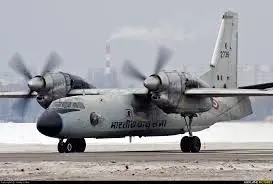
AN32 Aircraft

Features

  • Engines: Two singleshaft turboprop engines.
  • Payload Capacity: Can carry 7.5 tons cargo, 50 passengers, or 42 paratroopers.
  • Performance: Max speed 530 km/h, range 2,500 km, service ceiling 9,500 m.
  • Versatility: Operates on rough airfields and dirt runways; used for supply drops in remote regions.
  • Additional Roles: Limited bombing capability and paratrooping operations.

Significance for India

  • Strategic Utility: Vital for logistics in border areas like Ladakh and Northeast India.
  • Disaster Relief: Extensively used in humanitarian missions and supply drops.
  • Modernization Needs: Many aircraft are over 30 years old, requiring upgrades for avionics and safety.
  • Comparative Example: India has inducted modern transport aircraft like C130J Super Hercules, but AN32 remains crucial for rugged terrains.

Way Forward

  • Accelerate fleet modernization with advanced transport aircraft.
  • Strengthen maintenance and safety protocols for aging AN32s.
  • Enhance indigenous transport aircraft development under Make in India.
  • Improve pilot training and accident investigation mechanisms.

Conclusion

The AN32 remains a lifeline for India’s remote and highaltitude regions, but recent accidents highlight the urgent need for modernization and safety upgrades in the IAF’s transport fleet.

JUNO NEUTRINO OBSERVATORY

TOPIC: (GS3) SCIENCE AND TECHNOLOGY: THE HINDU

China’s Jiangmen Underground Neutrino Observatory (JUNO) recently released its first scientific results, measuring how neutrinos from nuclear reactors change their flavour while travelling.

About JUNO

  • Situated near Kaiping city, Guangdong province, ~53 km from Taishan and Yangjiang nuclear plants.
  • Involves 74 institutions across Asia, Europe, and America, with ~700 scientists.
  • Leadership: Led by the Chinese Academy of Sciences (CAS) via the Institute of High Energy Physics.
  • Scale: World’s largest liquid scintillator detector: 35 m radius sphere with 20,000 tonnes of liquid scintillator.
  • Design: Built underground (700 m deep), designed for a 30year scientific lifespan.

Scientific Goals

  • Neutrino Mass Ordering: Primary aim is to determine the hierarchy of neutrino masses.
  • Oscillation Studies: Measures oscillation patterns of electron antineutrinos from nuclear reactors.
  • Precision: Offers higher accuracy than earlier experiments like Daya Bay.
  • Global Context: Part of nextgeneration neutrino projects alongside HyperKamiokande (Japan) and DUNE (USA).

What are Neutrinos?

  • Ghost Particles: Elementary particles with no charge, extremely small mass (< one millionth of electron mass), moving nearly at light speed.
  • Interactions: Interact only via gravity and weak force, making detection very difficult.
  • Sources: Produced in nuclear reactions, stellar processes, and particle decays.
  • Scale: Most abundant particles in the universe; ~100 trillion neutrinos pass through the human body every second harmlessly.
  • Significance: Crucial for particle physics, stellar physics, black holes, and Big Bang cosmology.

Broader Significance

  • Advances fundamental physics by clarifying neutrino properties.
  • Strengthens international scientific collaboration.
  • Supports cosmology and astrophysics research, linking particle physics with universe evolution.
  • Provides insights relevant to India’s own neutrino projects, such as the Indiabased Neutrino Observatory (INO) in Tamil Nadu.

Conclusion

JUNO represents a milestone in global neutrino research, deepening our understanding of the universe’s most elusive particles and their role in fundamental physics.

NASM–MR

TOPIC: (GS3) SECURITY: THE HINDU

India recently conducted successful trials of its multilayered Ballistic Missile Defence (BMD) system and the maiden flighttest of the Naval AntiShip Missile–Medium Range (NASM–MR),

Naval AntiShip Missile–Medium Range (NASM–MR)

  • Type – Subsonic, seaskimming antiship missile developed by DRDO for the Indian Navy.
  • Targets – Designed to engage frigates, corvettes, and destroyers.
  • Variants – Shiplaunched, airlaunched, and submarinelaunched versions planned.
  • Complementary Role – Works alongside NASM–SR (shortrange) tested earlier, providing layered strike capability.
  • Features
    • Powered by Small Gas Turbine Jet Engine (SGTJE).
    • Strike range up to 350 km.
    • Warhead > 200 kg.
    • Advanced guidance with active radar seeker + imaging IR seeker.
  • Significance – Enhances sea denial capability, critical for safeguarding India’s 7,500 km coastline and maritime trade routes.
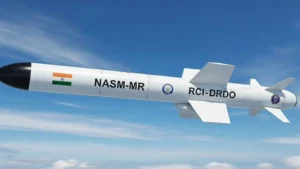
NASM-MR

Ballistic Missile Defence (BMD) System – Phase II

  • Interceptor Missiles – AD1 (endoatmospheric) and AD2 (exoatmospheric) tested.
  • Capabilities – Designed to neutralise IRBMs and ICBMs up to 5,000 km class.
  • AD1 – Twostage solid motor; intercepts missiles within Earth’s atmosphere during terminal phase.
  • AD2 – Intercepts missiles in space during midcourse flight, preventing reentry.
  • Performance – Hypersonic speeds Mach 6–7, highly manoeuvrable.
  • Strategic Impact – Places India among elite nations (US, Russia, Israel) with capability to intercept ICBMs.

Broader Significance

  • Strengthens Indian Navy’s deterrence in the Indian Ocean Region.
  • Supports Atmanirbhar Bharat by indigenously developing advanced missile systems.
  • Enhances strategic autonomy in defence, reducing reliance on imports.
  • Provides multilayered protection against both maritime and ballistic threats.
  • Complements India’s role in Quad and IndoPacific security frameworks.

Conclusion

The successful NASM–MR and BMD trials highlight India’s growing technological edge in missile systems, reinforcing its maritime strength and strategic deterrence against evolving threats.


Write a Review

Your email address will not be published. Required fields are marked *

Seraphinite AcceleratorOptimized by Seraphinite Accelerator
Turns on site high speed to be attractive for people and search engines.