
Table of Contents
ToggleWhy in News
The world observes Hiroshima Day every year on 6 August to commemorate the atomic bombing of Hiroshima, Japan, during the final phase of World War II in 1945.
The day is observed as a reminder of the devastating consequences of nuclear weapons and highlights the global commitment towards peace, prevention of nuclear conflicts and complete nuclear disarmament.
The occasion honours the victims of the bombing and the survivors, known as Hibakusha, who continue to share their experiences to promote a world free from nuclear warfare.
81st Anniversary of the Atomic Bombing
In 2026, the world marks the 81st anniversary of the Hiroshima atomic bombing, remembering the immense human suffering caused by the first-ever use of nuclear weapons in warfare.
The day encourages nations to reflect on the importance of responsible nuclear policies and peaceful international cooperation.
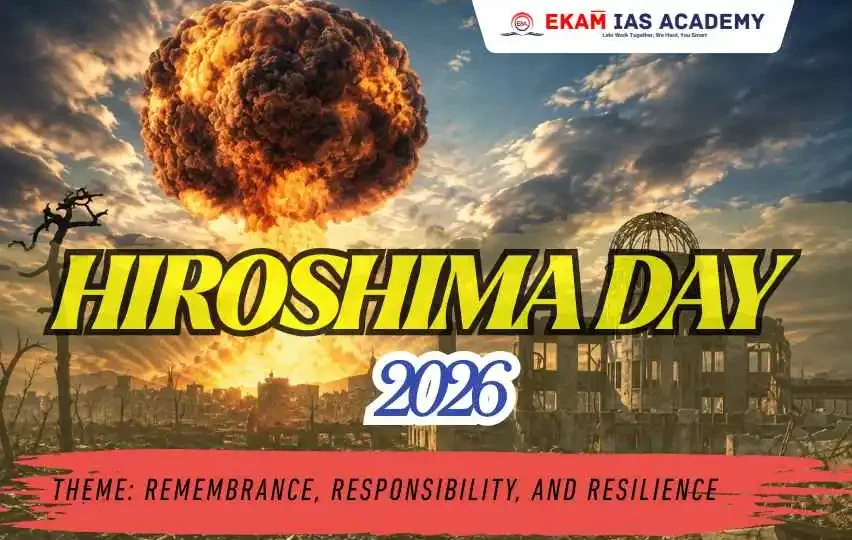
Theme of Hiroshima Day 2026
The theme for Hiroshima Day 2026 is:
“Remembrance, Responsibility, and Resilience”
The theme focuses on three important ideas:
- Remembrance: Preserving the memory of those who lost their lives and ensuring that the tragedy is not forgotten.
- Responsibility: Recognising the global duty to prevent nuclear escalation and promote peace.
- Resilience: Honouring survivors and communities that rebuilt their lives after the devastation.
Peace Memorial Events
Hiroshima Day is commemorated through various peace events across the world.
The central event is the:
Hiroshima Peace Memorial Ceremony
- Held annually at the Hiroshima Peace Memorial Park, Japan.
- A moment of silence is observed at 8:15 AM, the exact time when the atomic bomb exploded over Hiroshima.
Other events include:
- Peace exhibitions
- Documentary screenings
- Educational programmes
- Lantern-floating ceremonies
These activities spread awareness about the dangers of nuclear weapons and promote non-violence.
Historical Background of Hiroshima Bombing
The Atomic Bombing of Hiroshima (6 August 1945)
During the closing stages of World War II, the United States carried out the first military use of an atomic bomb.
- A US B-29 bomber named Enola Gay dropped an atomic bomb called “Little Boy” over Hiroshima on 6 August 1945.
- The attack marked the beginning of the nuclear age and changed the nature of modern warfare.
Impact of the Hiroshima Bombing
The destruction caused by the atomic explosion was catastrophic.
Immediate Destruction
- Nearly 90% of Hiroshima city was destroyed due to the blast.
- Around 70,000–80,000 people died immediately from the explosion and intense heat.
Long-Term Effects
- Radiation exposure caused severe health impacts, including burns, radiation sickness and long-term illnesses.
- By the end of 1945, the estimated death toll reached around 140,000 people.
The survivors of the bombing, known as Hibakusha, continue to highlight the humanitarian consequences of nuclear weapons.
Bombing of Nagasaki and End of World War II
Three days after Hiroshima, another atomic bomb was dropped on:
Nagasaki (9 August 1945)
- The bomb used was codenamed “Fat Man”.
- The combined impact of the Hiroshima and Nagasaki bombings contributed to Japan’s decision to surrender.
- Japan announced its unconditional surrender on 15 August 1945, bringing World War II to an end.
Significance of Hiroshima Day
1. Promoting Nuclear Disarmament
Hiroshima Day strengthens international efforts towards reducing nuclear risks and achieving a world free from nuclear weapons.
2. Remembering Humanitarian Consequences
The day reminds the world that nuclear weapons cause massive destruction beyond immediate battlefield impacts, affecting generations through radiation and environmental damage.
3. Encouraging Global Peace
The observance promotes dialogue, diplomacy and peaceful resolution of conflicts among nations.
Conclusion
Hiroshima Day is not only a day of remembrance but also a global call for peace and responsibility.
The tragedy of Hiroshima highlights the destructive potential of nuclear warfare and reinforces the need for international cooperation, peaceful coexistence and efforts towards nuclear disarmament.



Hiroshima Day-FAQs Answered
Why is Hiroshima Day observed?
Hiroshima Day is observed every year on August 6 to remember the victims of the atomic bombing of Hiroshima in 1945.
What is the theme of Hiroshima Day 2026?
The theme mentioned for Hiroshima Day 2026 is “Remembrance, Responsibility, and Resilience.” It focuses on remembering the victims, preventing nuclear escalation and honouring the strength of survivors and affected communities.
What happened on August 6, 1945?
On August 6, 1945, the United States dropped the atomic bomb “Little Boy” on Hiroshima during the final phase of World War II.
Who are Hibakusha?
Hibakusha are survivors of the atomic bombings of Hiroshima and Nagasaki who continue to share their experiences to promote peace.
How is Hiroshima Day commemorated?
The main observance is the Hiroshima Peace Memorial Ceremony at Hiroshima Peace Memorial Park. A moment of silence is observed at 8:15 AM, along with peace exhibitions, educational programmes, documentary screenings and lantern-floating ceremonies. The ceremony is organised annually to honour the victims and pray for lasting world peace