
Table of Contents
ToggleIndia-China Military Talks
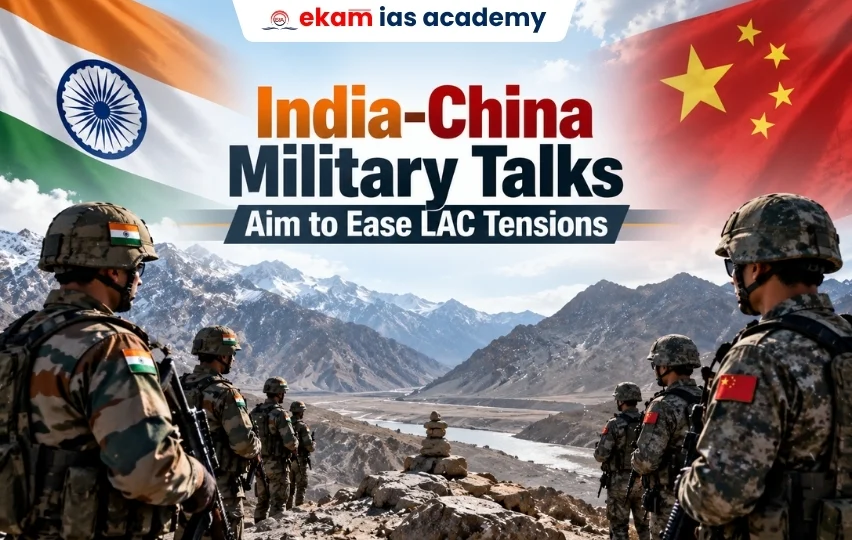
India and China held Corps Commander-level military talks in Arunachal Pradesh on September 6, 2026, focusing on maintaining peace and tranquillity along the Line of Actual Control (LAC) in the eastern sector. The meeting at the Wacha-Damai border meeting point came shortly after the 25th round of Special Representative-level boundary talks in Beijing.
The renewed military engagement is significant because both countries are seeking to prevent local tensions from escalating and strengthen communication mechanisms along the disputed border.
What is the Line of Actual Control?
The Line of Actual Control (LAC) is the de facto military boundary separating Indian- and Chinese-controlled territory. Unlike an internationally recognised border, the LAC remains disputed in several areas.
The border is broadly divided into three sectors:
- Western Sector: Ladakh
- Middle Sector: Himachal Pradesh and Uttarakhand
- Eastern Sector: Arunachal Pradesh and Sikkim
Differences in the perception of the LAC have historically resulted in patrol confrontations and tensions between the two militaries.
Recent India-China Military Talks
The latest Corps Commander-level engagement followed diplomatic discussions between National Security Adviser Ajit Doval and Chinese Foreign Minister Wang Yi in Beijing in August 2026.
The two sides agreed to strengthen existing diplomatic and military communication mechanisms to address situations on the ground promptly and reduce the possibility of misunderstanding or miscalculation. They also agreed on additional military meeting points and border military hotlines in the eastern and middle sectors.
These mechanisms are particularly important because rapid communication between local commanders can help prevent incidents from developing into larger confrontations.
Background: Galwan and Border Tensions
India-China relations witnessed a major deterioration following the 2020 Galwan Valley clash in eastern Ladakh. The confrontation resulted in the deaths of 20 Indian soldiers and significantly affected bilateral relations.
Since then, both countries have used diplomatic and military channels to negotiate disengagement and improve border management. An understanding reached in 2024 concerning Depsang and Demchok helped restore patrolling arrangements in those areas, although the broader boundary dispute remains unresolved.
Why Are the Talks Important?
The latest military dialogue is important for several reasons.
Preventing Escalation
Regular communication can help both sides manage face-offs and avoid accidental escalation along the LAC.
Strengthening Border Management
Military-level discussions can address patrolling arrangements, local incidents and operational concerns.
Supporting Diplomatic Engagement
Military talks complement negotiations conducted through higher-level diplomatic mechanisms.
Maintaining Peace and Tranquillity
Stable border conditions are important for improving the broader India-China relationship. India has repeatedly stressed that peace and tranquillity along the border are essential for normal bilateral relations
Challenges Ahead
Despite renewed dialogue, significant challenges remain. The LAC is not mutually delineated, territorial claims continue, and both sides maintain substantial military infrastructure and deployments in sensitive areas.
Therefore, dialogue can reduce tensions and improve crisis management, but it does not by itself resolve the underlying boundary dispute.
Way Forward
India and China need to maintain regular military-to-military communication, strengthen confidence-building measures and ensure timely implementation of agreements.
Additional hotlines, commander-level meetings, diplomatic consultations and border-management mechanisms can reduce the risks of misunderstanding. At the same time, sustained negotiations are necessary for achieving a durable settlement of the boundary question.
Conclusion
The latest India-China military talks in Arunachal Pradesh indicate continued efforts to manage tensions along the LAC through dialogue. While these discussions cannot immediately resolve the territorial dispute, stronger communication mechanisms can help prevent local incidents from escalating.
For India, maintaining border security while pursuing diplomatic engagement remains essential to achieving peace, stability and a more predictable relationship with China.


FAQs: India-China Military Talks and LAC
What is the Line of Actual Control (LAC)?
The LAC is the de facto military boundary separating Indian- and Chinese-controlled territories. It remains disputed in several areas and is not an internationally recognised border.
Why are India-China military talks important?
Military talks help maintain peace and tranquillity along the LAC, address local tensions, improve communication and reduce the risk of misunderstandings or escalation.
What are the three sectors of the India-China border?
The border is broadly divided into the Western Sector (Ladakh), Middle Sector (Himachal Pradesh and Uttarakhand), and Eastern Sector (Arunachal Pradesh and Sikkim).
How did the 2020 Galwan Valley clash affect India-China relations?
The 2020 Galwan Valley clash significantly strained bilateral relations and led to increased military deployments and infrastructure development along the LAC. Subsequent military and diplomatic talks have focused on disengagement and border stability.
Can military talks resolve the India-China boundary dispute?
Military talks can improve border management and crisis prevention, but they cannot by themselves resolve the underlying territorial dispute. A lasting solution requires sustained diplomatic negotiations between the two countries.