Table of Contents
ToggleThe proposed Siang Upper Multipurpose Project (SUMP) in Arunachal Pradesh has triggered growing concerns among sections of the indigenous Adi community, local youth groups and residents living along the Siang River. The proposed hydropower project is being presented by authorities as strategically important, particularly in the context of China’s plans for large-scale hydropower development upstream.
At the same time, local communities have raised concerns over possible displacement, livelihood disruption and the impact on their cultural relationship with the river.
What Is the Siang Upper Multipurpose Project?
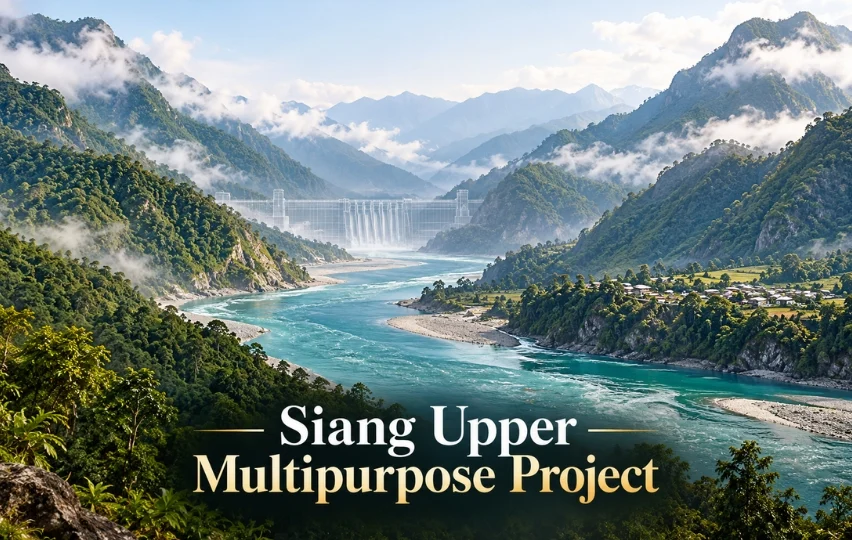
With a proposed capacity of 11,200 MW, SUMP is planned as a major multipurpose hydropower project in Arunachal Pradesh.
The idea of harnessing the Siang and Subansiri river systems dates back to 1982, when the Brahmaputra Board proposed multiple smaller projects. Strategic concerns related to Chinese hydropower development became more prominent later.
In 2017, the proposed Siang Upper Stage-I and Stage-II projects were merged into a single project, eventually taking the form of SUMP.
The Counter China Argument
The project has gained strategic significance following China’s approval in December 2024 of a massive hydropower project on the lower reaches of the Yarlung Tsangpo, the river known as the Siang after entering India.
Supporters argue that India’s own infrastructure could provide greater control and preparedness in the event of sudden upstream water releases.
However, water experts have questioned whether the project can be justified solely as a response to China without greater clarity about the Chinese project’s design, operating procedures and possible downstream impacts.
Current Status of the Project
SUMP is currently at the pre-feasibility survey stage. Arunachal Pradesh Chief Minister Pema Khandu has stated that the project will not be taken beyond the feasibility stage unless technical assessments establish its viability.
If the project progresses, authorities have indicated that social and environmental impact assessments and a detailed project report will be undertaken, along with consultations with affected communities.
Local Scepticism
Local representatives remain doubtful about whether the feasibility process could ultimately stop the project. Some have demanded written assurances that construction will not proceed if communities reject it.
Their concerns centre on the possibility of losing ancestral lands and becoming displaced from areas with which their identity and livelihoods are closely connected.
What’s at Stake for Local Communities
For indigenous communities, the Siang River is more than a source of water or economic activity. It has cultural, social and religious significance and is closely associated with traditional livelihoods.
The debate therefore involves both national strategic considerations and questions of land rights, cultural identity, environmental sustainability and community participation.
Conclusion
The SUMP debate highlights the complex balance between border security, hydropower development and indigenous rights. While the strategic concerns arising from China’s upstream projects remain significant, questions about their actual downstream impact require greater clarity.
For the project to move forward with public confidence, transparent feasibility studies, credible environmental assessments and meaningful consultation with affected communities will be essential.


FAQs-Siang Upper Multipurpose Project
What is the Siang Upper Multipurpose Project?
The Siang Upper Multipurpose Project (SUMP) is a proposed 11,200 MW hydropower project on the Siang River in Arunachal Pradesh.
Why is SUMP considered strategically important?
Supporters argue that it could strengthen India’s preparedness against potential impacts of China’s upstream hydropower development on the Yarlung Tsangpo.
Why are local communities concerned about the project?
Sections of the Adi community fear displacement, loss of ancestral land, disruption of livelihoods and damage to their cultural relationship with the Siang River.
What is the current status of SUMP?
According to the article, SUMP is at the pre-feasibility survey stage. Further progress depends on technical viability assessments and subsequent approval processes.
What measures are needed to address concerns about SUMP?
Transparent feasibility studies, credible environmental and social impact assessments, and meaningful consultation with affected communities are essential to address concerns and build public confidence.