Table of Contents
ToggleUPSC History - Art and Culture - Indo Islamic Architecture
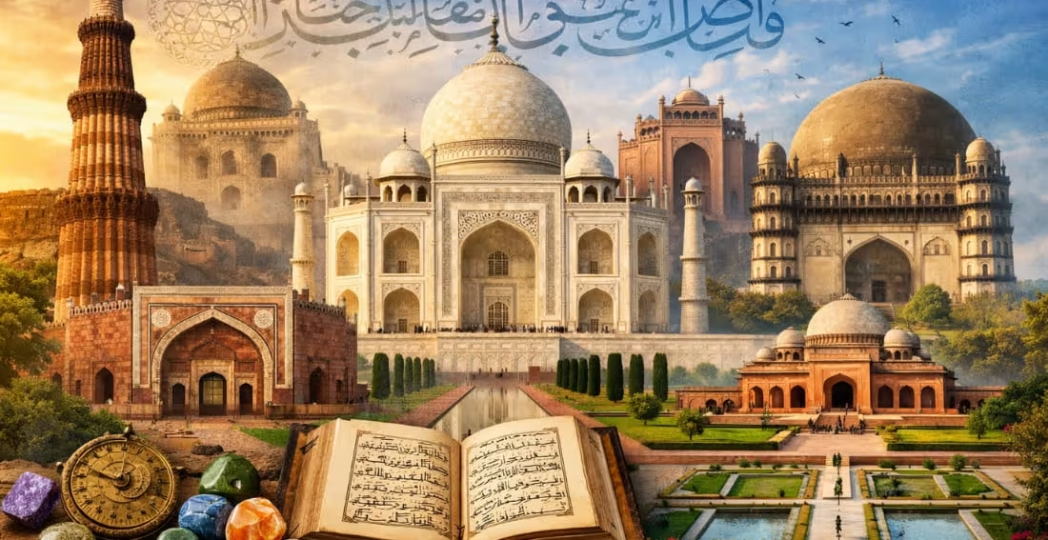
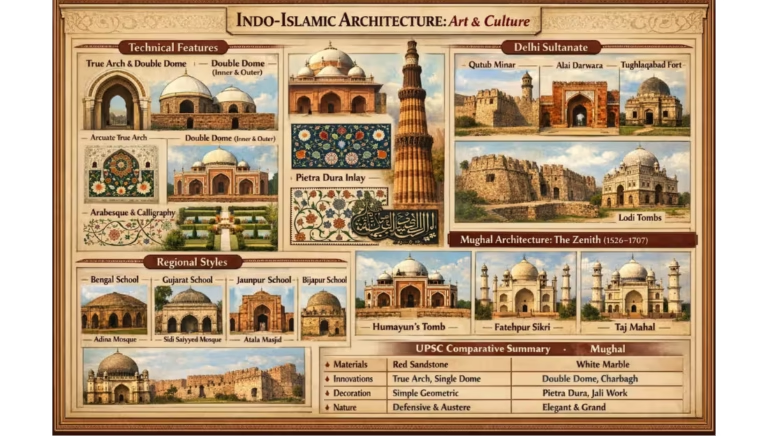
Indo-Islamic architecture is characterized by the Arcuate style, which revolutionized Indian construction by introducing the true arch, dome, and vault. This style replaced the indigenous Trabeate style (beam-and-lintel) and allowed for the creation of vast, column-free spaces and massive monumental structures.
1. Technical Features and Decorations
- Arcuate System: The use of the True Arch and Dome meant that the weight of the structure was distributed through the arch to the ground, rather than resting on horizontal beams.
- Double Dome: A major innovation where an inner dome provided the ceiling for the interior, while an outer, higher dome gave the building a majestic external appearance.
- Pietra Dura: A decorative technique involving the inlay of precious and semi-precious stones (like lapis lazuli, jade, and crystal) into polished white marble.
- Arabesque & Calligraphy: Since Islam prohibits human imagery in religious spaces, buildings were decorated with intricate floral patterns (Arabesque) and Quranic verses in beautiful calligraphy.
- Charbagh: A Persian garden layout divided into four symmetrical quarters by water channels, representing the “Gardens of Paradise”.
2. The Imperial Style (Delhi Sultanate)
The architecture of the Delhi Sultanate (1206–1526) evolved through five dynasties:
- Slave Dynasty: Notable for the Qutub Minar and the Quwwat-ul-Islam Mosque, which was built using materials from 27 demolished Hindu and Jain temples, showing an early blend of styles.
- Khilji Dynasty: Introduced the “true” arch and dome. The Alai Darwaza is a masterpiece of this era, featuring red sandstone and white marble.
- Tughlaq Dynasty: Known for more functional and austere architecture with sloping walls (Batter) for strength and the use of gray sandstone (e.g., Tughlaqabad Fort).
- Lodi Dynasty: Specialized in octagonal tombs and perfected the double dome technique, seen in the tombs at Lodi Gardens.
3. Regional (Provincial) Variations
Independent kingdoms developed unique architectural identities:
- Bengal School: Characterized by the use of bricks and the “Bangla Roof” (curved cornices), as seen in the Adina Mosque.
- Gujarat School: Heavily influenced by local Jain and Hindu craftsmanship, featuring fine stone carvings and delicate Jali work (e.g., Sidi Saiyyed Mosque).
- Jaunpur (Sharqi) School: Unique for its massive rectangular pylons (gateways) that dominated the facade of mosques, like the Atala Masjid.
- Deccan (Bijapur) School: Famous for the Gol Gumbaz, which features one of the largest unsupported domes in the world and a famous “whispering gallery”.
4. Mughal Architecture: The Zenith (1526–1707)
Mughal architecture moved toward extreme symmetry, luxury, and the use of marble.
- Babur & Humayun: Introduced the Charbagh garden. Humayun’s Tomb (Delhi) served as a prototype for the Taj Mahal, featuring a full double dome and high-arched alcoves.
- Akbar: Preferred red sandstone. His capital, Fatehpur Sikri, includes the Buland Darwaza and the Diwan-i-Khas, which features a unique central carved pillar supporting the emperor’s platform.
- Shah Jahan: The “Engineer King” who shifted from sandstone to white marble. The Taj Mahal represents the absolute peak of the Pietra Dura technique and architectural symmetry.
- Aurangzeb: Architecture began to decline in grandeur and decorative detail. The Bibi ka Maqbara is a notable but less grand imitation of the Taj Mahal.
UPSC Comparative Summary
Feature
Sultanate Architecture
Mughal Architecture
Primary Material
Bricks, Gray/Red Sandstone
White Marble, Red Sandstone
Decorative Focus
Simple Geometrics, Batter Walls
Pietra Dura, Gardens, Symmetry
Main Innovations
True Arch, Single Dome
Double Dome, Charbagh, Bulbous Domes
Nature
Defensive & Imposing
Aesthetic & Imperial
UPSC Prelims: PYQs & Practice Questions
Previous Year Questions (PYQs)
Question 1 (2022)
Q: With reference to the history of India, consider the following pairs:
Site – Description
1. Burzahom – Rock-cut shrines
2. Chandra-ketugarh – Terracotta art
3. Ganeshwar – Copper artifacts
Which of the pairs given above is/are correctly matched?
Options:
(a) 1 only
(b) 1 and 2
(c) 3 only
(d) 2 and 3
Answer: (d)
Explanation: Burzahom is a Neolithic site known for pit-dwellings, not rock-cut shrines. Chandraketugarh (West Bengal) is famous for terracotta art, and Ganeshwar (Rajasthan) is associated with copper artifacts.
Question 2 (Generic Concept Check)
Q: Iltutmish introduced the Silver Tanka and Copper Jital. With reference to the architecture of his reign, the "Arhai Din Ka Jhonpra" at Ajmer was originally a:
Options:
(a) Mosque
(b) Palace
(c) Sanskrit College
(d) Monastery
Answer: (c)
Explanation: Arhai Din Ka Jhonpra was originally a Sanskrit college built by Vigraharaja IV. It was later converted into a mosque, reflecting the early phase of Indo-Islamic architectural reuse.
Question 3 (Generic Concept Check)
Q: Which one of the following is the first monument in India to have a "True Dome"?
Options:
(a) Gol Gumbaz
(b) Humayun's Tomb
(c) Alai Darwaza
(d) Taj Mahal
Answer: (c)
Explanation: The Alai Darwaza, built by Alauddin Khilji, is the first structure in India to use a scientifically constructed true dome and true arch, unlike earlier corbelled constructions.
Prelims Practice Questions
Question 1
Q: Consider the following statements regarding the "Double Dome" technique:
Statements:
1. It was introduced in India during the Lodi Dynasty.
2. It consists of two layers—an inner one to provide a ceiling and an outer one to provide height.
3. Humayun’s Tomb was the first to use a full-scale double dome in the Mughal era.
Options:
(a) 1 and 2 only
(b) 2 and 3 only
(c) 1 and 3 only
(d) 1, 2 and 3
Answer: (d)
Question 2
Q: Which regional school of Indo-Islamic architecture is characterized by the use of "Pylons" (massive rectangular gateways) and the absence of minarets?
Options:
(a) Bengal School
(b) Jaunpur School
(c) Bijapur School
(d) Gujarat School
Answer: (b)
Explanation: The Sharqi rulers of Jaunpur built mosques like the Atala Masjid with massive sloping pylons.
UPSC Mains: Previous Year Questions (PYQs)
Delhi Sultanate Architecture
Question: “The architecture of the Delhi Sultanate was not merely an imitation of Central Asian styles but a creative synthesis of indigenous and Islamic traditions.” Discuss. (2021)
Indo-Islamic Influences
Question: Highlight the Central Asian and African elements in the Indo-Islamic architecture of the medieval period. (2018)
Architecture and Literary Sources
Question: Persian literary sources of medieval India reflect the spirit of the age. How far does the architecture of that period complement this? (2020)
Regional Variations
Question: Discuss the regional variations in the Indo-Islamic architecture of the 15th and 16th centuries. (2017)
Mughal Architecture
Question: Analyze the development of Mughal architecture from the era of Akbar to Shah Jahan, focusing on the shift in materials and aesthetics.
Mains Practice Questions
Arcuate System
Question: “The introduction of the Arcuate system revolutionized the spatial and structural possibilities of Indian buildings.” Elaborate with examples from the Sultanate and Mughal periods. (250 Words)
Deccan School of Architecture
Question: Evaluate the contribution of the Deccan School of architecture, specifically focusing on the engineering marvel of the Gol Gumbaz. (150 Words)
Mughal Gardens
Question: Explain the concept of 'Charbagh' in Mughal architecture. How did it evolve from the reign of Babur to the construction of the Taj Mahal? (250 Words)
Frequently Asked Questions (FAQs)
What is the 'Pietra Dura' technique?
- It is a decorative art where colored, semi-precious stones (like lapis lazuli, jade, and jasper) are inlaid into polished white marble to create intricate floral or geometric patterns. It reached its peak under Shah Jahan.
What is 'Batter' in Tughlaq architecture?
- ‘Batter’ refers to the inward sloping walls of a building. The Tughlaqs used this to provide additional structural strength and stability to their massive forts and tombs, such as Ghiyasuddin Tughlaq’s Tomb.
How does the 'True Arch' differ from the 'Corbelled Arch'?
- A Corbelled Arch is made by overlapping horizontal stone slabs until they meet at the top. A True Arch (Arcuate) uses wedge-shaped stones called ‘voussoirs’ with a central ‘keystone’ to distribute the weight outward and downward.
What is a 'Jali', and what was its purpose?
- A Jali is a perforated stone or latticed screen. It served three purposes: providing privacy for women (purdah), allowing ventilation, and creating beautiful play of light and shadow (Chiaroscuro).
Why is Fatehpur Sikri considered a "dream in red sandstone"?
- Built by Akbar, the entire city is constructed using red sandstone and represents a unique fusion of Mughal, Persian, and local Rajput/Gujarati styles, featuring structures like the Buland Darwaza and Panch Mahal.