

Daily Current affairs 05 June 2026

Daily Current Affairs 05-June-2026

Share this Post

DRAFT SUPREME COURT RULES ON AI IN JUDICIARY

TOPIC: (GS2) POLITY: THE HINDU

The Supreme Court AI Committee has released draft rules (June 2026) prohibiting the use of AI for judicial outcomes and witness profiling.

AI and Judicial Integrity

  • Artificial Intelligence is increasingly used in governance and law.
  • However, in the judiciary, concerns arise about bias, transparency, and accountability.
  • The draft rules aim to ensure that AI remains assistive, not authoritative, thereby safeguarding judicial independence and fairness.

Provisions of Draft Rules

  • Assistive Role Only: AI tools can support research, documentation, and case management but must remain subservient to human judges.
  • Ban on AI Sentencing: AI cannot decide punishments or judicial outcomes without mandatory human oversight.
  • No Witness Profiling: AI systems are barred from profiling parties or witnesses, preventing algorithmic bias in credibility assessments.
  • Transparency Requirement: Only explainable AI models can be used; opaque or “blackbox” systems are prohibited.
  • Human-in-the-Loop: Every AI application must have human oversight to ensure accountability.

Significance of the Rules

  • Judicial Independence: Protects courts from undue reliance on machines.
  • Ethical Safeguards: Prevents discrimination and bias in judicial processes.
  • Public Trust: Ensures citizens retain confidence in humanled justice.
  • Global Benchmark: Positions India alongside EU and US debates on ethical AI in law.

Challenges

  • Capacity Building Deficit: Judges, clerks, and registry staff lack structured training in AI ethics, bias detection, and digital case management.
    • A 2025 NITI Aayog survey found over 70% of district courts had no formal exposure to AI tools.
  • Dependence on Imported Technology: Current AI solutions are largely sourced from foreign vendors, raising risks of data sovereignty and hidden algorithmic bias.
    • India spends nearly ₹1,200 crore annually on imported judicial software, limiting selfreliance.
  • Data Privacy Vulnerabilities: Sensitive case files and witness records risk misuse if stored on cloud servers without endtoend encryption.
    • CERTIn reported a 28% rise in cyberattacks on government portals in 2025, many targeting legal databases.
  • Balancing Innovation with Fairness: Courts must adopt AI for efficiency but avoid automated bias in sentencing or profiling.
    • The challenge lies in integrating AI for speed while ensuring humanled justice remains paramount.

Way Forward

  • Indigenous AI Development: Encourage collaboration between IITs, NLU research centres, and NIC for judicial AI prototypes.
  • Secure Digital Infrastructure: Establish dedicated judicial data centres with blockchainbased audit trails to prevent tampering. Mandate ISOcertified cybersecurity protocols across all ecourts.
  • LegalTech Ecosystem Growth: Provide seed funding and incubation for startups working on AIdriven case management, efiling, and translation tools.
  • Dynamic Ethical Oversight: Create a National Judicial AI Ethics Board to periodically review algorithms.

Conclusion

India’s judiciary must embrace AI cautiously, ensuring human oversight and ethical safeguards remain central.

LATE ARRIVAL OF SOUTHWEST MONSOON IN KERALA

TOPIC: (GS1) GEOGRAPHY: THE HINDU

The southwest monsoon in Kerala arrived late in June 2026, under the shadow of a developing El Niño event.

What is El Niño?

  • El Niño is the warm phase of the El Niño–Southern Oscillation (ENSO), occurring every 2–7 years.
  • Mechanism:
    • Surface waters in the central and eastern Pacific Ocean become warmer than average.
    • This weakens trade winds, alters atmospheric circulation, and shifts rainfall patterns globally.
  • Duration: Typically lasts 9–12 months, peaking between November and February.
  • Global Impact: Causes heatwaves, floods, droughts, and cyclones in different regions.
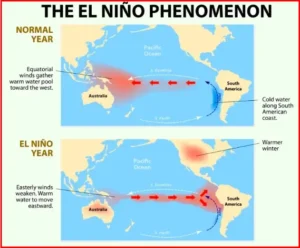
El Niño

Impact on India

  • Monsoon Weakening: Historically, El Niño years bring deficient rainfall, affecting sowing and crop yields.
  • Agriculture Risks: Lower rainfall reduces paddy output, raises irrigation demand, and impacts rural incomes.
  • Heatwaves: Intensifies premonsoon heat, making summers hotter. IMD forecasts belownormal rainfall (92% of LPA) this year, linked to El Niño’s warming of Pacific waters.
  • Water Stress: Reservoir levels drop, increasing dependence on groundwater.
  • Economic Effects: Food inflation risk due to reduced crop supply; rural distress may rise.

Global Significance

  • Climate Change Link: Warming oceans amplify El Niño’s intensity, making events more destructive.

International Impact:

    • Drier conditions in Australia & Indonesia.
    • Heavy rains in South America & Africa.
    • Altered hurricane and cyclone activity worldwide.

Way Forward for India

  • Strengthen early warning systems and crop insurance schemes.
  • Promote climateresilient agriculture (droughttolerant seeds, microirrigation).
  • Enhance reservoir management and water conservation.
  • Coordinate with global climate agencies for preparedness.

Conclusion

El Niño 2026 is a major climate challenge for India’s monsoon, agriculture, and economy, demanding proactive adaptation.

CHEMOTHERAPY DRUG SHORTAGE AND IMPACT OF WEST ASIA CRISIS

TOPIC: (GS2) POLITY: THE HINDU

India is facing a shortage of Cisplatin and Carboplatin, two key chemotherapy drugs, due to rising platinum prices and supply disruptions linked to the West Asia crisis.

Platinum Drugs in Cancer Care

  • Cisplatin and Carboplatin are platinumbased chemotherapy agents widely used for treating oral, lung, cervical, ovarian, and breast cancers.
  • Hospitals report difficulty in treating patients, with nearly 70% of cancer cases requiring these medicines.
  • However, geopolitical tensions and raw material scarcity have triggered a crisis in availability.

Reasons for Shortage

  • Platinum Price Surge: Prices rose from ₹2,700 per gram (2023) to ₹7,800 per gram (2026) due to supply chain disruptions.
  • Hormuz Crisis: Conflict in West Asia disrupted shipping routes, affecting raw material imports.
  • Supply Chain Bottlenecks: Limited global suppliers and dependence on imports worsened shortages.
  • High Demand: India records 14–15 lakh new cancer cases annually, increasing reliance on these drugs.

Impact on India

  • Patient Care: Oncologists report treatment delays and forced substitution with less effective drugs.
  • Healthcare System Stress: Hospitals struggle to maintain stock, leading to rationing.
  • Economic Burden: Rising drug costs increase outofpocket expenses for patients.
  • Public Health Risk: Interruptions in chemotherapy cycles reduce survival chances.

Way Forward

  • Develop indigenous production capacity for platinumbased drugs under Make in India.
  • Diversify import sources beyond West Asia to reduce dependency.
  • Strengthen drug price regulation and ensure affordable access.
  • Promote research in alternative therapies and biosimilars.

Conclusion

The chemotherapy drug crisis highlights India’s need for selfreliant healthcare supply chains and resilient medical infrastructure.

US TARIFF PROPOSAL AND INDIA’S TRADE CONCERNS

TOPIC: (GS3) ECONOMY: THE HINDU

The United States Trade Representative (USTR) has proposed tariffs on imports from 60 countries, including India, under Section 301 of the US Trade Act, 1974.

US Tariffs

  • Trade relations between India and the US have often faced friction over market access, subsidies, and labor standards.
  • The latest tariff proposal reflects Washington’s push to curb imports from countries accused of failing to enforce bans on forced labor goods.
  • For India, this development comes at a time when it is seeking to expand exports amid global slowdown.
  • India falls under the 12.5% tariff category, raising concerns about market access and economic impact.

Features of the Tariff Proposal

  • Section 301 Basis: Allows the US to impose tariffs if trading partners engage in unfair practices.
  • Scope: Covers 99.4% of US imports, making it one of the widest tariff actions.
  • India’s Position: India is placed in the 12.5% tariff bracket, higher than the 10% levy for other nations.
  • Forced Labor Clause: 54 countries, including India, are accused of not effectively prohibiting imports of goods made with forced labor.
  • Hearings: Scheduled for July 7, 2026, before final implementation.

Implications for India

  • Export Challenges: Tariffs may affect sectors like textiles, pharmaceuticals, and IT services.
  • Economic Impact: Could raise costs for Indian exporters, reducing competitiveness in the US market.
  • Diplomatic Strain: Adds pressure on IndiaUS ties, already strained over digital trade and agricultural subsidies.
  • Global Positioning: India must balance relations with the US while deepening ties with EU, ASEAN, and Africa.

Way Forward for India

  • Engage in Dialogue: India should push for bilateral negotiations to seek tariff relief.
  • Diversify Markets: Expand exports to Latin America, Africa, and ASEAN to reduce dependence on the US.
  • Strengthen Compliance: Enforce stricter labor standards and supply chain transparency to counter allegations.
  • Leverage Trade Forums: Use platforms like WTO and G20 to highlight concerns over unilateral tariff actions.
  • Promote Domestic Resilience: Encourage Make in India and Atmanirbhar Bharat to reduce vulnerability to external shocks.

Conclusion

India must adopt a balanced strategy of negotiation, diversification, and selfreliance to safeguard its trade interests amid US tariff pressures.

URBAN FIRE VULNERABILITY IN RESIDENTIAL AREAS

TOPIC: (GS3) DISASTER MANAGEMENT: THE HINDU

A deadly blaze in South Delhi highlighted the vulnerability of residential areas to fire hazards.

Fire Risks in Urban India

  • Urbanisation has led to densely packed residential colonies, often with poor infrastructure and weak enforcement of safety norms.
  • While overall fire incidents have declined from 20,377 in 2014 to 6,891 in 2023, fatalities remain high in residential zones due to congestion, lack of awareness, and inadequate firefighting capacity.
  • Reports show that 60% of fire deaths occur in homes, raising concerns about safety standards and preparedness.
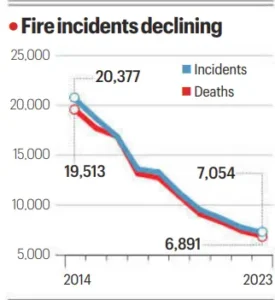
Urban Fire Vulnerability in Residential Areas

Reasons for Vulnerability

  • Congested Layouts: Narrow lanes and highrise apartments hinder fire engine access. Illegal constructions block escape routes.
  • Weak Preparedness: Most homes lack fire alarms, extinguishers, or evacuation drills. Residents often unaware of emergency protocols.
  • Resource Constraints: Fire services are a state subject, leading to uneven capacity across cities. Shortage of trained personnel and modern equipment.
  • Poor Enforcement: Building codes and safety norms are frequently ignored. Weak monitoring allows unsafe electrical wiring and LPG storage.

Impact of Residential Fires

  • High Fatalities: Majority of deaths occur in homes due to late detection and blocked exits.
  • Economic Loss: Families lose property, savings, and livelihoods.
  • Psychological Trauma: Survivors face longterm distress and displacement.

Way Forward

  • Strengthen Fire Services: Invest in modern equipment, training, and manpower.
  • Urban Planning Reforms: Ensure wider roads, open spaces, and compliance with building codes.
  • Community Awareness: Conduct fire drills, awareness campaigns, and schoollevel training.
  • Technology Integration: Use IoTbased alarms, smart sensors, and GIS mapping for early detection.
  • Policy Coordination: National guidelines with statelevel implementation to standardise safety norms.

Conclusion

Residential fire safety demands better planning, strict enforcement, and community awareness to reduce fatalities and losses.

MANGROVES AS A NATURAL COASTAL SHIELDS

TOPIC: (GS3) ENVIRONMENT: THE HINDU

Mangroves have proven effective in protecting Odisha’s coast during Cyclone Dana, reducing damage compared to seawallprotected areas.

Nature vs. Concrete Defenses

  • India’s coastline traditionally relies on seawalls, groynes, and embankments to counter erosion and cyclones.
  • However, mangroves, seagrasses, and coral reefs provide lowcost, selfsustaining, and multifunctional protection.
  • Mangroves, in particular, act as natural buffers, absorbing wave energy and stabilising soil while supporting biodiversity.
  • India is emphasising Ecosystembased Adaptation (EbA), highlighting mangroves as vital for climate resilience.
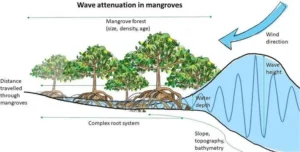
Mangroves as a Natural Coastal Shields

Significance of Mangroves

  • Wave Energy Reduction: A 150metre mangrove belt can cut wave height by 50% and reduce erosion by 60%.
  • Soil Stabilisation: Dense root systems prevent coastal erosion and siltation.
  • Livelihood Support: Provide breeding grounds for fish and crabs, sustaining coastal communities.
  • Carbon Sequestration: Store 3–5 times more carbon than tropical forests, aiding climate mitigation.
  • Biodiversity Hotspots: Shelter species like mudskippers, kingfishers, and saltwater crocodiles.

Comparison with Seawalls

  • Cost Efficiency: India spent ₹804 crore on seawalls in a decade, while mangroves regenerate naturally.
  • Adaptability: Unlike rigid seawalls, mangroves adjust to sealevel rise.
  • Broader Benefits: Provide ecological services beyond protection, unlike concrete structures.

Government Initiatives:

    • Coastal Regulation Zone (CRZ) 2019 – classifies mangroves as Ecologically Sensitive Areas (ESAs).
    • MISHTI Programme (2023) – aims to restore 540 sq. km of mangroves across India.
    • CAMPA Funding (2024–25) – ₹17.96 crore allocated for restoration of 3,836 ha of degraded mangroves in Andhra Pradesh, Gujarat, Kerala, Odisha, West Bengal, and Puducherry.

Challenges and Way Forward

  • Threats: Aquaculture, industrial expansion, and urbanisation degrade mangrove belts.
  • Solutions:
    • Strict enforcement of Coastal Regulation Zone (CRZ) rules.
    • Integrating mangrove restoration into national climate adaptation policies.
    • Promoting communitybased conservation for longterm resilience.

MANGROVES

Mangroves are halophytic (salttolerant) trees and shrubs found in intertidal zones of tropical and subtropical coastlines.

  • Adaptations:
    • Specialized aerial roots (pneumatophores) for breathing in waterlogged soils.
    • Vivipary reproduction, where seeds germinate while still attached to the parent tree.
    • Ability to withstand salinity, tidal fluctuations, and strong winds.
  • Distribution in India: Found along the coasts of 9 States and 4 Union Territories, with major stretches in Sundarbans (West Bengal), Andaman & Nicobar Islands, Gujarat, Odisha, and Maharashtra.

ISFR 2023

  • Total Mangrove Cover: 4,991.68 sq. km (0.15% of India’s geographical area).
  • Net Increase (2001–2023): 509.68 sq. km (11.4%).
  • Recent Growth (2013–2023): 363.68 sq. km (7.86%).
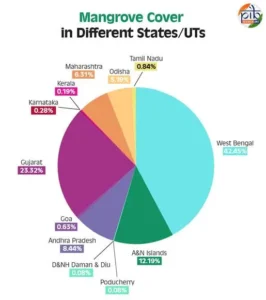
Mangroves

Conclusion

Mangroves are India’s natural defense against climate risks, combining ecological strength with coastal safety.

FUNDING INDIA’S CLIMATE FUTURE

TOPIC: (GS3) ENVIRONMENT: THE HINDU

On World Environment Day (June 5, 2026), experts highlighted India’s massive climate finance gap in achieving its netzero target by 2070.

Climate Finance

  • India’s climate transition involves decarbonising energy, transport, steel, and cement sectors, while ensuring sustainable growth.
  • The scale of investment needed is unprecedented, demanding innovative financing mechanisms, global cooperation, and institutional reforms.

India’s Climate Finance Needs

  • NDC Targets: $12.5 trillion required by 2030 for emission reduction and adaptation.
  • NetZero Goal: Estimated cost of $10.1 trillion till 2070. ( Net Zero refers to a state where the amount of greenhouse gases (GHGs) emitted into the atmosphere equals the amount removed through natural or technological means.)
  • Sectoral Decarbonisation: Steel, cement, power, and road transport need $667 billion in additional capital by 2030.
  • Annual Investment: At least 2.5% of GDP annually must be directed towards green financing.

Funding Agencies and Mechanisms

  • Domestic Sources:
    • Sovereign Green Bonds (₹47 billion issued).
    • National Bank for Financing Infrastructure and Development (NaBFID) for climate projects.
    • SIDBI for MSMElinked green initiatives.
  • International Agencies:
    • Green Climate Fund (GCF)  supports developing nations.
    • World Bank & IMF provide concessional loans for climate projects.
    • Asian Development Bank (ADB)  funds renewable energy and resilience projects.
    • UNEP & UNDP technical and financial support for adaptation.
  • Private Sector & Markets:
    • ESG funds and impact investors.
    • Carbon credit trading under Article 6 of the Paris Agreement.
    • PublicPrivate Partnerships (PPP) in renewable energy and green infrastructure.

Challenges

  • Financing Gap: Domestic capital remains limited, and international climate funds are slow to disburse.
  • Policy Uncertainty: Absence of a clear taxonomy defining what qualifies as a “green project” creates confusion for investors. Need for a stable regulatory framework to attract global climate finance.
  • Equity Concerns: Developing nations like India must balance growth with emission reduction, ensuring fairness in global commitments. India advocates for climate justice, demanding fair access to technology and funding.
  • Capacity Issues: Weak institutional and monitoring frameworks hinder effective tracking of climate funds. Limited expertise in green accounting and project evaluation slows fund utilisation.

Way Forward

  • Expand Green Bond Markets: Encourage issuance of sovereign and corporate green bonds to mobilise private capital. Offer tax incentives and simplified approval processes for investors.
  • Strengthen Climate Finance Taxonomy: Develop a uniform classification system for green projects to improve transparency. Align India’s taxonomy with global standards like the EU Green Taxonomy.
  • Push for Global Climate Justice: Advocate at COP summits for equitable financing and technology transfer. Demand fulfilment of the $100 billion annual pledge by developed nations.
  • Build Domestic Resilience: Invest in innovation, renewable infrastructure, and sustainable urban planning. Promote publicprivate partnerships for clean energy and climate adaptation.

Conclusion

India’s climate future depends on mobilising trillions through domestic reforms and global cooperation.

ATF PRICE STABILISATION SCHEME

TOPIC: (GS3) ECONOMY: THE HINDU

The Government of India has launched a ₹10,000crore price stabilisation fund for Aviation Turbine Fuel (ATF).

ATF and Aviation

  • Aviation Turbine Fuel accounts for 35–40% of airline operating costs in India.
  • Frequent fluctuations in international crude prices have strained airlines, especially lowcost carriers.
  • The stabilisation scheme seeks to provide predictability in fuel costs, ensuring financial sustainability for the aviation sector.

Features of the Scheme

  • Fixed Price Mechanism: ATF price set at ₹115 per litre in Delhi, about 10% higher than current market rates.
  • Stabilisation Fund: Backed by a ₹10,000crore government fund to absorb extreme volatility.
  • Voluntary Participation: Available only to Indian airlines, foreign carriers excluded.
  • Duration: Expected to last up to three years, subject to review.
  • OMC Role: Public sector oil marketing companies will implement the pricing framework.

Significance for India’s Aviation Sector

  • Financial Relief: Helps airlines plan operations with stable fuel costs.
  • Boost to Connectivity: Supports UDAN scheme and regional connectivity by reducing cost uncertainty.
  • Tourism and Trade: Predictable fares encourage tourism and business travel.
  • Global Competitiveness: Aligns India’s aviation sector with global practices of fuel hedging.

Challenges Ahead

  • Fiscal Burden: Sustaining a ₹10,000crore fund may strain government finances.
  • Exclusion of Foreign Carriers: Could raise concerns of trade discrimination.
  • Market Distortion: Artificially fixed prices may discourage efficiency in fuel use.
  • Implementation Monitoring: Ensuring transparency in OMC pricing and fund utilisation.

Way Forward

  • Encourage fuelefficient aircraft adoption and sustainable aviation fuels.
  • Expand scheme to include green aviation initiatives.
  • Strengthen domestic refining capacity to reduce import dependence.
  • Periodically review scheme to balance airline relief and fiscal prudence.

Conclusion

The ATF stabilisation scheme is a strategic step to support India’s aviation sector while ensuring cost predictability and resilience.

VIKSIT VIBRANT VILLAGE PROGRAM (VVVP)

TOPIC: (GS2) POLITY: THE HINDU

The Department of Youth Affairs through Mera Yuva Bharat (MY Bharat) launched the first phase of VVVP 2026.

Viksit Vibrant Village Program (VVVP)

  • The initiative engages youth volunteers in border villages of Himachal Pradesh, Uttarakhand, and Ladakh.
  • The Viksit Vibrant Village Program (VVVP) is a youthled initiative designed to strengthen grassroots engagement, national integration, and sustainable development in India’s frontier regions.
  • It combines community immersion, cultural exchange, and strategic awareness to empower border villages.

Implementation

  • Coordinated by the Ministry of Youth Affairs & Sports with support from the Ministry of Home Affairs and IndoTibetan Border Police (ITBP).
  • Volunteers selected via a nationwide online quiz competition.
  • Structured as a sevenday residential programme for immersive learning.

Key Features

  • Volunteer Engagement: 500 MY Bharat volunteers participate in two phases across 93 border villages.
  • Phasewise Implementation:
    • Phase 1 – 250 volunteers in 43 villages.
    • Phase 2 – 250 volunteers in 50 villages.
  • Community Interaction: Direct engagement with local communities, Panchayati Raj Institutions, district administrations, and security forces.
  • Nation First Challenge: Promotes responsible citizenship through five themes:
    • Adoption of Swadeshi products.
    • Healthy cooking practices.
    • Public transport usage & fuel conservation.
    • Promotion of natural farming.
    • Support for local tourism.

Significance

  • Strengthens border village development and youth participation.
  • Enhances strategic awareness of frontier regions.
  • Promotes sustainable lifestyle practices and national integration.
  • Builds trust between communities and security forces.

Conclusion

VVVP is a transformative youthdriven initiative empowering border villages through integration, sustainability, and national spirit.

Write a Review

Your email address will not be published. Required fields are marked *