Table of Contents
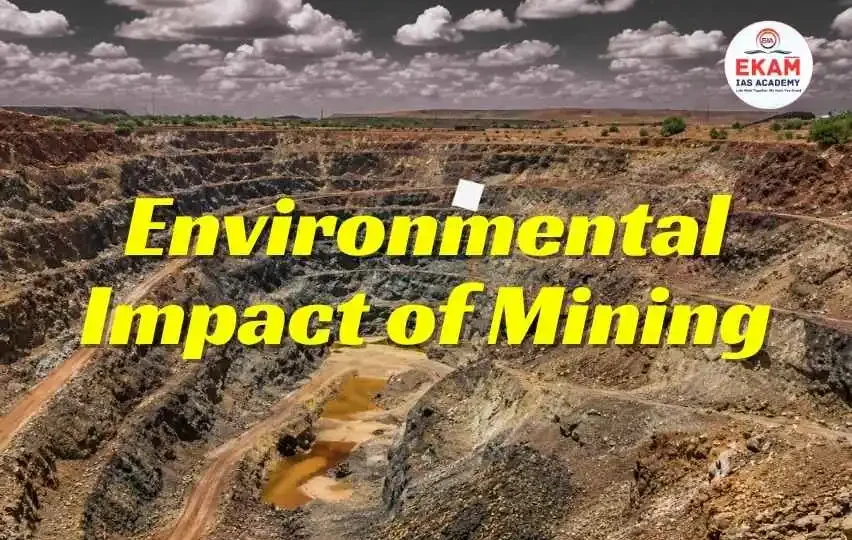
ToggleMining is the foundational step of global industrial supply chains, providing the critical minerals and metals needed for infrastructure, electronics, and energy production. However, extracting these materials from deep within the Earth’s crust disrupts natural landscape architecture. Unregulated mineral extraction can shift stable ecosystems into highly degraded landscapes, demanding rigorous policy intervention.
Types of Mining and the Importance of Resources
Society relies on mining to secure resources like coal, iron ore, bauxite, and rare earth elements that fuel industrial growth. These materials are extracted through two primary methods:
- Surface (Open-Cast) Mining: Strips away all overlying vegetation, topsoil, and rock layers to access shallow mineral deposits. This method causes massive, visible surface destruction.
- Subsurface (Underground) Mining: Involves blasting deep vertical shafts and horizontal tunnels to reach deep mineral veins. While it leaves a smaller surface footprint, it introduces severe structural hazards like land subsidence and toxic gas leaks.
Major Environmental Impacts of Mining
- The lifecycles of extraction operations cause continuous, multi-layered damage across diverse ecological systems:
                        ┌──> Water: Acid Mine Drainage (AMD) & heavy metal leaching
                        │
[Mining Operations] ────┼──> Air: Fugitive dust (PM2.5) / (PM10) & greenhouse gases
  Ecological Pressures  │
                        ├──> Land: Topsoil stripping & toxic tailing dams
                        │
                        └──> Biota: Habitat fragmentation & severe biodiversity loss
A. Depredation of Water Resources
Mining severely alters the quality of surrounding water basins:
- Acid Mine Drainage (AMD): When sub-surface rocks containing iron sulfides are exposed to air and water during mining, they react to form sulfuric acid. This highly acidic water leaches into nearby streams, killing aquatic life.
- Heavy Metal Pollution: Heavy metals like mercury, arsenic, and lead leach out of uncovered mining waste and tailing dams, permanently contaminating groundwater tables.
B. Degradation of Ambient Air Quality
- Fugitive Dust: Blasting, hauling, and crushing mineral aggregates releases massive amounts of particulate matter (PM2.5) and (PM10) into the air, creating thick blankets of industrial smog over nearby settlements.
- Toxic Gas Emissions: Smelting and refining minerals releases hazardous gases like sulfur dioxide (SO2) and nitrogen oxides (NOx), which drive acid rain.
C. Mining and Biodiversity Loss
- The mechanical clearance of forests to build open-cast pits leads directly to severe mining and biodiversity loss. It destroys native wildlife habitats and splits continuous natural corridors, which triggers a sharp rise in human-wildlife conflict and isolates gene pools, leading to localized species extinctions.
Climate Change and Social Impacts
- Altering Carbon Sinks: Clearing vast tracts of forests for mining removes critical carbon sinks, while burning fossil fuels like coal directly drives global warming.
- Involuntary Displacement: Mining often triggers the forced relocation of indigenous forest communities (Adivasis), stripping away their traditional livelihoods and exposing them to chronic respiratory illnesses like pneumoconiosis and silicosis.
Mining-Related Issues and Environmental Regulations in India
India faces distinct challenges where high-value mineral belts directly overlap with pristine forests and tribal lands:
- The Illegal Mining Crisis: Unregulated “rat-hole” coal mining in Meghalaya and illegal iron-ore extraction across fragile riverbeds cause severe, unmitigated ecological damage.
- The Fly Ash and Tailing Threat: Ruptures in coal ash ponds or iron tailing dams regularly pollute major river basins like the Damodar and Mahanadi.
Statutory Frameworks in India:
- Mines and Minerals (Development and Regulation) Act (MMDR): Sets the legal framework governing mining leases, emphasizing environmental restoration and mandatory community compensation.
- EIA Notification: Mandates that all major mining operations undergo a strict Environmental Impact Assessment (EIA) and clear public hearings before receiving an operational license.
Sustainable Mining Practices and Government Initiatives
- Mitigating the environmental impacts of mining UPSC modules highlight requires a firm shift away from exploitative extraction toward a strictly monitored circular resource economy.
Key Government Initiatives:
- District Mineral Foundation (DMF): A statutory trust set up in mining-affected districts under the MMDR Amendment Act to use mining royalties to fund local environmental restoration and community welfare projects.
- Sustainable Mining Management Framework: Guidelines that mandate miners to carry out progressive mine closure plans, which include reshaping the land and replanting native forests as soon as a mineral section is exhausted.
- Star Rating of Mines: An institutional initiative launched by the Ministry of Mines that rates operations based on their compliance with environmental laws, waste management protocols, and rehabilitation efforts.
- Coal Bed Methane (CBM) Extraction: Capturing trapped methane gas from coal seams before mining begins, preventing its release into the atmosphere and turning a potent greenhouse gas into a clean energy resource.
Conclusion
The study of environment ecology notes UPSC profiles track demonstrates that industrial mineral security must not bypass environmental survival. While mining drives economic growth, its long-term ecological damage can be mitigated through strict regulatory oversight. By enforcing EIA protocols, funding local restoration through DMF royalties, and adopting tech-driven sustainable mining practices, India can secure the raw materials it needs while preserving its vital ecosystems and protecting public health.
UPSC Prelims: PYQs & Practice Questions
Previous Year Questions (Prelims)
UPSC CSE Prelims 2020
Q: With reference to the management of minor minerals in India, consider the following statements:
1. Sand is a ‘minor mineral’ according to the prevailing law in India.
2. State Governments have the power to grant mining leases of minor minerals, but the powers regarding the formation of rules related to the grant of minor minerals lie with the Central Government.
3. State Governments have the power to frame rules to prevent illegal mining of minor minerals.
Which of the statements given above is/are correct?
(a) 1 and 3 only
(b) 2 and 3 only
(c) 1 and 2 only
(d) 1, 2 and 3
Answer: (a) 1 and 3 only
Explanation:
Statement 1 is correct. Sand is officially classified as a
minor mineral under the
Mines and Minerals (Development and Regulation) Act, 1957.
Statement 3 is correct. Section 23C of the MMDR Act empowers State Governments to frame rules for preventing illegal mining, transportation, and storage of minor minerals.
Statement 2 is incorrect. Section 15 of the MMDR Act gives State Governments, not the Central Government, the authority to make rules for regulating the grant of quarry leases, mining leases, and other mineral concessions for minor minerals.
UPSC CSE Prelims 2018
Q: Consider the following statements:
1. The definition of Critical Wildlife Habitat is incorporated in the
Forest Rights Act, 2006.
2. For the first time in India, Baigas have been given Habitat Rights.
3. Union Ministry of Environment, Forest and Climate Change officially decides and declares Habitat Rights for Primitive Tribal Groups anywhere in India.
Which of the statements given above is/are correct?
(a) 1 and 2 only
(b) 2 and 3 only
(c) 1 and 3 only
(d) 1, 2 and 3
Answer: (a) 1 and 2 only
Explanation:
Statement 1 is correct.
Critical Wildlife Habitats are defined under the
Scheduled Tribes and Other Traditional Forest Dwellers (Recognition of Forest Rights) Act, 2006.
Statement 2 is correct. The Baiga tribe of Madhya Pradesh became the first Particularly Vulnerable Tribal Group (PVTG) in India to receive official habitat rights.
Statement 3 is incorrect. The nodal ministry for forest rights and habitat rights is the Ministry of Tribal Affairs (MoTA), not the Ministry of Environment, Forest and Climate Change.
This topic is important when mining blocks, forest resources, wildlife habitats, and tribal livelihood rights overlap in ecologically sensitive regions.
Practice Questions
Q: In the context of the chemical pollution caused by mining, consider the following statements regarding Acid Mine Drainage (AMD):
1. AMD is triggered when sub-surface rock strata rich in
iron sulfides are exposed to ambient air and moisture during mining operations.
2. The resulting highly alkaline runoff neutralizes local river basins, leading to widespread calcium precipitation.
Which of the statements given above is/are correct?
(a) 1 only
(b) 2 only
(c) Both 1 and 2
(d) Neither 1 nor 2
Answer: (a) 1 only
Explanation:
Statement 1 is correct.
Acid Mine Drainage (AMD) occurs when sulfide-rich minerals such as
pyrite are exposed to air and water during mining operations. This reaction produces
sulfuric acid.
Statement 2 is incorrect. AMD does not create alkaline runoff. It produces highly acidic water with low pH. This acidic runoff leaches heavy metals from surrounding rocks and contaminates nearby streams, rivers, and aquatic ecosystems.
Q: In the context of mineral administration in India, what is the primary role of the District Mineral Foundation (DMF)?
(a) To function as an international stock market tracking the export values of rare earth elements.
(b) To operate as a statutory trust at the district level that uses mining royalties to fund environmental restoration and development projects in mining-affected communities.
(c) To provide military security to state-owned open-cast mining pits against local insurgencies.
(d) To issue direct environmental clearances bypassing the standard EIA notification protocols.
Answer: (b) To operate as a statutory trust at the district level that uses mining royalties to fund environmental restoration and development projects in mining-affected communities.
Explanation:
The District Mineral Foundation (DMF) is a statutory trust established in mining-affected districts under the
MMDR Amendment Act.
Its primary mandate is to collect a share of mining-related payments and use those funds for the welfare of communities directly affected by mining. DMF funds are meant for local ecological restoration, health infrastructure, drinking water supply, education, skill development, and livelihood support in mining-affected areas.
UPSC Mains – Previous Year & Practice Questions
Mains Previous Year Questions
Mains 2023
Question: Identify the main causes of the loss of
biodiversity in India.
(Requires detailing how open-cast mining clears out pristine forests and causes deep habitat fragmentation.)
Mains 2020
Question: How does the draft
Environment Impact Assessment (EIA) Notification differ from the existing
EIA Notification, 2006?
(Directly connects to how changing clearance norms impact mining leases and ecological scrutiny.)
Mains 2016
Question: In what way do
micro-watershed development projects help in
water conservation in drought-prone and semi-arid regions of India?
(Can be linked to post-mining land restoration, groundwater recharge, and local watershed protection.)
Mains 2014
Question: Enumerate the
indirect services provided by an ecosystem.
How do wetlands act as “Earth’s Kidneys”?
(Can contrast with how toxic mining tailings choke and degrade wetland systems.)
Mains 2021
Question: Bring out the
socio-economic effects of the introduction of
development projects in the tribal areas of India.
(Directly maps to the social disruptions caused by mineral extraction in central Indian tribal belts.)
Mains Practice Questions
[15 Marks | 250 Words]
Question: Analyze the conflict between industrial resource security and mining and biodiversity loss across India’s central forest corridors. Suggest institutional measures to achieve a balance.
[15 Marks | 250 Words]
Question: Examine the ecological impacts of Acid Mine Drainage (AMD). Evaluate how the statutory mechanism of the District Mineral Foundation (DMF) can be used to reverse localized environmental degradation.
[10 Marks | 150 Words]
Question: Unregulated and illegal mining operations, such as rat-hole coal mining, pose a severe threat to fragile river hydrology and public health. Discuss the regulatory gaps that allow these activities to persist.



Environmental Impact of Mining-FAQs
Why is open-cast mining more ecologically damaging?
Open-cast mining removes vegetation, topsoil, and rock layers, causing complete habitat destruction and soil erosion. Underground mining has a smaller surface footprint but may cause subsidence and gas leaks.
What is Acid Mine Drainage?
Acid Mine Drainage occurs when sulfide minerals react with air and water to form sulfuric acid. This acidic runoff leaches heavy metals and kills aquatic plants and animals.
How does DMF help mining-affected communities?
District Mineral Foundation collects funds from mining companies. These funds are used for local welfare like healthcare, clean water, schools, and environmental restoration.
What is a Tailing Dam?
A tailing dam stores toxic waste slurry left after mineral processing. If it breaks, heavy metals and chemicals can pollute rivers and cause long-term ecological damage.
What are Progressive Mine Closure Plans?
They require mining companies to restore mined-out areas during mining itself. This includes backfilling pits, replacing topsoil, and planting native vegetation.