

...
Daily Current affairs 29 May 2026

Daily Current Affairs 29-May-2026

Share this Post

RURAL EMPLOYMENT TRANSITION

TOPIC: (GS2) POLITY: THE HINDU

The Viksit Bharat–Guarantee for Rozgar and Ajeevika Mission (Gramin) Act, 2025 (VBG RAM G) will come into force from July 1, 2026, replacing MGNREGA. The Ministry of Rural Development has released eight draft rules for implementation.

Rural Employment Transition

  • Historic Policy Shift: India’s rural employment framework is undergoing a major transformation with the replacement of MGNREGA (2005) by the VBG RAM G Act (2025), effective from July 2026.
  • Structural Changes: VBG RAM G introduces 125 days of guaranteed work with a seasonal pause during sowing and harvesting, aligning employment with agricultural cycles.
  • Fiscal Federalism: Unlike MGNREGA’s centralised funding, states must now bear 40% of the wage burden, marking a significant shift toward shared fiscal responsibility.

Features of VBG RAM G

  • Enhanced Employment Guarantee: Workers will now receive 125 days of guaranteed work annually (up from 100), but with a 60day pause during peak sowing and harvesting seasons to ensure farm labour availability.
  • Funding Shift to States: Unlike MGNREGA’s 100% Centrefunded wage model, states must now bear 40% of the wage bill. Exceptions include Northeastern, Himalayan states, and UTs, where the Centre covers 90–100%.
  • TopDown Allocation: Resource distribution will follow the 16th Finance Commission’s horizontal devolution formula, replacing demanddriven labour budgets. This centralises control, reducing states’ flexibility.
  • PerformanceLinked Incentives: A portion of funds will be withheld and released based on timely wage payments, social audits, and work completion rates.
  • Excess Expenditure Burden: States must bear all costs beyond normative allocations, creating fiscal risks for highdemand states like Rajasthan, Andhra Pradesh, and Tamil Nadu.
  • DBT Wage Payments: All wages and allowances will be transferred directly into bank/post office accounts, ensuring transparency and reducing leakages.
  • Transition for Workers: Existing MGNREGA job cards remain valid after eKYC verification, until new Gramin Rozgar Guarantee Cards are issued.
  • Draft Rules Released: Eight draft rules cover allocation, grievance redressal, steering committees, wage payments, and transitional provisions.

Implications

  • For States: The 40% wage burden and reduced allocations for states like Tamil Nadu, Andhra Pradesh, and Rajasthan may strain finances.
  • For Workers: More workdays are positive, but the seasonal pause and uncertain wage rate create insecurity.
  • For Federalism: The shift from demanddriven to centralised allocation raises concerns of overcentralisation and reduced state autonomy.

Feature

MGNREGA

VBG RAM G

Year of Enactment

2005

2025 (effective July 2026)

Employment Guarantee

100 days per rural household

125 days per household, with a 60day agricultural pause

Funding Pattern

100% wage cost borne by Centre

States bear 40% wage cost (Centre covers 90–100% for NE, Himalayan states, UTs)

Allocation Model

Demanddriven, based on state labour budgets

Topdown, Centre decides allocation using 16th Finance Commission formula

Performance Incentives

No performancelinked fund withholding

Portion of funds withheld, released based on compliance & efficiency

Excess Expenditure

Centre bore wage costs

States must bear all costs beyond normative allocation

Wage Payments

Cash/Bank transfers, with leakages reported

100% Direct Benefit Transfer (DBT) into bank/post office accounts

Conclusion

VBG RAM G represents a paradigm shift in rural employment policy, balancing higher work guarantees with fiscal decentralisation and performance accountability. While it promises transparency and efficiency, challenges of state finances, wage uncertainty, and federal tensions remain.

LUNAR EXPLORATION MILESTONE

TOPIC: (GS3) SCIENCE AND TECHNOLOGY: THE HINDU

India’s Chandrayaan2 mission has provided fresh evidence of the possible presence of subsurface ice in the lunar south pole region, nearly six years after launch.

Lunar Ice Discovery

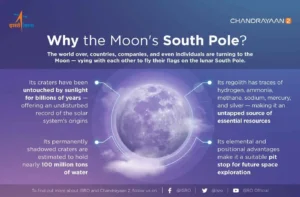
  • ISRO’s Contribution: Chandrayaan2 continues to provide valuable lunar data six years after launch, showcasing India’s ability to sustain longterm planetary missions.
  • Global Relevance: The lunar south pole is also the target of NASA’s Artemis missions and Russia’s Luna25, highlighting its strategic importance for international exploration.
  • Resource Utilisation: Water ice can be split into hydrogen and oxygen, enabling rocket fuel production and reducing dependence on Earthbased supplies.
  • Human Settlement Potential: Ice deposits can support longterm human habitation by providing drinking water, breathable oxygen, and energy resources.
  • Scientific Insights: Studying lunar ice helps understand solar system evolution, as these craters act as time capsules preserving ancient volatiles.
Lunar Exploration Milestone

Chandrayaan2 Findings

  • Radar Observations: The Dual Frequency Synthetic Aperture Radar (DFSAR) detected signals consistent with subsurface ice deposits.
  • Cold Trap Craters: Doubly shadowed craters, with temperatures as low as 25 Kelvin, act as natural cold traps, preserving ice for billions of years.
  • Faustini Crater Evidence: A 1.1 km crater inside Faustini showed strong radar reflections and morphological features indicating ice presence beneath the surface.
  • Scientific Significance: Confirms India’s role in planetary science, strengthens global understanding of lunar geology, and aids planning for future missions like Artemis and Chandrayaan3 followups.
  • Exploration Potential: Ice can be used for drinking water, oxygen extraction, and rocket fuel, reducing dependence on Earth supplies.

Aspect

Chandrayaan2

Chandrayaan3

Primary Objective

Expand lunar science through orbiter, lander, and rover

Demonstrate safe and soft landing on lunar south pole

Scientific Goals

Study topography, mineral distribution, surface composition, lunar atmosphere, and seismic activity

Conduct insitu experiments: thermal properties, seismicity, plasma density, and elemental composition

Payloads

Orbiter (8 instruments), Lander Vikram, Rover Pragyan

Lander Vikram (ChaSTE, ILSA, RAMBHA, NASA retroreflector), Rover Pragyan (APXS, LIBS), Propulsion Module (SHAPE)

Orbiter Role

Longterm mapping of minerals, water molecules, and highresolution imaging (0.3 m camera)

No new orbiter; relied on Chandrayaan2 orbiter for communication support

Technological Leap

India’s first attempt at soft landing; orbiter continues to function successfully

Focused on robust landing technologies: throttleable engines, hazard detection cameras, redundant sensors

Outcome

Orbiter successful; lander lost communication during descent at 2.1 km altitude

Achieved successful soft landing on 23 August 2023, making India the fourth nation to land on the Moon

Conclusion

Chandrayaan2’s findings highlight India’s growing space research capabilities and the strategic importance of lunar resources. The discovery of possible ice deposits strengthens prospects for sustainable human presence on the Moon.

GLOBAL HEAT CRISIS AND THE CLIMATE THRESHOLD

TOPIC: (GS3) ENVIRONMENT: THE HINDU

The World Meteorological Organization (WMO) and UK Met Office report (May 2026) warns of an 86% chance that at least one year between 2026–2030 will surpass 2024 as the hottest year ever.

Rising Global Heat

  • Projected Temperature Rise: Average global temperatures are expected to increase by 1.3°C–1.9°C above preindustrial levels between 2026–2030, with a 91% chance of breaching the 1.5°C Paris threshold temporarily.
  • Record Heat Likelihood: WMO and UK Met Office project that at least one year in 2026–2030 will surpass 2024 as the hottest year ever recorded.
  • HumanInduced Warming: The IPCC AR6 Synthesis Report (2023) confirms that human activities caused 1.1°C warming (2011–2020), with every 0.1°C rise intensifying risks.
  • Energy Imbalance: Rising greenhouse gas concentrations and Earth’s energy imbalance are driving unprecedented warming trends.
  • Extreme Weather Impacts: Heatwaves, floods, droughts, and wildfires will become more frequent and severe, affecting millions globally.
  • Ecosystem Risks: Coral reefs, glaciers, and Arctic ice are at risk of irreversible damage, with Arctic winters warming 2.8°C above baseline.

Implications of Increasing Global Heat

  • Extreme Weather Events: More frequent heatwaves, floods, droughts, and wildfires threaten lives and livelihoods.
  • Food Security: Crop yields decline due to heat stress and shifting rainfall patterns, raising risks of hunger.
  • Health Risks: Rising temperatures increase heatrelated mortality, vectorborne diseases, and water scarcity.
  • Ecosystem Collapse: Coral reefs, glaciers, and Arctic sea ice face irreversible damage. WMO projects Arctic winters warming 2.8°C above baseline, over 3.5 times faster than global average.
  • Economic Losses: IPCC estimates climate risks could reduce global GDP by 2–4% by 2050.
  • Displacement: Millions may be forced to migrate due to sealevel rise and extreme events.

Challenges

  • Insufficient Finance: Current global adaptation finance is far below needs; developing nations face severe constraints.
  • Dependence on Fossil Fuels: Continued reliance destabilizes both climate and global security.
  • Policy Gaps: Nationally Determined Contributions (NDCs) remain inadequate to limit warming below 2°C.
  • Biodiversity Loss: IUCN’s ENACT report (2024) highlights that climate change accelerates species extinction and ecosystem degradation.

Way Forward

  • Strengthen Paris Agreement Goals: Countries must submit ambitious NDCs 3.0 by 2025 under UNFCCC.
  • Accelerate Renewable Energy: UN SecretaryGeneral stresses a just transition to renewables for climate and energy security.
  • NatureBased Solutions: IUCN advocates NbS in agriculture, water, and coastal systems to tackle climatebiodiversity crises.
  • Adaptation & Early Warning: Expand forecasting systems to protect vulnerable communities.
  • Global Cooperation: Strengthen multilateralism at COP31 (2026 Antalya) to ensure collective action.

Conclusion

The accelerating global heat crisis is a warning that climate change is no longer a distant threat but a present emergency. Urgent action on renewables, finance, and biodiversity protection is essential to safeguard humanity and ecosystems.

INDIA–SOUTH KOREA TRADE DEFICIT CHALLENGE

TOPIC: (GS3) ECONOMY: THE HINDU

India and South Korea recently concluded the 12th round of CEPA upgrade negotiations (May 2026) in New Delhi, focusing on India’s growing bilateral trade deficit and ways to make the agreement more balanced.

What is trade deficit

  • A trade deficit occurs when a country’s imports exceed its exports, leading to a negative balance of trade.
  • For India, persistent trade deficits with countries like China, South Korea, and Gulf nations reflect structural challenges in manufacturing, energy dependence, and global competitiveness.

Trade Defict

India’s Trade Deficit

  • Overall Deficit: India’s merchandise trade deficit stood at USD 238 billion in FY202526, driven by high imports of crude oil, electronics, and gold.
  • China: Deficit with China crossed USD 100 billion in 2025, mainly due to electronics, machinery, and chemicals.
  • South Korea: Bilateral deficit widened to USD 20 billion in 202526, prompting CEPA renegotiations.
  • Energy Imports: Crude oil and LNG account for over 25% of total imports, making India vulnerable to global price shocks.
  • Positive Export Growth: Services exports (IT, business services) grew by 9% in 202526, partially offsetting merchandise deficit.

Current Account Deficit (CAD) vs Capital Account Deficit (KAD)

  • Current Account Deficit: Occurs when a country’s imports of goods, services, and transfers exceed exports. India’s CAD was 1.7% of GDP in FY202526, manageable but rising.
  • Capital Account Deficit: Refers to a shortfall in capital inflows (FDI, FPI, loans) compared to outflows. India usually runs a capital account surplus, financing CAD, but volatile FPI flows pose risks.

Reasons for trade deficit

  • Structural Dependence: Heavy reliance on energy and electronics imports drives persistent deficits.
  • Global Volatility: Oil price shocks and currency fluctuations widen CAD.
  • FDI vs FPI: Stable FDI inflows help finance CAD, but volatile FPI outflows create instability.
  • Policy Challenge: Need to boost domestic manufacturing (Make in India, PLI schemes) to reduce import dependence.
  • External Risks: Rising deficits strain forex reserves, impacting rupee stability.

Way Forward

  • Diversify Exports: Expand into highvalue sectors like electronics, pharmaceuticals, and green tech.
  • Energy Transition: Reduce oil dependence by scaling renewables and EV adoption.
  • Balanced Trade Agreements: Renegotiate CEPA/FTAs to ensure fair market access.
  • Boost Domestic Industry: Strengthen PLI schemes, MSMEs, and supply chain resilience.
  • Stable Capital Flows: Encourage longterm FDI over shortterm speculative flows.

Conclusion

India’s rising trade deficit reflects structural import dependence and global volatility. Addressing CAD and ensuring balanced capital flows require domestic industrial growth, energy diversification, and fair trade agreements.

SUPREME COURT ON SEDITION AND CONSTITUTIONAL DILEMMA

TOPIC: (GS2) POLITY: THE HINDU

On 21 May 2026, the Supreme Court of India clarified that sedition proceedings under Section 124A of the IPC can continue if the accused consents, partially reviving the colonialera law. This has reignited debates on its constitutional validity and misuse.

Sedition Law in India

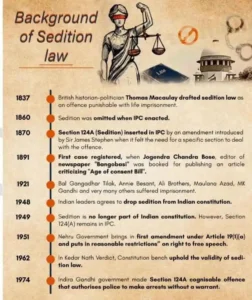
  • Section 124A of the IPC, introduced in 1870 by the British, criminalises speech or actions that bring hatred or contempt against the government.
  • While intended to protect sovereignty, it has often been criticised for curbing free speech and dissent.
Supreme Court on Sedition and Constitution                 

Features of Sedition Law

  • Definition: Any act that incites hatred, contempt, or disaffection against the government.
  • Punishment: Imprisonment for life or up to three years with fine.
  • Judicial Stand: The Supreme Court in Kedar Nath Singh (1962) upheld sedition but limited its application to acts involving violence or incitement to public disorder.
  • Recent Developments: In May 2022, SC suspended sedition trials until legislative review; the 2026 clarification now allows continuation with accused consent.

Challenges

  • Colonial Legacy: Law designed to suppress nationalist voices, now misused against activists and journalists.
  • Conflict with Free Speech: Article 19(1)(a) guarantees freedom of speech; sedition often undermines this right.
  • Ambiguity: Vague wording leads to subjective interpretation and misuse.
  • Burden on Judiciary: Thousands of pending cases create legal uncertainty.
  • International Criticism: India faces criticism for retaining sedition while many democracies have repealed it.

Way Forward

  • Repeal or Reform: Replace sedition with narrowly defined provisions against violent incitement.
  • Legislative Clarity: Parliament must enact clear safeguards to prevent misuse.
  • Judicial Oversight: Courts should scrutinise sedition charges to protect fundamental rights.
  • Awareness & Training: Police and enforcement agencies need training to avoid arbitrary application.
  • Comparative Lessons: Learn from democracies like the UK and Australia, which have repealed sedition laws.

Conclusion

The revival of sedition proceedings highlights the tension between national security and free speech. India must move toward a balanced legal framework that protects sovereignty without silencing dissent.

FIJI ISLANDS

TOPIC: (GS1) GEOGRAPHY: THE HINDU

The Quad grouping (US, India, Japan, Australia) recently announced plans to build a “model port” in Fiji, sparking hopes of a $1.82 billion relocation project for the nation’s main dock. This highlights Fiji’s growing strategic importance in the IndoPacific.

Fiji’s Strategic Profile

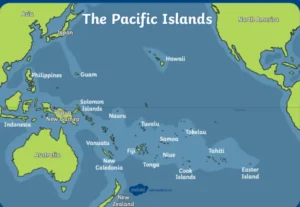
  • Fiji, located in the South Pacific Ocean, is a small island nation with outsized geopolitical relevance.
  • Its position near the Koro Sea makes it a key player in maritime trade and IndoPacific security.
  • With a developed economy in tourism and sugar, Fiji also faces challenges of climate change and political instability.
Fiji Islands

Geography & Demographics

  • Island Composition: Comprises 300 islands, of which about 100 are inhabited.
  • Major Island: Viti Levu accounts for over half of Fiji’s land area, hosting the capital Suva and the highest peak Mount Tomanivi (1,324 m).
  • Natural Features: Islands formed by volcanic activity, sedimentary deposits, and coral reefs.
  • Population: Majority of MelanesianPolynesian ancestry, with a significant South Asian minority.
  • Languages & Religion: English, Fijian, and Hindi are official languages; Christianity, Hinduism, and Islam are major religions.

Political & Economic Background

  • Independence: Gained independence in 1970 after nearly a century of British rule.
  • Governance: Adopted a Westminsterstyle democracy; currently functions under the 2013 Constitution with a 55seat unicameral parliament.
  • Coups: Experienced coups in 1987, 2000, and 2006, slowing democratic consolidation.
  • Economy: One of the most developed Pacific economies, relying on tourism, sugar exports, and remittances.

Strategic Importance

  • IndoPacific Relevance: Location makes Fiji vital for maritime security and supply chain resilience.
  • Climate Vulnerability: Rising sea levels threaten ports and coastal settlements.
  • Quad Engagement: The proposed port project reflects Fiji’s role in regional connectivity and strategic balance.

PMWANI

TOPIC: (GS2) POLITY: THE HINDU

The Department of Telecommunications (DoT) has recently introduced reforms under the PMWANI framework to make public WiFi access more userfriendly and expand connectivity.

PMWANI Framework

  • Launched in December 2020, the Prime Minister’s WiFi Access Network Interface (PMWANI) aims to create a robust digital communications infrastructure by proliferating public WiFi hotspots.
  • It is a key step toward bridging the digital divide and enabling affordable internet access for all.

Objectives of PMWANI

  • Digital Inclusion: Expand internet connectivity in remote and rural areas.
  • Economic Empowerment: Enable individuals and businesses to participate in the digital economy.
  • Local Entrepreneurship: Encourage shopkeepers and small establishments to become Public Data Office (PDO) operators.
  • Affordable Access: Provide lowcost internet services without complex licensing requirements.

PMWANI Ecosystem Components

  • Public Data Office (PDO): Local shops or establishments that set up WANIcompliant WiFi hotspots; no license or fee required.
  • Public Data Office Aggregator (PDOA): Authorizes PDOs and manages accounting functions.
  • App Provider: Develops apps to register users and help them discover nearby WANIcompliant hotspots.
  • Central Registry: Maintains records of PDOs, PDOAs, and App Providers; managed by CDoT.

Recent Reforms (2026)

  • Simplified onboarding process for PDOs.
  • Enhanced security and authentication protocols.
  • Integration with Digital India initiatives for wider adoption.
  • Focus on supply chain resilience and digital trade support.

Significance

  • Strengthens Digital India vision by expanding affordable internet.
  • Promotes inclusive growth by empowering rural entrepreneurs.
  • Supports education, egovernance, and healthcare delivery in remote areas.
  • Reduces dependence on mobile data, offering lowcost alternatives.

ALGOZA’S

TOPIC: (GS1) CULTURE: THE HINDU

Rajasthan’s folk artist Taga Ram Bheel was recently awarded the Padma Shri (Art) for preserving and promoting the traditional desert music of the Thar through the rare wind instrument, the Algoza.

Algoza’s Cultural Significance

  • The Algoza is one of India’s oldest surviving folk wind instruments, deeply rooted in the musical traditions of Rajasthan, Punjab, Sindh, and western India.
  • Its hypnotic sound embodies the spirit of desert folk culture, making it both a musical and cultural heritage symbol.  Algozas  Features of Algoza

  • Twin Flutes: Played using two wooden pipes simultaneously – one for melody, the other for drone or rhythm.
  • Circular Breathing: Musicians master this demanding technique to produce a continuous, uninterrupted flow of sound.
  • Unique Rhythm: Rapid breathing creates a bouncing swing rhythm, giving performances a seamless and meditative quality.
  • Regional Spread: Popular across Rajasthan, Punjab, Sindh, and desert communities, often accompanying folk dances and storytelling traditions.
  • Cultural Identity: Represents the oral traditions of desert tribes, preserving their songs of migration, love, and resilience.

Contemporary Relevance

  • Preservation Efforts: Recognition through awards like the Padma Shri encourages younger generations to learn and sustain the art.
  • Tourism & Culture: Algoza performances enrich Rajasthan’s cultural tourism, showcasing India’s diverse heritage.
  • Global Appeal: Increasingly featured in fusion music, connecting traditional desert sounds with modern genres.


Write a Review

Your email address will not be published. Required fields are marked *

Seraphinite AcceleratorOptimized by Seraphinite Accelerator
Turns on site high speed to be attractive for people and search engines.