

Table of Contents
ToggleINFANT FEEDING PRACTICES AND NUTRITION INDICATORS
TOPIC: (GS2) POLITY: THE HINDU
Recent analysis of National Family Health Survey (NFHS-5) data highlights a decline in several infant and young child feeding (IYCF) indicators in Delhi.
Infant feeding
- Proper infant feeding is essential for ensuring healthy growth, immunity, cognitive development, and survival of children.
- The latest NFHS findings reveal that despite improvements in healthcare access, several key feeding and nutrition indicators among children in Delhi have weakened, posing challenges to achieving national nutrition goals.
Key Findings from NFHS Data
Breastfeeding Indicators
- Children breastfed within one hour of birth declined from 51.2% to 45.1%.
- Exclusive breastfeeding among infants below six months dropped from 83.9% to 72.2%.
- Children receiving breast milk along with complementary foods declined from 62.9% to 52.5%.
- Continued breastfeeding among children aged 6–23 months remained low at around 10.9%.
Complementary Feeding
- Infants aged 6–8 months receiving complementary food with breast milk fell from 18% to 10.9%.
- Appropriate complementary feeding remains a major concern in urban settings.
Nutrition Status
- Stunting (low height-for-age) reduced from 30.9% to 26.4%, indicating some improvement.
- Wasting (low weight-for-height) increased sharply from 1.2% to 15%.
- Severe wasting remained around 4.1%.
- Underweight children declined from 4% to 1.7%.
- Children receiving adequate diets remain low at approximately 11.9%.
Importance of Breastfeeding – For Children
- Complete Nutrition: Provides all essential nutrients for the first six months.
- Immunity Boost: Strengthens defense against infections.
- Brain Development: Supports healthy cognitive growth.
- Reduced Mortality: Lowers risk of infant deaths.
For Mothers
- Postpartum Recovery: Aids healing after childbirth.
- Cancer Protection: Lowers chances of breast and ovarian cancers.
- Bonding: Strengthens emotional connection with the child.
Reasons for Declining Breastfeeding Practices
- Rising number of working mothers and inadequate workplace support.
- Limited awareness regarding breastfeeding benefits.
- Increasing dependence on formula feeding.
- Urban lifestyle changes and reduced family support systems.
- Inadequate counselling during pregnancy and post-delivery.
- Misconceptions regarding breast milk sufficiency.
Government Initiatives
- MAA Programme: Promotes optimal breastfeeding practices through counselling.
- Mission Poshan 2.0: Integrates nutrition-related interventions for mothers and children.
- Janani Suraksha Yojana (JSY): Encourages institutional deliveries and maternal care.
- Pradhan Mantri Matru Vandana Yojana (PMMVY): Provides maternity benefits for pregnant and lactating women.
Challenges in Infant Nutrition
- Low Awareness: NFHS5 shows only 64% mothers received counselling on breastfeeding.
- Workplace Gaps: Limited maternity support; only 27% women in organized sector covered under maternity benefits.
- Urban–Rural Divide: Rural areas face shortage of trained counsellors and nutrition services.
- Delayed Complementary Feeding: NFHS5 reports only 45% children (6–8 months) receive timely complementary foods.
Way Forward
- Strengthen Counselling: Train ASHAs/ANMs to provide regular breastfeeding and infant nutrition guidance.
- Expand Maternity Benefits: Extend paid maternity leave and workplace crèche facilities beyond organized sector.
- Community Awareness: Launch IEC campaigns under POSHAN Abhiyaan to improve knowledge among families.
- Timely Complementary Feeding: Promote dietary diversity after 6 months; integrate with ICDS and Anganwadi services.
Conclusion
Sustained awareness, institutional support, and effective nutrition programmes are essential to reduce child malnutrition and enhance human capital.
IRAN ISRAEL CONFLICT AT 100 DAYS
TOPIC: (GS2) INTERNATIONAL RELATIONS: THE HINDU
As the Iran Israel conflict crossed the 100-day mark, a possible ceasefire gained momentum, with Iran showing emphasis on developments in Lebanon than on Gaza.
Background of the Conflict
Roots of Iran–Israel Rivalry
- Hostility dates back to the 1979 Iranian Revolution.
- Iran opposes Israel’s regional policies and supports anti-Israel groups.
- Israel views Iran’s nuclear programme and regional activities as major security threats.
Recent Escalation
- Direct military exchanges between Iran and Israel increased in 2024–25.
- Attacks on military installations, proxy groups, and strategic infrastructure widened the conflict.
- The crisis has affected maritime security, regional stability, and energy routes.
Why Lebanon is More Important for Iran?
- Strategic Role of Hezbollah: Hezbollah, based in Lebanon, is Iran’s most powerful regional ally. It serves as a major deterrent against Israel.
- Forward Defence Strategy: Iran follows a strategy of maintaining influence beyond its borders. Lebanon acts as a strategic frontline against Israeli military pressure.
- Regional Influence: It helps maintain the so-called “Axis of Resistance”, consisting of Iran-backed groups in the region.
- Pressure Tool Against Israel: A stable Hezbollah presence allows Iran to exert continuous pressure on Israel. weakening of Hezbollah would reduce Iran’s regional bargaining power.
Iran’s Position on Gaza
- Iran strongly supports the Palestinian cause politically and diplomatically. However, Gaza does not provide the same strategic depth as Lebanon.
- Therefore, developments in Lebanon often receive greater strategic attention.
Impact on Regional Security
- Threat to Maritime Routes: Tensions affect shipping through the Strait of Hormuz, Red Sea, and nearby sea lanes.
- Humanitarian Concerns: Continued violence has caused civilian casualties and displacement. Humanitarian access remains a major challenge.
- Risk of Wider Conflict: Possibility of involvement by regional actors such as Syria, Hezbollah, and other armed groups. Increased risk of broader instability in West Asia.
Strategic Importance of the Strait of Hormuz
- Connects the Persian Gulf with the Gulf of Oman and the Arabian Sea.
- Around one-fifth of global oil trade passes through this route.
- Any disruption can affect global energy prices and supply chains.
Implications for India
- Energy Security: India imports a significant share of crude oil from West Asia. Escalation can increase energy costs.
- Trade and Connectivity: Maritime disruptions affect trade routes and shipping expenses.
- Indian Diaspora: Large Indian communities live and work across the region. Stability is important for their safety and welfare.
- Strategic Balancing: India maintains relations with both Israel and Arab countries while supporting peace and diplomacy.
Conclusion
The Iran–Israel confrontation extends beyond Gaza and reflects a wider regional power struggle; lasting stability in West Asia will require diplomacy, restraint, and a balanced security framework that addresses the concerns of all stakeholders.
INDIA’S GROWTH–INFLATION CHALLENGE AMID GLOBAL UNCERTAINTY
TOPIC: (GS3) ECONOMY: THE HINDU
Recent economic assessments indicate that external shocks may slow economic growth while increasing inflationary pressures in FY 2025–26.
India’s Economic Outlook
- Fastest-Growing Economy: India continues to rank among the world’s fastestgrowing large economies, driven by robust domestic demand, rising public investment, and better infrastructure.
- Global Headwinds: External pressures such as geopolitical conflicts, supplychain disruptions, volatile energy prices, and weakening global demand are emerging as fresh challenges.
- Core Concern: The central policy challenge is to sustain high growth while ensuring inflation remains under control.
India’s Current Economic Position
Growth Outlook
- India’s GDP growth is expected to remain around 6.3–6.7% in FY 2025–26, making it one of the fastest-growing major economies.
- Domestic consumption continues to be the principal growth driver.
- Government capital expenditure and infrastructure development are supporting economic activity.
Inflation Scenario
- Retail inflation (CPI) has moderated compared to earlier peaks but remains vulnerable to food and fuel shocks.
- Rising global crude oil prices can increase transportation and production costs.
- Imported inflation remains a major risk due to dependence on energy imports.
Factors Supporting Economic Growth
- Strong Domestic Demand: Household consumption remains resilient and Urban demand has shown steady recovery.
- Government Policy Support: Infrastructure spending on roads, railways, ports, and logistics. Production-Linked Incentive (PLI) schemes promoting manufacturing.
- Investment Growth: Public investment has remained robust. Private sector investment is gradually improving in selected sectors.
Major Risks to Growth and Inflation
- West Asia Conflict: Escalation in West Asia may disrupt global energy supplies. Higher oil prices increase India’s import bill and current account pressures.
- Global Trade Slowdown: Weak demand in the United States, Europe, and other major markets may affect Indian exports. Reduced export earnings can impact industrial growth.
- Supply Chain Disruptions: Shipping costs and freight charges may rise. Delays in trade can increase production costs.
- Monsoon Uncertainty: Below-normal rainfall can affect agricultural output. Food inflation may rise due to lower crop production.
Role of the RBI
- Monetary Policy Measures: Uses repo rate adjustments to manage inflation. Maintains liquidity conditions in the economy.
- Inflation Targeting Framework: RBI targets 4% CPI inflation with a tolerance band of ±2%. Objective is to ensure price stability while supporting growth.
Policy Priorities for India
- Short-Term Measures: Monitor food and fuel inflation closely. Maintain adequate buffer stocks of essential commodities.
- Long-Term Measures: Reduce dependence on imported energy. Promote renewable energy and domestic manufacturing.
Way Forward
- Prudent Fiscal & Monetary Management: Maintain fiscal deficit within 5.1% of GDP (FY202526 target) and continue RBI’s inflation targeting (CPI kept near 4–5% band).
- Infrastructure & Manufacturing Reforms: Accelerate projects under PM Gati Shakti; India’s infrastructure investment reached ₹11 lakh crore in FY2025, boosting logistics and manufacturing competitiveness.
- Energy Security Diversification: Expand renewable capacity—India crossed 200 GW of renewables in 2025, reducing dependence on imported crude (currently ~90% import reliance).
- Export Promotion via FTAs: Strengthen trade through recent FTAs (e.g., India–EU talks, India–UAE CEPA). Merchandise exports stood at $437 billion in FY2025, with services exports crossing $340 billion.
Conclusion
India’s external shocks can strain the growth-inflation balance and sustained reforms, macroeconomic stability, and resilient supply systems will be crucial for maintaining high growth with price stability.
RAIN AND FERTILISER SHORTFALL AND AGRICULTURAL OPPOORTUNITY
TOPIC: (GS3) ECONOMY: THE HINDU
Recent assessments indicate that India may face the combined impact of a below-normal monsoon and possible fertiliser supply constraints during the 2025–26 agricultural season.
Agriculture in India
- Backbone of Rural Economy: Employs nearly 45% of India’s workforce and contributes around 16–18% of GDP (Economic Survey 2025).
- Monsoon Dependence: Over 60% of cropped area is rainfed, making farming highly vulnerable to erratic rainfall.
- Fertiliser Reliance: India imports ~30% of its urea needs; disruptions in global supply chains raise costs and availability issues.
- Climate Risks: Weaker rainfall and fertiliser shortages highlight the need to move away from waterintensive crops like paddy and sugarcane.
Rainfall Outlook
- India received around 104% of the Long Period Average (LPA) rainfall in 2024.
- However, forecasts indicate a possibility of weaker rainfall conditions in parts of the 2025–26 agricultural cycle.
- Weather uncertainties linked to El Niño conditions can affect crop productivity.
Fertiliser Concerns
- India depends significantly on imports for fertiliser raw materials.
- Global geopolitical tensions and supply-chain disruptions can increase fertiliser prices.
- Urea remains the most heavily subsidised fertiliser in India.
Potential Impact on Agriculture
- Kharif Crops: Delayed or deficient rainfall can affect sowing of rice, pulses, oilseeds, and coarse cereals. Reduced soil moisture may lower yields.
- Rabi Crops: The impact may be more severe during the winter season if reservoir levels decline. Wheat and other irrigated crops may face water stress.
- Food Inflation: Lower agricultural output can increase food prices. Rising food inflation affects household consumption and overall economic stability.
Why This Can Be an Opportunity
- Crop Diversification: Farmers can shift from water-intensive crops such as paddy and sugarcane to: Millets, Pulses, Oilseeds, Drought-resistant crops.
- Efficient Resource Use: Reduced availability of water and fertilisers can encourage Precision farming, Micro-irrigation systems and Balanced nutrient management.
- Promoting Millets: Following the International Year of Millets (2023), India has intensified efforts to popularise millets.
Government Initiatives
- Pradhan Mantri Krishi Sinchayee Yojana (PMKSY): Promotes efficient irrigation through the slogan “Per Drop More Crop.”
- PM-PRANAM Scheme: Encourages states to reduce excessive use of chemical fertilisers.
- National Mission on Natural Farming: Supports low-input and sustainable agricultural practices.
- Soil Health Card Scheme: Promotes balanced fertiliser application based on soil conditions.
Case Studies and Recent Examples
- Millet Revolution in Karnataka and Telangana: Farmers adopting millets have reported lower cultivation costs and improved resilience during dry spells.
- Andhra Pradesh Community Natural Farming: One of the world’s largest natural farming programmes has demonstrated reduced dependence on chemical fertilisers and improved sustainability.
- Israel’s Water-Efficient Agriculture: Extensive use of drip irrigation has enabled cultivation even in water-scarce conditions, offering valuable lessons for India.
Way Forward
- Crop Diversification: Encourage farmers to shift from waterintensive crops (paddy, sugarcane) to millets, pulses, and oilseeds. MSP for millets increased by 7–9% in 2025–26, supporting diversification under the International Year of Millets (2023) momentum.
- Expand MicroIrrigation: Scale up drip and sprinkler irrigation.Currently covers only 12% of cropped area; target is 28 million hectares by 2030 under PMKSY.
- Balanced Fertiliser Use: Promote NanoUrea and organic alternatives to reduce chemical dependency. India consumed 62 million tonnes of fertilisers in 2025, with urea forming ~55%; NanoUrea adoption can cut usage by 50%.
Conclusion
Rainfall uncertainty and fertiliser constraints should be viewed not merely as risks but as an opportunity to accelerate climate-smart agriculture, improve resource efficiency, and build a more resilient and sustainable farming system for the future.
TRANSFORMING INDIA’S HEALTH RESEARCH ECOSYSTEM
TOPIC: (GS2) POLITY: THE HINDU
The Indian Council of Medical Research (ICMR) is undergoing major reforms to focusing on innovation-driven healthcare, indigenous technologies, disease surveillance and affordable public health solutions.
ICMR’s New Vision for Viksit Bharat 2047
Key Objectives
- Build a globally competitive biomedical research ecosystem.
- Promote indigenous healthcare technologies.
- Strengthen disease surveillance and early warning systems.
- Convert laboratory research into affordable healthcare solutions.
- Enhance India’s role in global health leadership.
Target Areas
- Precision medicine.
- Artificial Intelligence (AI) in healthcare.
- Genomics and biotechnology.
- Vaccine development.
- Digital public health infrastructure.
Major Reforms Introduced by ICMR
- Shift Towards Mission-Oriented Research: Focus on solving national health challenges rather than only publishing research.
- Priority areas: Antimicrobial Resistance (AMR). Tuberculosis. Cancer. Diabetes. Emerging infectious diseases.
- Integrated Disease Surveillance: Expansion of real-time disease monitoring systems for pandemics and outbreaks and Use of digital platforms for rapid data collection.
- Promotion of Indigenous Medical Technologies: Encouraging start-ups and research institutions and Reducing dependence on imported healthcare equipment.
- Public Health Research Network: Creation of collaborative research networks involving: Medical colleges, State governments, Research institutes, Public health agencies.
Important Initiatives and Success Stories
- Mission DELHI (Delhi Hypertension Control Initiative): Demonstrated how evidence-based interventions improve management of hypertension.
- Mission Utkarsh: Improved emergency healthcare delivery and critical care systems.
- ICMR–MediTwin Collaboration (2025): Development of India’s first AI-powered digital twin platform for personalized healthcare solutions. Supports predictive diagnosis and precision medicine.
Challenges
- Low Research Funding: India spends only 0.7% of GDP on R&D, compared to 2–3% in advanced economies.
- Infrastructure Shortage: Limited highend labs and biobanks; only ~20 national institutes have advanced genomic facilities.
- Uneven Healthcare Access: NFHS5 shows stark regional gaps—maternal mortality in Assam (195 per lakh) vs Kerala (30 per lakh).
- Weak Industry–Academia Linkages: Collaboration remains limited; only 15% of patents involve joint research with industry.
Way Forward
- Increase Investment: Raise health R&D spending to 1.5% of GDP by 2030; boost funding under ICMR & DBT.
- Expand Genomic & AI Platforms: Scale up Genome India Project (target: sequencing 10,000 genomes) and AIbased diagnostics.
- Strengthen PPPs: Encourage private sector participation; India’s biotech industry already valued at $100 billion (2025).
- Affordable Translation: Focus on lowcost vaccines and diagnostics; India supplied 60% of global vaccines during COVID19.
Conclusion
ICMR’s ongoing transformation reflects India’s shift towards innovation-led healthcare; by combining scientific research, digital technologies, and public health delivery, it can become a key pillar in achieving the vision of a healthy and developed India by 2047.
NATIONAL SOCIAL ASSISTANCE PROGRAMME (NSAP) AND PENSION REFORM IN INDIA
TOPIC: (GS3) ECONOMY: THE HINDU
Recent analyses have highlighted that India’s flagship social pension programme, the Indira Gandhi National Old Age Pension Scheme (IGNOAPS), has not kept pace with inflation, and rising living costs.
National Social Assistance Programme (NSAP)
- Launched in 1995 by the Ministry of Rural Development.
- Provides social assistance to vulnerable groups.
- Covers: Elderly persons, Widows, Persons with disabilities
Indira Gandhi National Old Age Pension Scheme (IGNOAPS)
- Major component of NSAP.
- Eligibility: Persons aged 60 years and above belonging to Below Poverty Line (BPL) households.
- Central Assistance: ₹200 per month (60–79 years) , ₹500 per month (80 years and above)
Issues in India’s Pension System
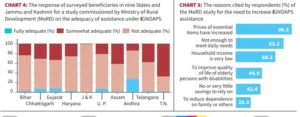
- Inadequate Pension Amount: A pension of ₹200 today provides only a fraction of its purchasing power compared to earlier years.
- Limited Coverage: India’s elderly population exceeds 15 crore (150 million) and is projected to rise substantially by 2050. Yet, only a small proportion of elderly citizens receive social pensions.
- Dependence on State Governments: States often provide additional pension support. States like Goa, Delhi, Rajasthan, Odisha, and Chhattisgarh provide higher assistance.
- Targeting and Identification Issues: Dependence on outdated BPL lists excludes deserving beneficiaries. Errors in beneficiary identification reduce programme effectiveness.
Importance of Social Pensions
- Social Security: Provides minimum income support. Reduces vulnerability among elderly citizens.
- Poverty Reduction: Supports consumption of food, medicines, and essential services. Helps prevent extreme deprivation.
- Women’s Empowerment: Particularly important for widows and elderly women lacking independent income.
- Inclusive Development: Contributes to achieving SDG 1 (No Poverty) and SDG 10 (Reduced Inequalities).
Recent Good Practices
- Odisha: Expanded social pension coverage through the Madhu Babu Pension Yojana.
- Rajasthan: Provides higher pension amounts with periodic revisions.
- Goa: Offers one of the highest old-age pension benefits in the country.
Way Forward
- Periodic Revision: Regularly update pension amounts and index them to inflation.
- Expand Coverage: Move beyond restrictive BPL criteria to include all vulnerable elderly.
- Use Modern Databases: Employ updated socioeconomic datasets for accurate beneficiary identification.
- Strengthen DBT: Enhance Direct Benefit Transfer systems for efficient delivery.
Conclusion
As India moves towards an ageing society, strengthening pension coverage and ensuring adequate income support will be essential to protect elderly citizens and promote inclusive social security.
JAN SAMARTH PORTAL
TOPIC: (GS2) POLITY: THE HINDU
The Jan Samarth Portal completed four years, reinforcing India’s push for financial inclusion through seamless credit delivery.
Objectives
- Expand Reach: Broaden access to governmentsponsored credit schemes.
- Streamline Credit: Simplify loan application and sanction processes.
- Inclusive Development: Connect beneficiaries, banks, and agencies on one platform.
Key Features
- Available in 8 languages, ensuring rural accessibility.
- Digital marketplace with integrated data sources.
- 24/7 loan application facility with inprinciple sanction.
- Covers 15 Central schemes and links 254 lending institutions.
- Singlewindow system reduces physical visits to banks.
- Builtin grievance redressal mechanism for beneficiaries and banks.
Recent Data & Case Studies
- By 2026, the portal has processed lakhs of applications, easing access for MSMEs, students, and farmers.
- Example: A farmer in Guntur accessed PM Kisan Credit Card loan digitally, avoiding delays in sanction.
- Case studies show improved loan turnaround time and reduced exclusion errors compared to manual systems.
Significance
- Promotes ease of doing business and supports Digital India.
- Strengthens Direct Benefit Transfer (DBT) ecosystem.
- Bridges gaps in financial inclusion, especially for rural and underprivileged groups.
Conclusion
The Jan Samarth Portal is a transformative step in India’s credit delivery system. By combining technology, inclusivity, and transparency, it ensures that government schemes reach the last mile beneficiaries effectively.
E85 FUEL
TOPIC: (GS3) ENVIRONMENT: THE HINDU
Recently, the Union Minister for Petroleum and Natural Gas launched E85 fuel in New Delhi, marking a milestone in the country’s biofuel transition.
E85 Fuel
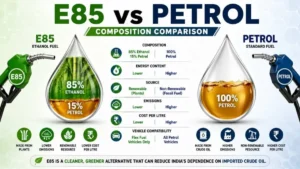
- Composition: Blend of 80–85% ethanol and 14–19% petrol.
- Designed for: FlexFuel Vehicles (FFVs), which can run on blends from E20 to E100.
- Objective: Promote energy independence and support India’s Net Zero 2070 target.
Benefits
- Lower Price: Cheaper than petrol, passing benefits of domestic ethanol to consumers.
- Emission Reduction: Cuts lifecycle greenhouse gases by ~61% compared to petrol.
- High Octane: RON ~108, enabling higher compression ratios and better engine performance.
- Cleaner Combustion: Nearzero particulate matter, improving urban air quality.
Recent Data & Case Studies
- India produced ≈1,800 crore litres of ethanol in 202526, surpassing demand.
- Farmers earned ₹1.18 lakh crore from ethanol procurement since 2014, boosting rural incomes.
- Pilot projects in Maharashtra and Uttar Pradesh show FFVs running efficiently on E85 with reduced fuel costs.
Significance
- Strengthens energy security by reducing crude oil imports (India imports ~90% of its oil).
- Supports climate commitments under COP26.
- Encourages agrarian empowerment by creating demand for crops like sugarcane and maize.
Conclusion
The launch of E85 fuel is a strategic step in India’s biofuel roadmap. By combining economic savings, emission reduction, and farmer benefits, it paves the way for a flexfuel future.