

...
Daily Current affairs 08 July 2026

Daily Current Affairs 08-July-2026

Share this Post

RIGHT TO LEGAL REPRESENTATION AND BAR ASSOCIATIONS

TOPIC: (GS2) POLITY: THE HINDU

The Ayodhya Bar Association recently resolved that none of its lawyers would defend eight persons accused of embezzling Ram Temple donation funds, even threatening a ₹5 lakh fine on any lawyer who chose to represent them.

Constitutional Safeguards

  • Article 22(1): Every arrested person has the right to consult and be defended by a lawyer of their choice.
  • Article 14: Guarantees equality before law and equal protection of laws.
  • Article 21: Recognises fair trial as part of the right to life and liberty.
  • Article 39A: Directive Principle mandating free legal aid to ensure justice is not denied due to poverty or disability.

Bar Council Rules

  • Advocates must accept briefs at a fee suited to their standing.
  • Refusal is allowed only in “special circumstances” for individual lawyers.
  • Kuldeep Agarwal v. State of Uttarakhand (2019): Clarified that bar associations cannot collectively ban representation.

Landmark Supreme Court Judgment

  • A.S. Mohammed Rafi v. State of Tamil Nadu (2010):
    • Declared such resolutions “wholly illegal, against traditions of the bar and professional ethics.”
    • Cited precedents: Indian revolutionaries, Gandhi’s and Indira Gandhi’s assassins, and even Nazi war criminals at Nuremberg were all given legal defence.

Fair Trial as Core Value

  • J. Jayalalithaa v. State of Karnataka (2014): Fair trial protects accused, victim, and society.
  • Courts emphasised that denial of counsel undermines the rule of law.

Other Notable Cases

  • Ajmal Kasab (2008 Mumbai attacks): Legal aid lawyer appointed despite threats.
  • Delhi Gangrape (2012): Saket lawyers passed boycott resolution.
  • Hyderabad Vet Case (2019): Accused denied representation; later killed in encounter.
  • Pradyuman Thakur Case (2017): Supreme Court intervened against Gurgaon Bar boycott.

Why This Matters

  • The Bar is not a trade union but a constitutional institution.
  • Boycotts violate rights of both accused and victims by compromising trial fairness.
  • Ensuring representation upholds justice, equality, and constitutional morality.

Conclusion

Bar association boycotts are unconstitutional and unethical, as the right to counsel is inviolable — it remains the cornerstone of a fair trial, irrespective of public sentiment or the gravity of allegations.

E20 PETROL – MILEAGE CONCERNS AND CONSUMER ISSUES

TOPIC: (GS3) SCIENCE AND TECHNOLOGY: THE HINDU

India completed its transition to E20 petrol (20% ethanol blend) last year, five years ahead of schedule. In June 2026, Union Petroleum Minister launched E85 fuel in New Delhi, raising fresh concerns among motorists about mileage loss and engine durability.

India’s Ethanol Blending Journey

  • 2009 National Policy on Biofuels: Target of 20% blending by 2017, delayed due to supply and infrastructure issues.
  • Rapid Transition: Ethanol share doubled from E10 to E20 in just three years, instead of the planned eight.
  • Nationwide E20 rollout completed in April 2026. Current blending level: 20% ethanol in petrol across India.
  • Feedstock shift: Sugarcanebased ethanol reduced after drought and shortages. Grainbased ethanol (rice, maize, broken grains) now contributes ~65% of production.
  • Consumer Concerns: Older vehicles certified only for E10 faced sudden adaptation challenges without adequate warnings.

Why Mileage Matters in India

  • Fuel efficiency obsession: Mileage is central to carbuying decisions; advertising campaigns historically highlighted this.
  • Economic reality: Uneven income growth keeps mileage a priority for middleclass and rural consumers.

Key Problems with Higher Ethanol Blends

  • Drop in Fuel Economy:
    • Ethanol has lower calorific value than petrol.
    • Causes ~30% mileage reduction in vehicles not designed for higher blends.
    • Performance drop intensifies as blending levels rise.
  • Risk of Vehicle Damage:
    • Ethanol is hygroscopic → attracts water, leading to corrosion.
    • Burns hotter, making cold starts difficult.
  • No Consumer Choice:
    • Unlike Brazil, Indian motorists cannot choose between blends.
    • No mandated price discount for higher ethanol fuels.

Chemistry Behind Ethanol Blending

  • Ethanol (C2H5OH): Simpler carbon chain, produces less CO₂.
  • Ethanol has a very high octane rating (~108 RON). This means it burns more cleanly and prevents engine knocking .
  • Potential: Could allow future engines with higher compression ratios for better mileage, but not yet realised in India.

Road Ahead – E25 & E85

  • Government plans E25 rollout and promotion of E85 for flexfuel vehicles.
  • Economic challenge: E85 gives >25% mileage loss; price difference (~₹20/litre cheaper) not enough to offset.
  • Engineering needs: Carmakers must recalibrate engines, improve corrosion resistance, and undergo fresh homologation.

Lessons from Brazil

  • Ethanol programme began in 1970s; built a strong sugarcanebased ecosystem.
  • Consumers can choose between E27–35 blends and E100 pure ethanol.
  • Government ensures E100 is 25–35% cheaper, making flexfuel cars popular.
  • By late 1980s, 90% of new cars in Brazil could run entirely on ethanol.

Conclusion

India’s ethanol transition highlights the tension between environmental goals and consumer realities mileage loss, engine risks, and lack of choice must be addressed to make higher blends truly sustainable.

INDIA’S ECONOMIC PROSPECTS AFTER THE WEST ASIAN CRISIS

TOPIC: (GS2) INTERNATIONAL RELATIONS: THE HINDU

The United States and Iran signed a 14point preliminary MoU to reopen the Strait of Hormuz, stabilising global crude supply. This development is expected to lower oil prices and reshape India’s growth outlook for 202627.

Crude Oil Prices and Growth Outlook

  • April 2026: Indian crude basket averaged $114.5/bbl.
  • May 2026: Declined to $106.2/bbl.
  • June 2026: Further dropped to $86.3/bbl.
  • If peace holds, prices will remain below these levels for the rest of 202627.
  • NSO estimates: GDP growth at 7.7% in 202526, confirming strong postCOVID recovery.
  • RBI projection: Real GDP growth at 6.6% in 202627, impacted by crude disruptions and El Niñorelated rainfall deficiency.

Agriculture & Fertilizer Concerns

  • El Niño impact: IMD projected a 10% rainfall shortfall in 2026.
  • Rainfall deficit: Till June 2026, deficit stood at 43%, affecting soil moisture.
  • Fertilizer shortages: Risk to both kharif and rabi crops.
  • Policy response: Build fertilizer reserves to buffer shocks.
  • Trade adjustment: Revise cropspecific import/export policies to ensure food security.

Fiscal Prospects

  • Nominal GDP growth: Expected at 12.4% in 202627, higher than budgeted 10.1%.
  • Inflation outlook: WPI ~6%, CPI ~4.5%, IPD inflation ~5.4%.
  • Revenue gains: Higher nominal growth strengthens tax collections.
  • RBI dividend: ₹2.69 lakh crore transferred, covering most of budgeted receipts.
  • Fiscal deficit: Target of 4.3% of GDP likely achievable despite subsidy pressures.

Petroleum Economy Trends

  • Import dependence: More than 90% in 202526, compared to 54.9% in 199899.
  • Domestic crude output: Declined to 26 MMT in 202526, from 35.9 MMT in 201112.
  • PoL consumption: Rose to 243.2 MMT in 202526, up from 90.6 MMT in 199899.
  • Refining capacity: Expanded significantly, lowering import costs and boosting exports.
  • Energy intensity: Declined steadily, supporting sustainable growth.

Strategic Recommendations

  • Diversify crude sources: Reduce reliance on the Strait of Hormuz.
  • Build reserves: Establish strategic reserves of crude, fertilizers, and key commodities.
  • Domestic exploration: Exploit untapped crude resources while pushing solar, nuclear, and renewables.
  • Energy security policies: Strengthen resilience against external shocks and geopolitical risks.

External Sector Outlook

  • CAD 202526: 0.6% of GDP; Q4 showed a surplus of 0.7%.
  • CAD forecast 202627: Expected at ~1.5% of GDP, lower than earlier 2.1% estimate, due to oil market stabilisation.

Conclusion

India’s economic prospects hinge on peace in West Asia — stable crude prices, resilient agriculture, and fiscal discipline can sustain growth, but renewed conflict would severely challenge India’s macroeconomic stability.

THE NEW LEXICON OF INDIA AUSTRALIA TIES

TOPIC: (GS2) INTERNATIONAL RELATIONS: THE HINDU

Prime Minister Narendra Modi’s third visit to Australia (July 2026) highlights the evolving Comprehensive Strategic Partnership, moving beyond traditional links of Commonwealth, Cricket, Curry and even Democracy, Diaspora, Dosti.

Expanding Trade & Investment

  • ECTA Agreement: Dutyfree access for Indian exports (textiles, pharma, chemicals, gems, engineering goods).
  • Australian exports: Critical minerals, wool, avocados, macadamia gain preferential access.
  • Trade target: Raise bilateral trade from $33 bn (2025) to $100 bn by 2030.
  • Investment flows: Twoway cumulative investment nearing $50 bn.
  • Examples:
    • AirTrunk (Australia): $30 bn investment in AIready data centres by 2030.
    • Perdaman Chemicals (Indian origin): $4.5 bn urea plant in Western Australia, largest in fertilizer sector.

Defence Cooperation

  • Highlevel visits: Australian Defence Minister Richard Marles prioritised India; Rajnath Singh’s 2025 visit was first in 12 years.
  • Exercises: AUSINDEX, Malabar, Talisman Sabre enhance maritime coordination.
  • Emerging areas: Cyber, AI, drones, shipbuilding.
  • Significance: Strengthens IndoPacific security architecture.

The ‘E’ Factor – Energy & Education

  • Renewable Energy Partnership: Solar Taskforce & Green Hydrogen Taskforce.
  • Civil Nuclear Cooperation: Prospects of Australian uranium exports to India.
  • Education links:
    • Over 1 lakh Indian students in Australia.
    • Australian universities opening campuses in India.
    • Joint research in computing, energy, healthcare, defence.
  • Skill development: Vocational training in mining and solar rooftops in Gujarat, UP, Odisha.

Sports & Diaspora

  • Sports diplomacy: Cooperation in training, medicine, infrastructure, mega events (CWG 2030, Brisbane Olympics 2032).
  • Diaspora strength: Over 10 lakh Indians in Australia, termed the “living bridge.”
  • Cultural impact: Kabaddi and KhoKho gaining popularity beyond diaspora circles.

Multilateral Partnerships

  • Trilateral formats: IndiaIndonesiaAustralia, IndiaFranceAustralia.
  • Supply Chain Resilience: IndiaJapanAustralia initiative; new triads with UAE, Canada.
  • Quad & IORA: Shared vision for a free, open, prosperous IndoPacific.
  • Pacific outreach: Joint work in education, fintech, disaster relief.

Conclusion

India–Australia ties have decisively moved into T20 mode, expanding across trade, defence, energy, education, sports, and multilateral platforms — a partnership built on trust, values, and shared IndoPacific vision.

LINKING WOMEN’S INCOMES AND HEALTHCARE

TOPIC: (GS1) SOCIAL ISSUES: THE HINDU

New research (Oxford Open Economics, 2026) shows that higher female incomes in India reduce household healthcare spending and healthier lifestyles.

Two Revolutions in India

  • Economic: Rising female labour force participation due to formalisation, digital payments, and government initiatives.
  • Epidemiological: Shift from infectious diseases to chronic conditions (diabetes, hypertension, cardiovascular disease, obesity, mental health).

Determinants of Health

  • Traditional focus: hospitals, doctors, insurance, expenditure.
  • Real determinants: nutrition, sanitation, education, preventive care, lifestyle choices.
  • Example: Ayushman Bharat expanded financial protection, but longterm health depends on household investments outside hospitals.

Provident Fund Reform (2018)

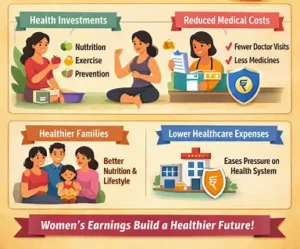
  • Reform reduced mandatory PF contributions for newly employed women from 12% → 8% for first 3 years.
  • Result: Higher takehome pay without change in gross wages.
  • Findings:
    • Femaleled households cut healthcare spending by ~11.6%.
    • Less on medicines/doctors, more on nutrition and fitness.
    • Electronic medical records confirmed lower expenditure even among women already accessing healthcare.
Linking Womens Income and Healthcare

Behavioural Insights

  • Women reorganise household priorities to reduce future health risks.
    • Esther Duflo & Abhijit Banerjee: Transfers to women → higher spending on education, nutrition, child welfare.
    • Banerjee & Niehaus: Identity of income recipient shapes household resource allocation.
  • New extension: Women’s incomes influence preventive healthcare choices.

Why This Matters for India

  • Demographic dividend: Jobs for women must translate into healthier families.
  • Policy linkages: Employment policy = health policy.
  • Outofpocket expenditure: Still high in India; preventive investments can reduce future medical costs.
  • Development strategy: Aligns with India’s emphasis on preventive healthcare and lifestyle improvements (National Health Policy, Fit India Movement).

Conclusion

Empowering women economically is not just a labour market reform  it is one of India’s most powerful investments in public health and family wellbeing.

INDIA’S EV TRANSITION

TOPIC: (GS2) POLITY: THE HINDU

After the West Asian conflict disrupted global oil supply, India’s dependence on imported crude (≈85%) has renewed focus on energy security. Experts now emphasise vehicle retrofitment — converting existing petrol/diesel vehicles into electric ones — as a key to a circular and inclusive EV transition.

India’s EV Push

  • Government schemes like FAME I & II, PM EDRIVE, and PLI for Advanced Chemistry Cells have accelerated EV adoption.
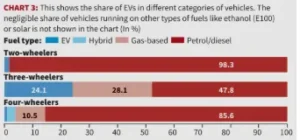
  • EVs now form 8.5% of new vehicle sales (FY2526).
  • Yet, India still has 30 crore Internal Combustion Engine (ICE) vehicles running on imported fuel.

What is Retrofitment

  • Retrofitment means replacing an ICE engine and exhaust with an electric motor, battery pack, and control system.
  • It converts existing vehicles into EVs without discarding the chassis or structure.
  • Fits India’s ethos of reuse and repair, reducing waste and cost.

Economic and Social Rationale

  • Affordable transition: Retrofit kits cost less than buying new EVs or ICE vehicles.
  • Social inclusion: Enables middleclass and rural consumers to join the EV revolution.
  • Employment generation: Creates decentralised jobs for technicians, electricians, battery specialists, and service centres.
  • Circular economy: Extends vehicle life, reduces scrappage, and conserves resources.
Indias EV Transition

Environmental Benefits

  • Reduces carbon emissions and petroleum consumption.
  • Minimises landfill waste from discarded vehicles.
  • Supports India’s NetZero 2070 and National Electric Mobility Mission Plan goals.

Policy and Market Developments

  • FAMEI initially supported retrofitment; later dropped from focus.
  • Madhya Pradesh pioneered a model with:
    • Upfront subsidies.
    • Statewide registration portal.
    • Simplified certification through a single agency.
  • Market confidence rising certified retrofit firms now collaborate with testing agencies, insurers, and financiers.

Way Forward

  • Standardise policies across States.
  • Recognise retrofitted vehicles as financeable assets.
  • Establish safety and certification norms to prevent lowquality conversions.
  • Rationalise GST parity between retrofit kits and EVs.

Conclusion

India’s EV transition must go beyond new sales, retrofitting existing vehicles can democratise clean mobility, strengthen energy security, and build a circular economy.

FOUR STATES PACT ON NARMADA PROJECT

TOPIC: (GS2) POLITY: THE HINDU

The States of Maharashtra, Gujarat, Rajasthan, and Madhya Pradesh have signed a onetime settlement agreement to resolve longpending payment issues under the Narmada Award.

The Narmada Project

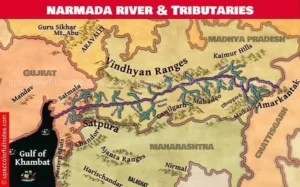
  • Sardar Sarovar Project: A multipurpose dam on the Narmada River, designed for irrigation, drinking water, and hydropower across four States.
  • Narmada Water Dispute Tribunal: Constituted in 1969 under the InterState Water Disputes Act, 1956 to adjudicate sharing of Narmada waters among Madhya Pradesh, Maharashtra, and Gujarat.
  • Award (1979): Allocated water shares and costsharing responsibilities; later extended benefits to Rajasthan.
Four States Pact on Narmada Project

Highlights of the Agreement

  • Signed by: Chief Ministers of the four States in presence of Union Home Minister Amit Shah and Jal Shakti Minister C.R. Patil.
  • Objective: Settlement of pending costsharing payments for the Sardar Sarovar Project through a onetime payment mechanism.
  • Outcome:
    • Longstanding financial disputes resolved amicably.
    • Water and electricity now reaching all beneficiary States.
    • Rajasthan’s irrigated areas witnessing land value rise and farmer prosperity.

Cooperative Federalism in Action

  • Demonstrates CentreState and interState collaboration for equitable resource sharing.
  • Reflects India’s federal spirit — States working together for national welfare beyond regional boundaries.
  • Union Minister emphasised that “water anywhere benefits Indians everywhere.”

Related Developments in WaterSharing

  • Kishau Multipurpose Project: MoU signed among Himachal Pradesh, Uttarakhand, Delhi, Uttar Pradesh, Haryana, and Rajasthan to rejuvenate the Yamuna River.
  • Yamuna Water Project: Agreement between Rajasthan and Haryana (June 2026) resolved a threedecadeold dispute.
  • These examples highlight India’s progress in interState water cooperation.

InterState Water Dispute Mechanisms

Body/Tribunal

Year

States Involved

Key Outcome

Narmada Tribunal

1969

MP, Maharashtra, Gujarat

Water allocation & cost sharing

Krishna Tribunal

1969, 2004

Maharashtra, Karnataka, AP

Revised water shares

Cauvery Tribunal

1990

Karnataka, Tamil Nadu, Kerala, Puducherry

Final award in 2018

Godavari Tribunal

1969

Maharashtra, AP, MP, Odisha

Basinwise allocation

Conclusion

The Narmada payment pact exemplifies cooperative federalism in practice, ensuring shared prosperity through consensusbased water management — a model for resolving future interState resource disputes.


WHATSAPP USERNAME DEBATE AND INFORMATIONAL PRIVACY

TOPIC: (GS2) POLITY: THE HINDU

The Centre has raised concerns over WhatsApp’s proposed username feature, fearing risks of impersonation and cybercrime, while WhatsApp claims it enhances user privacy by masking phone numbers.

Constitutional Context

  • Justice K.S. Puttaswamy case (2017): Supreme Court recognised informational privacy as part of Article 21 (Right to Life & Liberty).
  • Privacy threats can arise from both state and nonstate actors.
  • Any restriction on privacy must meet the test of proportionality — fair law, legitimate aim, least restrictive means.

WhatsApp’s Position

  • Username feature prevents exposure of phone numbers to strangers.
  • Claimed to strengthen privacy in digital interactions.

Government’s Concerns

  • MeitY flagged risks:
    • Phishing, fraud, impersonation.
    • Digital arrest scams and spoofing of officials, banks, and institutions.
  • Argues that usernames resembling genuine entities could mislead users.
  • Sees intervention as part of national security and public welfare mandate.

Judicial Balancing of Liberty and Security

  • Anuradha Bhasin case (2020): Court asked whether liberty or security should prevail.
  • Stressed need for balanced approach — neither extreme should compromise the other.
  • Recognised that cyber threats can destabilise financial systems and governance.

Analytical Dimensions

  • Technology vs Regulation: Innovation must align with legal safeguards.
  • User Autonomy: Optional features should not be curtailed without statutory backing.
  • Cybersecurity: India’s rising digital economy requires robust frameworks against impersonation and fraud.
  • Cooperative Governance: Dialogue between platforms and regulators is essential to balance privacy rights with security imperatives.

Conclusion

The WhatsApp username debate highlights India’s challenge of balancing privacy and security in the digital age, reaffirming that informational privacy is fundamental but must coexist with national safety concerns.

Write a Review

Your email address will not be published. Required fields are marked *

Seraphinite AcceleratorOptimized by Seraphinite Accelerator
Turns on site high speed to be attractive for people and search engines.