

...
Daily Current affairs 06 July 2026

Daily Current Affairs 06-July-2026

Share this Post

GOVT. NOTICE TO META ON CHILD SEXUAL ABUSE ADS

TOPIC: (GS2) POLITY: THE HINDU

The Ministry of Electronics and IT (MeitY) has issued a notice to Meta (Instagram) directing it to disable advertisements promoting child sexual abuse material (CSEAM) and to submit an explanation within seven days.

Key Developments

  • BBC Investigation: Found Instagram ads linking users to Telegram channels selling exploitative content.
  • Government Action: IT Minister Ashwini Vaishnaw directed officials to issue notice; Meta must respond within 7 days.
  • Meta’s Response: Claimed zero tolerance policy, use of detection technology, but admitted criminals exploit loopholes among billions of users.

Meta’s Advertisement Policy

  • Ads must comply with Community Standards on adult nudity and sexual activity.
  • Explicit or sexually suggestive imagery is prohibited.
  • Additional restrictions apply beyond community standards to prevent misuse.

Legal Framework in India

  • IT Act, 2000: Provides punishment for publishing/transmitting obscene or sexually explicit material; stricter penalties for child sexual content.
  • IT Rules, 2021: Intermediaries must remove such content within 24 hours or lose safe harbour protections.
  • National Cyber Crime Reporting Portal: Operated by Ministry of Home Affairs for complaints, with focus on crimes against children.
  • Indian Cyber Crime Coordination Centre (I4C): Established to coordinate and strengthen response to cybercrimes.

Broader Implications

  • Highlights challenges of regulating global tech platforms in India.
  • Raises concerns about algorithmic loopholes and ad moderation failures.
  • Demonstrates government’s increasing reliance on legal provisions and IT Rules to hold intermediaries accountable.
  • Reflects global debates on child safety online, requiring cooperation between governments, tech firms, and civil society.

way forward

  • Strengthen Laws: Update IT Act, 2000 with stricter penalties for child sexual abuse material.
  • Strict IT Rules: Enforce 2021 guidelines requiring removal of flagged content within 24 hours.
  • Safe Harbour Accountability: Withdraw immunity if platforms fail to observe due diligence.
  • Dedicated Agencies: Strengthen I4C and cybercrime cells for monitoring.
  • AI Detection: Use machine learning to identify explicit or exploitative content.
  • Proactive Monitoring: Automated scanning of ads, hashtags, and groups.
  • CrossPlatform Tracking: Integrate detection across apps to stop migration of harmful content.

Conclusion

The notice to Meta underscores India’s resolve to enforce strict accountability on digital platforms for child safety, ensuring that technology does not become a tool for exploitation.

THE RIGHT TO BELONG BEYOND DOCUMENTS

TOPIC: (GS2) POLITY: THE HINDU

The Ministry of External Affairs (MEA) recently clarified that the passport is only a travel document, not proof of citizenship, sparking debate amidst ongoing electoral roll revisions and recent Supreme Court rulings on citizenship.

Citizenship Debate in India

  • Passport Clarification: The Ministry of External Affairs (MEA) stated that the passport is only a travel document, not proof of citizenship, raising doubts about what constitutes valid evidence of belonging.
  • Electoral Roll Revision: The Election Commission of India (ECI) is conducting Special Intensive Revision (SIR) in multiple States to verify voter eligibility, sparking concerns about exclusion and bureaucratic hurdles.
  • Supreme Court Rulings: Between 2024–2026, the Supreme Court upheld the ECI’s limited power to scrutinize citizenship in cases related to the Assam Accord and Bihar SIR, reinforcing Parliament’s wide authority under Article 11.
  • Citizenship Amendment Act, 2019: Operational from 2024, the Act altered naturalisation rules along religious lines, intensifying debates on secularism, equality, and the meaning of belonging in India.

Constitutional Foundations

  • Articles 5–11: Defined citizenship at the time of Partition.
  • Article 11: Gave Parliament power to legislate on citizenship, but debates in the Constituent Assembly stressed secularism and equality.
  • Rejected Proposal (P.S. Deshmukh): Citizenship based on religion was opposed by Nehru, Ambedkar, and Alladi Krishnaswami Ayyar, affirming secular principles.
  • Principle of Jus Soli: Initially adopted (citizenship by birth/residence), later diluted through amendments.

Legislative Changes

  • 1955 Citizenship Act: Based on jus soli.
  • 1985 Assam Accord (Section 6A): Citizenship linked to dates of migration.
  • 2003 Amendment: Denied citizenship to children born in India if one parent was an “illegal migrant.”
  • 2019 Amendment: Religion introduced as a criterion for naturalisation.

Supreme Court’s Stand

  • Sarbananda Sonowal Case (2005): Migration into Assam termed “external aggression.”
  • October 2024 Judgment: Upheld Section 6A, gave Parliament wide powers under Article 11.
  • May 2026 Judgment (ADR vs Union of India): Allowed ECI to verify citizenship for electoral rolls, but final decision rests with competent authority.

Challenges

  • Burden of Proof: Shifted onto individuals; documents like Aadhaar, voter ID, and passport deemed insufficient.
  • Assam NRC Experience: Citizens marked “doubtful,” trapped in bureaucratic tribunals.
  • Risk: People left in limbo—neither confirmed citizens nor declared foreigners.

Personhood and Rights

  • Article 14 & 21: Guarantee equality and liberty to all persons.
  • Article 19: Rights reserved for citizens (speech, trade, assembly).
  • Voting Rights: Citizenship ensures participation in democracy.
  • Philosophical Dimension: Hannah Arendt’s idea of “the right to have rights” highlights the danger of exclusion based on paperwork.

Conclusion

Citizenship in India must rest on constitutional values of equality and secularism, not the accident of documents, ensuring that every individual retains the “right to have rights.”

INDIA’S RESILIENCE IN UNCERTAIN TIMES

TOPIC: (GS2) INTERNATIONAL RELATIONS: THE HINDU

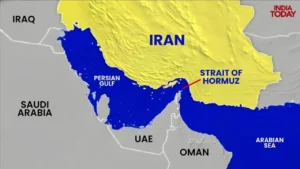
India’s swift and coordinated response to disruptions in the Strait of Hormuz, a vital global oil route, demonstrated its growing ability to manage external shocks and maintain energy security and economic stability.

Strategic Importance of Hormuz

  • Critical Maritime Route: Nearly 20% of global oil trade passes through Hormuz, making India highly vulnerable as it imports ~90% of crude oil.
  • Shipping Challenges: Rising freight costs, insurance premiums, and vessel delays disrupted trade.
  • Government Response: Indian authorities coordinated with shipping firms, diplomats, and maritime agencies to ensure safe passage of vessels and protection of crew.
Indias Resilience in Uncertain Times

Economic Stability Under Pressure

  • Inflation Control: Despite global crude volatility, inflation stayed within RBI’s target band.
  • Growth Momentum: India remained the fastest-growing major economy, supported by domestic demand, public investment, and manufacturing.
  • Fuel Price Management: Calibrated policies prevented sharp retail fuel price hikes, unlike many countries facing shortages.

Energy Management Strategy

  • Whole-of-Government Approach: Ministries, states, oil companies, and industry worked in coordination to ensure uninterrupted supplies.
  • Gas Infrastructure Expansion: City Gas Distribution network grew from 55 areas in 2014 to over 300 by 2026.
  • Export Resilience: Targeted support (liquidity, logistics facilitation, customs simplification) helped exports grow 16% in Apr–May FY27 despite shipping disruptions.

Role of RBI

  • Financial Stability: Maintained liquidity and ensured smooth functioning of markets.
  • Forex Measures: Introduced swap facilities, eased rules for NRI deposits, rationalised FPI taxes.
  • Banking Strength: Well-capitalised banks supported external sector resilience.

India’s Preparedness

  • Infrastructure Investment: Expanded refining capacity, strategic reserves, and logistics networks.
  • Diversified Supply Chains: Reduced dependence on single regions.
  • Policy Foresight: Built resilience through long-term planning, not just emergency response.
  • Clean Energy Transition: Accelerated adoption of renewables, strengthening sustainability.

Conclusion

India’s handling of the Hormuz crisis proves that resilience is not built overnight but through years of investment, diversification, and institutional coordination, positioning the nation strongly for Viksit Bharat 2047.

INDIA NEEDS A SECOND HOME FOR ASIATIC LIONS

TOPIC: (GS2) INTERNATIONAL RELATIONS: THE HINDU

Despite the Asiatic lion population rising to ~891 in Gir forest, experts and the Supreme Court have warned that the absence of a second geographically separate habitat leaves the species vulnerable to extinction from epidemics or disasters.

Asiatic Lions

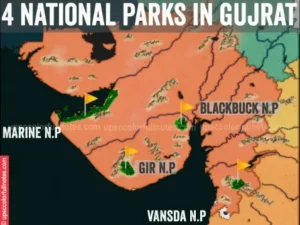
  • The Asiatic lion (Panthera leo persica) is the only wild lion population outside Africa, found exclusively in Gujarat’s Gir landscape.
  • While their numbers have risen to about 891 in 2025–26, experts and the Supreme Court warn that concentrating the entire global population in one region makes them highly vulnerable to disease, disasters, and human conflict.

Why Asiatic lions live only in Gir:

  • Historical Decline: Once spread across West Asia and northern India, excessive hunting during colonial times reduced their numbers to a few dozen, confined to Gir by the early 20th century.
  • Ecological Suitability: Gir forest provides dry deciduous habitat, abundant prey (chital, nilgai, wild boar), and water sources, making it ideal for lions’ survival.
  • Conservation Efforts: Gir was declared a sanctuary in 1965 and later a national park, with focused protection measures that helped the population recover.
  • State Resistance to Translocation: Despite Supreme Court’s 2013 directive to move lions to Kuno National Park (Madhya Pradesh), Gujarat resisted relocation, keeping the entire population concentrated in Gir.
India Needs a Second Home For Asiatic Lions

Scientific Concerns

  • Single Population Risk: Wildlife Institute of India studies since the 1980s highlight dangers of concentrating all lions in one landscape.
  • Disease Outbreaks: The 2018 Canine Distemper Virus outbreak killed several lions, showing vulnerability of dense populations with limited genetic diversity.
  • Metapopulation Approach: Conservation science recommends distributing species across multiple habitats to reduce extinction risk.

Judicial Mandates

  • Supreme Court Judgment, 2013: Directed translocation of lions from Gir (Gujarat) to Kuno National Park (Madhya Pradesh).
  • Court stressed that lions are national heritage, not the property of one State, and ecological principles must guide conservation.

Policy and Governance Challenges

  • State Resistance: Gujarat opposed relocation, citing conservation success and doubts about habitat suitability elsewhere.
  • Prepared Habitat: Villages relocated and habitat restored in Kuno, yet no lions introduced.
  • Project Lion, 2020: Proposed expansion of lion habitats, including Barda Wildlife Sanctuary in Gujarat, but experts argue proximity to Gir does not diversify risk.
  • Governance Tension: Wildlife is a shared responsibility under the Constitution, but regional identity and politics hinder national conservation priorities.

CONSERVATION STATUS

  • IUCN Red List: Vulnerable.
  • Wildlife Protection Act, 1972: Schedule I species (highest protection).
  • CITES: Appendix I.
  • Population Growth: From a few dozen in the early 20th century to ~891 in 2025, a 32% increase since 2020.

Conclusion

India’s Asiatic lion story shows that true conservation success lies not just in increasing numbers but in ensuring resilience through a second secure habitat.

SYAMA PRASAD MOOKERJEE

TOPIC: (GS1) INDIAN ART AND CULTURE: THE HINDU

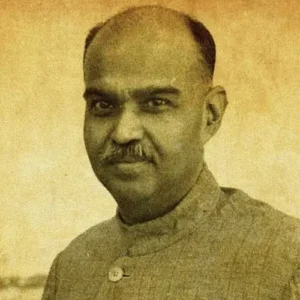
On his 125th birth anniversary, Prime Minister Narendra Modi paid tribute to Syama Prasad Mookerjee, calling him a “champion of national unity” and highlighting his role in India’s political and industrial development.

Early Life & Background

  • Born in 1901, son of renowned educationist Ashutosh Mookerjee.
  • Became the youngest Vice-Chancellor of Calcutta University, introducing reforms with a patriotic vision.
  • Despite personal tragedies, chose a life of public service and sacrifice.
Syama Prasad Mookerjee

Political Contributions

  • Minister for Industry & Supply: Laid foundations of modern industry through projects like Damodar Valley Corporation and Sindri Fertilizer Plant, while supporting handlooms and cottage industries.
  • Founder of Bharatiya Jana Sangh, 1951: Offered an alternative voice to Congress, rooted in cultural identity and nationalism.
  • Role in Partition: Ensured West Bengal remained part of India.
  • Jammu & Kashmir: Opposed special status; died in detention in 1953 while protesting against separate arrangements for J&K.

Ideological Stance

  • Advocated national unity, secular integrity, and self-reliance.
  • Critic of First Constitutional Amendment (1951), warning against curbs on free speech.
  • His vision later echoed in the revocation of Articles 370 & 35A (2019), seen as a tribute to his struggle.

Legacy & Relevance

  • Remembered as a nationalist leader, educationist, and institution builder.
  • Embodied India’s civilizational values and democratic spirit of dialogue.
  • His ideals remain relevant in debates on unity, governance, and industrial self-reliance.

Conclusion

Syama Prasad Mookerjee’s life shows that true leadership lies in sacrifice and conviction for national unity, making him a lasting figure in India’s political and cultural history.

RUTILE

TOPIC: (GS3) SCIENCE AND TECHNOLOGY: THE HINDU

Researchers at IIT-Delhi recently studied rutile oxides and found differences between metals and insulators that existing mathematical models could not explain, highlighting rutile’s scientific significance.

Rutile

  • Composition: Primarily titanium dioxide (TiO₂), most stable natural form of titanium.
  • Appearance: Red to reddish-brown, metallic luster, slender crystals.
  • Impurities: Can contain iron, niobium, and tantalum.
  • History: First described in 1803 by Abraham Gottlob Werner.

Occurrence

  • Found in igneous, metamorphic, and sedimentary rocks worldwide.
  • Concentrated in heavy mineral sands by stream and wave action.
  • Major producers: Australia, India, South Africa, Ukraine, Sierra Leone.
  • In India, deposits occur in Kerala, Tamil Nadu, Odisha, Andhra Pradesh coastal sands.

Uses

  • Pigments: Bright white color, opacity in paints, plastics, ceramics.
  • Metallurgy: Source of titanium metal for aerospace, automotive, electronics, medical devices.
  • Traditional Industries: Used in porcelain, glass, and alloys.
  • Gemstone: Transparent rutile crystals polished for jewelry.

Conclusion

Rutile is not just a mineral but a strategic resource for India’s industry and science, making its conservation and utilization vital for national growth.

MATCHA TEA

TOPIC: (GS3) ECONOMY: THE HINDU

An Assam tea estate has produced and sold India’s first commercially available matcha tea, marking a diversification of India’s tea industry into premium global markets.

Matcha Tea

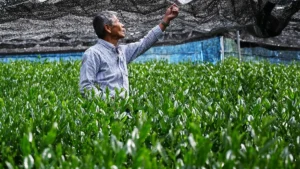
  • Definition: Finely ground powder of shadegrown green tea leaves (Camellia sinensis).
  • Origin: Developed in Japan after Zen Buddhist monks introduced powdered tea practices from China.
  • Production Process:
    • Tea bushes shaded for 3–4 weeks (90% sunlight blocked).
    • Boosts chlorophyll and amino acids → bright green color and umami taste.
    • Leaves steamed, dried, destemmed into tencha, then stoneground into fine powder.
  • Consumption: Unlike regular tea, matcha is whisked into water and consumed entirely, giving higher antioxidants, amino acids, and natural caffeine.
Matcha Tea

Nutritional & Cultural Significance

  • Rich in catechins (antioxidants), supports metabolism and immunity.
  • Provides calm alertness due to Ltheanine + caffeine balance.
  • Integral to Japanese tea ceremonies, symbolizing mindfulness and discipline.
  • Now entering Indian markets, diversifying beyond black and orthodox teas.

Economic & Policy Dimensions

  • Tea Industry Diversification: India traditionally exports black tea; matcha opens niche premium segments.
  • Global Demand: Rising popularity in wellness, fitness, and gourmet sectors.
  • AgriInnovation: Supports farmers with new valueadded products.

Conclusion

India’s entry into matcha production shows how innovation in traditional crops can unlock global opportunities, blending heritage with modern wellness trends.


MODIFIED UDAN SCHEME

TOPIC: (GS2) POLITY: THE HINDU

The Prime Minister inaugurated the new terminal at Jodhpur airport and launched the Modified UDAN Scheme, marking a major step in expanding aviation-led regional development.

Modified UDAN Scheme

  • Funding: ₹28,840 crore allocated for 10 years.
  • Aerodromes: Development of 100 aerodromes from unserved airstrips with ₹12,000 crore outlay.
  • O&M Support: ₹2,500 crore for operations and maintenance to ensure viability of regional airports.
  • Helipads: ₹3,661 crore for 200 modern helipads to improve connectivity in remote areas.
  • Viability Gap Funding: ₹10,043 crore to sustain regional airline operations.
  • Indigenous Aircraft: Promotes HAL Dhruv helicopters and Dornier aircraft for underserved regions.

Original UDAN Scheme (2016)

  • Objective: Affordable air travel for common citizens, connect Tier2 & Tier3 cities, revive unused airports.
  • First Flight: Delhi–Shimla (April 2017).
  • Key Features:
    • Competitive bidding for airlines.
    • 50% seats capped at ₹2,500 per hour of flight.
    • VGF support, waived airport fees, state support for utilities.
  • Phases:
    • UDAN 1.0 (2017): 128 routes awarded.
    • UDAN 2.0 (2018): Focus on NorthEast, hill states, islands; helicopter routes.
    • UDAN 3.0 (2018–19): Tourism routes, seaplanes, limited international links.
    • UDAN 4.0 (2020): Remote areas, water aerodromes.
    • UDAN 5.0 onwards: Longer routes, helicopter subschemes (Sagarmala Seaplane, Krishi UDAN).

Conclusion

The Modified UDAN Scheme reflects India’s vision of inclusive growth through aviation connectivity, ensuring that air travel becomes a driver of balanced regional development.

Write a Review

Your email address will not be published. Required fields are marked *

Seraphinite AcceleratorOptimized by Seraphinite Accelerator
Turns on site high speed to be attractive for people and search engines.