Table of Contents
ToggleIntegrated Theatre Commands in India
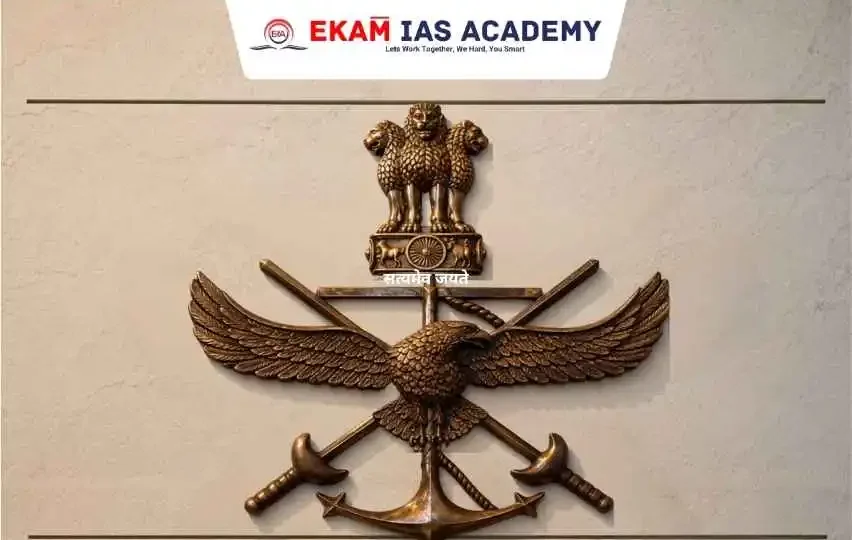
The landscape of modern warfare demands absolute synergy among military wings. In this context, Integrated Theatre Commands (ITCs) represent the most ambitious chapter of Defence Reforms and Military Modernization in independent India.
Evolution of Theatre Commands in India
The need for restructuring India’s military architecture became starkly evident during the 1999 Kargil War. The Kargil Review Committee and the subsequent Group of Ministers (GoM) report highlighted critical gaps in inter-service coordination.
While the establishment of the Andaman and Nicobar Command (ANC) in 2001 as India’s first tri-service command was a major step forward, the broader transition toward Theatre Commands in India remained slow. The momentum accelerated significantly following the recommendations of the Lt. Gen. Shekatkar Committee, which directly led to the historic creation of the post of Chief of Defence Staff (CDS) and the establishment of the Department of Military Affairs (DMA) in 2020.
What are Integrated Theatre Commands?
An Integrated Theatre Command is a unified military structure that places all assets of the Army, Navy, and Air Force within a specific geographical theater under a single operational commander.
Currently, India operates with 17 separate single-service commands (Army 7, Air Force 7, Navy 3), which often leads to duplicate logistics and overlapping command lines. ITCs replace this fragmented setup with unified Joint Military Commands, ensuring that rather than fighting isolated battles, the three forces pool their combat power to achieve a single, coordinated strategic objective.
Proposed Theatre Command Structure in India
The restructuring plan aims to streamline India’s defense assets into focused geographical commands. By 2026, the blueprint has moved closer to implementation, organizing the armed forces into three primary theatre commands:
| Command | Headquarters | Primary Focus |
|---|---|---|
| Maritime Theatre Command | Karwar | Peninsular & Indian Ocean Security |
| Western Theatre Command | Jaipur | Western Borders |
| Eastern Theatre Command | Lucknow | Northern Borders |
- Maritime Theatre Command: Expected to be headquartered in Karwar, combining naval assets, coastal air squadrons, and amphibious army elements to secure the Indian Ocean Region.
- Western Theatre Command: Planned to be based in Jaipur, integrating land and air assets to handle security threats along the western borders.
- Eastern Theatre Command: Scheduled to be located in Lucknow, focused entirely on countering northern border security challenges.
Need, Objectives, and Advantages of ITCs
- Optimal Resource Utilization: Avoids expensive asset duplication. Instead of maintaining distinct logistics, medical, and repair networks for each service, ITCs consolidate them into a unified system.
- Synergized Doctrine: Combines the unique advantages of air power, ground forces, and maritime maneuvers into a single, cohesive military strategy.
- Swift Decision Making: Eliminates administrative delays by placing the decision-making authority with a single Theatre Commander, who reports directly to the political leadership through the CDS.
Challenges in Implementation & International Models
Transitioning to this new structure involves navigating several institutional challenges:
- Inter-Service Dissension: Overcoming historical service-specific cultures and aligning priorities between the Army, Navy, and Air Force requires significant effort.
- Air Asset Allocation: The Indian Air Force (IAF) has raised concerns that dividing its limited fighter squadrons among specific geographical commands could limit its ability to rapidly shift air power across different fronts.
- Infrastructure Costs: Establishing the communication systems and digital infrastructure needed for smooth tri-service operations requires substantial budgetary support.
Globally, major military powers operate on unified command models. The United States uses its Unified Combatant Commands (e.g., INDOPACOM), and China reorganized its military into five highly integrated Theatre Commands under the People’s Liberation Army (PLA) to build a leaner, combat-ready force.
Government Initiatives, Recent Developments, and Way Forward
The Union Government has taken several steps to operationalize this new structure. The Department of Military Affairs (DMA), led by the Chief of Defence Staff (CDS), has actively revised joint operational doctrines. A key legislative milestone was reached with the passage of the Inter-Services Organisations (Command, Control and Discipline) Act, which empowers commander-in-chiefs to maintain administrative and disciplinary control over personnel from all three services serving under them.
To ensure a smooth transition, the military is taking a phased approach, starting with integrated logistics nodes and joint training programs to build an institutional culture of cooperation.
Conclusion
Integrated Theatre Commands represent a vital evolution for India’s national security architecture. By moving away from legacy single-service silos, ITCs ensure that the Indian Armed Forces operate as a unified, modern fighting force. Successfully executing these Defence Reforms will be essential to protecting India’s sovereignty against modern, complex security threats.
UPSC Prelims: PYQs & Practice Questions
Previous Year Questions (Prelims)
Q: With reference to the higher defence management architecture in India, consider the following statements:
1. The Chief of Defence Staff (CDS) functions as the permanent Chairman of the Chiefs of Staff Committee (CoSC).
2. The Department of Military Affairs (DMA) created within the Ministry of Defence is headed by the Union Defence Minister.
Which of the statements given above is/are correct?
(a) 1 only
(b) 2 only
(c) Both 1 and 2
(d) Neither 1 nor 2
Answer: (a) 1 only
UPSC Equivalent Base Year: 2020 | Theme: Higher Defence Reforms
Explanation:
Statement 1 is correct. The CDS serves as the permanent Chairman of the Chiefs of Staff Committee (CoSC) and acts as the principal military advisor to the Union Defence Minister.
Statement 2 is incorrect. The Department of Military Affairs (DMA) is headed by the Chief of Defence Staff (CDS) as its Secretary, not by the Union Defence Minister.
Q: Which of the following is India’s first and only fully operational tri-service theatre command, managing vital maritime choke points and island security?
(a) Strategic Forces Command (SFC)
(b) Western Naval Command
(c) Andaman and Nicobar Command (ANC)
(d) Armed Forces Special Operations Division
Answer: (c) Andaman and Nicobar Command (ANC)
UPSC Equivalent Base Year: 2015 / 2017 | Theme: Joint Military Architecture
Explanation:
The Andaman and Nicobar Command (ANC), established in 2001, is a unified tri-service command based in Port Blair. It integrates components of the Army, Navy, and Air Force, serving as the blueprint for Theatre Commands in India.

Practice Questions
Q: Consider the following statements regarding the proposed Integrated Theatre Commands (ITCs) in India:
1. Under the new model, theatre commanders will report directly to their respective single-service chiefs for operational instructions.
2. The Inter-Services Organisations (Command, Control and Discipline) Act empowers commanders of joint forces to exercise administrative and disciplinary control over personnel from different services serving under them.
Which of the statements given above is/are correct?
(a) 1 only
(b) 2 only
(c) Both 1 and 2
(d) Neither 1 nor 2
Answer: (b) 2 only
Explanation:
Statement 1 is incorrect. In the upcoming ITC model, individual service chiefs will focus primarily on administrative tasks, training, and recruitment. Theatre commanders will report directly through the CDS to the political executive.
Statement 2 is correct. Previously, single-service laws limited the disciplinary power that a commander from one service could hold over personnel from another. The Inter-Services Organisations Act legally resolves this administrative hurdle.
Q: The Lieutenant General Shekatkar Committee report is frequently mentioned in the news in the context of:
(a) Streamlining the intelligence sharing network across borders
(b) Implementing combat capability optimization and structural defence reforms
(c) Regulating space weaponization and cyber security command structures
(d) Reforming the direct recruitment of Central Armed Police Forces (CAPFs)
Answer: (b) Implementing combat capability optimization and structural defence reforms
Explanation:
The Shekatkar Committee recommendations focused on enhancing combat capabilities and balancing defence spending. These reforms provided the strategic groundwork for creating the office of the Chief of Defence Staff (CDS) and moving toward Military Modernization through Integrated Theatre Commands.
UPSC Mains – Previous Year & Practice Questions
Mains Previous Year Questions
UPSC CSE 2024 | GS-3
Question: Analyze the role of the Chief of Defence Staff (CDS) in achieving inter-service integration and modernization in India's armed forces.
Marks: 10 Marks | Word Limit: 150 Words
UPSC CSE 2023 | GS-3
Question: What are the internal and external security challenges confronting India? Evaluate how structural reorganization within the armed forces can help address these threats.
Marks: 15 Marks | Word Limit: 250 Words
UPSC CSE 2020 | GS-3
Question: Electronic warfare and joint planning are critical to modern combat. Discuss the challenges of managing inter-service coordination during high-intensity conflict scenarios.
Marks: 10 Marks | Word Limit: 150 Words
UPSC CSE 2019 | GS-3
Question: Assess the mandate of India's higher defense architecture. To what extent has the lack of unified commands affected the rapid deployment of resources in past operations?
Marks: 15 Marks | Word Limit: 250 Words
UPSC CSE 2017 | GS-3
Question: The security dynamics of the Indian Ocean Region require a shift from isolated service approaches to combined theater strategies. Elaborate.
Marks: 15 Marks | Word Limit: 250 Words
Mains Practice Questions
Question: “Transitioning from single-service commands to Integrated Theatre Commands is a vital structural reform for India's national security, but it requires overcoming deep-rooted institutional cultures.” Analyze.
Question: “The geopolitical realities of two-front threats and a highly competitive Indian Ocean Region necessitate the creation of specialized theater structures.” Evaluate the proposed architecture of India's Integrated Theatre Commands.
Question: “Examine how global models of theater commands can inform India's military restructuring, while keeping in mind the country's unique operational requirements.”


Integrated Theatre Commands-FAQs
What are Integrated Theatre Commands?
Integrated Theatre Commands are unified military commands where Army, Navy and Air Force assets are placed under one operational commander for a specific geographical theatre.
Why does India need Theatre Commands?
India needs Theatre Commands to improve jointness, reduce duplication, speed up decision-making and ensure better coordination among the three services.
Which was India’s first tri-service command?
The Andaman and Nicobar Command, established in 2001, was India’s first tri-service command.
What is the role of CDS in Theatre Commands?
The Chief of Defence Staff plays a key role in promoting jointness, coordinating defence reforms and guiding the transition toward integrated military structures.
Why are Integrated Theatre Commands important for UPSC GS 3?
They are important for GS 3 because they connect national security, defence reforms, military modernization, border management and India’s preparedness for modern warfare.