

Table of Contents
ToggleHIGH-POWERED TASK FORCE ON EXAM REFORMS
TOPIC: (GS2) POLITY: THE HINDU
The Government has formed a high-powered task force on examination reforms, led by Infosys co-founder Nandan Nilekani, to strengthen transparency and dependability in the National Testing Agency (NTA).
Background
- Recent controversies like NEET paper leaks and irregularities in NTA exams triggered widespread protests.
- Prime Minister Narendra Modi announced reforms to restore student trust and institutional credibility.
- Committees are often used in governance to provide expert recommendations and ensure accountability.
- The committee includes top officials from ISRO, IITs, Education Ministry, and retired civil servants, reflecting a multidisciplinary approach.
What are Committees?
- Committees are formal groups of experts or officials set up to study issues and recommend solutions.
- They can be parliamentary committees (like Public Accounts Committee) or executive committees (task forces, commissions).
- Their role is to provide specialized knowledge, independent review, and policy guidance.
- Example: The Kothari Commission (1964–66) shaped India’s education policy by recommending 6% of GDP for education.
Nandan Nilekani Committee on Exam Reforms
- Chairperson: Nandan Nilekani, known for leading Aadhaar project and digital governance initiatives.
- Members:
- S. Somanath (ISRO Chairman) – expertise in technology and systems reliability.
- Directors of IIT Bombay & IIT Madras – academic and technical perspectives.
- Education Secretary Atul Kumar Tiwari – administrative coordination.
- Retired IAS Amarjit Singh – governance and policy experience.
- Mandate:
- Strengthen information security and digital monitoring in exams.
- Ensure multidisciplinary reforms covering technology, policy, and structure.
- Recommend fast-track mechanisms for handling exam malpractice cases.
Broader Implications
- Technology Integration: AI-based monitoring, secure digital platforms, and forensic audits.
- Governance Accountability: Clearer rules for NTA functioning and recruitment transparency.
- Student Confidence: Restoring trust in exams like NEET, JEE, and CUET.
- Global Benchmarking: Similar to reforms in ETS (USA) which conducts SAT/TOEFL with strong psychometric standards.
Conclusion:
The Nandan Nilekani-led committee reflects India’s resolve that credible examinations require expert-driven reforms, technological safeguards, and strong governance to uphold fairness.
INDUS WATERS TREATY AND INDIA’S CONCERNS
TOPIC: (GS2) POLITY: THE HINDU
India and Pakistan are facing renewed tensions over the Indus Waters Treaty (IWT) due to climate change, rising water demand, and reservoir management issues.
Background
- The IWT was signed in 1960 with World Bank mediation.
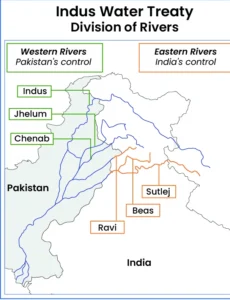
- It divided river usage: Eastern Rivers (Ravi, Beas, Sutlej) for India, Western Rivers (Indus, Jhelum, Chenab) for Pakistan.
- The treaty reflected 1950s hydrological realities, but today India’s population and water needs have multiplied.
New Hydrological Realities
- Population Growth: India’s demand for drinking water, irrigation, and industry has surged.
- Groundwater Decline: Punjab, Haryana, and Rajasthan face severe depletion, increasing reliance on river systems.
- Climate Change: Erratic rainfall, glacial melt, and rising temperatures alter river flows.
- Example: NITI Aayog’s 2025 report warned that 21 major Indian cities may face severe water scarcity by 2030.
Reservoir Management Issues
- India cannot freely use sediment flushing and low-level outlets due to treaty restrictions.
- These are internationally accepted engineering practices but limited under IWT.
- Sediment accumulation reduces reservoir capacity, affecting hydropower and irrigation.
- Case: Salal Dam on Chenab faced operational challenges due to sedimentation.
Geopolitical Dimensions
- Pakistan often raises objections to India’s dam projects, citing treaty violations.
- India argues for modernization of treaty provisions to reflect current realities.
- Water disputes add to broader India–Pakistan tensions, linking environment with geopolitics.
- Example: Kishanganga and Ratle projects faced objections from Pakistan at international forums.
Way Forward
- Treaty Review: Update IWT to include climate change and modern engineering practices.
- Integrated Basin Management: Joint monitoring of flows, sediment, and groundwater.
- Technology Use: Satellite data, AI-based hydrological forecasting, and smart irrigation.
- Regional Cooperation: South Asian nations must treat water as a shared resource, not a conflict trigger.
Conclusion:
The Indus Waters Treaty, once a model of cooperation, now requires modern reforms to balance environmental sustainability, technological needs, and geopolitical realities.
ASSAM FLOODS 2026 AND GOVERNANCE DIMENSIONS
TOPIC: (GS3) ENVIRONMENT: THE HINDU
Assam is facing unprecedented floods in 2026, with over 66 deaths in a week and millions displaced across 31 districts.
Background
- Assam’s geography, with the Brahmaputra and Barak river basins, makes it naturally flood-prone.
- Annual monsoon floods are common, but this year’s intensity is linked to extreme weather events.
- Upper Assam districts like Sivasagar, Charaideo, and Jorhat are among the worst affected.
Causes of Flooding
- Climate Change: Rising frequency of high-intensity rainfall and cloudbursts.
- Geography: Brahmaputra’s braided channels and low-lying floodplains increase vulnerability.
- Deforestation & Encroachment: Human activity reduces natural flood absorption capacity.
- Dam Management Issues: Sudden water releases from upstream reservoirs worsen flooding.
- Example: The IPCC Report (2023) noted that South Asia will face more extreme rainfall events due to global warming.
Impact
- Humanitarian Crisis: Over 7 lakh people displaced, loss of lives and livelihoods.
- Agriculture Damage: Crops submerged, affecting food security and rural economy.
- Infrastructure Loss: Roads, bridges, and houses destroyed, slowing economic recovery.
- Health Risks: Waterborne diseases and lack of sanitation in relief camps.
Government Response
- Rescue Operations: NDRF, SDRF, and Army deployed for evacuation.
- Relief Measures: Temporary shelters, food distribution, and medical aid.
- Policy Initiatives: Assam State Disaster Management Authority (ASDMA) coordinating efforts.
- Example: Similar large-scale relief was mobilized during the Kerala floods (2018).
Broader Dimensions
- Environmental: Need for afforestation and wetland conservation.
- Technological: Use of satellite data and flood forecasting models for early warning.
- Governance: Integration of flood management with climate adaptation policies.
- Global Comparison: Countries like Japan use advanced flood control infrastructure (levees, floodways) to minimize damage.
Way Forward
- Strengthen embankments and river basin management.
- Promote community-based disaster preparedness.
- Integrate flood control with National Climate Action Plan.
- Enhance regional cooperation for upstream water management.
Conclusion:
Assam’s floods highlight that climate change, poor planning, and fragile geography together demand urgent reforms in disaster management and sustainable development.
CITIZEN COURAGE FROM RECENT MOVEMENTS
TOPIC: (GS2) POLITY: THE HINDU
Recent editorials highlight how citizen activism and protests in India reflect civic courage rather than passive obedience. The debate links education, governance, and democratic participation, showing how ordinary people shape national politics.
Background
- India’s democracy thrives on active citizen participation beyond elections.
- Movements led by students, workers, and civil society groups have historically influenced governance.
- Example: The JP Movement (1970s) and Anna Hazare’s anti-corruption campaign (2011) reshaped political discourse.
Civic Courage vs. Passive Subjects
- Civic Courage: Citizens act as agents of change, questioning authority and demanding accountability.
- Subjects: Passive acceptance of state decisions without resistance.
- Courage is expressed through protests, petitions, and public debate, strengthening democratic institutions.
- Example: Youth protests against exam irregularities show courage in defending fairness.
Education and Awareness
- Education empowers individuals to think critically and challenge injustice.
- Universities and schools act as breeding grounds for civic consciousness.
- Example: Student movements in Delhi University and JNU have historically influenced national debates.
- NEP 2020 emphasizes holistic learning, which can nurture responsible citizenship.
Governance and Accountability
- Citizen activism pressures governments to deliver better policies.
- Transparency in exams, welfare schemes, and law enforcement often emerges from public demand.
- Example: The Right to Information Act (2005) was a result of grassroots activism led by Mazdoor Kisan Shakti Sangathan.
Broader Implications
- Political Dimension: Strengthens democracy by balancing state power.
- Social Dimension: Encourages inclusivity and representation of marginalized voices.
- Global Comparison: Similar civic courage was seen in Civil Rights Movement (USA) and Hong Kong protests (2019).
- Policy Dimension: Governments must integrate citizen feedback into policymaking to avoid alienation.
Way Forward
- Promote civic education in schools and colleges.
- Strengthen legal protections for peaceful protest under Article 19.
- Encourage dialogue between state and citizens to resolve conflicts.
- Use digital platforms for participatory governance and grievance redressal.
Conclusion:
Citizen courage is the lifeblood of democracy, ensuring that people remain active participants in governance rather than passive subjects.
ANTIBIOTIC USE IN INDIA
TOPIC: (GS2) SOCIAL JUSTICE AND HEALTH: THE HINDU
A global study published in The Lancet Public Health revealed that India’s antibiotic use far exceeds optimal levels, raising concerns about antimicrobial resistance (AMR).
Background
- Antibiotics are medicines used to treat bacterial infections.
- Overuse or misuse leads to antibiotic resistance, where bacteria no longer respond to treatment.
- India is among the largest consumers of antibiotics globally, driven by self-medication, over-prescription, and use in agriculture.
Current Trends
- WHO classifies antibiotics into three groups: Access (safe first-line drugs), Watch (higher risk of resistance), Reserve (last-resort drugs).
- India’s optimal use should be 9.9–14.7 defined daily doses per 1,000 people/day, but actual use is 18.8 doses.
- Stronger medicines are often prescribed even when safer alternatives are sufficient.
- Example: Studies show widespread use of third-generation cephalosporins and fluoroquinolones in routine infections.
Causes of Overuse
- Easy Availability: Antibiotics sold without prescription in pharmacies.
- Medical Practices: Doctors prescribing stronger drugs to ensure quick relief.
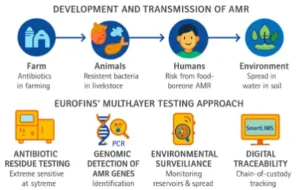
- Agriculture & Animal Husbandry: Antibiotics used to promote growth in livestock.
- Public Awareness: Lack of knowledge about risks of misuse.
Implications
- Health Risks: Rise of drug-resistant infections like multi-drug resistant TB.
- Economic Burden: Longer hospital stays and higher treatment costs.
- Global Threat: Resistant bacteria can spread across borders, undermining global health security.
- Example: WHO estimates AMR could cause 10 million deaths annually worldwide by 2050 if unchecked.
Government Response
- India launched the National Action Plan on AMR (2022–2026) focusing on surveillance, regulation, and awareness.
- Initiatives under National Health Mission (NHM) promote rational drug use.
- Collaboration with ICMR and WHO for monitoring resistance patterns.
- Example: Kerala introduced strict prescription audits to curb misuse in hospitals.
Way Forward
- Enforce prescription-only sales of antibiotics.
- Strengthen hospital infection control and diagnostic facilities.
- Promote public awareness campaigns on responsible medicine use.
- Encourage research in new antibiotics and alternatives.
- Integrate AMR strategy with One Health approach, covering humans, animals, and environment.
Conclusion:
India’s antibiotic challenge shows that restraint, regulation, and awareness are as vital as medicine itself to safeguard future health security.
POLICING PROTESTS IN DEMOCRACIES
TOPIC: (GS2) GOVERNANCE: THE HINDU
Recent debates highlight the role of police in managing protests at places like Jantar Mantar, Delhi, where tear gas and crowd control measures were used. The issue raises questions about civil liberties, law enforcement practices, and democratic accountability.
Background
- Protests are protected under Article 19(1)(b) of the Indian Constitution (right to assemble peacefully).
- However, police are tasked with maintaining public order and safety, often leading to tensions between rights and enforcement.
- Social media has amplified protest mobilization, making crowd management more complex.
Accountability
- Accountability means being answerable and responsible for one’s actions, decisions, or duties.
- It implies that individuals or institutions must justify their conduct and face consequences if they fail to meet expected standards.
Challenges in Policing Protests
- Crowd Control: Large gatherings can quickly turn disorderly, requiring rapid response.
- Civil Liberties: Excessive force undermines democratic values.
- Technology & Surveillance: Monitoring protests through digital tools raises privacy concerns.
- Political Pressure: Police often face conflicting demands from governments and citizens.
- Example: Farmers’ protests (2020–21) showed prolonged standoffs between police and protestors.
Governance and Legal Dimensions
- Legal Framework: Police powers derive from CrPC Sections 129–131 for dispersing unlawful assemblies.
- Judicial Oversight: Courts have emphasized proportionality in use of force.
- Case: In Ramlila Maidan (2012), SC held excessive police action unconstitutional.
- Accountability: Independent inquiries and human rights commissions monitor police conduct.
Global Comparisons
- USA: Police use “First Amendment Audits” to balance free speech with order.
- UK: Public Order Act regulates protests with strict guidelines on police powers.
- Hong Kong (2019): Heavy policing of protests raised global debates on civil rights.
- India’s challenge lies in upholding democratic freedoms while ensuring security.
Way Forward
- Training & Sensitization: Police must be trained in non-violent crowd management.
- Dialogue Mechanisms: Mediation between protestors and authorities to reduce confrontation.
- Technology Use: Employ drones, AI-based crowd monitoring, but with safeguards for privacy.
- Community Policing: Build trust between citizens and police to prevent escalation.
- Policy Integration: Link protest management with National Human Rights Commission guidelines.
Conclusion:
Effective policing of protests requires a delicate balance between safeguarding democratic rights and maintaining public order, ensuring that citizens remain participants, not adversaries, in governance.
KHEYBAR SHEKAN MISSILE
TOPIC: (GS3) SEQURITY: THE HINDU
Iran has recently deployed the Kheybar Shekan missile in complex attacks, showcasing its adaptability against U.S. defence systems.
About the Missile
- Type: Long-range solid-fuel ballistic missile.
- Name Origin: “Breaker of Khayber” – refers to the historic Battle of Khayber.
- Family: Fourth generation of the Khorramshahr missile series.
- Dimensions: ~4 meters long, weight ~1,500 kg.
- Range: Approx. 1,450 km, covering much of West Asia.
Key Features
- Engine: Locally developed Arond engine integrated within fuel tank → shorter length, better camouflage.
- Fuel: Solid propellant → faster launch readiness (<15 minutes), easier storage, higher concealment.
- Warhead: ~550 kg high-explosive payload.
- Flight Phases: Takeoff, mid-flight guidance with rear engines, precision-guided descent.
- Guidance: Satellite navigation + manoeuvrable warheads → enhanced accuracy.
- Speed: ~Mach 12 (≈19,500 km/h in atmosphere) → difficult to intercept.
- Design: Aerodynamic body without ailerons → reduced radar detection and air friction.
- Launch Platform: Mobile, enhancing survivability and flexibility.
Strategic Significance
- Regional Security: Extends Iran’s strike capability across West Asia, including U.S. bases and allies.
- Defence Challenge: High speed and manoeuvrability complicate interception by advanced systems like Patriot or THAAD.
- Symbolic Messaging: Demonstrates Iran’s technological self-reliance amid sanctions.
- Example: Similar to India’s Agni-V in terms of strategic deterrence role, though with different range and design.
Conclusion:
The Kheybar Shekan missile underlines Iran’s push for regional deterrence through advanced missile technology, reshaping security equations in West Asia.
UNDAVALLI CAVES
TOPIC: (GS1) INDIAN ART AND CULTURE: THE HINDU
The Telugu Mahotsavam, a two-day cultural festival, was recently inaugurated at the historic Undavalli Caves in Guntur district.
Location & Historical Background
- Situated in Undavalli village, Guntur district, overlooking the Krishna River.
- Built between the 4th–5th centuries CE, attributed to the Gupta dynasty.
- Later associated with the Vishnukundina kings (420–620 CE).
- Initially carved as a Buddhist monastery, later adapted into Hindu temples.
Architectural Features
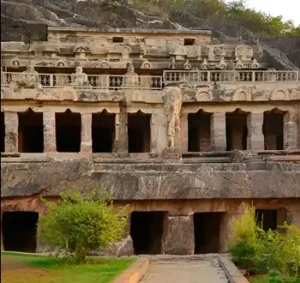
- Carved out of solid sandstone hills.
- The main cave has four stories, showcasing early Gupta rock-cut style.
- Second floor houses a massive reclining Vishnu statue, carved from a single granite block.
- Shrines dedicated to the Trimurti – Brahma, Vishnu, Shiva.
- First floor retains Buddhist vihara style, with monastic cells and sculptures.
- Facade of the third floor decorated with lion and elephant carvings.
Cultural Significance
- Reflects religious transition from Buddhism and Jainism to Hinduism.
- Served as rest houses for Buddhist monks in early centuries.
- Today, it is a protected monument under the Archaeological Survey of India (ASI).
- Plays a role in tourism and cultural festivals, promoting Andhra Pradesh’s heritage.
Conclusion:
The Undavalli Caves stand as a timeless reminder of India’s layered cultural journey, blending Buddhist, Jain, and Hindu traditions in stone.

INSAT-3DR
TOPIC: (GS3) SCIENCE AND TECHNOLOGY: THE HINDU
Recent analysis of INSAT-3DR satellite images showed that nearly 60–70% of India’s landmass was under cloud cover.
About INSAT-3DR
- Developed by ISRO as part of the Indian National Satellite series.
- Launched on 8 September 2016 aboard GSLV-F05.
- Designed to improve weather forecasting, cyclone tracking, disaster warnings, and environmental monitoring.
- Provides half-hourly multispectral images from a geostationary orbit over India.
Key Features
- Equipped with an Imaging System and Atmospheric Sounder.
- Carries Data Relay Transponder and Search & Rescue Transponder for continuity of earlier missions.
- Improvements over INSAT-3D:
- Imaging in middle infrared band → nighttime detection of low clouds and fog.
- Two thermal infrared bands → accurate estimation of Sea Surface Temperature (SST).
- Higher spatial resolution in visible and thermal infrared bands.
Significance
- Enhances cyclone monitoring in the Bay of Bengal and Arabian Sea.
- Supports disaster management authorities with real-time data.
- Assists agriculture by tracking monsoon patterns and rainfall distribution.
- Strengthens India’s space-based meteorological infrastructure, aligning with global standards.
- Example: During Cyclone Fani (2019), INSAT-3DR data was used for early warnings, reducing casualties.
Conclusion:
INSAT-3DR strengthens India’s ability to predict, prepare, and protect against extreme weather events, making it a cornerstone of national disaster resilience.


