Table of Contents
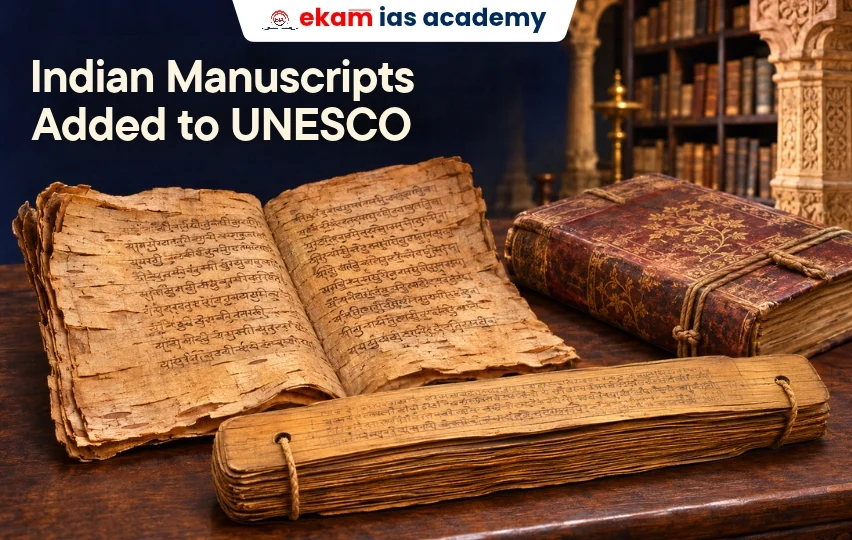
ToggleIndian Manuscripts Added to UNESCO include three important works representing India’s literary and intellectual traditions—Kalhana’s Rajatarangini, the Mahabharata and Kautilya’s Arthashastra—which have been inscribed in UNESCO’s Memory of the World Regional Register for Asia and the Pacific.
The recognition was announced at the 11th General Meeting of the Memory of the World Committee for Asia and the Pacific (MOWCAP) in Jakarta, Indonesia. With these additions, India’s inscriptions in the regional register have risen to six.
India’s Manuscripts on the Register
India’s earlier entries, inscribed in 2024, include the Ramcharitmanas, Panchatantra and Sahrdayaloka-Locana.
Key Elements That Make Mentorship Effective
Rajatarangini
Written by Kalhana in the 12th century, Rajatarangini is a Sanskrit chronicle documenting the rulers and political history of Kashmir. The recognised manuscript is preserved at the Oriental Research Library, Srinagar.
Mahabharata
Traditionally attributed to Vyasa, the Mahabharata is one of India’s major Sanskrit epics and explores themes of dharma, duty, morality and human conduct. The recognised manuscript is around 400 years old, written on birch bark in the Sharada script, and preserved at the Bhandarkar Oriental Research Institute, Pune.
Arthashastra
Traditionally associated with Kautilya (Chanakya), the Arthashastra is a major treatise dealing with governance, administration, diplomacy, economics and statecraft. The selected 16th-century palm-leaf manuscript is preserved at the Oriental Research Institute, Mysuru.
UNESCO Memory of the World Programme
Launched by UNESCO in 1992, the programme seeks to protect documentary heritage from threats such as conflict and natural disasters while improving public access and awareness.
The programme maintains international, regional and national registers covering manuscripts, archives and audiovisual records.
The UNESCO Memory of the World Prize, established in 2004, recognises significant contributions to preserving and promoting documentary heritage. It is named after, the oldest surviving book printed using movable metal type.
Role of IGNCA
The Indira Gandhi National Centre for the Arts (IGNCA) contributed to preparing the nomination dossiers for all three Indian manuscripts.


FAQs - Indian Manuscripts Added to UNESCO
Which Indian manuscripts have been added to UNESCO’s regional register?
According to the article, Kalhana’s Rajatarangini, the Mahabharata and Kautilya’s Arthashastra have joined the Memory of the World Regional Register for Asia and the Pacific.
What is the significance of Rajatarangini?
Written by Kalhana in the 12th century, Rajatarangini is a Sanskrit chronicle describing Kashmir’s rulers and political history.
Where are the recognised manuscripts preserved?
Rajatarangini is preserved in Srinagar’s Oriental Research Library, the Mahabharata at Pune’s Bhandarkar Oriental Research Institute, and the Arthashastra at Mysuru’s Oriental Research Institute.
What is UNESCO’s Memory of the World Programme?
Launched in 1992, the programme promotes the preservation of documentary heritage, including manuscripts, archives and audiovisual records, while improving public access.
What role did IGNCA play in the recognition?
The Indira Gandhi National Centre for the Arts contributed to preparing the nomination dossiers for the three manuscripts.