

Table of Contents
TogglePM MODI’S AUSTERITY CALL AMID RISING FOREX PRESSURE AND GOLD IMPORTS
TOPIC: (GS3) ECONOMY: THE HINDU
Prime Minister Modi urged citizens to adopt austerity measures reducing nonessential spending on imported goods, foreign travel, and petroleum use to safeguard foreign exchange reserves.
What are Forex Reserves?
- Definition: Stockpile of foreign assets maintained by the RBI to back the rupee and meet external obligations.
- Components:
- Foreign Currency Assets (FCA): US Treasury bonds, deposits in foreign banks, and other currencies.
- Gold Reserves: Physical gold held domestically and abroad.
- Special Drawing Rights (SDRs): IMF reserve assets based on a currency basket.
- Reserve Position in IMF: India’s contribution and rights within the IMF.
Importance of Forex Reserves
- Currency Stability: RBI uses reserves to manage rupee volatility by selling or buying dollars.
- Import Cover: Ensures India can pay for essential imports like crude oil and gold (India imports over 80% of crude oil and 90% of gold demand).
- Investor Confidence: Large reserves reassure global investors about India’s ability to meet external obligations.
- Crisis Buffer: Acts as a safeguard during global shocks (oil price spikes, wars, financial crises).
External Sector
- Foreign Exchange Reserves Decline: India’s reserves reportedly fell by nearly $38 billion within two months, reflecting pressure from high import bills and capital outflows.
- Rupee Depreciation: The rupee weakened beyond ₹95 per USD, raising concerns over currency stability.
- Major Causes:
- Rising crude oil import costs.
- Increasing gold imports.
- High outward remittances under the Liberalised Remittance Scheme (LRS).
- FII withdrawals from Indian markets.
- Global geopolitical uncertainty.
Gold Imports and Current Account Deficit
- India’s gold import bill nearly doubled to $72 billion in 202526, widening the current account deficit (CAD) to 1.3 % of GDP.
- Heavy dependence on imported gold strains forex reserves.
- Policy Response: Strengthening the Gold Monetisation Scheme (GMS) to mobilise idle household gold can reduce import dependence and conserve foreign exchange.
Liberalised Remittance Scheme and Overseas Spending
- Outward remittances under LRS reached $29.56 billion, with foreign travel forming over half the total.
- The PM highlighted destination weddings, luxury tourism, and nonessential foreign travel as major drains on forex.
- Citizens were urged to prioritise domestic tourism and buy local products to support the economy.
Crude Oil Dependence and Inflationary Risks
- India imports over 85 % of its crude oil needs; prices above $100 per barrel raise inflation and fiscal stress.
- The PM promoted:
- Electric vehicles (EVs) and public transport.
- Carpooling and workfromhome practices.
- Energy diversification to reduce vulnerability.
Tourism Imbalance and Forex Earnings
- Outbound tourism (32.7 million travellers) far exceeds inbound arrivals (9 million), reducing foreign exchange earnings and employment opportunities.
Conclusion
Sustainable consumption, domestic production, and prudent financial behaviour are essential to protect forex reserves, stabilise the rupee, and maintain macroeconomic resilience.
DECENTRALISED WASTE MANAGEMENT IN INDIA
TOPIC: (GS3) ENVIRONMENT: THE HINDU
The Solid Waste Management Rules, 2026 have replaced the 2016 framework, aiming to strengthen segregation at source, scientific processing, and reduction of landfill dependence.
India’s Waste Challenge
- Massive Waste Generation: India produces about 1.7 lakh tonnes of municipal solid waste every day, much of which is dumped in open landfills without proper treatment.
- Landfill Hazards: Landfills release methane gas, contributing to climate change and causing frequent fires (e.g., Delhi Bhalswa fire 2024, Kochi Brahmapuram fire 2025).
- Urban Flooding from Plastic Waste: Poorly managed plastic waste clogs urban drainage systems, worsening monsoon flooding in cities like Bengaluru and Mumbai.
Constitutional & Legal Context
- Rules framed under the Environment (Protection) Act, 1986, enacted using Article 253 (international obligations like Stockholm Declaration, 1972).
- While national standards are necessary, sanitation and public health are State subjects under the Constitution.
- The 73rd and 74th Amendments assign waste management responsibilities to Panchayats and Municipalities, making it a local governance function.
Principle of Subsidiarity
- Governance at the Local Level: The principle stresses that decisionmaking should happen closest to citizens, with municipalities and gram panchayats leading waste management efforts.
- Need for Local Knowledge: Effective waste solutions depend on understanding local ecology, settlement patterns, and administrative capacity, which only local bodies can provide.
- Limits of Uniform Rules: A single national framework cannot address the diverse realities of megacities, Himalayan towns, coastal regions, and rural villages; decentralisation allows flexibility and innovation.
Challenges
- Compliance Over Outcomes: Centralised rules often prioritise documentation and reporting rather than actual improvements in waste collection, segregation, and processing.
- Administrative and Digital Burden: Heavy reliance on digital monitoring systems can overwhelm local bodies that lack trained staff and technical infrastructure.
- Fiscal Inefficiency: A large share (40–50%) of municipal budgets is consumed by secondary transport of waste to landfills.
Decentralised Waste Management
- Urban Local Bodies (ULBs): Strengthen segregation, recycling, and composting at ward level.
- Gram Panchayats:
- Awareness through Gram Sabhas.
- Promote household/community composting.
- Clusterlevel waste processing with nearby towns.
- States as Policy Laboratories: Experiment with cooperatives, metropolitan authorities, and tourist waste regulation; successful models can inform national standards.
SOLID WASTE MANAGEMENT RULES, 2026
- Replaced the 2016 framework from April 1, 2026.
- Key provisions:
- Mandatory segregation of waste at source.
- Regulation of bulk waste generators (institutions, hotels, housing complexes).
- Scientific processing through composting, biomethanation, recycling, and wastetoenergy.
- Legacy dumpsite remediation using biomining.
- Digital monitoring via CPCB portal.
Conclusion
Empowering local bodies with predictable financing, trained staff, and citizen participation ensures cleaner cities, healthier rural areas, and sustainable development. A phased rollout starting with megacities and moving to rural areas can balance ambition with practicality.
STRUCTURAL REFORM OF NTA AND NEET CHALLENGES
TOPIC: (GS2) GOVERNANCE: THE HINDU
The National Testing Agency (NTA) conducts major entrance exams like NEET and JEE, impacting lakhs of students annually. Recent controversies such as paper leaks, impersonation cases, and poor communication have raised questions about its credibility.
NEETUG 2026 Paper Leak
- Exam & Leak Evidence: Conducted on May 3, 2026 across 5,400+ centres. A “guess paper” circulated earlier allegedly matched 120+ questions, covering nearly 600 marks.
- Scale of Impact: Over 22.79 lakh students appeared. The exam was cancelled, disrupting medical admission schedules nationwide.
- Investigation Trail: Rajasthan Police’s SOG first flagged suspicious documents. Links traced to multiple States including Rajasthan, Uttarakhand, Maharashtra, and Kerala.
- CBI Probe: The case was handed to the Central Bureau of Investigation (CBI). Focus is on multistate networks, exam security lapses, and NTA accountability.
Issues in NTA Functioning
- Operational Inefficiencies: Delays in results, poor grievance redressal, and lack of transparency.
- Cybersecurity Vulnerabilities: Reports of digital breaches and leaks undermine exam integrity.
- Centralised Admission Bottlenecks: Overreliance on one agency creates risks of systemic failure.
- Student Stress: Frequent controversies erode confidence and increase anxiety among aspirants.
Suggested Reforms
- Digital Test Format: Transition to secure computerbased testing with stronger encryption.
- Decentralised Admissions: Empower universities and States to handle admissions, reducing dependence on one central agency.
- Independent Oversight: Establish a regulatory board for monitoring NTA’s functioning.
- Capacity Building: Train staff in cybersecurity, exam logistics, and grievance handling.
- Transparency Measures: Publish audit reports, exam security protocols, and grievance outcomes.
Federal Balance in Education
- Concurrent Subject: Education is placed in the Concurrent List of the Constitution. This requires coordination between Centre and States in policymaking and implementation.
- Risk of Centralisation: Excessive control by the Centre may undermine State autonomy, especially in higher education. States may be reduced to implementing agencies rather than active policy designers.
- Need for Decentralisation: Decentralised models allow States and local institutions to innovate while still adhering to national standards.
Way Forward
- Strengthen institutional credibility through reforms in NTA’s structure and processes.
- Balance central oversight with State flexibility to ensure fairness and innovation.
- Adopt technologydriven secure systems while maintaining accessibility for rural students.
- Ensure studentcentric governance with grievance redressal and mental health support.
Conclusion
A balanced approach combining digital security, decentralisation, and transparency can restore trust and ensure that entrance exams remain fair, credible, and inclusive.
RETAIL INFLATION IN INDIA
TOPIC: (GS3) ECONOMY: THE HINDU
In April 2026, India’s retail inflation rose to 3.5%, the highest in 13 months, mainly due to costlier food and dining out.
Causes of Rising Inflation
- Food Prices: Higher vegetable, pulses, and restaurant bills pushed inflation up by 30 basis points.
- Global Factors: Geopolitical disruptions in West Asia and El Niñolinked weather changes affected supply chains.
- Gold & Oil Imports: Rising import bills indirectly add pressure on prices.
- Transport Costs: Interestingly, transport inflation eased, offering partial relief.
About Inflation
Inflation refers to the rise in the general price level of goods and services over time, reducing the purchasing power of money.
Types of Inflation
- DemandPull Inflation: Prices rise when demand exceeds supply.
- CostPush Inflation: Higher input costs (fuel, wages) push prices upward.
- Core Inflation: Excludes food and fuel, showing underlying price trends.
- Headline Inflation: Overall inflation including food and fuel.
Implications
- Household Impact: Higher food bills affect poor and middleclass families most.
- Policy Challenge: RBI must balance inflation control with growth.
- Fiscal Pressure: Government subsidies on food and fuel may rise.
- Employment & Consumption: Rising costs reduce disposable income, slowing demand.
Way Forward
- Strengthen food supply chains and cold storage to reduce volatility.
- Promote domestic production of pulses and edible oils.
- Encourage energy transition to reduce oil dependence.
- Enhance digital monitoring of prices for timely policy response.
Conclusion
Inflation management is crucial for economic stability and social welfare. A mix of monetary discipline, fiscal prudence, and structural reforms is needed to keep inflation within target while supporting growth.
NATIONAL MISSION FOR SUSTAINABLE AGRICULTURE (NMSA)
TOPIC: (GS3) ENVIRONMENT: THE HINDU
The Government has set a target of covering 100 lakh hectares under microirrigation between 202526 and 2029 as part of the NMSA, strengthening the “Per Drop More Crop” initiative for wateruse efficiency.
National Mission for Sustainable Agriculture (NMSA)
- Launched in 201415 under the National Action Plan on Climate Change (NAPCC).
- Designed to mitigate climate variability impacts on agriculture and ensure longterm food and livelihood security.
- Since 202223, it functions under the umbrella of Pradhan Mantri Rashtriya Krishi Vikas Yojana (PMRKVY).
- Nodal Ministry: Ministry of Agriculture and Farmers Welfare.
Objectives
- Promote climateresilient farming practices.
- Enhance wateruse efficiency and soil health.
- Strengthen adaptation capacity of farmers against climate shocks.
- Support sustainable agricultural development.
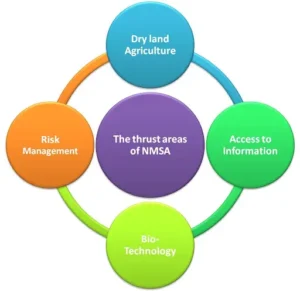
Initiatives
- Rainfed Area Development (RAD): Encourages Integrated Farming Systems (IFS) for diversified, riskresilient agriculture.
- Per Drop More Crop (PDMC): Focuses on microirrigation to improve water efficiency.
- Soil Health Management (SHM): Linked with the Soil Health Card Scheme, promoting balanced nutrient use and longterm fertility.
- Climate Change & Sustainable Agriculture: Monitoring, Modeling and Networking (CCSAMMN): Facilitates knowledge exchange between farmers and research institutions on climate adaptation.
Conclusion
NMSA is a strategic mission to safeguard agriculture against climate risks. Its success depends on effective implementation, farmer awareness, and integration of technology for sustainable growth.
LAVAN ISLAND
TOPIC: (GS1) GEOGRAPHY: THE HINDU
Recently, reports claimed the UAE carried out strikes on Iran’s refinery facilities at Lavan during the Middle East conflict, highlighting its geopolitical importance.
Location and Geography
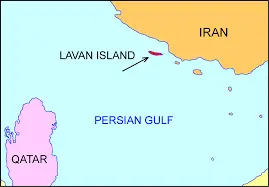
- Situated about 40 km west of Qeshm Island in Hormozgan Province, Iran.
- Measures roughly 25 km in length and 5 km in width.
- Historically known as the “Hidden Pearl Island”, once famous for pearl fishing.
Economic Importance
- Presently, the main occupations are oil industry work and fishing.
- Functions as one of Iran’s key oil export terminals.
- Serves as the operating base for three offshore oil fields:
- Salman Field (144 km south, among the largest in the Gulf).
- Resalat Field.
- Reshadat Field.
- Infrastructure includes processing plants, storage facilities, export systems, utility services, and loading jetties.
- Oil extracted offshore is transferred to Lavan for final processing and export.
Strategic and Geopolitical Context
- Proximity to the Strait of Hormuz, a chokepoint for global oil trade, makes Lavan highly strategic.
- Any disruption here impacts global energy security.
- Recent Middle East tensions and alleged strikes underline its vulnerability and importance in regional geopolitics.
Conclusion
Lavan Island is not just an Iranian oil hub but a strategic node in global energy trade. Its role in the Persian Gulf makes it central to discussions on energy security, geopolitics, and maritime strategy.
ONE CASE ONE DATA INITIATIVE
TOPIC: (GS2) GOVERNANCE: THE HINDU
The Supreme Court of India has launched the “One Case One Data” initiative, a major step in judicial digitalisation. It aims to integrate caserelated information across all levels of courts into a single digital identity, ensuring continuity and transparency.
One Case One Data
- Unified Case Identity: Each case will have a unique digital ID, linking all records from lower courts to the Supreme Court.
- Integrated Data Access: Case information from district courts, taluka courts, High Courts, and the Supreme Court will be available in one platform.
- Automated Retrieval: Data will be automatically fetched from court databases, reducing manual verification delays.
- Continuity of Records: When a case moves to a higher court, existing records will be seamlessly updated, not recreated.
Su Sahay – AI Chatbot
- Alongside this initiative, the Supreme Court introduced “Su Sahay”, an AIpowered chatbot.
- Developed by NIC and Supreme Court Registry, it assists litigants with:
- Filing procedures.
- Accessing services.
- General courtrelated queries.
Conclusion
The ‘One Case One Data’ initiative is a landmark in judicial digitalisation. By combining integration, automation, and AI support, it can strengthen judicial efficiency, transparency, and citizen access to justice.
TRISTAN DA CUNHA
TOPIC: (GS1) GEOGRAPHY: THE HINDU
Why in News?
Recently, British military medical teams carried out a rare emergency parachute mission to Tristan da Cunha after a passenger from the cruise vessel MV Hondius was suspected to have contracted Hantavirus.
Tristan da Cunha
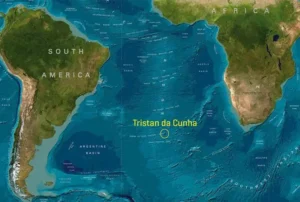
Tristan da Cunha is a remote volcanic island group situated in the South Atlantic Ocean. It is regarded as the most isolated inhabited archipelago in the world due to its great distance from major continents and lack of air connectivity.
Location and Geographical Features
- Located roughly midway between South America and Southern Africa.
- Forms part of the British Overseas Territory along with Saint Helena and Ascension Island.
- The islands are of volcanic origin and contain rugged mountainous landscapes.
- The main inhabited island is Tristan da Cunha, while nearby islands include:
- Gough Island
- Inaccessible Island
- Nightingale Island
Important Facts
- Gough Island and Inaccessible Island are designated as UNESCO World Heritage Sites because of their rich ecological value.
- The archipelago has no airport and can be reached only through ships or helicopters.
Human Settlement and Administration
- The main settlement is called Edinburgh of the Seven Seas.
- Population is nearly 250 permanent residents.
- The society follows a unique community ownership system:
- Land is held collectively.
- Outsiders cannot freely buy land or permanently settle.
- Governance is carried out under British administration with local community participation.