
Table of Contents
ToggleCENTRE’S OLD AGE PENSION AND INFLATION
TOPIC: (GS3) ECONOMY: THE HINDU
Social security pensions under the National Social Assistance Programme (NSAP) since 2012 have lost nearly 45% of their real value due to inflation, raising concerns about adequacy and sustainability.
Pension
- A pension is a regular income paid to retired individuals who are no longer earning wages.
- It can be provided by the state (government pension) or by a private employer/company pension scheme.
- The purpose is to ensure financial stability and dignity in old age.
Inflation and Money Value Loss
- Inflation reduces purchasing power: A fixed pension amount buys fewer goods and services over time.
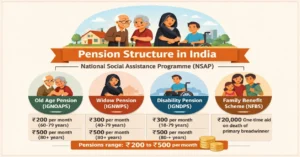
- Example: ₹200 in 2012 ≈ ₹380 in 2025 (CPI adjusted). Current pension remains ₹200, meaning real value has eroded by ~45%.
- Impact on beneficiaries: Rising food, healthcare, and living costs make pensions inadequate, pushing vulnerable groups into financial insecurity.
Challenges in Pension System
- Inadequate amounts: Current pensions cannot meet basic needs.
- No inflation indexation: Unlike wages or DA for government employees, pensions remain static.
- Interstate disparity: States like Andhra Pradesh, Telangana, and Haryana provide higher topups, while others lag.
- Rising elderly population: By 2050, India will have nearly 30 crore elderly, increasing demand for social security.
Recommendations
- National Floor Pension (NFP): Link pensions to the Consumer Price Index (CPI).
- Automatic Annual Revisions: Ensure pensions maintain real value against inflation.
- Uniform State TopUps: Mandate transparent state contributions to reduce inequality.
- Strengthened Delivery: Use Direct Benefit Transfer (DBT) and Aadhaarlinked accounts for efficiency.
Committee Recommendations
- Rangarajan Committee (2011): Suggested raising pensions to at least ₹500 per month and linking them to inflation.
- Standing Committee on Rural Development (2016 & 2022): Recommended periodic revision of pension amounts and better monitoring of state topups.
- Economic Survey (202223): Highlighted the need for inflationindexed social security to protect vulnerable groups.
- NITI Aayog (2021 Report on Social Security): Advocated for a National Minimum Pension Framework similar to the National Floor Level Minimum Wage.
How Pensions Are Created
- Employee Contributions: Workers contribute a portion of their salary to a pension fund during their employment.
- Employer Contributions: Employers often add to the fund, creating a pool of resources.
- Government Schemes: In many countries, governments provide pensions funded through taxation (e.g., oldage pensions, widow pensions).
- Eligibility: Payments begin after retirement age (commonly 60–65 years) or due to disability/illness.
Types of Pensions
- State Pension: Paid by the government to eligible citizens.
- Occupational Pension: Provided by employers as part of retirement benefits.
- Personal Pension: Individual savings or investment plans for retirement.
- Disability/Survivor Pension: Paid to disabled persons or dependents of deceased workers.
Conclusion
Linking pensions to CPI through a National Floor Pension will ensure dignity and financial security for vulnerable groups. At the same time, effective inflation management by the government is crucial to safeguard the real income of millions dependent on social assistance.
THE RUSSIA UKRAINE WAR AND EUROPE’S ROLE
TOPIC: (GS2) INTERNATIONAL RELATIONS: THE HINDU
Recently, Russian President Vladimir Putin, after the Victory Day Parade (May 9, 2026), stated that the war with Ukraine was “coming to a close” and expressed willingness to meet Ukrainian President Volodymyr Zelenskyy for a longterm peace deal.
Background of the Conflict
- The war began when Russia launched a “special military operation” in Ukraine, citing security concerns over NATO’s eastward expansion.
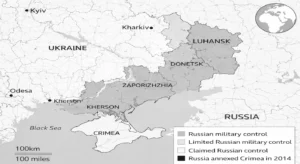
- Russia captured nearly 20 % of Ukrainian territory, mainly in Donbas and southern regions, but progress has stalled since 2024.
- Both sides have resorted to missile and drone warfare, causing heavy civilian and infrastructure losses.
- The conflict has entered its fifth year, with no decisive military outcome.
Current Situation
- Domestic Pressure in Russia: Economic strain, rising taxes, and public fatigue have lowered Putin’s approval ratings.
- Battlefield Stalemate: Frontlines remain largely unchanged; Ukraine has gained capability to strike inside Russian territory.
- Nationalist Pushback: Hardline groups in Russia demand stronger retaliation, complicating peace efforts.
- European Impact: The prolonged war has weakened Europe’s economy, increased energy insecurity, and deepened dependence on the United States.
Russia’s Peace Conditions
- Ukraine must adopt neutral status and withdraw from Donbas.
- Western sanctions on Russia should be lifted.
- A new security arrangement between Moscow and NATO must be established. While Russia’s security concerns are legitimate, its maximalist demands hinder progress toward peace.
Challenges for Ukraine
- Uncertain Victory Path: Despite strong resistance and international backing, Ukraine lacks a clear military roadmap to reclaim occupied territories.
- Humanitarian Strain: Prolonged conflict has led to mass displacement, infrastructure destruction, and civilian casualties, deepening the humanitarian crisis.
- Economic Exhaustion: Wartime spending and reduced production have weakened Ukraine’s fiscal stability and reconstruction capacity.
- Security Vulnerability: Persistent attacks and limited air defence capacity expose Ukraine to continued missile and drone strikes.
Way Forward
- Diplomatic Push for Peace: Europe must prioritise negotiation and dialogue over prolonged military confrontation to prevent further escalation.
- Global Mediation: Institutions like the UN, EU, and OSCE should facilitate confidencebuilding measures and ceasefire monitoring.
- PostWar Reconstruction: Launch coordinated efforts for economic recovery, infrastructure rebuilding, and humanitarian rehabilitation.
- Regional Stability: Promote collective security mechanisms in Eastern Europe to prevent future conflicts and ensure longterm peace.
NATO
- Formation (1949): Established through the North Atlantic Treaty in Washington, initially with 12 founding members (10 European + USA + Canada), to counter Soviet influence and ensure collective security.
- Core Principle – Article 5: An attack on one member is considered an attack on all, ensuring mutual defence. This principle has been invoked only once — after the 9/11 attacks in 2001.
- Membership Expansion: NATO follows an “open door policy”; any European country that meets democratic and military standards can apply. Membership requires unanimous approval of existing allies.
- Recent Members:
- Finland joined on 4 April 2023, becoming the 31st member.
- Sweden joined on 7 March 2024, becoming the 32nd member, ending over 200 years of neutrality.
- Current Membership: NATO now has 32 countries, spanning North America and Europe, making it the world’s largest military alliance.
Conclusion
After four years of attrition, the Russia–Ukraine war has proven that military solutions cannot ensure lasting peace. A negotiated settlement, backed by Europe’s diplomatic initiative, is the only viable path to restore stability, rebuild economies, and prevent further geopolitical fragmentation.
INDIA–UAE GOLD TRADE AND RISING IMPORT BILL
TOPIC: (GS3) ECONOMY: THE HINDU
Rising global prices and trade concessions under the IndiaUAE deal have inflated the import bill, complicating efforts to manage the Current Account Deficit (CAD) and the rupee’s stability.
Gold Imports and Rupee Drain
- India is among the world’s largest consumers of gold, with annual demand averaging 750 tonnes has created a macroeconomic vulnerability.
- High Import Dependence: Domestic production is negligible (~1.5 tonnes annually), forcing reliance on imports.
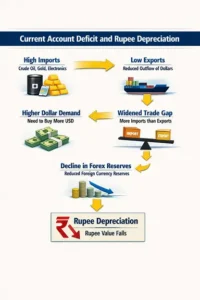
- Impact on CAD: Large gold imports widen the current account deficit, leading to higher demand for foreign exchange.
- Rupee Weakness: When foreign exchange reserves are used to pay for gold, the rupee depreciates, raising inflationary pressures.
- Example: FY26 import bill rose to $72 billion, despite lower volumes, due to a 40% surge in global prices.
Current Account Deficit (CAD)
- The Current Account Deficit occurs when a country’s imports of goods, services, and transfers exceed its exports, leading to more foreign exchange flowing out than coming in.
- It is created when high imports (like crude oil, gold, electronics) combined with lower exports widen the trade gap, forcing the country to use foreign reserves or borrow to finance the imbalance.
Why People Consider Gold an investment
- Cultural Significance: Gold is seen as a symbol of wealth and security in Indian households.
- Hedge Against Inflation: Gold retains value when currency purchasing power declines.
- Safe Haven Asset: During global uncertainty, investors prefer gold over volatile equities.
- Liquidity: Gold can be easily exchanged or pledged for loans.
- Wealth Preservation: Unlike paper assets, gold is tangible and trusted across generations.
Structural Challenges in India’s Gold Policy
- Import Duty Dependence:
- India consumed 802.8 tonnes of gold in 2024 valued at ₹5.15 lakh crore ($51.8 billion).
- In 2025, imports fell to 710.9 tonnes but the value rose to ₹7.51 lakh crore ($72 billion) due to a 40% surge in global prices.
- Duty hikes (15% in 2023, later reduced to 6% in 2024) often encourage smuggling and diversion through tariffconcession countries like the UAE.
- Finished Bullion vs Doré Imports:
- Under the IndiaUAE trade deal, tariff concessions made importing refined bullion cheaper than doré, discouraging domestic refining.
- This reversed the intended policy of promoting doré imports for local value addition.
- Weak Refining Ecosystem:
- India has over 40 licensed refineries with a combined capacity of ~1,800 tonnes, but only one LBMAaccredited refinery.
- Most Indian refineries are fragmented, smallscale units lacking economies of scale.
- By contrast, Japan has 11 LBMAcertified refineries and recycles 500 tonnes annually, while Switzerland adds ~40% value through refining despite no domestic production.
Global Lessons
- Switzerland: Built a global hub through advanced refining despite no domestic gold production.
- Japan: Developed “urban mining” by recycling ewaste, reducing dependence on imports.
- Hong Kong: Integrated refining and trading ecosystem linking China with global markets.
Policy Reforms to Reduce Gold Import Dependence
- Expand LBMAcertified refineries: Build more globally accredited refineries to integrate India into international gold supply chains.
- Promote doré imports over bullion: Encourage semiprocessed gold imports to boost domestic refining and value addition.
- Develop gold recycling infrastructure: Establish largescale “urban mining” facilities to recover gold from ewaste and old jewellery.
- Rationalise duty structure: Adjust import duties to make refining profitable and reduce incentives for smuggling.
- Encourage Electronic Gold Receipts (EGRs): Formalise gold trade through exchangebased receipts to reduce physical demand and improve transparency.
Conclusion
Strengthening domestic capacity and promoting financial instruments like EGRs can reduce vulnerability, support the rupee, and align gold trade with longterm economic resilience.
INDIA’S ELECTRICAL FIRE RISK
TOPIC: (GS3) DISASTER MANAGEMENT: THE HINDU
Recently The tragic Vivek Vihar fire in East Delhi (May 2026), which killed nine people, highlights systemic weaknesses in electrical infrastructure and widespread use of highload appliances creating hidden fire hazards.
Why Older Homes Face Higher Risks
- Outdated Wiring: Many homes-built decades ago were designed for minimal loads (fans, lights).
- Mismatch with Modern Demand: Today’s appliances — ACs, induction cooktops, geysers — overload circuits.
- Poor Maintenance: Loose joints, corroded wires, and counterfeit components increase ignition risk.
- Global Parallels: Europe too faces fire risks from ageing installations, but India’s challenge is compounded by rapid urbanisation and poor enforcement.
Air Conditioners as HighRisk Electrical Appliances
- High StartUp Load: AC compressors draw 6–8 times their normal running current when switched on, stressing circuits and causing overheating if wiring is inadequate.
- Shared Circuit Overload: In many homes, ACs are connected to circuits shared with other heavy appliances (geyser, induction cooktop, washing machine), leading to excessive load and fire risk.
- Harmonic Distortion: Inverterbased ACs consume electricity in irregular pulses, creating harmonics that accumulate in the neutral wire, which is not designed for heavy loads.
- Silent Overheating: Harmonics combined with loose joints or damaged insulation create hidden hot spots that can ignite and trigger electrical fires.
Major Causes of Electrical Fires
- Short circuits and overloaded circuits.
- Loose connections creating hidden hot spots.
- Counterfeit components with poor insulation.
- Arc faults and ground faults.
- Ageing equipment.
Global Lessons
- Japan & South Korea: Mandatory periodic inspections reduced electrical fires by ~90%.
- EU Directive (2024): Recognises modern systems (EV chargers, solar panels, batteries) as new fire risks.
- USA: Arcfault circuit interrupters (AFCIs) mandatory since 1999.
Electrical Safety Framework
- National Electrical Code (2023) and National Building Code (2016) lay down comprehensive norms for electrical installation, fire prevention, and life safety in residential and commercial buildings.
- Bureau of Indian Standards (BIS) mandates contractor certification and inspection approval before energising new electrical connections.
- Enforcement Gaps: Advanced protective devices such as ArcFault Circuit Interrupters (AFCIs) and Residual Current Devices (RCDs) are not yet mandatory in most residential structures.
- Fire Forensics Deficiency: India faces a shortage of trained electrical forensic engineers, leading to superficial “shortcircuit” explanations instead of detailed rootcause analyses after major fire incidents.
Policy Strengthening Measures
- Harmonic Compliance Standards: Introduce mandatory powerquality and harmonic monitoring norms for highload facilities such as hospitals, data centres, and EVcharging stations.
- Periodic Electrical Inspections: Make regular inspection and certification compulsory after major load additions like rooftop solar or battery storage systems.
- Integrated National Dataset: Create a centralised database combining fire department, BIS, and crime record data to improve policy planning and risk mapping.
- Public Awareness and Training: Launch nationwide campaigns on safe wiring practices, appliance load management, and periodic maintenance; expand training for electricians and inspectors.
Conclusion
Ensuring compliance with updated codes, expanding forensic capacity, and mandating protective devices will reduce risks, safeguard lives, and build resilience in a rapidly electrifying economy.
MELANOSERIS PENDRYI
TOPIC: (GS3) ENVIRONMENT: PIB
A team of Indian botanists recently discovered a new flowering plant species named Melanoseris pendryi in the Sikkim Himalayas at altitudes above 4,000 m.
Taxonomic Classification
- Genus: Melanoseris
- Family: Asteraceae (commonly known as the daisy family)
- Native Range: Extends from Iran to southern China and IndoChina, reaching Java in Southeast Asia.
- Habitat in India: Alpine grasslands of northern Sikkim, near the Tibetan plateau.

Distinctive Features
- Petal Structure: Lavenderpurple petals (ligules) covered with long white hairs on their undersides.
- Growth Pattern: Grows close to the ground among cushionlike shrubs to resist strong winds and cold.
- Root System: Possesses a fleshy, branching root that stores nutrients and moisture, enabling survival in harsh alpine conditions.
- Reproductive Traits: Shorter floral tube and stout seed structure, distinguishing it from other Melanoseris species.
Ecological Significance
- Found in fragile alpine zones, where vegetation is sparse and highly adapted to low temperatures.
- Acts as an indicator of climate change impacts on Himalayan flora.
- Botanists propose classifying it as Critically Endangered due to threats from tourism, grazing, and habitat degradation.
Conclusion
The discovery of Melanoseris pendryi underscores India’s botanical diversity and the need for strong conservation measures in Himalayan ecosystems. Protecting such rare alpine species is vital for maintaining ecological balance and genetic richness in the region.
INDIAN OCEAN RIM ASSOCIATION (IORA)
TOPIC: (GS2) INTERNATIONAL RELATIONS: PIB
The Indian Ocean Rim Association (IORA) organised 10th Indian Ocean Dialogue (2026), hosted by India’s Ministry of External Affairs, reaffirmed IORA’s role in shaping a peaceful and prosperous IndoPacific region.
Background and Evolution
- Founded as the Indian Ocean Rim Initiative (1995) and later renamed IORARC, before adopting its current name in 2013.
- Headquarters: Ebène, Mauritius.
- Apex body: Council of Foreign Ministers (COM), meeting annually.
- Secretariat led by a SecretaryGeneral appointed for a threeyear term.
Objectives
- Promote sustainable and balanced growth across member states.
- Enhance economic cooperation through trade, investment, and technology exchange.
- Facilitate liberalisation and freer flow of goods, services, and investments.
- Strengthen maritime safety, disaster management, and blue economy initiatives.
Membership
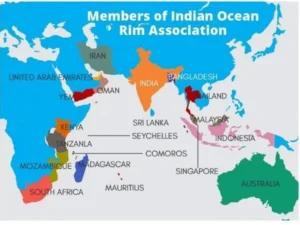
- 23 Member States and 12 Dialogue Partners.
- Asia: India, Bangladesh, Indonesia, Iran, Malaysia, Maldives, Oman, Singapore, Sri Lanka, Thailand, UAE, Yemen.
- Africa: Kenya, Madagascar, Mozambique, Somalia, South Africa, Tanzania, Comoros, Mauritius, Seychelles.
- Oceania: Australia.
- Europe: France.
- Dialogue Partners: China, Japan, USA, UK, Russia, EU, Saudi Arabia, South Korea, Türkiye, Germany, Italy, Egypt.
Priority Areas
- Trade & Investment Promotion
- Maritime Safety & Security
- Fisheries Management
- Disaster Risk Reduction
- Academic & Science Cooperation
- Blue Economy Development
Conclusion
Strengthening IORA aligns with India’s SAGAR (Security and Growth for All in the Region) vision, reinforcing its leadership in the Indian Ocean community.

INTERNATIONAL FUND FOR AGRICULTURAL DEVELOPMENT (IFAD)
TOPIC: (GS3) AGRICULTURE: INDIAN EXPRESS
Recently, the Government of India and IFAD launched a new eightyear Country Strategic Opportunities Programme (COSOP) 2026–2033, aimed at strengthening rural incomes, resilience, and sustainable livelihoods.
About IFAD
- Nature: International financial institution + UN specialized agency.
- Objective: Empower rural communities to improve food security, nutrition, and incomes.
- Focus Areas: Works in remote, fragile, and leastdeveloped regions, including Small Island Developing States (SIDS).
- Membership: Currently 180 member states, with India as a founding member.
- Headquarters: Rome, Italy.
- Governance: The Governing Council is the highest decisionmaking body, meeting every three years.
- Grants: Provides global/regional grants and countryspecific grants to support innovation, propoor technologies, and institutional reforms.
- Partnerships: Member of the United Nations Development Group (UNDG), working with FAO, WFP, and other agencies.
Latest Development – COSOP 2026–2033 (India)
- India and IFAD launched a new Country Strategic Opportunities Programme (COSOP) for 2026–2033.
- Aim: Strengthen rural incomes, resilience, and sustainable livelihoods.
- Priorities:
- Enhance social, economic, and climate resilience of rural communities.
- Strengthen knowledge systems to scale successful models across India and the Global South.
- Significance: Aligns with India’s SDG commitments and supports initiatives like Doubling Farmers’ Income and climateresilient agriculture.
Conclusion
IFAD plays a critical role in rural transformation, focusing on smallholder farmers, women, and vulnerable groups. The new COSOP with India reflects a longterm partnership to build resilient rural economies, reduce poverty, and contribute to global food security.
NATIONAL FLORENCE NIGHTINGALE AWARD
TOPIC: (GS2) POLITY: PIB
The President of India recently conferred the National Florence Nightingale Awards 2026, recognising exemplary service and commitment of nursing professionals across India.
About the Award
- Institution: Established in 1973 by the Ministry of Health and Family Welfare, Government of India.
- Purpose: To honour outstanding nursing personnel serving in Central and State Governments, Union Territories, and voluntary organisations.
- Recipients: Includes Registered Nurses, Midwives, Auxiliary Nurse Midwives (ANMs), and Lady Health Visitors.
- Award Components:
- Certificate of Merit
- Medal of Honour
- Cash Prize of ₹1,00,000
- Significance: Recognises dedication, compassion, and resilience in healthcare delivery, especially in rural and emergency settings.
About Florence Nightingale
- Florence Nightingale (1820–1910) was an English social reformer, statistician, and the founder of modern nursing.
- Gained prominence during the Crimean War (1853–1856) by organising care for wounded soldiers at Constantinople.
- Established the Nightingale School of Nursing at St Thomas’ Hospital, London, pioneering scientific nursing education.
- Her reforms transformed nursing into a professional discipline, emphasising hygiene, patient care, and datadriven health management.
Relevance and Impact
- The award reinforces the critical role of nurses in India’s healthcare system, especially during pandemics, disasters, and public health emergencies.
- Encourages professional excellence and motivates young nurses to pursue ethical and compassionate service.
- Symbolises India’s commitment to Universal Health Coverage (UHC) and SDG 3 – Good Health and WellBeing.
Conclusion
By recognising India’s nursing heroes, it strengthens the foundation of humancentred healthcare and inspires future generations to uphold the values of care, empathy, and professionalism.