Table of Contents
ToggleDeveloping nations, particularly those in tropical regions, possess immense biological wealth and centuries of indigenous traditional knowledge. However, the rise of modern biotechnology has led to instances where these resources are exploited without permission. This unauthorized exploitation undermines global equity and threatens the sovereignty of megadiverse nations over their natural capital.
Definition of Biopiracy
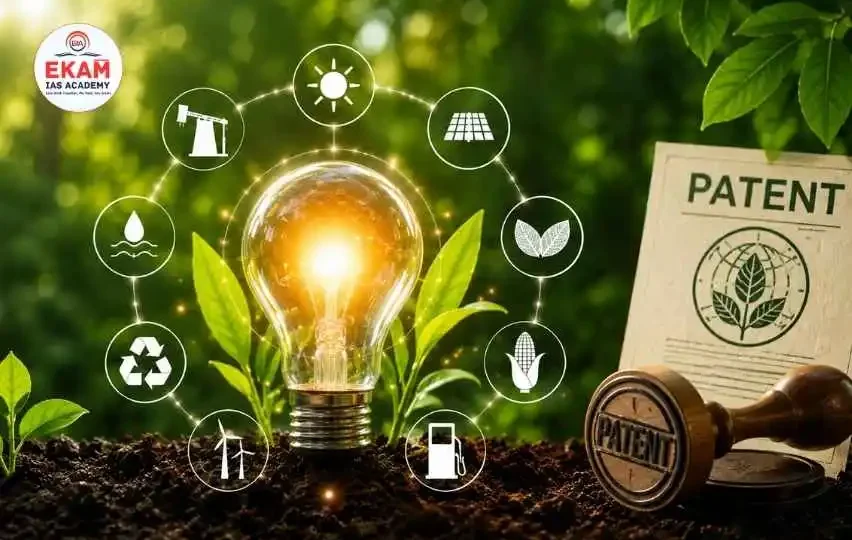
Biopiracy refers to the practice of commercially exploiting naturally occurring biochemical or genetic materials, as well as the traditional knowledge of indigenous communities, by obtaining patents that restrict its future public use, without providing fair financial compensation or seeking Prior Informed Consent (PIC) from the country of origin.
Origin and Concept of Biopiracy
- The Pioneer: The term was coined in the early 1990s by Pat Mooney, a Canadian civil society activist, to describe the uncompensated extraction of biological resources from developing nations by corporations based in developed states.
- The Corporate Nexus: It highlights an asymmetrical relationship where traditional knowledge is treated as a “free resource,” while the isolated active chemical compound derived from that knowledge is patented as private property.
Characteristics and Causes of Biopiracy
- Lack of Benefit-Sharing: Profits generated from the commercialization of biological products do not return to the communities that preserved them.
- Exploitation of Legal Gaps: Taking advantage of disparities between international patent laws and traditional, non-codified knowledge systems.
- Inequitable Global IPR Regimes: Historically, Western patent offices did not recognize oral traditions as “prior art,” allowing corporations to claim novelty over age-old remedies.
Major Historic Biopiracy Examples
A clear grasp of biopiracy examples is crucial for writing high-scoring answers in the Mains examination:
- The Neem Case (1995): The US Department of Agriculture and a multinational corporation received a patent from the European Patent Office (EPO) for an antifungal agent derived from neem oil. India successfully challenged the patent by proving that neem’s insecticidal and antifungal properties had been documented in ancient Indian texts for millennia, invalidating the claim of novelty.
- The Turmeric Case (1995): Two Indian-American researchers at the University of Mississippi were granted a US patent for the use of turmeric in wound healing. India’s Council of Scientific and Industrial Research (CSIR) contested it by presenting ancient Sanskrit texts, forcing the US Patent and Trademark Office (USPTO) to revoke it.
- Basmati Rice: An American company was granted a patent for cross-breeding Basmati rice lines with semi-dwarf varieties, claiming it as a new invention. India fiercely contested this to safeguard its geographic agricultural rights.
Impacts of Biopiracy
- Economic Exploitation: Local communities lose potential revenues to foreign entities.
- Erosion of Indigenous Rights: Communities face legal restrictions on utilizing their own inherited resources due to strict foreign patents.
- Loss of Biodiversity: Commercializing a single patented strain can push local farmers toward monoculture, threatening agricultural genetic diversity.
International Legal Frameworks
- To curb biopiracy, international environmental law has evolved significantly:
- Convention on Biological Diversity (CBD, 1992): Shifted the global paradigm by explicitly recognizing national sovereignty over biological resources, moving away from the old concept of biodiversity as the “common heritage of mankind.”
- Nagoya Protocol (2010): A supplementary agreement to the CBD that establishes a legally binding framework for Access and Benefit-Sharing (ABS), mandating Prior Informed Consent before genetic resources are accessed.
India’s Legal and Institutional Framework
India has built a robust domestic framework to protect its biological heritage:
The Biological Diversity Act 2002
Enacted to give statutory power to the CBD mandates, this law regulates access to India’s biological resources through a decentralized three-tier institutional structure:
National Biodiversity Authority (NBA): The apex statutory body that grants approval for commercial utilization or patenting of Indian biological resources by foreign entities.
State Biodiversity Boards (SBBs): Regulate commercial access for domestic entities within states.
Biodiversity Management Committees (BMCs): Local bodies responsible for executing conservation and maintaining documentation.
Traditional Knowledge Digital Library (TKDL)
To prevent biopiracy before it occurs, India created the TKDL. This database digitizes and translates traditional Indian medicinal knowledge (Ayurveda, Unani, Siddha) into five international languages, making it accessible to global patent examiners to establish “prior art” and reject wrongful patent claims.
Biopiracy vs. Bioprospecting
It is vital to distinguish these two ecological terms for the examination:
| Parameter | Bioprospecting | Biopropiracy |
| Legal Status | Fully lawful, ethical, and structured. | Illegal, unethical, and unauthorized. |
| Consent & Sharing | Includes Prior Informed Consent and fair Access and Benefit-Sharing (ABS). | Lacks consent and denies benefit-sharing to local communities. |
| Objective | Exploring biodiversity for new commercial applications while respecting local rights. | Monopolizing traditional resources through unfair patenting. |
Conclusion
For a high-scoring strategy in the biopiracy UPSC segment, candidates must view this issue as a challenge of both global equity and environmental justice. While instruments like the Biological Diversity Act 2002 and the TKDL have strengthened India’s defenses, international cooperation remains critical. Patent systems worldwide must be aligned with the Nagoya Protocol, ensuring that the fruits of global biotechnology never come at the cost of exploiting indigenous communities.
UPSC Prelims: PYQs & Practice Questions
Previous Year Questions (Prelims)
UPSC CSE Prelims 2023
Q: Consider the following statements:
1. Invasive Species Specialist Group, which develops the
Global Invasive Species Database, belongs to the
International Union for Conservation of Nature (IUCN).
2. The Convention on Biological Diversity (CBD) mandates countries to prevent the introduction of, control or eradicate those alien species which threaten ecosystems, habitats or species.
Which of the statements given above is/are correct?
(a) 1 only
(b) 2 only
(c) Both 1 and 2
(d) Neither 1 nor 2
Answer: (c) Both 1 and 2
Explanation:
Both statements are correct. The Invasive Species Specialist Group (ISSG) functions under the
IUCN Species Survival Commission (SSC) and contributes to the
Global Invasive Species Database.
The Convention on Biological Diversity (CBD) also mandates countries to prevent, control, or eradicate alien species that threaten ecosystems, habitats, or species. This question tests the foundational mandate of the CBD, which legally empowers countries to combat ecological imbalances and protect local biological resources from threats such as invasive species and biopiracy.
UPSC CSE Prelims 2001
Q: Government of India signed a major international agreement to contest a patent granted on which of the following traditional resources by the US Patent and Trademark Office?
(a) Neem
(b) Basmati Rice
(c) Turmeric
(d) Ginger
Answer: (c) Turmeric
Explanation:
In 1995, the University of Mississippi Medical Center was granted a US patent for the use of
turmeric in wound healing.
India’s Council of Scientific and Industrial Research (CSIR) legally challenged the patent by presenting ancient Sanskrit texts and published evidence showing that turmeric’s healing properties were already part of India’s traditional knowledge. This established prior art and led to the revocation of the patent, marking a landmark victory against biopiracy.
Practice Questions
Q: With reference to the institutional structure established under the Biological Diversity Act, 2002, consider the following statements:
1. A foreign citizen or a non-resident Indian entity must obtain prior approval from the
National Biodiversity Authority (NBA) before obtaining any biological resource from India for commercial utilization.
2. Local citizens and domestic corporate entities only need to give prior intimation to the respective
State Biodiversity Board (SBB) before harvesting resources for commercial use.
3. The local Biodiversity Management Committees (BMCs) possess the statutory power to levy collection fees from persons accessing biological resources within their territorial jurisdiction.
Which of the statements given above are correct?
(a) 1 and 2 only
(b) 2 and 3 only
(c) 1 and 3 only
(d) 1, 2 and 3
Answer: (d) 1, 2 and 3
Explanation:
All statements are correct under the decentralized three-tier framework of the
Biological Diversity Act, 2002.
Section 3 mandates that foreign entities must obtain prior approval from the apex National Biodiversity Authority (NBA). Section 7 requires domestic entities to give prior intimation to the respective State Biodiversity Boards (SBBs). Further, Section 41 empowers local Biodiversity Management Committees (BMCs) to protect local ecosystems and levy collection fees from commercial harvesters, ensuring local benefit-sharing.
Q: The Nagoya Protocol, an international treaty frequently mentioned in discussions surrounding global biopiracy, is a supplementary agreement to which of the following parent conventions?
(a) United Nations Framework Convention on Climate Change (UNFCCC)
(b) Convention on Biological Diversity (CBD)
(c) Ramsar Convention on Wetlands
(d) CITES
Answer: (b) Convention on Biological Diversity (CBD)
Explanation:
The Nagoya Protocol on Access to Genetic Resources and the Fair and Equitable Sharing of Benefits Arising from their Utilization is a supplementary agreement to the
Convention on Biological Diversity (CBD).
It provides a transparent and legally binding framework for both providers and users of genetic resources to implement Access and Benefit Sharing (ABS). This helps prevent biopiracy by ensuring that benefits arising from the use of biological resources and traditional knowledge are shared fairly and equitably.
UPSC Mains – Previous Year & Practice Questions
Mains Previous Year Questions
Mains 2018
Question: How does biodiversity vary in India?
How is the Biological Diversity Act, 2002 helpful in conservation of flora and fauna?
(Directly tests your command over India's sovereign anti-biopiracy legislation.)
Mains 2023
Question: Identify the main causes of the loss of
biodiversity in India.
(Can discuss how commercializing genetic resources without local benefit-sharing discourages indigenous communities from protecting local ecosystems.)
Mains 2014
Question: Enumerate the
indirect services provided by an ecosystem.
(Preserving genetic repositories and traditional medicinal systems are vital indirect ecosystem services.)
Mains 2020
Question: How does the draft
Environment Impact Assessment (EIA) Notification, 2020 differ from the existing
EIA Notification, 2006?
(Ties into how changes in clearance norms can impact the territorial rights of forest-dwelling tribes.)
Mains 2016
Question: What is water-use efficiency?
Describe the role of micro-irrigation in India.
(Can link to how climate-resilient crop varieties developed from indigenous strains face patent vulnerabilities.)
Mains Practice Questions
[10 Marks | 150 Words]
Question: Analyze the conflict between the World Trade Organization’s TRIPS Agreement and the Convention on Biological Diversity (CBD) regarding the patenting of life forms.
[10 Marks | 150 Words]
Question: Explain how the Traditional Knowledge Digital Library (TKDL) acts as a defensive patent protection mechanism for India’s sovereign biological heritage.
[15 Marks | 250 Words]
Question: Critically evaluate the performance of local Biodiversity Management Committees (BMCs) in checking biopiracy and securing Access and Benefit Sharing (ABS) at the grassroots level in India.



Biopiracy-FAQs
Difference between Biopiracy and Bioprospecting?
Bioprospecting is the legal and ethical search for useful biological resources with consent and benefit sharing. Biopiracy is the unauthorized use or patenting of biological resources or traditional knowledge without compensation.
What is TKDL and how does it prevent biopiracy?
The Traditional Knowledge Digital Library, created by CSIR and Ministry of Ayush, records Indian medicinal knowledge from Ayurveda, Unani, and Siddha. It helps patent offices reject false claims by proving prior knowledge.
How does the Nagoya Protocol enforce ABS?
The Nagoya Protocol requires Prior Informed Consent before using genetic resources. It also ensures Mutually Agreed Terms so benefits are shared fairly with provider countries and communities.
Why did Western patent offices allow biopiracy earlier?
Many patent offices depended on written and published records for prior art. Since much traditional knowledge was oral or not in Western databases, companies sometimes received wrongful patents.
Can citizens complain against biopiracy under the Biological Diversity Act?
Yes. Citizens or groups can report violations to Biodiversity Management Committees, State Biodiversity Boards, or the National Biodiversity Authority, which can take legal action.