

Table of Contents
ToggleTENTH SCHEDULE AND PARTY MERGERS
TOPIC: (GS2) POLITY: THE HINDU
Around 20 Trinamool Congress MPs have sought to merge with the Nationalist Citizens Party of India (NCPI), raising questions about the interpretation of the Tenth Schedule on party mergers and defections.
Origin of the Tenth Schedule
- Introduced through the 52nd Constitutional Amendment (1985) to curb political instability caused by frequent defections in the 1960s–70s.
- Provides for disqualification of legislators who voluntarily give up party membership or vote against party directions.
- Distinguishes between the political party (entire organisation) and the legislature party (members in a House).
Merger Provisions
- Originally, two exceptions existed:
- Paragraph 3 – onethird of members splitting to form a separate group.
- Paragraph 4 – merger of a political party with another, approved by twothirds of its legislature party.
- 91st Amendment (2003) deleted Paragraph 3 to strengthen antidefection law.
- Presently, only merger of the original political party with another party is exempt from disqualification if twothirds of its legislature party agrees.
Misuse After Deletion of Paragraph 3
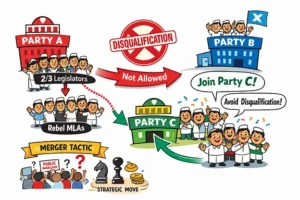
- Legislators now claim to be the “original political party” to escape disqualification.
- Examples:
- Shiv Sena (2022) and NCP (2023) splits where factions claimed legitimacy.
- Rajasthan BSP MLAs (2019) merged with Congress.
- Goa Congress MLAs (2022) merged with BJP; upheld by Bombay High Court.
- AAP Rajya Sabha MPs (2026) merged with BJP.
- Current Bengal case: 20 of 28 Trinamool MPs claim merger with NCPI under Paragraph 4.
Challenges
- Ambiguity in Merger: Unclear if twothirds of legislature party alone can merge without parent party approval.
- Bias of Presiding Officers: Speakers/Chairmen often act in favour of ruling parties, undermining impartiality.
- Judicial Delays: Appeals pending in Supreme Court create uncertainty and weaken deterrence.
- Undermining Mandate: Frequent mergers dilute voter trust and weaken party discipline.
Way Forward
- Independent Tribunal: Supreme Court (K.M. Singh case, 2020) suggested transferring disqualification powers to a tribunal headed by judges.
- Law Commission Recommendation: 1999 report advised deletion of Paragraph 4 to prevent misuse of merger provisions.
- Stronger AntiDefection Law: Any action against parent party should lead to disqualification, ensuring accountability.
- Transparency and Judicial Review: Speaker’s rulings must be transparent, with timebound judicial oversight to prevent misuse.
Tenth Schedule
Authority to Disqualify
- Presiding Officer:
- The Speaker of Lok Sabha/State Assembly or the Chairman of Rajya Sabha/Legislative Council decides on disqualification petitions under the Tenth Schedule.
- Their decision is considered final within the House, but subject to judicial review.
Judicial Remedy
- Judicial Review:
- Supreme Court in Kihoto Hollohan case (1992) upheld the constitutional validity of the Tenth Schedule but allowed judicial review of Speaker/Chairman’s decisions.
- Courts can intervene if the decision is mala fide, biased, or unconstitutional.
Supreme Court Recommendation (K.M. Singh case, 2020):
- Suggested creation of an independent tribunal headed by judges to decide disqualification cases, reducing political bias.
Law Commission Report (1999):
- Recommended deletion of Paragraph 4 (merger provision) to prevent misuse and ensure stricter antidefection law.
Conclusion
The misuse of merger provisions under the Tenth Schedule highlights the need for clearer constitutional safeguards and impartial adjudication to protect the sanctity of the voter’s mandate.
TELEGRAM APP AND NEET REEXAMINATION
TOPIC: (GS2) POLITY: THE HINDU
The Government of India, temporarily blocked the Telegram app to curb cheating rackets ahead of the NEET (UG) 2026 reexamination, scheduled for June 21, 2026.
Background and Context
- The NTA discovered organised groups using Telegram to sell fake NEET question papers and defraud students.
- The Ministry of Electronics and Information Technology (MeitY) ordered the blocking, describing it as “calibrated and timebound.”
- The restriction is temporary and will be lifted after the exam.
- Telegram’s listing was removed from Google Play Store and Apple App Store, and access was blocked by telecom operators.
- This marks the first instance of a largescale messaging app being blocked in India for examination integrity.
Government and Agency Actions
- The Indian Cyber Crime Coordination Centre (I4C) under the Ministry of Home Affairs coordinated with state police forces (Bihar, Gujarat, Rajasthan) to remove fraudulent Telegram channels and bots.
- Telegram founder Pavel Durov criticised the move, saying it affected over 15 crore users and that “leaks moved to other apps.”
- The IT Ministry also directed Telegram to disable message editing till June 30, preventing postexam fabrication of fake leaks.
- NTA urged parents to protect students from financial scams and panic created by such rackets.
Process for Blocking Social Media Platforms
- Under Section 69A of the Information Technology Act, 2000, the Central Government can direct intermediaries to block public access to information for reasons of national security, public order, or prevention of offences.
- The MeitY issues blocking orders through its Designated Officer, under the Information Technology (Procedure and Safeguards for Blocking for Access of Information by Public) Rules, 2009.
- Requests may originate from agencies like NTA, I4C, or law enforcement authorities, and are reviewed by a committee before approval.
- The blocking is implemented by Internet Service Providers (ISPs) and app stores, and can be temporary or permanent depending on the threat level.
Challenges
- Rising Cybercrime Cases: NCRB 2025 report recorded 1.3 million cybercrime cases, with nearly 18% linked to education frauds such as fake exam papers and impersonation.
- CrossBorder Enforcement Issues: Many fraudulent servers are hosted outside India, limiting jurisdiction under the IT Act, 2000.
- Impact on Digital Rights: India has over 850 million internet users; temporary bans affect communication, small businesses, and ordinary users.
- Low Cyber Awareness: MeitY’s Digital Literacy Mission survey (2025) found only 32% of students and parents were aware of online exam fraud risks.
Conclusion
The temporary blocking of Telegram underscores the government’s resolve to ensure fairness and credibility in national examinations, balancing digital freedom with public interest.
WATER SECURITY IN INDIAN CITIES
TOPIC: (GS3) ENVIRONMENT: THE HINDU
Major Indian cities including Delhi, Chennai, Bengaluru, and Hyderabad are facing severe summer water shortages, highlighting the urgent need for systematic urban water management beyond temporary tanker supplies.
Water situation in India
- Urban water demand projected to reach 74 billion cubic metres by 2050 (NITI Aayog).
- Groundwater depletion: India is the world’s largest extractor, using ~25% of global groundwater (World Bank).
- Nonrevenue water losses: Nearly 30–40% of piped water is lost due to leaks and theft (Central Water Commission).
- Access gap: About 21 cities may run out of groundwater by 2030 (NITI Aayog Composite Water Index).
- Health impact: WHO estimates 37.7 million Indians affected annually by waterborne diseases due to unsafe supply.
Urban Water Emergency
- Rapid Urbanisation: Cities have grown faster than water infrastructure.
- Loss of Local Buffers: Lakes, tanks, and stormwater channels encroached, reducing resilience against floods and droughts.
- Groundwater Overuse: Excessive borewell drilling has outpaced natural recharge.
- Neglect of Networks: Focus on new sources rather than repairing leaks and maintaining pipelines.
- Quality Concerns: Intermittent supply and unsafe storage lead to contamination and illness.
Five Solutions for WaterSecure Cities
- Transparent Emergency Planning: Publicly share wardwise supply schedules, storage levels, and prioritisation rules. Builds trust and reduces panic during shortages.
- Leak Reduction: Launch “leak hunts” in highloss zones. With 30% of water lost in networks, even modest repairs equal creating new sources.
- Demand Management: Government offices, campuses, and commercial complexes must audit usage. Resident groups can set norms for peak months, limit nonessential use, and track tanker sources.
- Safeguarding Water Quality: Rapid testing in highrisk areas. Temporary treatment support and awareness on safe storage.
- Wastewater Reuse: Upgrade treatment plants with lowcost measures like aeration and desludging. Reduce sewage leaks and contamination, augmenting usable water.
Broader Picture
- Aligns with National Water Policy (2012) and Jal Jeevan Mission goals of equitable access.
- Supports SDG6 (Clean Water and Sanitation) by ensuring safe, reliable supply.
- Lessons from Chennai’s 2019 water crisis show the need for longterm planning, not seasonal coping.
- Integrating urban planning, groundwater regulation, and climate resilience is essential for sustainable water security.
Challenges
- Infrastructure Deficit: Rapid urbanisation outpaced water networks; encroachment of lakes and tanks reduced natural buffers.
- Leakages and Losses: Up to 30% of water lost before reaching consumers, worsening shortages.
- Groundwater Overextraction: Borewell dependence has led to unsustainable depletion.
- Quality Concerns: Intermittent supply, unsafe storage, and sewage contamination cause illness.
Way Forward
- Transparent Emergency Planning: Publicly share wardwise supply schedules, storage levels, and prioritisation rules to reduce panic.
- Leak Reduction Drives: Launch “leak hunts” in highloss zones; even 10% reduction equals creating new sources.
- Demand Management: Government offices, campuses, and housing societies to audit usage and limit nonessential consumption.
- Water Quality Safeguards: Rapid testing in highrisk areas, temporary treatment, and awareness on safe storage.
- Wastewater Reuse: Upgrade treatment plants with lowcost measures (aeration, desludging) to augment usable water.
- Integrated Urban Planning: Protect lakes, tanks, and stormwater channels; enforce groundwater regulation; align with Jal Jeevan Mission and National Water Policy.
Conclusion
Indian cities must move from shortterm coping to systemic water governance, combining emergency planning, leak reduction, demand control, quality safeguards, and wastewater reuse to secure urban futures.
POVERTY AND FOREST CONSERVATION
TOPIC: (GS3) ENVIRONMENT: THE HINDU
A new international study published in Nature Sustainability shows that alleviating poverty and providing alternative livelihoods can directly improve forest biodiversity, challenging the traditional view of separating conservation from human needs.
Forestlinked Livelihoods in India
- Dependence: Around 300 million people rely on forests for fuelwood, fodder, grazing, medicinal plants, and nontimber forest products (NTFPs) such as lac, tendu leaves, and bamboo.
- Tribal Communities: Forests are crucial for Scheduled Tribes, who form nearly 8.6% of India’s population, with many living in forest fringe villages.
- Livestock Grazing: Forests provide grazing for ~30% of India’s livestock population, linking rural economy directly to forest health.
Findings of the Study
- Livelihood Link: Forests with higher poverty and dependence on fuelwood showed lower tree species diversity.
- Alternative Livelihoods: Communities with access to farming or other income sources had more diverse forests.
- Tree Diversity: Greater species richness supports wildlife, ecological stability, and resilience to climate change.
- Human Pressure: Poverty itself is not the cause; lack of livelihood options forces heavy reliance on forests.
Challenges
- Fortress Model Limitations: Protected areas managed by restricting human access have isolated forests, creating ecological stress.
- High Dependence: Around 275 million Indians rely on forests for daily needs, increasing extraction pressure.
- Implementation Gaps: Subsidised LPG and efficient stoves reduce fuelwood use but face inconsistent funding and weak community participation.
- Equity in Benefits: Wildlife tourism generates millions, yet only a small fraction reaches forestdependent communities.
Way Forward
- Inclusive Conservation: Empower local communities with rights, incentives, and roles in managing forests (Madhav Gadgil’s approach).
- Wildlife Corridors: Strengthen ecological links between protected areas to improve species richness and resilience.
- Community Partnerships: Expand initiatives like hornbill nest adoption (Arunachal Pradesh), mangrove comanagement (Maharashtra), and snow leopard homestays (Ladakh).
- Livelihood Diversification: Promote farming, ecotourism, and sustainable aquaculture to reduce dependence on fuelwood.
- Revenue Sharing: Ensure greater share of tourism and conservation funds reach local communities.
- Policy Integration: Align forest conservation with poverty alleviation schemes like MGNREGA, National Rural Livelihood Mission, and Green India Mission.
India’s Forest Area (ISFR 2023)
- Total Forest Cover: 7,13,789 sq km (21.71% of India’s geographical area).
- Tree Cover: 95,003 sq km outside recorded forest areas.
- Carbon Stock: Forests store ~7,320 million tonnes of carbon, acting as a major sink.
- Global Position: India ranks 9th globally in forest area and 3rd in net annual forest area gain (FAO GFRA 2025).
UNCBD and Livelihood Promotion
- KunmingMontreal Global Biodiversity Framework (2022):
- Targets 30% of land and sea under conservation by 2030.
- Emphasises community participation and equitable benefitsharing from biodiversity use.
- Forest Ecosystem Restoration Initiative (FERI): Supports countries (including India) in restoring degraded forests and building livelihood opportunities.
- Collaborative Partnership on Forests: UNCBD works with FAO, UNFF, and UNCCD to integrate poverty alleviation with forest conservation, ensuring sustainable harvesting and market access for NTFPs.
- Livelihood Focus: Encourages ecotourism, community forestry, and payments for ecosystem services, ensuring local communities benefit financially from conservation.
Conclusion
India can secure its forests not by excluding people, but by integrating poverty alleviation with conservation, ensuring that communities become partners in protecting biodiversity.
DROP SHIPPING
TOPIC: (GS3) ECONOMY: THE HINDU
Drop shipping has gained attention as a key factor behind the success of global ecommerce giants like Amazon, and is increasingly adopted by small retailers and entrepreneurs due to low investment needs.
Understanding Drop Shipping
- Definition: A retail model where sellers accept customer orders without keeping stock, forwarding them to suppliers who ship directly to buyers.
- Role of Dropshipper: Acts as an intermediary between consumers and suppliers, curating products and earning profit margins.
- Advantages: Eliminates warehouse costs, reduces risk of unsold inventory, and requires minimal capital.
- Challenges: Issues of product quality, delivery delays, and lack of direct control over supply chain.

How It Works
- Seller signs agreement with wholesaler or manufacturer.
- Customer places order online and receives confirmation.
- Seller forwards order to supplier.
- Supplier ships product directly to customer.
- Seller retains profit margin between sale price and supplier cost.
Example
- A phone case listed at ₹500 is purchased by a customer.
- Seller orders it from supplier at ₹300.
- Supplier ships directly to customer.
- Seller earns ₹200 gross profit before marketing and overhead costs.
Broader Picture
- Encourages digital entrepreneurship and supports MSMEs in India.
- Aligns with Digital India and StartUp India initiatives.
- Raises concerns about consumer protection, requiring stronger ecommerce regulations by bodies like Consumer Affairs Ministry and Competition Commission of India.
- Global trade platforms (e.g., WTO discussions on ecommerce) highlight drop shipping as part of crossborder retail trends.
Conclusion
Drop shipping represents a lowinvestment gateway to ecommerce, but its sustainability depends on balancing profit with consumer trust and regulatory oversight.
SAN ANDREAS FAULT
TOPIC: (GS1) GEOGRAPHY: THE HINDU
Recent geological research shows that stress along the San Andreas Fault in Southern California has reached its highest level in the past 1,000 years, raising concerns about potential major earthquakes.
Location and Formation
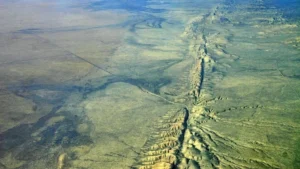
- The San Andreas Fault is a continental transform boundary in western North America.
- It began forming about 30 million years ago during the midCenozoic Era.
- It separates the Pacific Plate (west) and the North American Plate (east).
- Extends over 1,300 km from the Gulf of California through California to the Pacific Ocean near San Francisco.
- Its northward movement led to the creation of the Baja Peninsula.
Geological Features
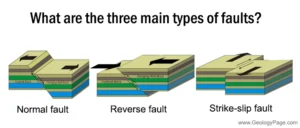
- Classified as a strikeslip fault, where plates slide horizontally with little vertical movement.
- The Pacific Plate moves northward relative to the North American Plate.
- It is one of the world’s most studied faults due to frequent seismic activity.
- Similar strikeslip faults exist globally, but San Andreas is the most famous.
Significance
- Responsible for several powerful earthquakes in California’s history.
- Stress accumulation indicates future seismic risks for urban centers like Los Angeles and San Francisco.
- Studying the fault helps in disaster preparedness and urban planning.
- US Geological Survey (USGS) and global agencies monitor it as part of earthquake earlywarning systems.
- Lessons from San Andreas are relevant for India’s Himalayan seismic zones, where plate collisions also create earthquake risks.
Fault
A planar or curved fracture in rock where measurable displacement has occurred. Fault Plane is a surface along which rocks slip
- Movement can be vertical, horizontal, or oblique.
- Faults differ from joints because joints show no significant displacement.
How Faults Form
- Tectonic Plate Motion: Compression, tension, or shear forces.
- Gravitational Forces: Slope failures.
- Magma Intrusion/Crustal Loading: Pressure changes causing fractures.
- When stress exceeds rock strength it causes brittle failure and leads to fault formation.
Conclusion
The San Andreas Fault exemplifies how tectonic stress at plate boundaries shapes seismic hazards, reminding nations to strengthen disaster resilience and preparedness.
NEW GI TAGS
TOPIC: (GS3) ECONOMY: THE HINDU
Recently, Jharkhand’s Bhagaiya silk, Kuchai silk, Munda jewellery, and bamboo craft have been awarded the prestigious Geographical Indication (GI) tag, recognizing their unique cultural and economic value.
GI Tags
- Bhagaiya Silk
- Handspun silk woven mainly by Santhal tribal women.
- Represents indigenous craftsmanship passed down through generations.
- Strengthens rural livelihoods and preserves tribal identity.
- Kuchai Silk
- Produced by tussar silkworms reared on Asan and Arjun trees.
- Originated in SeraikelaKharsawan village “Kuchai” and spread across Jharkhand.
- Integral to Jharkhand’s traditional silk industry and rural economy.
- Munda Jewellery
- Distinctive art form of the Munda tribal community.
- Known for unique motifs and cultural symbolism.
- Embodies tribal heritage and identity.
- Jharkhand Bamboo Craft
- Utilizes locally available bamboo resources.
- Rural artisans create utility and decorative products.
- Expands market access and supports sustainable livelihoods.
Significance
- GI tags protect traditional knowledge systems and prevent misuse of names.
- They promote rural entrepreneurship and align with Atmanirbhar Bharat and Make in India initiatives.
- Enhance export potential by giving global recognition to tribal crafts.
- Encourage sustainable practices, especially bamboo craft, linked to India’s climate goals.
- Similar GI recognitions (e.g., Darjeeling Tea, Mysore Silk) show how local products gain international branding.
- Ministry of Commerce and Industry and DPIIT oversee GI registrations under the Geographical Indications of Goods (Registration and Protection) Act, 1999.
Conclusion
GI recognition of Jharkhand’s silk, jewellery, and bamboo crafts highlights how heritage products can drive rural prosperity while safeguarding cultural identity.
MOVING FROM WAR TO DEAL IN WEST ASIA
TOPIC: (GS2) INTERNATIONAL RELATIONS: THE HINDU
The U.S.–Iran ceasefire has led to a digitally signed deal halting hostilities, lifting sanctions, and unfreezing assets, marking a shift from prolonged war to tentative negotiations in a deeply divided region.
Genesis of the Crisis:
- Prolonged Bombardment: For nearly four years, regions like Iran, Lebanon, Gaza, and Sudan witnessed relentless airstrikes and shelling. This exposed the limits of military force, showing that wars without political dialogue only deepen instability.
- Major Powers’ Role: Instead of pushing for negotiations, global powers supplied arms, funds, and intelligence support to different factions. This worsened humanitarian crises, leading to thousands of civilian deaths, displacement, and destruction of infrastructure.
- U.S. Strategic Setbacks: The United States faced political backlash at home and strategic failures abroad. Rising costs of war, loss of credibility, and inability to achieve regime change in Iran made continuation of conflict untenable.
- Iran’s Compulsions: Iran suffered military reverses, economic sanctions, and leadership challenges. Its economy shrank under sanctions, oil exports were blocked, and domestic unrest grew. These pressures forced Iran to consider negotiations despite its assertive posture.
Key Features of the U.S.–Iran Deal
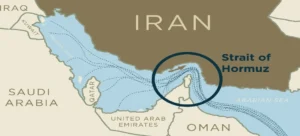
- Opens the Strait of Hormuz unconditionally.
- Halts war fronts including Lebanon.
- Lifts oil sanctions and unfreezes Iranian assets.
- Iran commits not to produce nuclear weapons.
- Negotiations over nuclear enrichment suspension to continue for 60 days.
Regional Dynamics
- Israel rejects any deal short of regime change, citing Hezbollah as a threat.
- Israeli elections in October 2026 make ceasefire politically difficult for Netanyahu.
- Iran remains assertive, directly targeting Israeli and U.S. assets.
- Gulf states’ reliance on U.S. security umbrella exposed; divisions between Saudi Arabia and UAE deepened.
- UAE’s exit from OPEC signals weakening Saudi dominance in energy policy.
Global Power Shifts
- Russia and China benefit from U.S. entanglement; China views Iran war as a preview for Taiwan scenarios.
- China likely to expand influence via Pakistan, leveraging its geographic position.
- India initially leaned towards U.S.–Israel but recalibrated after Hormuz closure threatened energy security and diaspora remittances.
- India needs strategic autonomy and multialignment to safeguard trade, investments, and maritime interests.
Broader Implications
- Highlights the intersection of geopolitics, energy security, and regional stability.
- Raises debate on military force vs. political settlement in conflicts.
- Gulf ambitions as middle powers weakened, requiring recalibration of ties with Washington.
- Lessons from Ukraine war show risks of excluding adversaries from regional security frameworks.
Conclusion
The U.S.–Iran deal signals that lasting peace in West Asia requires political settlements, not military victories, and India must pursue balanced multialignment to protect its strategic interests.