Table of Contents
ToggleDelhi Electric Vehicle Policy 2.0
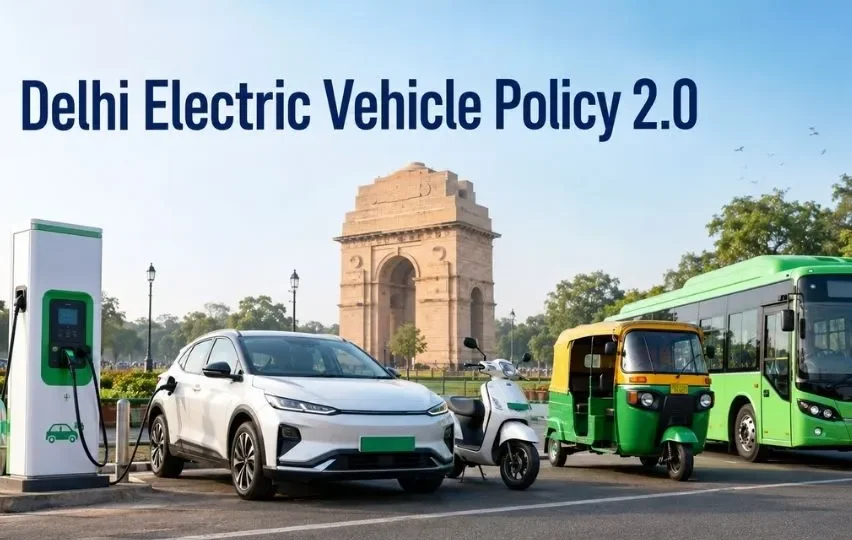
Delhi Electric Vehicle Policy 2.0 is an important step towards promoting clean mobility, reducing vehicular pollution and making Delhi a leading electric mobility hub. The policy focuses on accelerating the adoption of electric vehicles across high-use and high-polluting transport segments such as two-wheelers, three-wheelers, goods vehicles, school buses, aggregator fleets and government transport fleets.
For UPSC Current Affairs, the topic is relevant under Environment, Economy, Urban Mobility, Air Pollution, Climate Change and Sustainable Development.
What is Delhi Electric Vehicle Policy 2.0?
Delhi Electric Vehicle Policy 2.0 is the next phase of Delhi’s clean transport strategy. It builds on the earlier Delhi EV Policy 2020, which helped increase EV penetration in the city.
The policy aims to make Delhi a major electric mobility hub by promoting electric vehicles, expanding charging infrastructure and gradually shifting high-use transport categories away from fossil fuels.
Objectives of the Policy
The major objectives of Delhi EV Policy 2.0 include:
- Promoting clean and sustainable transport
- Reducing air pollution from vehicles
- Increasing electric vehicle adoption
- Expanding public charging infrastructure
- Supporting high-use commercial EV segments
- Encouraging green urban mobility
- Reducing dependence on fossil fuels
Focus Vehicle Segments
The policy gives special attention to high-polluting and high-use vehicle categories.
These include:
- Two-wheelers
- Three-wheelers
- Commercial goods vehicles
- School buses
- Aggregator fleets
- Government transport fleets
These vehicle categories are important because they operate frequently in urban areas and contribute significantly to road transport emissions.
Target for 2030
A major target under Delhi EV Policy 2.0 is to achieve at least 30% electrification of Delhi’s total vehicle fleet by 31 March 2030.
This target builds on the progress made under Delhi EV Policy 2020. By 2025, Delhi had achieved around 14% EV penetration, showing strong growth in electric vehicle adoption.
The new target aims to nearly double this progress and push Delhi towards cleaner transport by 2030.
Registration Mandates
The policy introduces phased registration mandates for certain vehicle categories.
From 1 January 2027, only electric three-wheelers and N1 category trucks will be registered in Delhi.
From 1 April 2028, only electric two-wheelers will be registered.
Already registered fossil-fuel vehicles will be allowed to complete their full lifecycle. This approach avoids sudden disruption while gradually shifting new vehicle registrations towards electric mobility.
Charging Infrastructure
Charging infrastructure is a core part of Delhi EV Policy 2.0.
The policy plans to create more than 30,000 public charging points across Delhi. Around ₹1,000 crore has been allocated for charging infrastructure development.
A strong charging network is necessary to reduce range anxiety, support commercial EV users and make electric mobility practical for daily use.
Implementation Agencies
The Delhi Transport Department will act as the nodal agency for implementing the policy.
Delhi Transco Ltd. will support the development of charging infrastructure in coordination with the power department and distribution companies.
This coordination is important because EV adoption depends not only on vehicle availability but also on reliable electricity supply and accessible charging stations.
Significance of Delhi EV Policy 2.0
Delhi EV Policy 2.0 is significant because it directly addresses the problem of urban air pollution. Vehicular emissions are a major contributor to poor air quality in Delhi.
The policy can help:
- Reduce vehicular emissions
- Improve urban air quality
- Promote green jobs
- Strengthen EV manufacturing and services
- Encourage sustainable public transport
- Support India’s climate commitments
- Improve last-mile connectivity
Challenges
Despite its strong goals, the policy may face several challenges.
Key challenges include:
- High upfront cost of EVs
- Need for reliable charging infrastructure
- Battery disposal and recycling concerns
- Power demand management
- Affordability for small transport operators
- Coordination between multiple agencies
- Consumer confidence and awareness
Proper implementation will be crucial for achieving the 2030 targets.
UPSC Relevance
Delhi EV Policy 2.0 is important for UPSC under:
GS Paper 2
- Governance
- Urban policy
- Public service delivery
GS Paper 3
- Environment
- Climate change
- Energy
- Transport
- Sustainable development
Current Affairs
- Electric vehicles
- Air pollution
- Green mobility
- Urban governance
Conclusion
Delhi Electric Vehicle Policy 2.0 represents a strong push towards clean mobility and sustainable urban transport. By targeting 30% fleet electrification by 2030, expanding charging infrastructure and introducing phased registration mandates, the policy aims to reduce pollution and make Delhi a leading electric mobility hub.
Its success will depend on effective implementation, affordable EV access, strong charging networks and coordination among transport and power agencies.



Frequently Asked Questions on Delhi Electric Vehicle Policy 2.0
What is Delhi Electric Vehicle Policy 2.0?
Delhi Electric Vehicle Policy 2.0 is Delhi’s updated clean mobility policy aimed at promoting electric vehicles, reducing vehicular pollution and making Delhi a leading EV hub.
What is the 2030 target of Delhi EV Policy 2.0?
The policy targets at least 30% electrification of Delhi’s total vehicle fleet by 31 March 2030.
Which vehicle segments are covered under Delhi EV Policy 2.0?
The policy focuses on two-wheelers, three-wheelers, commercial goods vehicles, school buses, aggregator fleets and government transport fleets.
What are the registration mandates under Delhi EV Policy 2.0?
From 1 January 2027, only electric three-wheelers and N1 category trucks will be registered. From 1 April 2028, only electric two-wheelers will be registered.
Why is Delhi EV Policy 2.0 important for UPSC?
It is important for UPSC because it connects with electric mobility, air pollution, urban governance, climate change, clean energy, sustainable transport and environmental policy.