Table of Contents
ToggleHemis Festival 2026: Ladakh’s Grand Buddhist Celebration and Its Cultural Significance
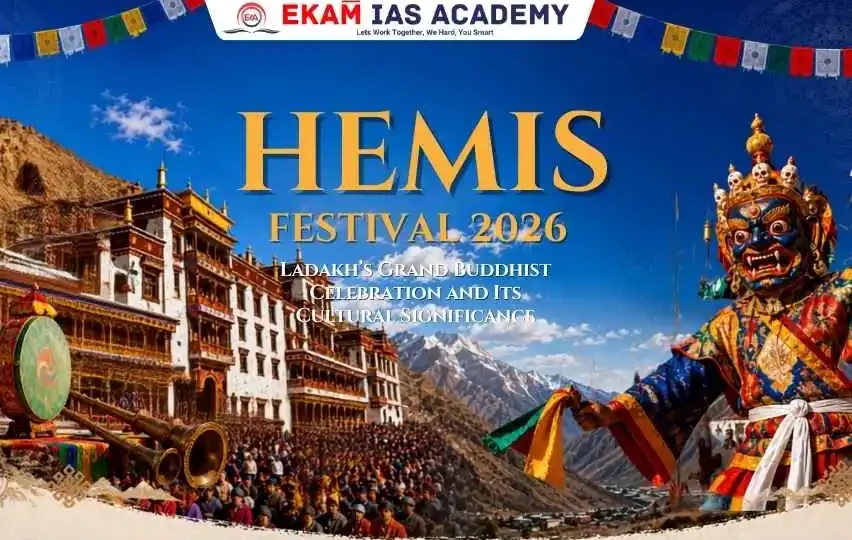
The Hemis Festival 2026 is one of the most vibrant and spiritually significant festivals celebrated in Ladakh, attracting devotees, tourists, and cultural enthusiasts from across the world. Known for its colorful rituals, sacred mask dances, and deep connection with Tibetan Buddhism, the festival represents a blend of spirituality, tradition, and heritage. For UPSC Current Affairs, the Hemis Festival holds importance under Art & Culture, Indian Heritage, and Buddhist traditions in India.
Why is Hemis Festival 2026 in News?
The Hemis Festival 2026 gained attention as celebrations commenced with devotion and enthusiasm at the historic Hemis Monastery in the Leh district of Ladakh. The festival continues to remain an important cultural event due to its role in preserving the region’s ancient Buddhist practices and attracting global tourism.
The festival is important because it highlights:
- Ladakh’s Buddhist traditions
- Cultural heritage preservation
- Religious tourism
- India’s soft cultural power
About Hemis Festival
The Hemis Festival, also called Hemis Tsechu, is celebrated annually at Hemis Monastery in Ladakh. The festival is observed according to the Tibetan lunar calendar, generally on the 10th day of the Tse-Chu month.
Key Features of Hemis Festival
Important features include:
- Celebrated at Hemis Monastery
- Based on Tibetan Buddhist traditions
- Dedicated to Guru Padmasambhava
- Includes sacred rituals and cultural performances
- Attracts pilgrims and tourists worldwide
The festival is recognized as one of the most significant Buddhist celebrations in the Himalayan region.
Origin and Religious Significance of Hemis Festival
The origin of the Hemis Festival traces its roots to the 8th century and is closely associated with Guru Padmasambhava, also known as Guru Rinpoche.
Who Was Guru Padmasambhava?
Guru Padmasambhava is considered one of the most influential spiritual figures in Tibetan Buddhism. He is often called the Second Buddha because of his role in spreading Buddhist teachings across the Himalayan region.
Religious significance of the festival includes:
- Commemorates the birth anniversary of Guru Padmasambhava
- Symbolizes victory of good over evil
- Represents spiritual purification
- Promotes Buddhist teachings and values
Major Events and Rituals of Hemis Festival
The festival is famous for its spectacular rituals and colorful celebrations.
Cham Mask Dance
The Cham Dance is the main attraction of the festival. Monks and lamas perform sacred masked dances in monastery courtyards while accompanied by:
- Traditional drums
- Cymbals
- Long horns
- Religious chants
The dance symbolizes the destruction of evil forces and the triumph of positive spiritual energy.
Ritual Practices
At the conclusion of rituals:
- A symbolic dough figure representing evil is destroyed
- Pieces are scattered in different directions
- It signifies removal of negativity and spiritual cleansing
Local traditions also form an essential part of the celebration, including serving Chhang, a traditional Ladakhi beverage.
Why Hemis Festival Matters
The Hemis Festival serves purposes beyond religious celebration.
Its broader significance includes:
- Preserves Ladakh’s Buddhist heritage
- Promotes cultural tourism
- Strengthens community participation
- Reflects a unique blend of history, spirituality, culture, and celebration
Conclusion
The Hemis Festival 2026 represents more than a religious gathering; it is a living example of India’s diverse cultural and spiritual traditions. The festival not only strengthens Buddhist heritage but also promotes tourism and cultural awareness. For UPSC aspirants, understanding the Hemis Festival, its origin, rituals, and cultural importance is valuable from both Art & Culture and Current Affairs perspectives.



Hemis Festival-FAQs Answered
What is Hemis Festival?
Hemis Festival, also known as Hemis Tsechu, is a famous Buddhist festival celebrated every year at Hemis Monastery in Ladakh.
Where is Hemis Festival celebrated?
Hemis Festival is celebrated at the historic Hemis Monastery in the Leh district of Ladakh.
Why is Hemis Festival celebrated?
The festival is celebrated to commemorate the birth anniversary of Guru Padmasambhava, also known as Guru Rinpoche, who is revered in Tibetan Buddhism.
What is the main attraction of Hemis Festival?
The main attraction of Hemis Festival is the Cham Mask Dance, performed by monks and lamas with traditional drums, cymbals, long horns and religious chants.
Why is Hemis Festival important for UPSC?
Hemis Festival is important for UPSC because it connects with Art & Culture, Buddhist traditions, Ladakh’s heritage, religious tourism, Cham dance and Indian cultural diversity.