Table of Contents
ToggleLie Detector Test and Legal Position in India
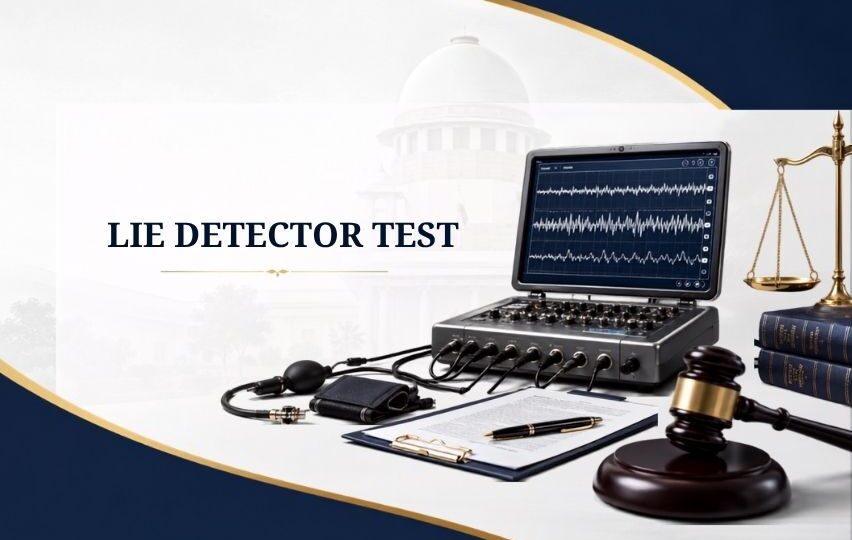
The Lie Detector Test, commonly known as the Polygraph Test, has once again come into the spotlight after the Pune Police sought court approval to conduct a polygraph examination during a criminal investigation. This has reignited discussions on the scientific reliability, constitutional validity, and legal admissibility of polygraph tests in India.
For UPSC aspirants, the topic is highly relevant under Polity, Governance, Internal Security, Ethics, and Science & Technology, particularly in relation to Article 20(3), Article 21, and the Supreme Court’s judgment in Selvi v. State of Karnataka (2010).
What is a Polygraph (Lie Detector) Test?
A Polygraph Test is an investigative technique used by law enforcement agencies to monitor a person’s physiological responses while answering a series of questions.
The underlying assumption is that deceptive answers may trigger measurable stress-related physiological changes.
However, it is important to understand that a polygraph does not directly detect lies. Instead, it records bodily responses that may indicate psychological stress.
What Does a Polygraph Test Measure?
The polygraph simultaneously records multiple physiological indicators, including:
- Heart Rate
- Blood Pressure
- Breathing Pattern
- Galvanic Skin Response (Sweating or Skin Conductivity)
These responses are recorded continuously and analyzed for unusual changes during questioning.
Principle Behind the Polygraph Test
The polygraph operates on the assumption that:
Deception may produce emotional stress, resulting in measurable physiological responses.
However, stress can arise from several other factors such as:
- Fear
- Anxiety
- Nervousness
- Trauma
- Medical conditions
Therefore, abnormal physiological responses cannot conclusively establish guilt or deception.
How Does a Polygraph Test Work?
Pre-Test Interview
The examiner explains the procedure to the person, establishes rapport and collects background information.
Baseline Recording
Simple factual questions are asked to record normal physiological responses.
Relevant Questioning
Crime-related questions are asked and the responses are compared with the baseline recordings.
Analysis
The examiner analyses stress patterns. The results are used only as an investigative aid and not as conclusive proof.
Key Components of a Polygraph
The major components of a polygraph include:
- Pneumograph tubes: Measure breathing patterns
- Blood pressure cuff: Records pulse and blood pressure
- Galvanic Skin Response sensors: Detect sweating through skin conductivity
- Photoplethysmograph: Measures blood flow changes
Together, these components help investigators observe physiological changes during questioning.
Limitations of Polygraph Tests
Although widely known, polygraph examinations have several scientific and legal limitations.
Detects Stress, Not Lies
A polygraph records physiological stress responses rather than deception itself.
Innocent Individuals May Fail
An innocent person experiencing fear, anxiety, or emotional distress may exhibit physiological responses similar to those of a deceptive individual.
Habitual Liars May Escape Detection
Individuals trained to control their emotions or those with certain personality traits may not display significant physiological changes.
Countermeasures Can Affect Results
Some individuals may intentionally manipulate breathing, muscle movements, or mental focus to influence the test results.
Scientific Reliability Remains Debated
The accuracy and reliability of polygraph examinations continue to be debated among scientists, psychologists, and legal experts worldwide.
Consequently, many courts do not treat polygraph findings as definitive evidence.
Legal Position of Polygraph Tests in India
The use of polygraph examinations in India is governed primarily by constitutional protections and judicial precedents.
Supreme Court Judgment: Selvi v. State of Karnataka (2010)
The landmark judgment laid down important safeguards regarding scientific investigative techniques.
The Court held that:
- Polygraph tests cannot be conducted without the voluntary consent of the accused.
- Forced administration violates Article 20(3) of the Constitution, which protects individuals against self-incrimination.
- The judgment also reinforces Article 21, safeguarding the right to life, personal liberty, and mental privacy.
- Even if conducted voluntarily, the results are not admissible as substantive evidence in court. They may only assist investigators in gathering further evidence.
Constitutional Provisions Involved
Article 20(3)
The accuracy and reliability of polygraph examinations continue to be debated among scientists, psychologists, and legal experts worldwide.
Consequently, many courts do not treat polygraph findings as definitive evidence.
Article 21
Guarantees the Right to Life and Personal Liberty.
Forced scientific tests without consent violate personal dignity, privacy, and mental autonomy.
Why Was the Polygraph Test in the News?
The issue gained attention after the Pune Police sought judicial permission to conduct a polygraph examination as part of an ongoing criminal investigation.
Since Indian law requires voluntary consent and judicial oversight, the case has renewed public debate on:
- Scientific validity
- Investigative usefulness
- Constitutional safeguards
- Human rights during criminal investigations
UPSC Relevance
Prelims
Questions may be asked on:
- Article 20(3)
- Article 21
- Scientific investigative techniques
- Polygraph, Narco Analysis, and Brain Mapping
- Supreme Court judgments
GS Paper II
- Fundamental Rights
- Criminal Justice System
- Constitutional Protections
- Judicial Pronouncements
GS Paper III
- Internal Security
- Forensic Science
- Police Reforms
- Investigation Techniques
GS Paper IV (Ethics)
Possible themes include:
- Ethics in criminal investigation
- Human dignity
- Informed consent
- Privacy
- Balancing justice with individual rights
The issue gained attention after the Pune Police sought judicial permission to conduct a polygraph examination as part of an ongoing criminal investigation.
Since Indian law requires voluntary consent and judicial oversight, the case has renewed public debate on:
- Scientific validity
- Investigative usefulness
- Constitutional safeguards
- Human rights during criminal investigations
Difference Between Polygraph Test and Narco Analysis
| Feature | Polygraph Test | Narco Analysis |
|---|---|---|
| Purpose | Measures physiological responses | Uses sedative drugs to induce a semi-conscious state |
| Detects | Stress-related changes | Verbal responses under drug influence |
| Scientific Reliability | Debated | Highly controversial |
| Requires Consent | Yes | Yes |
| Constitutional Protection | Covered under Selvi (2010) | Covered under Selvi (2010) |
| Admissibility | Not substantive evidence | Not substantive evidence |
Conclusion
The Polygraph Test remains an important investigative tool but is not a foolproof method of detecting deception. It measures physiological stress rather than lies and is subject to scientific limitations. In India, its use is carefully regulated to protect constitutional rights, particularly the right against self-incrimination under Article 20(3) and the right to personal liberty under Article 21.
For UPSC aspirants, understanding the scientific basis, constitutional safeguards, landmark judicial rulings, and ethical implications of polygraph testing is essential for both the Preliminary and Main examinations.



Frequently Asked Questions (FAQs)
What is a Polygraph (Lie Detector) Test?
A Polygraph Test is an investigative tool that records physiological responses such as heart rate, blood pressure, breathing, and sweating while a person answers questions. It measures stress-related changes, not lies directly.
Are Polygraph Tests legally valid in India?
Yes, but only under strict legal conditions. As per the Supreme Court’s Selvi v. State of Karnataka (2010) judgment, a polygraph test can only be conducted with the voluntary consent of the accused. Forced administration violates Article 20(3) of the Constitution.
Can Polygraph Test results be used as evidence in court?
No. Polygraph test results are not admissible as substantive evidence in Indian courts. They may only assist investigating agencies in gathering further leads or corroborative evidence.
Why is the Polygraph Test considered unreliable?
The test detects physiological stress rather than deception. Factors such as anxiety, fear, medical conditions, or emotional distress can influence the results, making them scientifically debated and not completely accurate.
Why is the Polygraph Test important for UPSC preparation?
The topic is relevant for UPSC under Polity, Internal Security, Ethics, and Science & Technology. Aspirants should understand its legal framework, constitutional provisions (Articles 20(3) and 21), the Selvi (2010) judgment, and the ethical issues surrounding investigative techniques.