

The U.S. military reverted the name of its IndoPacific Command (INDOPACOM) back to Pacific Command (PACOM).
From IndoPacific to Pacific
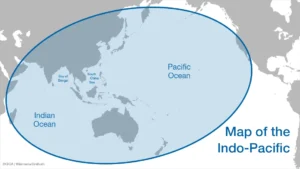
- The IndoPacific Command (INDOPACOM) was renamed in 2018 to highlight the Indian Ocean’s growing strategic importance.
- In May 2026, the U.S. reverted to PACOM, indicating a reorientation toward the Pacific theatre rather than the broader IndoPacific.
- The change coincides with U.S. Secretary of War Pete Hegseth’s speech at the ShangriLa Dialogue, which omitted any reference to the IndoPacific strategy.
U.S.–China Rapprochement and Quad’s Decline
- Temporary thaw with China The Trump 2.0 administration is trying to ease tensions with China, shown by reciprocal visits of Donald Trump and Xi Jinping.
- “G2” world order The idea being floated is that the U.S. and China could divide global influence into spheres of power, with China dominant in continental Asia.
- Quad losing momentum The Quad grouping (India, Japan, Australia, U.S.) is weakening — the 2026 National Defense Strategy does not even mention it.
- Limited cooperation areas Current collaboration is restricted to maritime security, critical minerals, AI, and disaster response. Even here, progress is slow — for example, AI cooperation faced setbacks due to U.S. restrictions.
- India’s Quad Summit efforts stalled India’s push to host a Quad Summit has not succeeded, suggesting the grouping may be downgraded to ministerial-level meetings instead of leaders’ summits.
U.S.–Iran MoU and West Asia
- Islamabad MoU, U.S. agreed to withdraw troops, allow Hormuz Strait administration by Iran & Oman, and provide a $300 billion reconstruction fund.
- This deal boosts Iran’s influence, pulling Oman and Qatar closer to Tehran.
- Saudi Arabia is seeking new partnerships with Türkiye, Pakistan, and even Ukraine.
- For India → urgent need to rebalance ties with Israel, UAE, and Iran, and rethink sanctions compliance on Chabahar Port and Iranian oil.
U.S. Role in South Asia
- Appointment of Sergio Gor as U.S. Ambassador to India & Special Envoy for South/Central Asia shows Washington’s regional ambitions.
- U.S. is actively engaging Nepal, Bhutan, Bangladesh, Sri Lanka, competing with China’s outreach.
- With SAARC and BIMSTEC weakened by IndiaPakistan tensions, U.S. is trying to fill the vacuum.
- India, as chair of the Indian Ocean Rim Association, can revive SAARC and strengthen regional frameworks to counter external influence.
Strategic Implications for India
- India must adapt its IndoPacific vision to the U.S.’s narrower Pacific focus.
- Build alternative maritime coalitions (e.g., AustraliaIndiaJapan trilateral) to secure interests.
- Reassess energy and connectivity diplomacy in West Asia.
- Reinforce regional leadership through multilateral revival and balanced engagement with both U.S. and China.
India’s southwest monsoon deficit has widened to 43%, with El Nino conditions and extreme heat threatening agriculture, raising concerns over food inflation and rural resilience.
Climate Drivers Explained
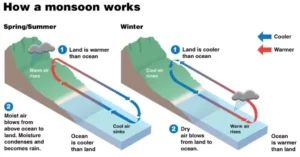
- El Niño impact During El Niño years, the Pacific Ocean warms up, which disrupts normal atmospheric circulation. This warming suppresses vertical air movement, meaning fewer rainclouds form over India → weaker monsoon rains.
- Pacific warming Normally, trade winds push moisture toward India. But when the Pacific warms, these winds weaken. As a result, less moisture reaches the subcontinent, reducing rainfall.
- MaddenJulian Oscillation (MJO) MJO is a moving system of clouds and rainfall across the tropics. When it is in an unfavourable phase, it suppresses convection (cloud formation) over India, further limiting monsoon activity.
- Indian Ocean Dipole (IOD) A positive IOD (warmer western Indian Ocean) can sometimes offset El Niño’s negative impact by bringing more rainfall. But currently, the IOD is weak, so it cannot balance El Niño’s suppressive effect.
Agricultural Concerns with Data
- Kharif Sowing Window: The kharif sowing season (June–September) is crucial for rice, pulses, and oilseeds. With 63% rainfall deficit in central India and 43% in the northeast, sowing is delayed and soil moisture is inadequate.
- Fertilizer Supply Risks: Revised requirement for kharif 2026 is 38.39 million tonnes (down from 39.05 mt). India sources ~35% of fertilizers from Gulf countries; West Asia tensions threaten imports.
- Urea: 19.03 mt (↓1.9%).
- DAP: 5.62 mt (↓4.9%).
- Extreme Heat and Labour Productivity: Heatwaves reduce farm labour efficiency by 15–20%, especially in states like Rajasthan and Madhya Pradesh. This adds to delayed sowing and higher input costs.
- Plantation Crop Stress: Cardamom harvest in Idukki (Kerala) already hit by heat and moisture stress. Similar risks for Western Ghats crops like coffee, pepper, and tea.
- Food Inflation Trends: Retail food inflation stood at 4.2% in April 2026. FAO warns prolonged fertilizer disruptions could push inflation higher, especially for vegetables and pulses.
Government Response and Vulnerability
- Agriculture Ministry identified 111 highpriority districts (out of 315 vulnerable) with irrigation coverage below 25%.
- Contingency plans → adjustable sowing windows, alternative seed varieties.
- Implementation remains uneven across states.
Structural Challenges
- Rainfall dependence: India’s rural economy is still built on the assumption of reliable monsoon rains, making it highly vulnerable to climate shocks.
- Unchecked warming: Rising temperatures make adaptation harder, reducing farm labour productivity and crop yields.
- Shift in planning: Need to move from raincentric to watercentric strategies, focusing on irrigation and water management.
- Crop diversification: Reduce reliance on waterintensive crops like paddy and sugarcane.
- Resilience pathways: Strengthen systems through microirrigation, watershed management, and diversified farming models.
Policy Suggestions
- New authority: Establish a dedicated body to coordinate interState water use and cropping changes, guided by extended El Niño forecasts.
- Unified governance: Integrate roles of the Agriculture Ministry, Jal Shakti Ministry, and IMD for cohesive climateresponsive planning.
- Climateresilient farming: Promote sustainable models like AP Community Natural Farming and PMKSY microirrigation.
- Regional cooperation: Encourage collaboration under the Indian Ocean Rim Association to mobilize climate adaptation finance.
Conclusion
India must reengineer its agricultural strategy from rainfall dependence to water resilience, ensuring food security in an era of climate volatility.
Afghan women, barred from universities and most formal jobs under Taliban rule, are increasingly turning to small-scale businesses as their only means of livelihood.
Decline in Education and Labour Participation
- Female labour force participation: fell from 14.6% (2021) to ~5% (2024–25).
- University enrolment: 54,861 women (2019) to 102 (2023–24) now zero (2024–25).
- Graduates: 9,937 (2019) and none in (2024–25).
- UNICEF & UNESCO attribute decline to restrictive policies, underinvestment, humanitarian crisis, and teacher shortages.
- Media sector: 80% of female workers lost jobs after Taliban’s return.
Rise of WomenOwned Enterprises
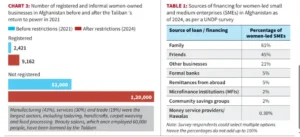
- Registered businesses: 2,421 (prerestrictions) and 9,162 (postrestrictions).
- Informal enterprises: 52,000 to 1,20,000.
- Sectors: Manufacturing (43%), Services (30%), Trade (19%).
- Activities include tailoring, handicrafts, carpet weaving, food processing.
- Taliban officials frame support as part of economic selfsufficiency.
Challenges for Women Entrepreneurs
- UNDP survey (2024): Only 28% formally registered/licensed. Nearly twothirds operate informally.
- Debt burden: 41% reported being in debt.
- Access to finance: Only 5% obtained loans from banks.
- Barriers: need for property documents, recommendation letters, business history. Reliance on family networks and personal savings.
Implications
- Economic isolation: Afghanistan’s weak economy limits growth opportunities.
- Gendered exclusion: Women’s absence from education and formal jobs undermines national productivity.
- Social impact: Entrepreneurship provides income but cannot replace lost educational capital.
- International concern: UN agencies highlight risks of learning poverty and generational setbacks.
India & Global Community
- Humanitarian & Trade Policy Integration India and regional partners must factor Afghan women’s exclusion into humanitarian aid and trade frameworks, ensuring policies do not reinforce gendered marginalisation.
- Inclusive Financing Models Global organisations like UNDP, World Bank, and ILO stress the need for inclusive financing mechanisms, including portable microcredit schemes that empower women even in restrictive environments.
- Learning from India’s SelfHelp Groups India’s SelfHelp Group (SHG) model demonstrates how collective organisation can provide women with financial independence, social capital, and resilience, offering a replicable framework for Afghanistan.
- Regional Cooperation South Asian and Indian Ocean partners can collaborate to mobilise adaptation finance and gendersensitive aid, ensuring Afghan women are not excluded from regional development initiatives.
Conclusion
Afghan women’s entrepreneurship surge is a survival response, but without education, formal rights, and access to finance, it remains a fragile lifeline rather than a pathway to empowerment.
The Ministry of Women and Child Development has invited nominations for the Pradhan Mantri Rashtriya Bal Puraskar 2026, India’s highest civilian honour for children.
Award
- Nature: Nation’s top civilian recognition for children.
- Occasion: Presented annually by the President of India on Veer Bal Diwas (December 26), commemorating Sahibzada Zorawar Singh and Sahibzada Fateh Singh.
- Categories: Six fields — Bravery, Social Service, Environment, Sports, Art & Culture, Science & Technology.
- Selection: Done by a committee headed by the Secretary, Ministry of Women & Child Development.
Eligibility Criteria
- Citizenship: Must be an Indian citizen.
- Age: Between 5–18 years (as of 31st July of the award year).
- Achievement window: Act/incident must have occurred within 2 years of nomination.
- Number of awards: Normally 25, but committee may relax this limit.
- Nominations: Can be made by individuals, institutions, or through selfnomination.
- Recommendations also invited from government agencies.
Benefits to Awardees
- Each recipient receives:
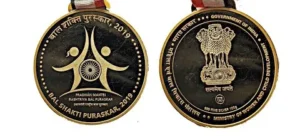
- Medal
- Cash prize of ₹1 lakh
- Certificate of recognition
Conclusion
The PMRBP honours young achievers across diverse fields, inspiring India’s children to contribute meaningfully to society and embody courage, creativity, and service.
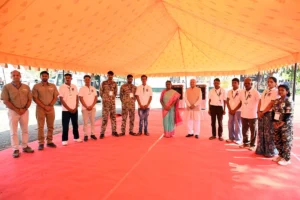
The President of India recently met members of the Sahariya tribe along with Cheetah Mitras at Kuno National Park, Madhya Pradesh, highlighting their role in conservation and community participation.
Identity and Location
- PVTG status: Sahariya are listed among India’s Particularly Vulnerable Tribal Groups.
- Also known as Seher, Sair, Savar, Saonar, Sahra.
- Found mainly in Madhya Pradesh and Rajasthan, living in forest margins and villages.
- Settlements called Seharana — clusters of stone or mud houses with roofs of stone slabs (Patore).
Language and Religion
- Original language lost and now speak local dialects of their regions.
- Practice Hinduism blended with animistic traditions, worshipping deities like Bhavani, Gond Devta, Bijasur.
Social Structure
- Divided into five subtribes based on occupation: Jati – farmers, Arsi – weavers, Muli – iron workers, Kindal – basket makers, Kumbi – potters
Cultural Practices
- Famous for Saharia Swang dance, performed during Holi.
- Accompanied by dhol, nagari, matki; features a male performer dressed as female.
Livelihood
- Predominantly forest dwellers, dependent on forest produce.
- Cultivate small plots and often work as landless labourers.
- Skilled in producing catechu from khair trees, a traditional forestbased craft.
Conclusion
The Sahariya, a PVTG community with rich cultural traditions and forestbased livelihoods, remain vital to India’s tribal heritage and conservation efforts.