

Table of Contents
ToggleMENTAL HEALTH OF ADIVASI YOUTH
TOPIC: (GS1) SOCIAL ISSUES: THE HINDU
Recent studies highlight that Adivasi adolescents express distress in nonclinical ways, which are often overlooked by formal mental health systems. This gap raises concerns about equity and inclusion in India’s mental health policies.
Adolescent Mental Health
- Indigenous Communities in India: India hosts the largest indigenous population globally, constituting about 9% of the national population.
- These communities face persistent socioeconomic and health inequities, making adolescent mental health a critical but underresearched area.
- Global Adolescent Burden: WHO estimates that 1 in 7 adolescents (10–19 years) worldwide experience mental health conditions.
- National Survey Findings: The 2015–16 National Mental Health Survey reported that 7% of Indian adolescents (13–17 years) suffer from mental health problems.
- Majority remain untreated due to limited access to formal care, especially in rural and Adivasi regions.
Healthcare Inequity
- Adivasi youth face multiple disadvantages: poverty, poor nutrition, and weak health infrastructure.
- Data: NFHS5 shows only 28% of ST households have improved sanitation, compared to 48% nationally.
- Impact: Poor living conditions worsen both physical and mental health vulnerabilities.
Education & Migration Burden
- Seasonal migration disrupts schooling, leading to dropout and emotional stress.
- Data: Ministry of Education reports 24% dropout rate among ST students at secondary level, higher than national average of 17%.
- Effect: Migration intensifies loneliness, fractured social ties, and substance use.
Mental Health System Gaps
- Frameworks remain urbancentric, privileging clinical categories like “depression” and “anxiety.”
- Data: National Mental Health Survey (2015–16) found 7% of adolescents (13–17 years) suffer mental health problems, but >80% lack access to formal care.
- Need: Training professionals to recognise local idioms of distress and expanding rural outreach under NMHP.
Justice & Cultural Continuity
- Addressing Adivasi mental health is not only medical but also about rights, dignity, and cultural survival.
- Data: NITI Aayog MPI (2023) shows ST poverty at 41.5% vs national 21.9%.
- Implication: Policies must integrate cultural spaces and justice alongside psychiatric care.
Challenges
- Socioeconomic precarity: Early family responsibilities, poverty, and migration compress adolescence into survival struggles.
- Expression of distress: Distress is conveyed through local idioms, silence, irritability, bodily complaints, or withdrawal, not clinical terms like “depression.”
- Limited research: Surveys in Gujarat, Tamil Nadu, and Meghalaya show 16% prevalence of mental disorders among Adivasi adolescents, double the national average.
- Cultural erosion: Traditional intergenerational spaces (storytelling evenings, collective learning) are weakening due to migration and smartphones.
Way Forward
- Strengthen community spaces for collective dialogue and support.
- Reduce economic precarity through targeted welfare schemes (e.g., scholarships, livelihood programs).
- Train professionals to recognise local languages of distress.
- Integrate schoolbased counselling and culturally sensitive outreach.
- Ensure inclusive policy frameworks under the National Mental Health Programme (NMHP).
Conclusion
True mental health equity in India will come only when Adivasi youth are heard in their own voices, beyond clinical labels.
TELEGRAM BAN AND DARK WEB CONCERNS VS FUNDAMENTAL RIGHTS
TOPIC: (GS2) POLITY: THE HINDU
The temporary ban under Section 69A of the IT Act, 2000 has been challenged by Telegram, and judgment is reserved.
Section 69A of IT Act
- The Union government told the Delhi High Court that Telegram has evolved into a “new dark web”, citing its misuse for cybercrime and exam paper leaks.
- Legal provision: Empowers the Centre to block public access to information if necessary for sovereignty, integrity, defence, security, public order, or preventing cognizable offences.
- Safeguards: Orders must follow the IT (Procedure and Safeguards for Blocking Access) Rules, 2009.
- Judicial precedent: In Anuradha Bhasin v Union of India, SC held that restrictions must pass the proportionality test (least restrictive, necessary, subject to review).
Government’s Position on Telegram Ban
- Cybercrime Concerns: The Indian Cyber Crime Coordination Centre (I4C) identified Telegram as a preferred platform for fraud networks, extremist groups, and exam paper leak operators.
- Data Evidence: Complaints linked to Telegram rose sharply from 75,688 in 2023 to 2.75 lakh in 2025, with financial frauds exceeding ₹3,000 crore.
- Operational Misuse: Channels allegedly hosted marketplaces for mule accounts, UPI handles, and crypto conversions, making tracking and enforcement difficult.
- Exam Integrity: The ban was imposed ahead of the NEET retest to prevent malpractice and safeguard fairness in competitive examinations.
Telegram’s Argument
- Overreach of emergency powers: Government failed to justify why specific channels couldn’t be blocked instead of banning the entire platform.
- Impact on users: Blanket ban affects 150 million Indian users, disrupting educators, entrepreneurs, and creators.
- Fundamental rights: Restriction interferes with Article 19(1)(a) (freedom of speech) and Article 19(1)(g) (freedom to trade/profession).
Dark Web
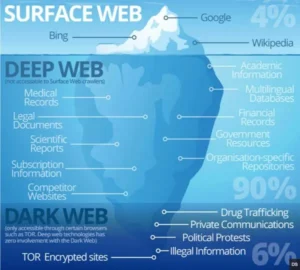
- The Dark Web is a hidden part of the internet that cannot be accessed through normal search engines like Google and requires special tools such as Tor.
- It provides online anonymity by hiding users’ locations and identities through multiple layers of encryption.
- It has both positive and negative uses — it can help protect privacy and free speech, but it is also used for illegal activities like cybercrime.
- Using the Dark Web involves risks because many sites may contain scams, harmful content, malware, or illegal material.
- accessible only via special browsers (e.g., Tor). It hosts encrypted sites not indexed by search engines.
- Examples:
- Silk Road (illegal drug marketplace, shut down in 2013).
- Ransomware forums where hackers sell stolen data.
- Arms trade networks using cryptocurrency for anonymity.
- Telegram link: Criminals use Telegram channels to share deep web links, making it a gateway to dark web forums.
Way forward
- Cybersecurity Oversight: Strengthening Indian Cyber Crime Coordination Centre (I4C) with AIbased tracking can help detect suspicious examrelated groups faster.
- Digital Governance: Loss of digital livelihoods undermines Article 19(1)(g) (right to trade/profession). Targeted enforcement avoids collateral damage to legitimate businesses.
- Biometric & AI Surveillance: Deploy biometric verification for exam staff and candidates. AIbased monitoring of suspicious online groups flagged by I4C.
- Strict Accountability & Penalties: Amend Public Examinations (Prevention of Unfair Means) Act, 2024 to impose minimum 10year jail terms for organised leaks.
ARTICLE 19 FUNDAMENTAL RIGHTS
- Freedom of Speech & Expression: Citizens can express opinions freely through speech, writing, or any medium.
- Freedom of Assembly: Right to peaceful meetings without arms.
- Freedom of Association: Citizens can form unions or groups.
- Freedom of Movement: Free movement across India.
- Freedom of Residence: Right to live anywhere in India.
- Freedom of Profession: Right to practice any trade, business, or occupation.
Relation to Telegram Ban
- Speech & Expression hampered: Blanket ban restricts 150 million users from communicating, violating Article 19(1)(a).
- Right to Profession affected: Educators, entrepreneurs, and digital creators lose livelihood opportunities, violating Article 19(1)(g).
- Assembly & Association curtailed: Groups and communities using Telegram for collective action are disrupted.
How It Hampers Rights
- Overbreadth: Instead of targeting illegal channels, the entire platform is blocked.
- Disproportionate restriction: SC in Anuradha Bhasin (2020) held that restrictions must be proportional and least intrusive.
- Economic disruption: Blanket bans affect legitimate businesses and innovation.
Conclusion
Balancing national security and cybercrime prevention with constitutional freedoms is the real test of India’s digital governance.
GRADUATE EXPANSION VS JOB ABSORPTION IN INDIA
TOPIC: (GS3) ECONOMY: THE HINDU
India’s higher education system is producing millions of graduates annually, but unemployment among the educated remains high, raising concerns about whether the economy can absorb this growing workforce.
Rising Graduate Numbers vs Limited Jobs
- Expansion of higher education: Over 40 million students enrolled in higher education (AISHE 2023); thousands of new colleges/universities added in the last decade.
- Graduate unemployment: Nearly 1 in 3 graduates jobless (CMIE 2024); youth unemployment rate ~15% (ages 15–29).
- Sectoral mismatch: IT services hiring slowed; banking, defence, and manufacturing expanded but not enough to absorb the surge.
- Example: Engineering graduates increased by 250% in 15 years, but job creation lagged.
Impact of Technology & AI
- AI transition: Firms demand skills in AI validation, ethical use, and problem solving.
- Skill mismatch: Current curricula outdated; NASSCOM 2025 report shows only 45% of engineering graduates employable in IT sector.
- Automation in manufacturing: Industry 4.0, robotics, and digital systems reduce supervisory roles; ILO estimates 20–25% of routine jobs at risk.
Employability Concerns
- Industry–academia gap: Strong academic credentials but weak exposure to labs, teamwork, and realworld problem solving.
- Additional training: Companies spend ₹30,000–₹50,000 per recruit on skill bridging (ASSOCHAM data).
- Global comparison: Germany invests ~1.3% of GDP in vocational training, while India remains examcentric.
- Extra Point: Only 26% of Indian graduates participate in internships (AICTE 2024), limiting practical exposure.
Manufacturing & Innovation Challenges
- Capitalintensive investments: Sectors like semiconductors and advanced manufacturing create fewer jobs despite large investments.
- Innovation deficit: India manufactures products designed abroad; patent filings per million people ~15, compared to China’s 1,500+ (WIPO 2024).
- FTA utilisation rate: India ~25% vs 70–80% in developed economies, showing weak integration into global innovation chains.
Way Forward
- Boost R&D investment: India spends 0.7% of GDP on R&D (UNESCO), far below global leaders like South Korea (4.8%).
- Strengthen industry–academia collaboration: Curriculum redesign, internships, and skillbased learning.
- Encourage entrepreneurship: Expand risk capital; India’s startup ecosystem valued at $450 bn (2025) but deeptech ventures remain <10%.
- Build indigenous design capabilities: Defence, aerospace, and automotive sectors show potential; e.g., HAL Tejas and ISRO’s Gaganyaan highlight design progress but need scale.
- Extra Point: Promote vocational and skillbased education under Skill India Mission, targeting 400 million youth by 2030.
Conclusion
India’s challenge is not just producing graduates but ensuring they are employable innovators aligned with industry needs, or else the demographic dividend risks turning into a liability.
PHARMACEUTICAL OVERSIGHT IN INDIA AND QUALITY REFORM
TOPIC: (GS2) POLITY: THE HINDU
The Union Health Ministry has mandated doctor’s prescriptions for cough syrups after contamination incidents killed over 300 children abroad, raising questions about India’s pharmaceutical regulation and global reputation.
Who regulates drugs?
- Drug regulation: Governed by Drugs and Cosmetics Act, 1940 and Drugs Rules, 1945.
- Global concern: WHO issued alerts in 2022–23 after ethylene glycol (EG) and diethylene glycol (DEG) contamination in India-made syrups.
- India’s role: Known as the “world’s pharmacy,” exporting medicines to over 150 countries.
Major Issues
Prescription Requirement
- Syrups removed from Schedule K, now sold only with prescription to reduce misuse and self-medication.
- Limitation: Does not address contamination or manufacturing lapses.
Manufacturing Failures
- Contamination linked to poor raw material testing and weak batch quality checks.
- Indian Pharmacopoeia updated methods post-crisis, but enforcement remains patchy.
- Example: Similar lapses caused deaths in Gambia and Uzbekistan (2022–23).
Regulatory Weakness
- India has 36 State drug controllers, but inspectorates are understaffed. Enforcement gaps mean rural areas may ignore prescription rules.
- Pharmaceutical lobby resists stricter testing citing cost burdens on small manufacturers.
Public Health Concerns
- OTC syrups often contain risky combinations (bronchodilators, antihistamines, decongestants).
- American Academy of Pediatrics warns against use in children under six.
- In India, pharmacists act as primary care providers in rural belts, making OTC culture entrenched.
Broader Dimensions
- Global trade: Weak oversight undermines India’s credibility as a drug exporter.
- Health equity: Prescription-only rules may limit access in underserved areas.
- Governance: Stronger inspectorate, transparent testing, and accountability are needed.
- Comparative insight: Countries like the US enforce stringent FDA norms; India must align with global standards.
Conclusion
India cannot remain the “world’s pharmacy” without robust regulatory enforcement and uncompromising drug quality standards.
UNITED NATIONS CONFERENCE ON TRADE AND DEVELOPMENT (UNCTAD)
TOPIC: (GS3) ECONOMY: THE HINDU
A recent UNCTAD report (2026) highlighted that developing nations could save nearly $500 billion annually if they borrowed at the same interest rates as advanced economies, underlining the global debt inequality challenge.
UNCTAD
- Establishment: Created in 1964 by the UN General Assembly as a permanent intergovernmental body.
- Mandate: Helps developing countries integrate fairly into the global economy by providing trade analysis, consensusbuilding, and technical assistance.
- Structure: Part of the UN Secretariat; reports to the UNGA and ECOSOC but has independent membership, leadership, and budget.
- Membership: 195 nations, including India.
- Headquarters: Geneva, Switzerland.
Functions and Role
- Policy support: Assists nations in tackling macrolevel development challenges.
- Trade integration: Promotes beneficial participation in the international trading system.
- Economic diversification: Encourages reducing dependence on commodities.
- Financial stability: Advises on limiting exposure to debt volatility and global financial shocks.
Key Reports
- Trade and Development Report – Global trade trends and policy analysis.
- World Investment Report – FDI flows and investment patterns.
- Least Developed Countries Report – Challenges and strategies for LDCs.
Relevance for India & Developing Nations
- Debt inequality: High borrowing costs hinder development projects.
- Global South priorities: Aligns with India’s push for fairer financial systems at G20 and UN forums.
- Sustainable growth: UNCTAD’s frameworks support inclusive development, crucial for economies facing external shocks.
Conclusion
UNCTAD remains vital in ensuring that developing nations gain equitable access to trade, finance, and technology for sustainable growth.
NONTARIFF BARRIERS AND GLOBAL TRADE
TOPIC: (GS3) ECONOMY: THE HINDU
India–U.S. trade talks in 2026 highlighted tariff cuts, but the actual obstacles are nontariff barriers (NTBs), which now shape global trade outcomes far more than tariffs.
What are Nontariff barriers?
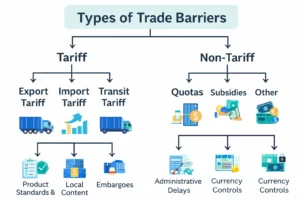
- Nontariff barriers are government policies or regulations that restrict imports/exports without imposing customs duties.
- They increase costs indirectly through compliance, delays, and documentation rather than direct taxation.
- WTO recognises NTBs as major obstacles to free trade, often harder to measure than tariffs.
Types of NTBs
- Licensing & Quotas: Import quotas (e.g., U.S. sugar quota system) and special licences restrict entry of goods.
- Technical Standards (TBT): Product safety, packaging, and labeling requirements (e.g., India’s BIS toy safety rules, EU food safety checks).
- Sanitary & Phytosanitary (SPS) Measures: Food safety and plant/animal health regulations.
- Environmental measures: EU’s Carbon Border Adjustment Mechanism (CBAM) and Deforestation Regulation directly affect exporters.
- Strategic controls: U.S. restrictions on semiconductors, AI chips, and advanced computing limit rivals’ access.
- India’s regulatory push: Expanding quality checks on electronics, machinery, and chemicals to strengthen domestic industry.
Shift from Tariffs to NTBs
- Tariff decline: WTO data shows average tariffs among members fell by ~50% since 1995.
- NTB surge: NTBs now impact ~90% of global trade, a sixfold rise in 30 years.
- Regulatory notifications: WTO recorded 7,700 NTB submissions in 2025, compared to just 700 in 1995, showing exponential growth.
Nature of NTBs
- Technical rules: Standards on packaging, labeling, and product safety (e.g., EU chemical safety norms).
Global Comparison
- EU: NTBs cover 94% of imports, heavily focused on climate and product safety.
- U.S.: NTBs cover 77% of imports, mainly for technology and security.
- India: NTBs cover ~45% of imports, but usage is rising as part of its industrial strategy.
Indian Experience with FTAs
- ASEAN–India FTA (2010): Despite tariff concessions, utilisation remains below 50%. Nontariff barriers (NTBs) like stringent pharma registration in Indonesia and customs delays in Thailand make benefits commercially impractical.
- Japan FTA (2011): Indian pharmaceutical exports are negligible as market approvals take 5–7 years, with Japan reluctant to recognise global testing standards.
- South Korea FTA: Bilateral trade touched $27 billion in 2024–25, but India’s share was only $6.5 billion, showing limited gains.
- Overall utilisation: India’s FTA usage rate is ~25%, far lower than 70–80% in developed economies, reflecting NTBs as the main barrier.
New Directions in Trade Policy
- UAE CEPA (2022): Introduced progressive measures like automatic recognition of medicines approved by global regulators and mutual acceptance of laboratory testing, reducing duplicate compliance costs.
- India–EFTA TEPA (2025): Marked a shift with legally binding NTB reduction, streamlined conformity assessment, and a dedicated NTB subcommittee to address regulatory hurdles continuously.
- Lesson for India: Transparent, proportionate, and mutually recognised regulations are essential to ensure FTAs deliver real market access and prevent fragmentation of global supply chains.
Conclusion
In today’s global economy, nontariff barriers, not tariffs, are the decisive factor in trade competitiveness and India must focus on NTB reduction to unlock its full export potential.
KASHMIR SAFFRON
TOPIC: (GS3) ECONOMY: THE HINDU
The West Asia crisis and reduced saffron output in Iran have boosted global demand for Kashmiri saffron, strengthening its export potential.
Kashmir Saffron
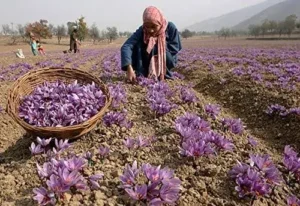
- Known as “Red Gold” for its aroma, flavour, and colouring properties.
- Cultivated mainly in Pampore and adjoining areas of South Kashmir.
- Secured a Geographical Indication (GI) tag in 2020, protecting its unique identity.
- Produces purple flowers with bright orangered stigmas, carefully dried to make the spice.
Types of Kashmiri Saffron
- Lachha Saffron – dried with stigmas intact.
- Mongra Saffron – separated stigmas, considered premium.
- Guchhi Saffron – stigmas loosely packed, less intense.
Climatic & Soil Requirements
- Grows at 1,500–2,000 m elevation.
- Temperature range: –15°C to –20°C in winter, up to 35–40°C in summer.
- Thrives in dry, moderate, continental climates.
- Soil: Loamy, sandy, calcareous, with pH 5.5–8.5.
Indian Context
- India produces ~90% of saffron in Kashmir, cultivated for centuries.
- Plays a role in cultural heritage, cuisine, and traditional medicine.
- Demand rises when global supply (e.g., Iran) declines, offering India export opportunities.
Conclusion
Kashmiri saffron is not just a spice but a symbol of heritage and economic potential, making its preservation and promotion vital for India’s global trade profile.

MOMBASA DECLARATION
TOPIC: (GS2) INTERNATIONAL RELATIONS: THE HINDU
At the 11th Our Ocean Conference (2026) in Mombasa, Kenya, 15 countries across Africa, Asia, Europe, the Caribbean, and the Pacific adopted the Mombasa Declaration to intensify global action against illegal fishing.
Mombasa Declaration
- Signed by nations including Belgium, Cameroon, Chile, Dominican Republic, France, Gambia, Ghana, Guinea, Liberia, Panama, Papua New Guinea, Peru, Republic of Congo, Somalia, and South Korea.
- Focus: Combat Illegal, Unreported, and Unregulated (IUU) fishing, which threatens marine ecosystems and millions dependent on fisheries.
- Calls for:
- Better information access on vessel ownership and licensing.
- Stronger data sharing to track fishing activities.
- Enhanced enforcement of regulations.
- Supports the Global Charter for Fisheries Transparency : 10 policy principles for lowcost governance reforms like modernising vessel registries and publishing fishing authorisations.
Our Ocean Conference (OOC)
- Launched in 2014 by the U.S. Department of State under John Kerry.
- Major platform uniting governments, NGOs, academia, and businesses for ocean sustainability.
- Focus areas: marine protected areas, sustainable blue economy, climate change, maritime security, sustainable fisheries, marine pollution.
- Achievements: Over 2,600 commitments worth $160 billion since inception.
- 2026 OOC in Mombasa: First time held in Africa, themed “Our Ocean, Our Heritage, Our Future.”
Conclusion
The Mombasa Declaration marks a crucial step toward global fisheries transparency and sustainable ocean governance, ensuring livelihoods and ecosystems are protected.